
Plumbing leak detection leads are among the highest-value calls a plumbing company receives, yet most businesses lose half these jobs before the first appointment. The reason is simple: homeowners with water leaks don't compare prices or wait for callbacks — they book with whoever can arrive today. If your competitor offers same-day scheduling while you check your calendar and promise to call back, you've already lost a $600–$1,200 job.
Why Do Plumbing Companies Struggle to Convert Leak Detection Calls?
Leak detection calls convert differently than routine maintenance or scheduled replacements. When a homeowner hears water running behind a wall at 2 AM or discovers a slab leak destroying their foundation, urgency eclipses everything else. They need someone now, not tomorrow or "sometime this week."
Most plumbing companies handle these calls the same way they handle every other inquiry: take a message, check the schedule, call back within a few hours. That approach works fine for water heater replacements or drain cleaning. For leak detection, it's a revenue killer.
Here's what most articles won't tell you: The profit margin on leak detection services is 40–60% higher than standard plumbing repairs, according to the Plumbing-Heating-Cooling Contractors Association. A typical leak detection job bills between $300–$500 for the detection alone, then another $500–$2,000 for the repair. These aren't price-shopping calls — they're desperation calls. But only if you can schedule them immediately.
The disconnect happens because most plumbers are on a job site when the call comes in. The phone rings through to voicemail, or a family member takes a message, or the call gets answered between soldering joints. By the time you return the call two hours later, the homeowner has already booked someone else.
What Happens When You Can't Offer Same-Day Appointments?
The homeowner calls the next name on the list. Then the next. The first company that says "we can be there in 90 minutes" wins the job — regardless of their Google reviews or your superior equipment. Speed of booking determines the winner in leak detection more than any other factor.
According to InsideSales.com, response times longer than five minutes reduce conversion rates by 400%. For emergency plumbing services like leak detection, that window is even tighter. Homeowners with active leaks don't wait — they can't afford to.
Here's the typical scenario: A homeowner discovers water damage Tuesday morning. They call four plumbers. Company A answers immediately and books a 2 PM appointment. Company B calls back 45 minutes later — the homeowner politely says they already found someone. Companies C and D call back three hours later and go straight to voicemail. The homeowner doesn't bother listening to the messages.
Company A captured a $1,400 job (detection + repair). Companies B, C, and D earned nothing despite having the expertise and equipment to do the work. The only difference was booking speed.
Why "Call Back Later" Doesn't Work for Leak Detection
Standard plumbing jobs allow for consideration. A homeowner replacing a water heater calls three companies, compares quotes, and makes a decision over 24–48 hours. Leak detection operates on a completely different timeline.
Water damage compounds by the hour. A slab leak can destroy flooring, foundation, and drywall if left unaddressed for even a single day. Homeowners understand this instinctively — which is why they interpret "I'll call you back" as "I'm not taking your emergency seriously."
Even if you genuinely intend to call back within the hour, perception matters more than intention. The plumber who answers the call, checks availability in real-time, and confirms an appointment on that same call projects competence and urgency. Everyone else sounds like they're doing the homeowner a favor by fitting them in.
How Do Competitors Win Leak Detection Jobs With Instant Scheduling?
Companies winning the majority of leak detection calls have one thing in common: someone available to answer calls, check the schedule, and confirm appointments immediately. That doesn't mean the plumber answers — it means a dedicated person handles booking while the plumber stays focused on the job site.
The most successful plumbing companies treat their front office like a revenue center, not an expense. Every missed call represents lost revenue, and leak detection calls represent significant lost revenue. A single front office person booking jobs all day generates far more profit than they cost.
Companies like BookAllLeads provide a full front office team that answers calls, books appointments, and manages scheduling 24/7 — without the business owner needing to hire, train, or manage staff. Your team stays on the job site. The front office team handles every call like it's an emergency, because leak detection calls usually are.
This approach works because it separates answering from execution. The plumber doesn't need to stop mid-job to check calendars or negotiate scheduling. The front office confirms availability, books the appointment, collects payment details, and sends the plumber to the next job. The homeowner gets same-day service. The plumber gets a pre-qualified, pre-scheduled job. Everyone wins except competitors still using voicemail.

What's the Real Cost of Losing Leak Detection Leads?
Let's quantify what delayed response times actually cost a plumbing company. Assume a modest service area where you receive five leak detection calls per week. Industry conversion rates for same-day scheduling run about 65–75%. Delayed response (2+ hours) converts at roughly 15–20%.
With immediate booking:
- 5 calls per week × 70% conversion = 3.5 jobs per week
- Average revenue per leak detection job = $1,000
- Weekly revenue = $3,500
- Annual revenue = $182,000
With delayed response:
- 5 calls per week × 18% conversion = 0.9 jobs per week
- Average revenue per leak detection job = $1,000
- Weekly revenue = $900
- Annual revenue = $46,800
The difference: $135,200 in annual revenue from a single operational change. That's not theoretical — that's the documented difference between companies who book appointments during the initial call versus those who call back later. You can calculate your losses based on your actual call volume.
According to the Bureau of Labor Statistics, the median hourly wage for plumbers in the U.S. is $28.79. At standard billing rates (3–4× labor cost), each hour of plumber time generates $90–115 in revenue. A leak detection job requiring three hours of total labor (detection + repair) bills at $800–1,200. These aren't small jobs to lose over scheduling delays.
How to Calculate What Missed Leak Detection Calls Cost Your Business
Track these numbers for one month:
- Total leak detection calls received (check call logs, not just booked jobs)
- Leak detection jobs actually completed
- Average revenue per completed leak detection job
- Average time to first response (when you answer or call back)
Divide completed jobs by total calls to get your current conversion rate. If it's below 60%, delayed response is likely the primary cause. Multiply the gap between your current conversion rate and 70% by your average job value and call volume to see annual lost revenue.
Most plumbing companies discover they're losing $80,000–$200,000 annually in leak detection revenue alone — not counting other service calls with similar urgency.
Why Do Most Plumbing Companies Think They're Already Responding Fast Enough?
Because they measure response time from when they see the message, not when the homeowner called. A plumber finishes a job at 3 PM, checks voicemail, sees a message from 1 PM, and calls back by 3:15 PM. From their perspective, they responded within 15 minutes. From the homeowner's perspective, they waited two hours and fifteen minutes.
This perception gap destroys conversion rates. The homeowner doesn't care that you were under a sink when they called. They care that three other plumbers answered immediately and one already confirmed a 5 PM appointment.
Many plumbers also underestimate call volume. They remember the jobs they booked, not the calls they missed. Voicemail doesn't leave a memorable impression the way a completed job does. Ask your phone provider for a call log — you're probably receiving 30–50% more calls than you realize, and missing half of them during business hours.
The "I'll Hire Someone When I Get Bigger" Trap
Most owner-operators tell themselves they'll hire a dedicated front office person once revenue justifies it. This logic is backwards. You can't grow revenue while missing half your calls. The front office isn't a luxury you afford after growth — it's the mechanism that creates growth.
A single person booking appointments instead of doing fieldwork might feel like an expense. But if that person captures even two additional leak detection jobs per week, they've paid for themselves and generated profit. The math isn't close.
Companies waiting to "get bigger" before improving their front office are guaranteeing they'll stay the same size. The growth happens when you start treating booking like revenue generation, not administrative overhead.
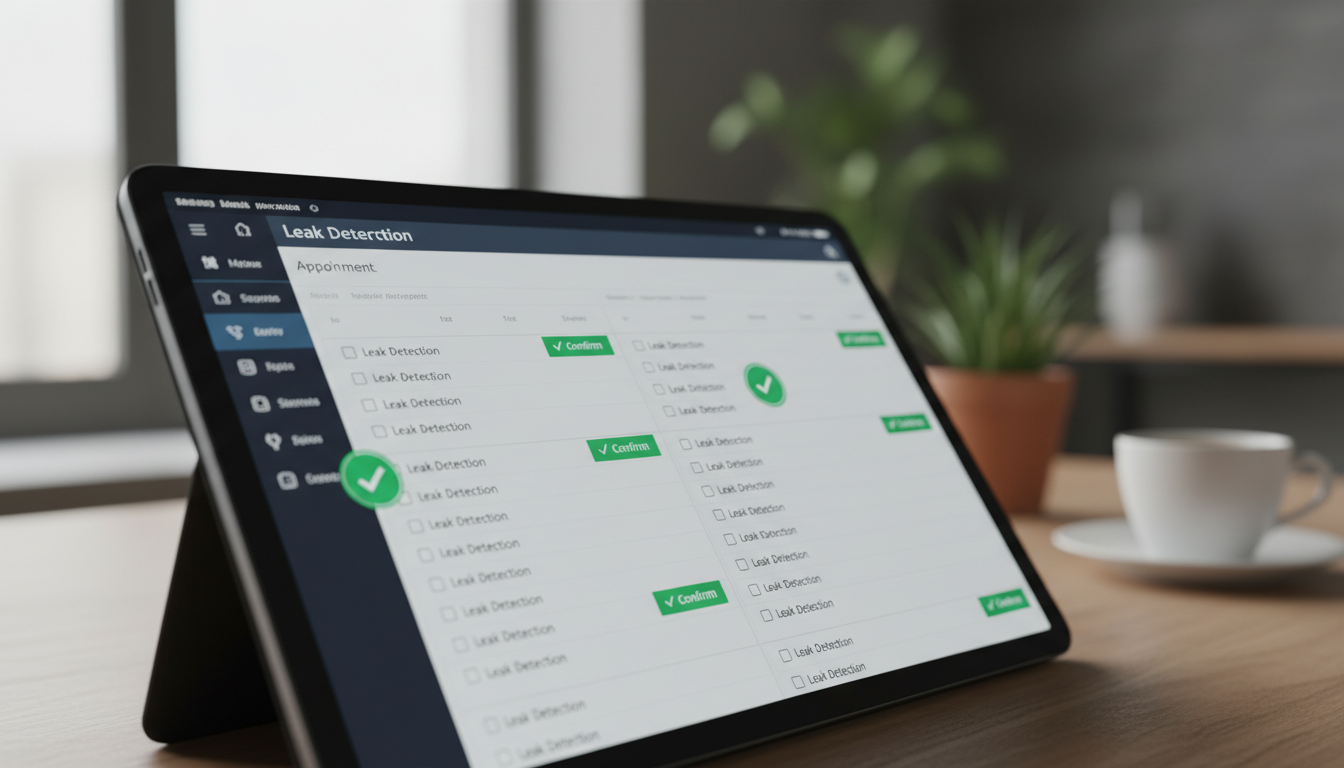
What Does a High-Converting Leak Detection Booking Process Actually Look Like?
Here's the standard that wins jobs: Answer within three rings. Confirm you handle leak detection. Ask about the symptoms and urgency. Check real-time availability. Offer two same-day time slots. Book the appointment before ending the call. Send confirmation via text within 60 seconds.
That entire process takes three minutes. But it requires someone who isn't crawling under a house, driving between jobs, or covered in pipe dope.
The best-performing plumbing companies script this process so every call follows the same pattern. The front office team doesn't improvise or "see what works" — they follow a proven sequence that maximizes conversions while gathering all necessary information for the field team.
Key elements include:
- Urgency acknowledgment: "Water leaks cause damage quickly — let's get you scheduled today."
- Service confirmation: "Yes, we have specialized leak detection equipment and can locate it without tearing up your walls."
- Immediate availability: "I'm looking at our schedule now. We can be there at 2 PM or 4:30 PM today — which works better?"
- Payment clarity: "Detection is $395, and if we find a leak and you authorize the repair, that fee applies to the total repair cost."
- Confirmation and next steps: "You're booked for 2 PM. I'm texting you our plumber's name, photo, and estimated arrival window right now."
Notice what's missing: callbacks, calendar checks, manager approvals, "let me see if we can fit you in." Every delay introduces an opportunity for the homeowner to call someone else.
How Do You Implement Same-Day Scheduling Without Overwhelming Your Field Team?
The concern is legitimate: if you start booking every leak detection call same-day, won't you overbook your team or create scheduling chaos? Not if your front office has real-time visibility into capacity and manages the calendar proactively.
This requires coordination between field teams and the front office. Plumbers provide morning and end-of-day updates on their schedule status. The front office blocks time for existing jobs, builds in buffer for overruns, and knows exactly how many emergency slots remain available.
When a leak detection call comes in, the front office doesn't promise arrival times they can't keep. They offer realistic windows based on current capacity. If same-day truly isn't possible, they offer first-thing-next-morning and explain why (e.g., "Our leak detection specialist is booked through 6 PM today, but you'd be our first appointment at 7 AM tomorrow").
Transparency maintains trust even when same-day isn't available. What kills trust is promising callbacks that never come or vague "we'll try to fit you in" responses.
Should You Dedicate a Plumber Specifically to Emergency Leak Detection?
For plumbing companies receiving more than eight leak detection calls per week, dedicating one plumber to emergency response dramatically improves conversion rates and revenue. This plumber handles only same-day emergency calls — leak detection, burst pipes, major backups — while the rest of the team focuses on scheduled work.
This specialization allows your front office to confidently promise same-day service without disrupting planned jobs. It also develops deep expertise in leak detection, improving job quality and speed. A plumber doing leak detection daily becomes significantly faster and more accurate than someone who does it occasionally.
The economics work because emergency calls command premium pricing. A dedicated emergency plumber billing $1,200–$1,800 per day in leak detection and urgent repairs generates more profit than that same plumber doing $800–$1,000 in scheduled maintenance work.
Frequently Asked Questions About Leak Detection Lead Conversion
How quickly do I need to respond to leak detection calls to win the job?
Answer within 5 minutes to maintain competitive conversion rates. According to InsideSales.com, lead response times beyond 5 minutes reduce conversion by 400%. For emergency services like leak detection, homeowners typically call 3-5 companies and book with whoever confirms an appointment first. If you're not answering calls live or returning them within minutes, you're losing 70-80% of these high-value jobs to faster competitors.
What's the average profit margin on leak detection jobs compared to other plumbing services?
Leak detection services typically carry 40-60% profit margins compared to 25-35% for standard repairs, according to PHCC data. The combination of specialized equipment, urgency pricing, and follow-on repair work makes these among the most profitable calls a plumbing company receives. Detection alone bills $300-$500, with total job value including repairs ranging from $1,000-$2,500.
Can I still win leak detection jobs if I can't offer same-day service?
Conversion rates drop to 15-20% when you can't offer same-day appointments, versus 65-75% with same-day availability. If genuinely unable to accommodate same-day requests, offer first-available next-morning slots and explain exactly why (dedicated leak detection specialist fully booked). Transparency maintains trust better than vague promises. Some homeowners will wait for quality and expertise, but most will book whoever arrives fastest.
Should I charge more for same-day leak detection appointments?
Most successful plumbing companies charge 15-25% premiums for same-day emergency service, and homeowners with active leaks rarely object. The key is transparent pricing stated during booking: "Our emergency leak detection rate is $395 for same-day service, and that fee applies toward the repair if you authorize the work." This positions the premium as urgency pricing rather than price gouging, and the credit toward repairs softens the impact.
How many leak detection leads should a plumbing company expect monthly?
Volume varies significantly by market size and marketing activity, but established plumbing companies in mid-sized markets typically receive 15-30 leak detection calls monthly. Companies with strong digital marketing and positive reviews may see 40-60 calls monthly. The key metric isn't call volume alone but conversion rate — capturing 70% of 20 calls generates more revenue than capturing 20% of 50 calls.
What's the best way to track how many leak detection leads I'm actually missing?
Request detailed call logs from your phone provider showing all incoming calls, including those that rang but weren't answered and went to voicemail. Compare total leak detection calls (identified by post-call categorization of voicemails and answered calls) to jobs actually booked. The gap represents lost revenue. Most plumbing companies discover they're missing 40-60% of leak detection calls during business hours simply because they're busy on job sites.
Stop Losing High-Value Leak Detection Jobs to Faster Competitors
Plumbing leak detection leads represent some of the highest-margin work your company can book — if you can convert them. The difference between capturing 70% versus 20% of these calls equals $100,000-$200,000 in annual revenue for most plumbing companies. That gap comes down to a single operational factor: whether you can answer calls immediately and book same-day appointments.
You don't need better marketing, more advertising spend, or premium leak detection equipment to win these jobs. You need a front office that treats every leak detection call like the emergency it actually is. That means answering within seconds, checking availability in real-time, and confirming appointments before the homeowner hangs up.
The solution isn't working longer hours or installing call forwarding to your personal cell phone. It's having a dedicated team handling your front office while you focus on the actual plumbing work. BookAllLeads provides a full front office team — answering calls, booking appointments, and managing your schedule 24/7. No software to learn, no staff to manage, live in 5 days. Your plumbers stay on job sites. Your front office captures every lead.
Stop losing leak detection jobs to competitors whose only advantage is answering the phone faster. Talk to our team about how a dedicated front office converts more plumbing leak detection leads into booked revenue.
John Edmonds is a native Texan and military combat veteran. He founded Book All Leads after identifying a critical gap in the service industry: business owners losing revenue not from lack of skill, but because no one was handling the calls, follow-ups, reviews, and payments while they were busy doing the work.
View LinkedIn Profile →