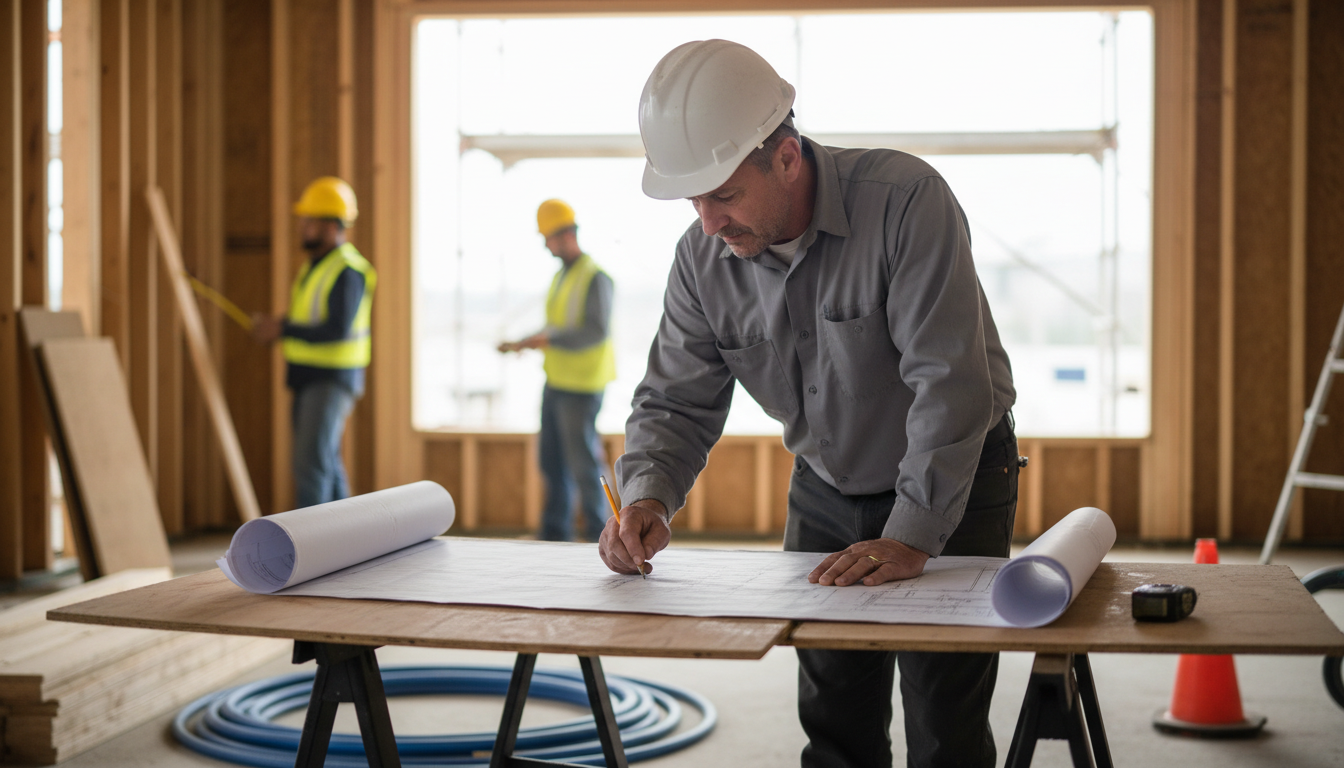
Most plumbing companies lose new construction bids before they even submit pricing — not because their rates are too high, but because builders can't reach them when they need answers, and their bids arrive formatted like residential quotes instead of what general contractors actually need to see. Winning plumbing new construction leads requires responsive communication during the pre-bid phase and builder-specific proposal formatting that addresses scheduling, change order procedures, and draw payment terms upfront.
Why Plumbing Companies Keep Losing Builder Contracts They're Qualified to Win
The disconnect happens in the 48 hours before bid deadline. A general contractor calls six plumbers for a multi-unit project. Three don't answer. Two answer but say they'll "get back to you" and never do. One responds immediately, asks the right questions about fixture schedules and rough-in timing, and gets the plans the same day. That last plumber wins the bid 70% of the time — even if their price is 8-12% higher than competitors who ghosted.
According to Construction Dive, general contractors cite subcontractor communication failures as the primary cause of project delays in 43% of residential new construction. When a builder is assembling a bid package with tight deadlines, they're not just comparing your plumbing price against others — they're evaluating whether you'll be responsive during the actual build.
Here's what most articles won't tell you: Builders don't expect the lowest price. They expect predictability. A $47,000 plumbing bid from someone who answers their phone and has done similar projects beats a $43,000 bid from someone they had to chase down. The builder knows that $4,000 difference disappears the first time a plumber doesn't show up for rough-in inspection and delays drywall by three days.
The Real Reason Your Plumbing Construction Bids Get Ignored
Your bid gets rejected because it looks like every residential service quote you send homeowners: line-item pricing for materials and labor, a total at the bottom, and a signature line. Builders need completely different information, and when your proposal doesn't include it, they assume you don't understand commercial new construction work.
What Builders Actually Need to See in Your Bid
General contractors reviewing plumbing builder contracts are trying to solve a scheduling puzzle and a cash flow problem. Your bid needs to address both. Include:
- Milestone schedule with dependencies: "Rough-in crew available 3 days after framing inspection" tells them when to expect you
- Draw payment structure: Most residential plumbers want 50% upfront — builders work on progress payments tied to construction loan draws
- Change order procedure and rates: Define T&M rates for changes and response time for pricing additive work
- Warranty terms specific to spec vs. custom: What's covered for 12 months vs. what requires owner maintenance
- Fixture allowances with upgrade pricing: Builders often let buyers choose fixtures — your bid should show base allowance and your markup on upgrades
A plumbing company in Austin submitted the same proposal format they used for remodels to a 12-home subdivision project. No response. They reformatted it to show rough-in and finish schedules separately, included their standard fixture allowance, and specified net-30 payment terms tied to builder draws. Same pricing, different format. They won the job and became the preferred plumber for that builder's next 40 homes.
How Missed Calls Cost You Builder Relationships Before You Know They Existed
Builders operate on compressed timelines. When they're assembling a bid or starting pre-construction, they need answers within hours, not days. If you miss their call, they move to the next plumber who answers. You never know the opportunity existed.
According to Vendasta, 78% of customers buy from the business that responds first, not necessarily the cheapest or most qualified. In commercial construction, that number is even higher because bid deadlines are non-negotiable. A builder calling for a quote on a Thursday for a Monday bid opening isn't going to chase you down — they'll work with whoever picks up the phone.
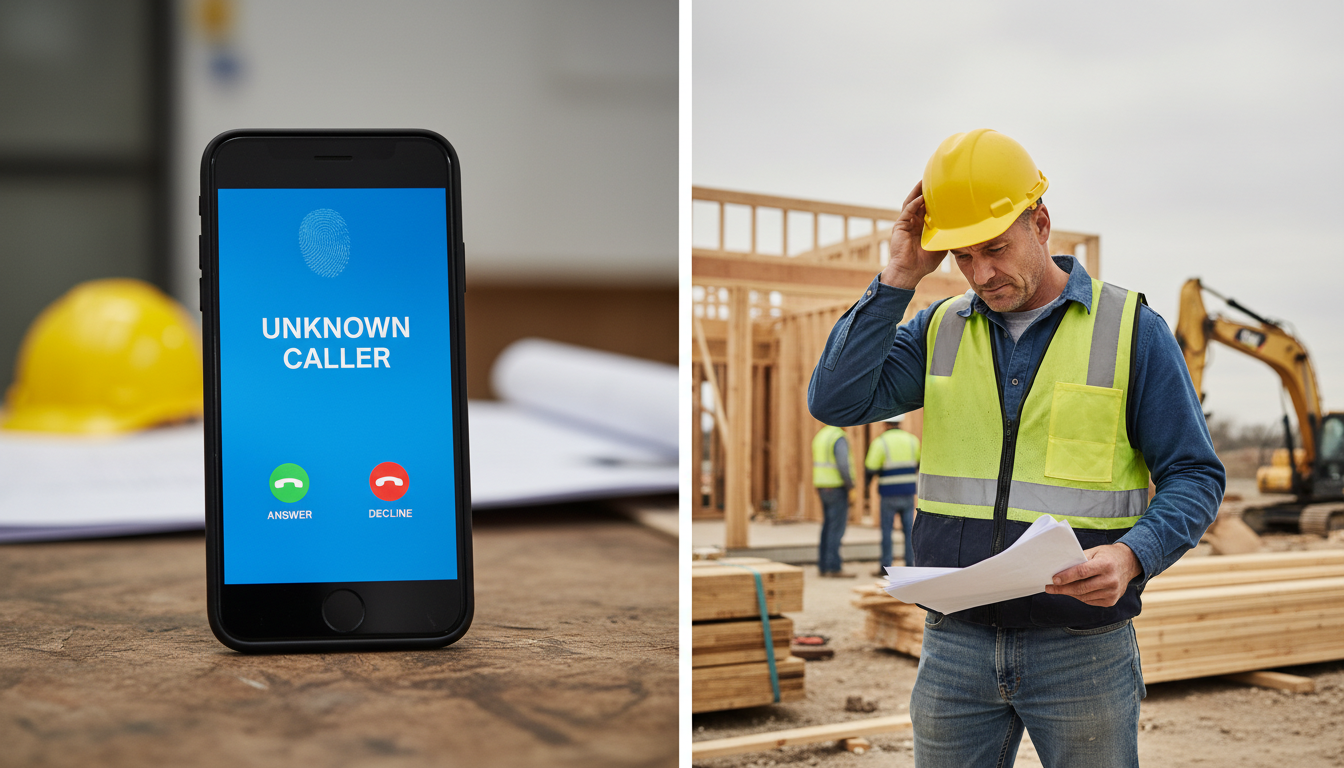
This is exactly why established plumbing companies struggle to break into new construction despite having the crew capacity and technical skills. They're running service calls all day, and when a builder calls at 2 PM about a potential 6-unit project, the call goes to voicemail. The builder doesn't leave a message — they call the next plumber.
That's where having a dedicated front office team changes everything. BookAllLeads puts six people on your phone lines 24/7 — someone answers every builder call immediately, captures the project details, and gets you the information you need to bid while the builder is still taking calls. You're not choosing between finishing a water heater install and winning a 12-home subdivision contract. Your team handles the call, you handle the bid, and the builder gets the responsiveness they need.
What General Contractors Wish Plumbers Understood About Builder Contracts
General contractors operate in a different world than residential service plumbing. Understanding how they think transforms how you position your bids and follow-up communication. Here's what they need from their plumbing subs but rarely say explicitly.
Why Builders Ghost Plumbers Who Submit Lowest Bids
The lowest bidder often gets cut first. Builders know that unrealistically low plumbing bids create problems six weeks into the project when the plumber realizes they're losing money and starts cutting corners or pushing for change orders on standard work. A builder managing eight trades across four active projects can't afford a plumber who's going to become a problem.
Competitive pricing matters, but so does demonstrating you understand new construction margins. If every other qualified plumber bid $38,000-$42,000 for rough-in and finish on a 2,400 sq ft custom home, and you bid $29,000, the builder assumes you either missed something major in the plans or you don't know how to estimate properly. Either way, you're a risk.
The Builder's Real Fear: Schedule Disruption
Builders lose money when trades don't show up on schedule. According to the National Association of Home Builders, scheduling delays cost builders an average of $1,600 per day on single-family construction due to carrying costs on construction loans and cascading delays across other trades. A plumber who doesn't show for rough-in inspection delays drywall, which delays HVAC finish, which delays the final inspection.
Your bid should address this directly. Include language like: "Rough-in crew scheduled within 3 business days of notification that framing passed inspection. Finish work scheduled within 2 business days of notification that drywall and paint are complete." This tells the builder you understand sequencing and won't be the trade holding up their schedule.
How to Win Plumbing New Construction Leads Without Competing on Price Alone
The path to consistent builder relationships starts with becoming the easy choice instead of the cheap choice. Builders will pay more for plumbers who make their job easier — you just need to demonstrate you're that plumber before they award the contract.
Build Your Builder Bid Package Template Now
Stop reformatting proposals from scratch for every commercial job. Create a standardized new construction bid template that includes everything builders need to see. At minimum:
- Cover page with project name, builder name, date, and your license numbers
- Scope of work section that references plan sheets and spec sections by number
- Pricing broken into rough-in and finish phases
- Milestone schedule with crew availability windows
- Payment terms compatible with construction draws (net-30 from draw funding, not net-30 from invoice)
- Change order process with pricing structure (T&M rates or percentage markup)
- Warranty coverage with specific exclusions
- Contact information for project manager and after-hours emergency line
This template positions you as a professional commercial plumber, not a residential service company trying to bid new construction work.
Answer Fast, Then Follow Up Faster
Speed determines who gets invited to bid and who gets forgotten. When a builder calls about a project, your response time in the first hour matters more than your response quality two days later. Get back to them within 60 minutes — even if it's just to say you received the plans and will have a bid ready by their deadline.
Then follow up the day after submitting your bid. Not to ask if they received it — they did. Call to ask if they need any clarifications on your scope or pricing. This positions you as engaged and available, which is exactly what builders want in their subs. Many contractors avoid this call because they think it seems pushy. Builders interpret it as professional communication.
Leverage Your Completed Projects as Social Proof
Include photos of similar completed projects in your bid package. A builder reviewing five plumbing bids for a 10-unit townhome project will remember the one that showed photos of your crew's work on an 8-unit project last year. It's visual proof you've successfully handled similar scope and scale.
Better yet, include builder references. Get permission from two or three general contractors you've worked with to use them as references, then include their contact information in your bid package. Most plumbing companies never do this — when you do, you stand out immediately.

Why Most Plumbers Can't Scale Builder Relationships (And How to Fix It)
Winning one builder contract is possible through hustle and availability. Winning and servicing five simultaneous builder relationships requires operational capacity most owner-operators don't have. The breakdown happens in communication and scheduling coordination.
You're managing service calls, handling residential remodels, coordinating your crew across multiple jobs, and somehow you're supposed to also answer every time a builder calls about fixture delivery, inspection scheduling, or change order pricing. Something falls through the cracks — and when it does with a builder, you don't get invited to bid their next project.
This is where you need to calculate your losses from missed builder calls and delayed bid responses. Every builder who moves on to another plumber because you couldn't call back the same day represents 10-50 homes worth of future work you'll never see. The opportunity cost is enormous.
The solution isn't working longer hours or hiring another field plumber. You need dedicated front office capacity — people whose only job is answering calls, coordinating with builders, tracking bid deadlines, and making sure nothing falls through the communication cracks. That's operational infrastructure, not field labor.
The Builder Relationship Advantage: Long-Term Revenue vs. One-Time Jobs
Here's the business case for prioritizing plumbing commercial new construction work: A single builder relationship can generate $180,000-$400,000 in annual revenue across 8-15 homes, and that builder will use you for 3-7 years if you don't mess up. Compare that to residential service work where you're constantly marketing for the next customer.
According to IBISWorld, plumbing contractors with 30% or more revenue from commercial and new construction work show 23% higher profit margins than those focused exclusively on residential service and repair. The work is more predictable, the payment terms are clearer, and you're not chasing small jobs scattered across town.
But that advantage only materializes if you can handle the communication volume and responsiveness builders demand. One missed call during pre-construction costs you the entire relationship, not just one job. Your front office becomes your competitive advantage.
Common Mistakes That Kill Your Builder Reputation Fast
Builders have long memories. Make one of these mistakes and you won't get invited back, regardless of how good your plumbing work was.
Changing your price after bid award. If you missed something in the plans, that's your problem unless it's a legitimate owner change or plan revision. Builders budget based on your number — when you try to renegotiate after award, you've made their project finances a mess.
Missing your scheduled start date. The builder coordinated other trades around your promised arrival. When you don't show up because you're still finishing another job, you've delayed their entire schedule. They'll finish the project with you, then never call again.
Being unreachable during the build. Builders need answers about fixture specs, change order pricing, and rough-in inspection timing during business hours. If they can't reach you or get return calls within a few hours, you become a scheduling liability.
Submitting vague change order pricing. "Additional work TBD" doesn't fly. When scope changes, provide specific pricing within 24 hours or you lose credibility as a professional commercial sub.
Every one of these failures traces back to communication and operational capacity. The plumbing work itself is usually fine — it's the business infrastructure around the work that determines whether builders trust you with their next project.
How to Ask Builders for Repeat Work Without Sounding Desperate
You've completed a project successfully. The builder is happy. Now what? Most plumbers wait for the builder to call them for the next job. That's passive and leaves money on the table.
Instead, two weeks after final inspection, reach out directly: "We finished up the Oak Street project clean and on schedule. I know you've got other projects in development — we've got capacity for another start in the next 30-45 days if you need a reliable plumbing sub." This is professional business development, not begging for work.
Better yet, ask if you can quote their next three projects at once. Many builders plan subdivisions in phases. If you can lock in pricing for phase 2 and 3 while you're completing phase 1, you've secured 6-12 months of predictable revenue and the builder has locked in their plumbing costs.
What Actually Wins Builder Loyalty Long-Term
Builders stay loyal to subs who eliminate uncertainty. They're not looking for the friendliest plumber or the one who buys lunch. They want the plumber who shows up on the scheduled day, completes rough-in before inspection deadline, and answers calls the same day.
Do that consistently across three projects and you become their go-to plumber. They'll call you first for bids, they'll defend your pricing to owners when someone complains you're not the cheapest, and they'll refer you to other builders they know. You've become a trusted partner, not a replaceable vendor.
That trust compounds. A builder doing 12 homes per year who uses you exclusively represents $240,000-$360,000 in annual revenue. If they refer you to two other builders of similar size, you've built a $700,000+ annual new construction business line — all from being reliably responsive and operationally solid.
Frequently Asked Questions
How much should I mark up materials for new construction vs. residential service work?
New construction material markups typically run 10-15%, lower than the 25-40% common in residential service work. Builders know material costs and will question inflated markups. Your profit comes from labor efficiency across multiple identical units, not from marked-up fixtures. Price materials competitively and make your margin on labor productivity.
Should I offer builders a volume discount for multi-unit projects?
Yes, but frame it as efficiency pricing, not desperation discounting. Your per-unit cost legitimately drops on units 3-10 because your crew learns the layout and fixture placement. A 6-8% reduction from unit 1 to units 2-6 reflects real efficiency gains and makes builders feel they're getting value for giving you volume work.
How do I handle builders who want net-60 or net-90 payment terms?
Push back professionally. Standard construction terms are net-30 from draw funding. Explain that you're paying your suppliers and crew weekly, and extended terms create cash flow problems that ultimately get priced into future bids. Most builders will accept net-30 if you're firm about it. If they insist on net-60, add 3-4% to your price to cover financing costs.
What's the best way to find builders who need plumbing subs?
Visit permit offices and ask who's pulling the most residential permits. Those builders have active projects and need subs. Attend local builder association meetings — not to sell, but to learn who's building what. Introduce yourself to project superintendents on active job sites in your area. The best builder relationships start with in-person conversations, not cold emails.
How many builder relationships can one plumbing company realistically manage?
Most plumbing companies with 4-8 field staff can reliably service 3-5 active builder relationships simultaneously, assuming each builder averages 8-15 starts per year. Beyond that, you need dedicated scheduling coordination and more crew capacity. Quality matters more than quantity — three builders who trust you completely generate more revenue than eight builders who see you as interchangeable.
Should I bid new construction at the same hourly rate as service work?
No. Your loaded labor rate for new construction should be 15-25% lower than service work because you're not dealing with unknown conditions, customer relations overhead, or travel time between jobs. However, your total project margin can be similar because of volume efficiency. Price the project, not the hours, and make sure your total margin hits your targets.
Stop Losing Builder Contracts You're Qualified to Win
Winning plumbing new construction leads comes down to two operational capabilities most owner-operators don't have: answering every builder call immediately, and formatting bids like a professional commercial sub instead of a residential service plumber. The technical work is the same — it's the business infrastructure that determines whether builders see you as reliable or risky.
Every missed builder call is a lost relationship worth 10-40 homes. Every slow bid response is another builder moving on to a more responsive plumber. You can keep losing these opportunities because you're too busy running service calls, or you can build the front office capacity that lets you compete for high-value commercial work without sacrificing your existing business.
BookAllLeads gives you a full front office team answering calls, coordinating with builders, and making sure nothing falls through the cracks — live in five days, no software to learn, no contracts locking you in. You focus on bidding and building. Your team handles everything else.
John Edmonds is a native Texan and military combat veteran. He founded Book All Leads after identifying a critical gap in the service industry: business owners losing revenue not from lack of skill, but because no one was handling the calls, follow-ups, reviews, and payments while they were busy doing the work.
View LinkedIn Profile →