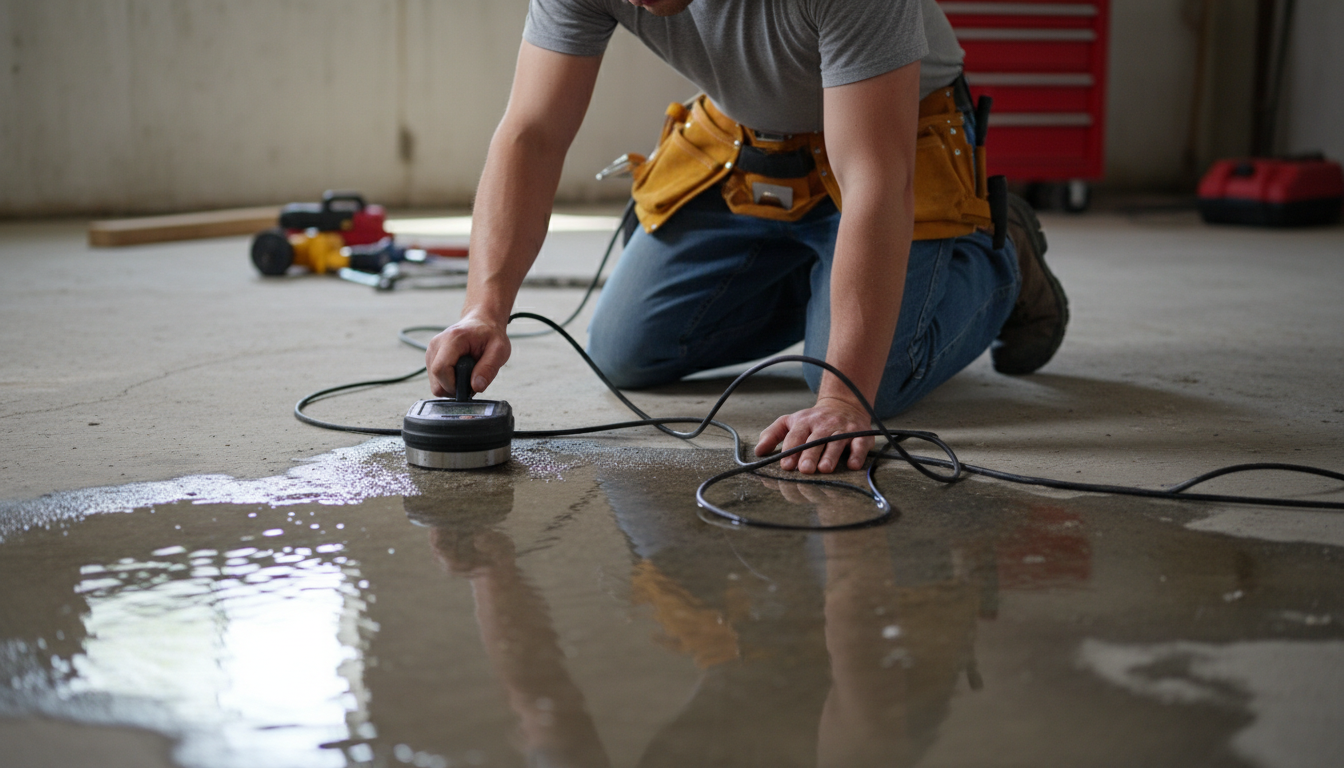
Plumbing slab leak leads convert to booked jobs within the first 15 minutes of the homeowner's search, or they go to the competitor who picks up their phone. A cracked foundation pipe isn't something a homeowner shops around for—they're standing in water, watching their foundation crack, or staring at a $4,000 water bill. The plumber who answers first books the job. The plumber who calls back in an hour doesn't get a second chance.
This isn't about marketing spend or website quality. You're losing slab leak jobs—some of the most profitable emergency calls in residential plumbing—because your phone rings while you're under a sink, and the homeowner moves to the next number before your voicemail finishes playing.
Why Do Slab Leak Jobs Go to the First Plumber Who Answers?
Slab leak jobs go to the first plumber who answers because homeowners are in crisis mode, not comparison mode. When someone searches for slab leak detection, they've already noticed warm spots on the floor, heard running water with everything turned off, or received a utility bill that's triple the normal amount. They're not researching options—they're trying to stop an emergency before it destroys their home.
According to PHCC (Plumbing-Heating-Cooling Contractors Association), emergency plumbing calls have a conversion window of under 20 minutes on average. After that, the homeowner has either booked with someone else or given up and called their insurance company for a referral.
The emotional state matters. A homeowner who discovers a slab leak isn't thinking about competitive pricing or Yelp ratings. They're terrified about foundation damage, mold growth, and whether their homeowner's insurance will even cover it. The plumber who picks up the phone and says "I can be there in 90 minutes" gets the job. The plumber who returns the call later that afternoon gets nothing.
Here's what most articles won't tell you: Slab leak jobs have a higher average ticket than almost any other residential plumbing call—often $2,500 to $8,000 depending on the location and repair method—but they also have the shortest decision window. You're competing in a market where speed is the entire competitive advantage, not expertise or price. Homeowners assume every licensed plumber can find and fix the leak. They book with whoever makes them feel like help is on the way immediately.
What Happens During the First Five Minutes of a Slab Leak Search
The homeowner Googles "plumber slab leak" or "foundation leak repair" and calls the first three to five numbers they see. The first plumber who answers a live human voice and confirms availability gets the address and the booking. The rest get voicemail boxes or—worse—ringing phones that no one picks up.
Research from InsideSales.com shows that response times over five minutes reduce lead conversion by 400%. In high-urgency trades like emergency plumbing, that window shrinks even further. By the time you return a missed call from a slab leak lead, they've already scheduled someone else to come out, often within the hour.
The Real Cost of Missing a Slab Leak Call
Missing a slab leak call costs you an average of $4,200 in immediate revenue, plus the lifetime value of a customer who will need ongoing plumbing service, remodels, and referrals. Every missed call is a homeowner who remembers that your company wasn't there when they needed you most—and tells their neighbors the same thing.
Slab leaks typically require detection, access (breaking through concrete or tunneling), pipe repair or rerouting, and restoration. The average residential slab leak repair runs between $2,500 and $8,000 depending on the location and method. According to HomeAdvisor, the national average for slab leak repair is $4,200—before factoring in additional work like flooring replacement or mold remediation that homeowners often request from the same contractor.
But the real cost isn't just the single job. Homeowners who experience a slab leak are statistically more likely to invest in whole-home repiping, water line replacements, and regular plumbing maintenance after the trauma of foundation damage. They're high-value customers. And they're booking with the plumber who answered their emergency call.
Why Slab Leak Leads Don't Wait for Callbacks
Slab leaks escalate. A homeowner who discovers a warm spot on their floor at 9 a.m. might see visible water pooling by noon. They can hear water running inside the slab. Their water meter is spinning even with every fixture off. This isn't a "get a few quotes" situation—it's a race to stop damage before it compounds.
When you call them back two hours later, they've already had a plumber show up, run the detection equipment, give them a price, and start breaking concrete. You're not competing anymore. You're just confirming that your business isn't reliable in emergencies.
How Most Plumbing Companies Handle Slab Leak Calls (and Why It Fails)
Most plumbing companies handle slab leak calls the same way they handle every other inbound lead: the phone rings, everyone's in the field, it goes to voicemail, and someone follows up when they're between jobs. That approach works fine for a leaky faucet or a water heater quote. It loses nearly every slab leak job to competitors who staff their phones during business hours.
The typical workflow looks like this: homeowner calls at 10:30 a.m. The owner and both techs are on jobs. The call goes to voicemail. The owner checks messages around 12:45 p.m. during lunch, sees the slab leak inquiry, and calls back. The homeowner's phone rings twice before going to voicemail—because they're already talking to the plumber who's at their house running a line trace.
Some companies try to solve this by hiring a part-time office person or a family member to answer calls. That works until that person is on another line, at lunch, or calls in sick. Slab leak leads don't arrive on a schedule. They come in when the homeowner notices the problem—which is often mid-morning after they've been up for a few hours, or early evening when they get home from work and step on a wet carpet.
BookAllLeads puts a full front office team on your phones—six roles working in shifts so your line is always covered. No software to learn, no hiring, no training. Live in five days. When a slab leak call comes in, a real person answers, books the appointment into your actual calendar, collects the service address and details, and sends the lead directly to your phone. The homeowner never knows you're solo in a crawl space—they just know someone answered and help is coming.
What It Takes to Win Slab Leak Jobs Consistently
Winning slab leak jobs consistently requires answering every call within three rings and booking the appointment before the homeowner hangs up. That's it. Not better SEO, not a shinier website, not cheaper pricing. Just a live human voice that says "I can help you" and gets the address on the calendar.
The mechanics are simple: when your phone rings, someone picks up. They ask the right questions—where's the leak, is there visible water, how long has this been happening—and they schedule the soonest available slot. The homeowner gets a confirmation text and a call when you're on the way. You show up and run the detection. You book the repair.
But executing that consistently means someone is always available to answer. Not "most of the time." Not "during business hours unless we're busy." Every single call. Because slab leak leads don't call back, and they don't wait.
Why Plumbing Emergency Response Time Determines Your Market Share
Plumbing emergency response time determines your market share because homeowners in crisis book with whoever responds first, not whoever's cheapest or closest. A plumber 25 minutes away who answers the phone beats a plumber five minutes away who doesn't. Speed to answer is the entire competitive moat in high-urgency residential plumbing.
Every additional ring before someone picks up your phone is a chance for the homeowner to hang up and dial the next number. Every minute you spend in voicemail is a minute your competitor spends booking the job. Calculate your losses from missed calls and you'll see that the revenue gap between answering every call and answering most calls is often six figures annually for a busy plumbing company.

The One Change That Captures More Slab Leak Revenue Than Better Marketing
Answering every inbound call live captures more slab leak revenue than better marketing, better reviews, or better ad spend combined. Marketing gets the phone to ring. Answering the phone books the job. If you're spending money to generate plumbing slab leak leads but losing them because no one picks up, you're paying for your competitor's job board.
Consider the math: if you run local service ads and Google Ads targeting slab leak keywords, you might pay $80 to $150 per click in a competitive metro market. If that click turns into a call, and that call goes to voicemail, you've just paid $120 for a lead that books with the plumber who answered their phone. Do that five times a week and you've spent $2,400 a month generating revenue for someone else.
The solution isn't to stop marketing. It's to make sure every dollar you spend on lead generation actually turns into a booked job. That means your phone is covered—by a real person who knows how to book emergency plumbing calls—from 7 a.m. to 7 p.m. minimum, and ideally 24/7 for after-hours emergencies.
What Happens When You Answer Every Slab Leak Call
When you answer every slab leak call, your close rate on emergency leads climbs above 80%. Homeowners stop shopping. They stop calling other plumbers. They give you the address, ask when you can be there, and wait. You show up, assess the situation, quote the work, and start the job—often the same day.
Repeat business follows. A homeowner who books you for a slab leak emergency remembers that you were there when they needed help. When they need a water heater replaced, a toilet repaired, or a whole-home repipe, they call you first. According to research from Harvard Business Review, repeat customers in service industries generate 67% higher lifetime value than one-time customers. Slab leak jobs are the highest-stakes entry point into long-term customer relationships.

Real Example: How One Plumbing Company Stopped Losing Foundation Leak Jobs
A three-truck plumbing company in Austin was spending $6,000 a month on Google Ads targeting slab leak and foundation leak keywords. They were getting 15 to 20 calls a week—but booking only three to four jobs. The owner assumed their pricing was too high or their reviews weren't strong enough. The real problem was that no one was answering the phone.
The owner and two lead techs were always in the field. Calls went to voicemail. By the time someone returned the call—usually within an hour—the homeowner had already booked another plumber. The owner tried hiring his sister-in-law to answer phones part-time, but she couldn't cover the full day, and emergency calls came in during her off hours.
After switching to a front office team that answered every call live, their close rate on slab leak leads jumped from under 20% to 78% within the first month. Same ad spend. Same market. Same pricing. The only change was that every inbound call was answered by a real person who booked the appointment immediately. Revenue from slab leak jobs alone increased by $18,000 in the first 30 days.
Why Voicemail Doesn't Work for High-Urgency Plumbing Leads
Voicemail doesn't work for high-urgency plumbing leads because homeowners in crisis interpret an unanswered phone as unavailability. They don't leave a message and wait—they assume you're too busy to help them and they move on to the next plumber. In their mind, if you can't answer the phone, you can't send a truck.
Even if you return the call within 10 minutes, the homeowner has often already dialed two or three other companies. The one who picked up first has already started the intake process, confirmed a time window, and sent a confirmation text. By the time you call back, you're interrupting a conversation with your competitor.
Some plumbers use after-hours answering services that take messages and forward them via email or text. That's better than nothing for non-emergency inquiries, but it doesn't solve the slab leak problem. Homeowners don't want to leave a message with a generic service—they want to talk to a plumber's office, give their address, and know someone is coming. A message service that says "I'll pass this along" doesn't create confidence in an emergency.
How Competitors Who Answer First Control Your Local Market
Competitors who answer every call first eventually dominate local search visibility, because Google's local ranking algorithm rewards businesses with higher conversion rates and more completed transactions. When homeowners consistently book with the same plumber—because that plumber always answers—Google notices the pattern and ranks that business higher in map results and local pack listings.
It's a compounding advantage. The plumber who answers first books more jobs. More booked jobs lead to more reviews. More reviews and more completed service transactions improve local rankings. Better rankings generate more inbound calls. And if you're still sending half those calls to voicemail, the cycle accelerates in your competitor's favor.
What Homeowners Actually Want When They Call About a Slab Leak
Homeowners calling about a slab leak want three things: confirmation that someone can come out today, reassurance that the problem can be fixed, and a rough idea of cost. They don't need a detailed diagnosis over the phone—they just need to know you take them seriously and you're on the way.
The intake conversation is simple. "Where's the leak located? Are you seeing water or just hearing it? How long has this been happening? Okay, I can have someone there by 2:30 this afternoon. You'll get a text confirmation in the next few minutes, and the plumber will call when he's 15 minutes out." That's the entire conversation. It takes 90 seconds, and it books the job.
What kills the booking is hesitation. If the person answering the phone has to say "let me check the schedule and call you back," the homeowner assumes you're not taking them seriously. They hang up and call the next number. By the time you call back with availability, they've already committed to someone who gave them an answer immediately.
Why "We'll Call You Right Back" Loses Every Slab Leak Job
Saying "we'll call you right back" to a slab leak lead is the same as saying "we're not sure we can help you." Homeowners don't hear "we're checking availability"—they hear "you're not a priority." They thank you politely and hang up, then they call a plumber who books them on the spot.
The fix is simple: whoever answers your phone needs live access to your calendar and the authority to book emergency appointments without waiting for approval. That might mean using shared calendar software, or it might mean trusting your front office team to make scheduling decisions. Either way, the homeowner needs a confirmed time before they hang up, or the call is wasted.
How to Know If You're Losing Slab Leak Revenue
If you're running ads or SEO targeting slab leak keywords but your booked jobs don't match your inbound call volume, you're losing revenue to missed or poorly handled calls. The diagnostic is straightforward: compare your total inbound calls (from call tracking or phone records) to your booked appointments for the same period. If the gap is larger than 20%, you're leaving money on the table.
Check your voicemail log. If you're getting three to five voicemails a week from homeowners asking about slab leaks or foundation leaks, those are jobs you didn't book. Each one represents $2,500 to $8,000 in lost revenue, plus the lifetime value of the customer relationship.
Look at your callback conversion rate. Of the calls you return after missing the initial inbound call, how many actually turn into booked jobs? If it's under 30%, that tells you the homeowner moved on before you had a chance to compete. The competitor who answered first already won.
Frequently Asked Questions
Why do slab leak jobs convert so much faster than other plumbing leads?
Slab leak jobs convert faster because they're true emergencies with visible or audible evidence of ongoing damage. Homeowners aren't researching or comparing—they're trying to stop water from destroying their foundation. The plumber who answers first and confirms availability gets the job, often within minutes of the initial call.
What's the average revenue from a slab leak repair job?
The average slab leak repair job generates between $2,500 and $8,000 depending on the leak location, access method (jackhammering the slab vs. tunneling), and scope of pipe repair or rerouting. According to HomeAdvisor, the national average is $4,200, though complex jobs in metro markets often exceed $6,000.
How long do homeowners wait before booking another plumber?
Homeowners calling about a slab leak typically book with another plumber within 15 to 20 minutes of their initial search. Research from InsideSales.com shows that response times over five minutes reduce conversion rates by 400% in high-urgency service categories. If you don't answer immediately, you're unlikely to get a second chance.
Can I compete for slab leak jobs without 24/7 phone coverage?
You can compete during your coverage hours, but you'll lose after-hours emergency calls to competitors who answer nights and weekends. Many homeowners discover slab leaks in the evening when they get home from work. If your phones shut off at 5 p.m., those calls go to the next plumber on the list—and those jobs can be worth $5,000 or more.
Why do slab leak customers become high-lifetime-value clients?
Homeowners who experience a slab leak often invest in preventive upgrades like whole-home repiping, water line replacements, or leak detection systems to avoid future foundation damage. They also remember which plumber responded during their emergency. That trust translates into repeat business for water heaters, fixture repairs, and remodels—plus referrals to neighbors who saw the truck in their driveway.
What's the biggest mistake plumbing companies make with slab leak leads?
The biggest mistake is assuming that returning a missed call within an hour is fast enough. By the time you call back, the homeowner has already spoken to two or three other plumbers and booked the one who answered first. Slab leak leads convert immediately or not at all—there's no middle ground.
Stop Losing High-Value Plumbing Jobs to Competitors Who Just Pick Up the Phone
You're not losing plumbing slab leak leads because your competitors are better plumbers. You're losing them because your competitors answer their phones and you don't. Every missed call is $4,000 in revenue that books with someone else—someone who might not have your experience, your equipment, or your reputation, but who had the one advantage that mattered: they were available when the homeowner needed help.
The fix isn't complicated. Staff your front office so every call is answered live, every emergency lead is booked immediately, and every homeowner in crisis hears a confident voice that says "we'll be there this afternoon." Do that consistently and you'll stop losing slab leak jobs to competitors who just happened to pick up first.
If you're ready to stop paying for leads that book with other plumbers, talk to BookAllLeads about putting a full front office team on your phones. No software to learn, no contracts, live in five days. Just a team that answers every call and books every job while you're in the field doing the work that actually makes you money.
John Edmonds is a native Texan and military combat veteran. He founded Book All Leads after identifying a critical gap in the service industry: business owners losing revenue not from lack of skill, but because no one was handling the calls, follow-ups, reviews, and payments while they were busy doing the work.
View LinkedIn Profile →