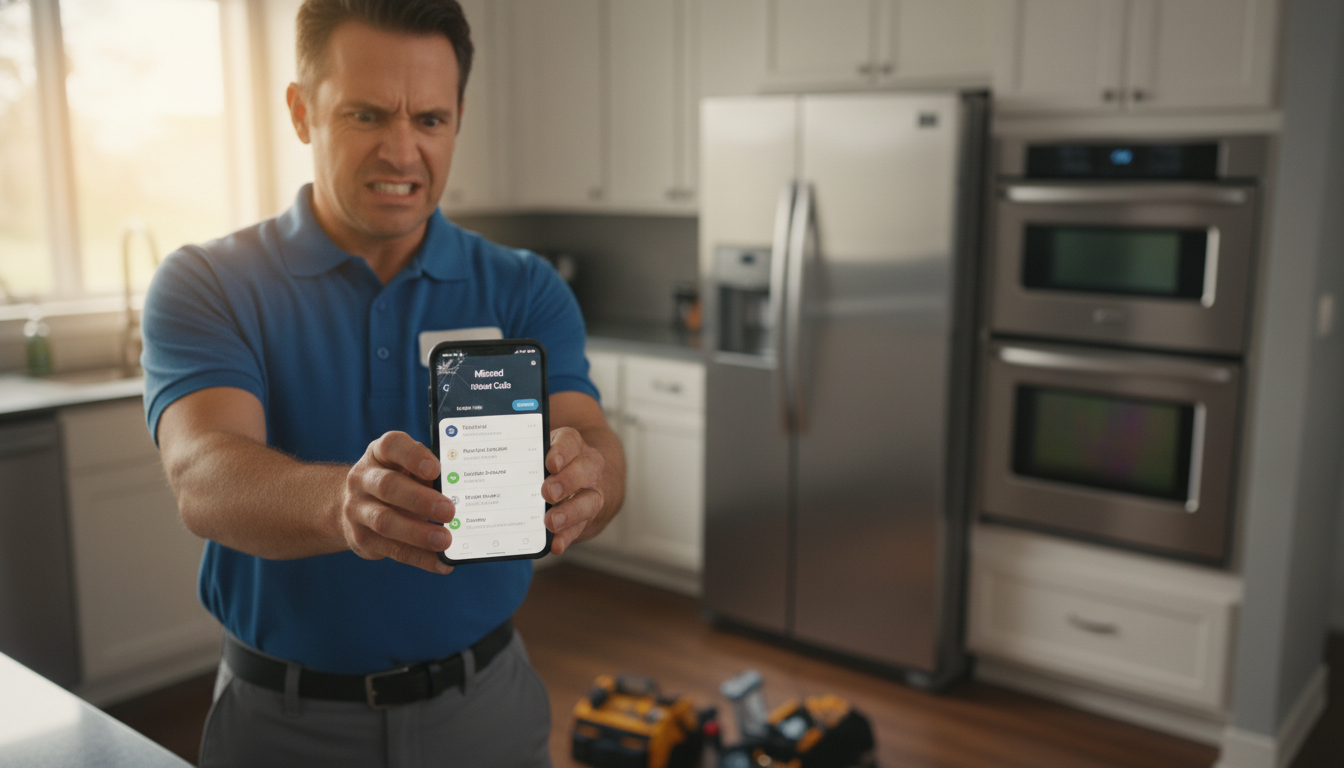
Appliance repair extended warranty companies reject independent repair shops not because of skill or certification, but because most can't meet the one operational standard that matters most: answering every call within minutes and booking jobs the same day. Home warranty providers route tens of thousands of service calls monthly to authorized partners who prove they can handle volume reliably. Most independent shops never even apply because they're too busy fixing appliances to realize they're missing the steadiest revenue stream in the business.
Why Extended Warranty Companies Won't Work With Most Repair Shops
Extended warranty providers like American Home Shield, Choice Home Warranty, and Select Home Warranty maintain networks of authorized service partners who handle repair calls for their policyholders. They require partners to answer calls within two rings, book appointments within 24 hours, and maintain strict customer satisfaction scores. Independent repair shops fail these requirements not because they lack technical skills, but because they can't manage the front office volume that comes with warranty partnerships.
According to Warranty Week, the home warranty industry processes approximately 4.2 million service requests annually, representing over $6 billion in repair work. That volume flows almost entirely through authorized service networks. Independent shops working retail customers average 8-12 service calls per week. Authorized warranty partners average 25-40 calls weekly from warranty companies alone—but only if they can prove operational reliability during the onboarding process.
Here's what most articles won't tell you: Warranty companies use "secret shopper" calls during your application period. They'll call your business 5-8 times at random hours over two weeks before approving you. Miss two calls or send one to voicemail, and your application gets flagged as "unreliable phone coverage." You'll never be told this was the rejection reason. The denial letter will cite "network capacity" or "service area coverage," but the real problem was your missed calls. This screening process eliminates roughly 60% of applicants before technical qualifications are even reviewed.
What Warranty Companies Actually Measure During Onboarding
Warranty providers use call response metrics as their primary screening tool because customer complaints about unreachable contractors cost them more than bad repairs. Their onboarding process tests whether your operation can handle their volume before sending you a single paying job.
The Three Metrics That Determine Approval
First-call answer rate: You must answer at least 95% of incoming calls on the first or second ring. Voicemail systems automatically disqualify you. Warranty companies track this through their own phone systems during test calls and use call tracking numbers once you're in the network. Most independent shops answer 60-70% of calls live during business hours—far below the threshold.
Same-day booking rate: From the moment you answer a call, you must confirm an appointment slot within the same conversation. "I'll call you back to schedule" fails the test. Warranty companies need real-time calendar access and immediate availability confirmation. Shops that schedule via text after the call or ask customers to "check back tomorrow" don't make it past the application period.
After-hours coverage: Warranty calls come in until 9 PM seven days a week, with emergency requests outside those hours. You don't need to perform emergency service outside business hours, but you must answer the phone, triage the call, and book the next available appointment. According to InsideSales.com, 42% of warranty-related service calls happen after 5 PM when homeowners get home from work. Shops that only answer during 8-5 business hours miss nearly half the available volume.

The Revenue You're Missing When Warranty Companies Pass You Over
Authorized appliance repair partners for major warranty companies receive an average of 25-40 service dispatches monthly once fully onboarded, with guaranteed payment within 30 days and no customer payment collection required. These jobs generate $85-$140 per service call depending on the appliance and issue, with parts markup included. That's $2,125 to $5,600 in predictable monthly revenue that doesn't require marketing spend, follows a standardized pricing structure, and arrives whether your phone rings with retail customers or not.
Independent shops working only retail customers spend 15-20 hours monthly on marketing, handle payment collection on every job, and see significant seasonal fluctuation in call volume. Summer months might bring 15 service calls; winter might bring 35. Warranty partnerships smooth that volatility and fill technician schedules during slow periods.
More significantly, warranty partnerships create capacity for retail premium services. When your schedule has a baseline of warranty jobs maintaining cash flow, you can be selective about retail work and focus on higher-margin appliance sales, maintenance agreements, and diagnostic services that warranty contracts don't cover. Shops with warranty partnerships report 30-40% higher annual revenue than comparable independents working retail only, according to data from the North American Retail Dealers Association.
But here's the operational reality: warranty volume doesn't work if you can't handle the front office demands. A missed warranty call costs you more than one job—it triggers a partner performance review that can suspend your entire account. Three missed calls in a month can remove you from the network entirely, cutting off that baseline revenue stream.
How to Calculate What Missed Warranty Opportunities Cost Your Business
Take your current monthly service call volume and calculate your losses from missed calls. If you're currently averaging 10-12 retail service calls per month and missing 30% of incoming calls, you're likely missing 4-5 additional bookings monthly. At $125 average ticket, that's $500-$625 in lost retail revenue. Now add the warranty opportunity cost: authorized partners receive 25-40 calls monthly at similar ticket averages. Missing that authorization because of call handling means forfeiting $3,000-$5,000 in baseline monthly revenue that doesn't depend on your marketing efforts.
How Independent Shops Become Authorized Partners
Getting approved as an authorized warranty service partner requires proving you can meet operational standards before technical qualifications matter. Start by solving the phone coverage problem that disqualifies most applicants, then approach warranty companies with demonstrated reliability metrics.
Fix Your Front Office Before You Apply
Warranty companies won't overlook operational weaknesses hoping your repair skills compensate. Your phone must be answered live during all business hours, with evening coverage until at least 9 PM and weekend availability for scheduling. Voicemail systems, answering services that take messages, and "I'll call you back" scheduling all fail their standards.
For most owner-operators running jobs during the day, this creates an impossible situation: answer the phone and interrupt customer jobs, or focus on service quality and miss calls. The shops that win warranty contracts solve this by separating front office operations from field operations entirely. Book All Leads provides a full front office team that answers every call live, books appointments directly into your calendar, and handles customer follow-up 24/7. Your technicians stay on jobs while warranty companies see professional phone coverage that meets their standards. You're live in five days, and there's no software for you to learn or manage.
Document Your Call Handling Metrics
Before applying to warranty networks, track your incoming call performance for 30 days. You need data showing: percentage of calls answered live within two rings, percentage of calls that result in booked appointments during the same conversation, and response time to after-hours calls. Most warranty applications ask for these metrics directly or verify them through test calls. Having documentation ready demonstrates operational maturity.
Target Regional Warranty Providers First
National warranty companies like American Home Shield and Choice Home Warranty have the strictest requirements and longest approval timelines. Start with regional home warranty providers serving your state or metro area. They process applications faster, have more flexible service area needs, and often accept newer partners willing to prove themselves with smaller job volumes initially. Once you've established performance history with regional providers, national networks become more accessible.
Maintain Licensing and Insurance at Required Levels
All warranty companies require general liability insurance with minimum $1 million coverage and workers' compensation if you have employees. Many require appliance-specific certifications from manufacturers like Whirlpool, GE, or Samsung, particularly for warranty work on newer appliances still under factory coverage that extends through home warranty policies. Budget $1,500-$2,500 annually for insurance and certification maintenance—this is non-negotiable for network participation.

What Happens Once You're Approved
Authorized warranty partners receive service dispatches through dedicated portals or phone calls from warranty company dispatch teams. Each dispatch includes customer contact information, appliance details, and covered repair scope. You contact the customer within the timeframe specified in your partner agreement—usually 2-4 hours—and schedule the service visit. After completing the repair, you submit invoices through the warranty company portal with parts documentation and labor details. Payment arrives within 14-30 days depending on the provider.
Most warranty companies start new partners with 5-10 dispatches monthly during a probationary period lasting 60-90 days. They're monitoring customer satisfaction scores, completion rates, and whether you're meeting their scheduling and communication standards. Partners who maintain 4.5+ star ratings and complete 95%+ of dispatched jobs move to higher volume tiers receiving 25-40 monthly calls.
The ongoing operational requirement remains the same as the application period: answer your phone reliably, book appointments immediately, and maintain professional customer communication. Partners get removed from networks for declining jobs, missing calls, or poor satisfaction scores more often than for repair quality issues. The warranty company needs reliability more than perfection.
Why Some Shops Stay Independent Despite the Revenue
Not every appliance repair business should pursue warranty partnerships. Warranty work typically pays 15-20% less per job than retail customers because warranty companies negotiate volume pricing. If your retail schedule stays fully booked year-round with higher-margin work, warranty contracts might not improve profitability. Shops specializing in high-end appliance brands or commercial equipment often earn more focusing exclusively on direct customers who value specialized expertise.
Warranty partnerships also require accepting the warranty company's pricing structure rather than setting your own rates. You're trading pricing control for volume and payment reliability. For shops in affluent areas where customers readily pay premium rates for immediate service, that trade-off may not make sense. But for most independent repair businesses facing seasonal fluctuation, unpredictable call volume, and slow-paying retail customers, warranty partnerships provide the revenue stability that allows business growth.
Frequently Asked Questions
Do I need special certifications to become an authorized warranty repair partner?
Most warranty companies require EPA Section 608 certification for refrigerant handling and manufacturer-specific certifications for brands you'll service. GE, Whirlpool, Samsung, and LG offer authorized servicer programs with training and certification. Some warranty providers accept equivalent experience in lieu of formal certifications, but manufacturer credentials significantly improve approval chances and unlock higher-paying repair tiers.
How long does warranty company approval typically take?
Regional warranty providers process applications in 2-4 weeks if your documentation is complete. National providers like American Home Shield or Choice Home Warranty take 4-8 weeks and include phone screening tests during that period. The timeline extends if you're missing required insurance documentation or certifications. Have everything ready before applying to avoid delays.
Can I decline warranty jobs I don't want to take?
Warranty companies track your acceptance rate, and declining more than 10-15% of dispatches triggers performance reviews. You can decline jobs outside your service area or for appliances you're not certified to repair, but repeatedly declining jobs you're qualified for will get you removed from the network. The partnership model assumes you'll accept the volume they send.
What happens if a warranty company doesn't pay an invoice?
Warranty companies have established payment processes with specific submission requirements. Most payment disputes result from incomplete documentation—missing parts receipts, unclear labor descriptions, or repairs exceeding pre-authorized amounts. Follow submission guidelines exactly and document everything with photos. Legitimate payment issues are rare with established warranty providers, but always check company reviews before joining a network.
Will warranty partnerships hurt my retail business reputation?
Some repair shops worry that warranty work—which often involves older appliances and cost-conscious customers—will dilute their brand. In practice, warranty and retail customers rarely overlap. Warranty customers are assigned to you; they're not choosing you based on reputation. Your retail brand remains separate. Many high-end repair shops maintain warranty partnerships specifically to keep technicians busy during slow periods while reserving premium scheduling slots for retail clients.
How do warranty companies decide which partner gets each service call?
Most warranty providers use geographic routing algorithms that assign calls to the closest available authorized partner. Partners with higher customer satisfaction ratings get priority when multiple qualified shops serve the same area. Response time also matters—partners who consistently contact customers within 2 hours of receiving dispatches get more volume than those who wait 24 hours. The best performers can receive 50+ monthly dispatches in competitive markets.
Stop Missing the Revenue Stream That Doesn't Depend on Your Marketing
Extended warranty partnerships represent the most predictable revenue source in appliance repair because volume doesn't fluctuate with seasons, marketing budgets, or local competition. But warranty companies only work with repair shops that prove operational reliability through professional phone coverage and immediate scheduling. Independent shops lose these opportunities not because they lack repair skills, but because they can't answer calls while they're fixing appliances.
If you're running jobs during the day and missing calls, you're locked out of the warranty network revenue that could stabilize your business and fill your schedule during slow months. Book All Leads provides the front office team that answers every call, books every job, and meets the operational standards warranty companies require. Your business gets the appliance repair extended warranty partnerships you've been missing, and you stay focused on the repair work you do best.
John Edmonds is a native Texan and military combat veteran. He founded Book All Leads after identifying a critical gap in the service industry: business owners losing revenue not from lack of skill, but because no one was handling the calls, follow-ups, reviews, and payments while they were busy doing the work.
View LinkedIn Profile →