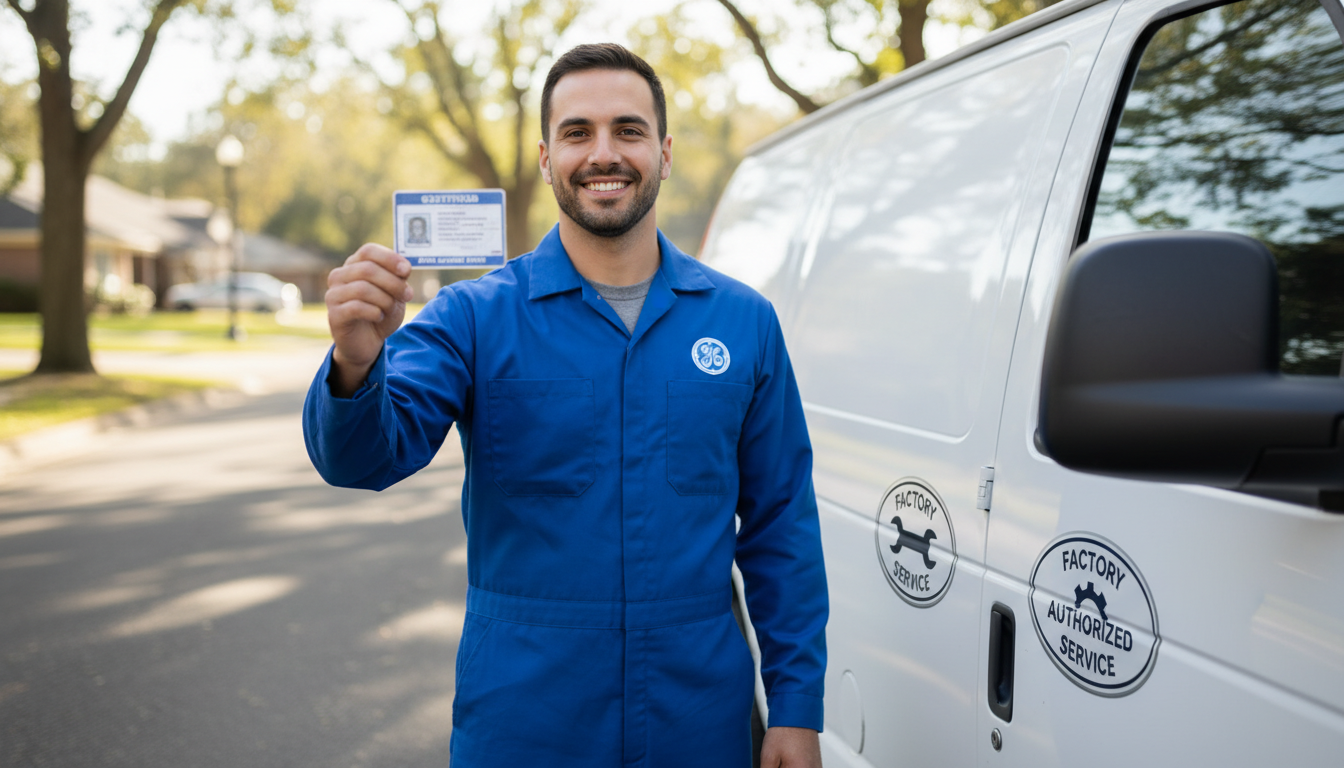
Becoming appliance repair factory authorized means earning the right to perform warranty repairs for brands like GE, Whirlpool, Samsung, and LG on behalf of the manufacturer. These companies require specific certifications, tools, liability insurance, and customer service standards before they'll send warranty work your way. Factory authorization opens the door to steady referrals, parts account access, and customers who trust your work because the manufacturer does — but most independent repair shops never qualify or lose their status within the first year.
The Problem: Factory Warranty Work Goes to Someone Else
You're qualified to fix the problem. You're local. You could be there in an hour. But when a homeowner calls GE or Whirlpool about a broken refrigerator still under warranty, the manufacturer sends another shop — one with factory authorization. That job came with a guaranteed payment, no collections hassle, and a customer who'll remember your name when the warranty expires and they need a dishwasher fixed.
Factory warranty work isn't just about the immediate repair ticket. It's a customer acquisition channel that costs you nothing. According to Bain & Company, acquiring a new customer costs 5 to 25 times more than retaining an existing one. Every warranty call you miss is a customer relationship handed to a competitor.
Most independent appliance repair companies never get authorized. The ones that do often lose their status within months because they can't meet the manufacturer's service level agreements — especially the call answer requirements.
Why Most Appliance Repair Companies Fail Factory Authorization Requirements
Factory authorization isn't about your technical skills. Manufacturers assume you can turn a wrench. What disqualifies most shops — or gets them dropped after approval — is operational infrastructure, particularly how they handle incoming calls and scheduling. GE appliance repair certification and Whirlpool authorized service contracts require specific response times, callback windows, and customer satisfaction scores that small shops can't consistently hit when the owner is on a service call.
The Call Answer Rate Problem
Most major appliance manufacturers require authorized service providers to answer at least 80-90% of incoming calls within three rings or 30 seconds during business hours. Miss that threshold two months in a row, and you're out. When you're under a refrigerator in someone's basement, you're not answering the phone. When your one office person takes lunch or calls in sick, you're not answering the phone.
Here's what most articles won't tell you: The manufacturers don't just check your answer rate — they mystery shop you. Multiple brands use third-party compliance companies that call your number repeatedly throughout the month, at random times, logging whether someone picks up, how long it takes, and whether the person who answers can schedule a service appointment or just takes a message. If your spouse is covering the phone and tells the caller "I'll have him call you back tonight," that's a failed call in the manufacturer's tracking system. They want immediate appointment booking, not callbacks.
The Scheduling Speed Trap
Factory warranty repair work comes with strict scheduling requirements. Most manufacturers require appointments scheduled within 24-48 hours of the initial customer call. If your calendar is managed on paper, in your head, or on a whiteboard in the shop, you can't reliably meet that requirement. You'll double-book, miss appointments, or tell customers you're three days out when you actually had a cancellation that opened up tomorrow.
According to the ServiceTitan 2023 State of Home Services Report, missed appointments cost home service businesses an average of $120 per incident in lost revenue and customer trust. For a factory-authorized shop, missed appointments also threaten your authorization status.
The Parts Ordering Bottleneck
Factory authorization requires you to order genuine OEM parts through the manufacturer's parts network, usually within 24 hours of diagnosing the issue. When you're juggling service calls, a parts order that should take five minutes gets pushed to the end of the day — or forgotten until the customer calls asking when you're coming back. Manufacturers track your parts ordering speed and completion rates. Slow parts orders = delayed repairs = unhappy customers = lost authorization.

What Factory Authorization Actually Requires (Beyond Technical Certification)
Getting GE appliance repair certification or Whirlpool authorized service status requires passing technical training and exams, but that's the easy part. The operational requirements are what separate shops that keep their authorization from those that lose it. You need dedicated staff who can answer calls immediately, book appointments accurately, order parts promptly, and follow up on every job — all while you're in the field doing the actual repair work.
EPA Section 608 Certification and Liability Insurance
Every technician who works on refrigeration systems needs EPA Section 608 certification to handle refrigerants legally. Most manufacturers require at least Type I and Type II certification (some want Universal). You'll also need general liability insurance with minimum coverage between $500,000 and $2,000,000, depending on the brand. These are table stakes — you won't even get the application without them.
Brand-Specific Technical Training
Each manufacturer runs its own training program. Whirlpool's Service Technical College, GE Appliances Factory Training, LG's certification courses — they're all separate, and they're not cheap. Budget $500-$2,000 per technician per brand, plus travel costs if the training isn't offered online. You'll need to recertify periodically to stay current on new product lines.
The Real Barrier: Front Office Capacity
This is where most shops fail. Factory warranty work requires someone to answer every call, schedule every appointment within the required window, order parts the same day, and follow up to confirm completion. If you're a two-person operation — one tech, one admin — you're at the edge of what manufacturers consider reliable. When your admin goes on vacation or quits, you're out of compliance immediately.
That's the operational reality most independent shops can't solve. You need front office capacity that doesn't depend on one person, doesn't take lunch breaks at the wrong time, and doesn't let calls roll to voicemail when things get busy. Book All Leads runs your entire front office — six roles working 24/7, answering every call, booking appointments, and managing the follow-up that keeps you compliant with factory service level agreements. You get live coverage in five days, no software to learn, no staff to hire. Just a front office team that picks up the phone every time a manufacturer sends work your way.
How to Get Factory Authorized (The Step-by-Step Process)
Becoming factory authorized takes 60-90 days from application to first assigned job. Start with one manufacturer — usually the brand you already repair most often — then add others once you've proven you can handle the operational requirements. Pick GE or Whirlpool first; they have the largest installed base in most U.S. markets and generate the most warranty call volume.
Step 1: Get Your Operational House in Order First
Don't apply for authorization until you can reliably answer 90% of calls within 30 seconds and schedule appointments within 24 hours. Manufacturers check this during the application process, and they'll drop you immediately after approval if you can't maintain it. If you're currently missing calls or scheduling appointments three days out, fix that problem before you submit an application.
Step 2: Complete Brand-Specific Certification Training
Visit the manufacturer's service provider portal and register for technical training. Most brands offer online modules plus hands-on sessions. You'll need to pass exams covering product diagnostics, safety protocols, and warranty repair procedures. Keep your certification documents — you'll submit copies with your application and need them for annual renewals.
Step 3: Submit Your Authorization Application
Gather your business license, EPA 608 certification, liability insurance certificate, business references, and technician certifications. Most manufacturers want to see that you've been in business at least two years and have an established reputation in your service area. The application asks detailed questions about your service capacity, average response times, and customer service procedures. Be specific — vague answers get rejected.
Step 4: Pass the Operational Audit
After your application is reviewed, most brands conduct a phone audit or mystery shop. They'll call your number multiple times over several days to verify someone answers promptly and can schedule appointments professionally. Some manufacturers also visit your shop to inspect your tools, parts inventory, and service vehicles. They're checking whether you can actually deliver the service experience they promised their customers.
Step 5: Prove You Can Handle the Volume
Once approved, you'll start small — maybe five to ten warranty jobs per month. The manufacturer monitors your completion rate, customer satisfaction scores, and how fast you close jobs. Prove you can handle that volume without missing appointments or letting calls go unanswered, and they'll increase your referral flow. Most shops that lose authorization lose it in the first 90 days because they couldn't scale their operations to match the increased call volume.
What Factory Warranty Work Actually Pays (And Why It's Worth It Anyway)
Factory warranty repair work pays less per job than out-of-pocket customer work — usually $85-$150 for a service call plus parts reimbursement, compared to $150-$300 you might charge a retail customer. But warranty work comes with guaranteed payment, zero collections hassle, and built-in customer acquisition. The manufacturer sends you customers who already trust you because you're on their approved list, and those customers call you back for non-warranty work later.
The real value isn't the warranty ticket — it's the relationship. According to Harvard Business Review, increasing customer retention rates by just 5% can increase profits by 25% to 95%. Every warranty job is a chance to earn a customer for life, starting with a repair they didn't have to pay for and ending with your business card on their refrigerator when something else breaks.
Here's the math: If you complete 20 warranty repairs per month at an average of $100 per job, that's $2,000 in guaranteed revenue with no marketing cost. If 30% of those customers call you back for a non-warranty repair within 12 months at an average ticket of $250, that's another $1,500 per month. And you didn't spend a dollar on Google ads or door hangers to get them.
The Biggest Mistake: Applying Before You're Ready
Most shops apply for factory authorization the moment they pass technical certification, then lose their status within six months because they couldn't handle the operational demands. Manufacturers don't give second chances easily. Once you're dropped for failing to meet service level agreements, you're flagged in their system. Reapplying means waiting 12-24 months and proving you've fixed the problems that got you dropped.
The mistake isn't trying to become authorized. The mistake is applying before your front office can handle the call volume and scheduling demands that come with authorization. If you're currently letting calls go to voicemail, scheduling appointments two days out, or forgetting to order parts until the customer calls back, you're not ready. Fix those problems first — because the manufacturer will notice them immediately, and they'll pull your authorization faster than it took to get it.
Want to see how many calls you're actually missing? Calculate your losses based on your current answer rate and average ticket value. Most shops are shocked when they see the revenue walking away because nobody picked up the phone.
Why Independent Shops Lose Authorization (Even After They Get It)
Getting authorized is easier than staying authorized. Most manufacturers review your performance monthly, tracking call answer rates, appointment completion rates, average repair time, and customer satisfaction scores. Fall below their thresholds two months in a row, and you get a warning. Fail to improve, and you're out. The most common reasons shops lose factory warranty authorization have nothing to do with technical ability — they're all operational failures.
Missed Calls During Service Hours
This is the number one reason shops lose authorization. The manufacturer sends you a referral, the customer calls, and it goes to voicemail. They call back, voicemail again. They call the manufacturer back, complain they couldn't reach you, and you get a compliance strike. Three strikes in 90 days typically ends your authorization. You can be the best technician in your market, but if your customers can't reach you, the manufacturer moves on to someone they can rely on.
Slow Parts Ordering and Job Completion
Warranty repairs come with completion time requirements — usually 7-10 days from the initial service call to final completion. If you diagnose the problem on day one but don't order the part until day three, don't receive it until day six, and don't schedule the follow-up appointment until day nine, you're out of compliance. Manufacturers track this closely because they're paying for the repair and their customer is waiting. Slow completion rates tank your authorization status fast.
Customer Satisfaction Scores Below Threshold
After every warranty repair, the manufacturer surveys the customer. They ask about appointment scheduling, technician professionalism, repair quality, and overall satisfaction. Most brands require a minimum satisfaction score of 4.0 out of 5.0 or 80% "satisfied/very satisfied" responses. One bad review won't kill you, but a pattern of complaints about missed appointments, poor communication, or repeat visits for the same problem will end your authorization.
How to Keep Your Factory Authorization (Once You Have It)
Keeping factory authorization requires treating warranty work with the same urgency you give your highest-paying customers — even though it pays less per job. The manufacturers are watching your metrics every month, and they'll replace you the moment your performance drops. The shops that keep their authorization year after year are the ones that built operational infrastructure to handle the volume before they applied, not after they started receiving referrals.
Answer every call within three rings. Book appointments within 24 hours. Order parts the same day you diagnose the problem. Follow up immediately after the repair is complete. These aren't nice-to-haves — they're the minimum standards that keep you in the program. If your current operation can't do this consistently, you need more front office capacity, not better intentions.
The shops that dominate factory warranty work in their markets aren't necessarily the best technicians. They're the ones who answer the phone every time it rings, show up when they say they will, and close jobs fast. That reliability earns them more referrals, which earns them more non-warranty customers, which grows their business while competitors are still wondering why the manufacturers won't approve them.
Frequently Asked Questions
How long does it take to become factory authorized for appliance repair?
The process typically takes 60-90 days from initial application to receiving your first warranty referral. This includes completing brand-specific technical training (2-4 weeks), submitting your application with required documentation (1-2 weeks processing time), passing operational audits, and getting approved into the manufacturer's service network. Some brands move faster if you already have the required certifications and insurance in place.
Can I become factory authorized if I'm a solo technician with no office staff?
Technically yes, but practically it's very difficult to maintain authorization without dedicated front office support. Manufacturers require 80-90% call answer rates during business hours, same-day parts ordering, and 24-hour appointment scheduling. If you're in the field doing repairs, you can't consistently meet those requirements. Most solo operators who get authorized lose their status within six months due to missed calls and scheduling failures.
Which appliance brands are easiest to get authorized with?
GE Appliances and Whirlpool are often the best starting points because they have the largest market share and established authorization processes. They also generate the highest volume of warranty work, which means more opportunities to build customer relationships. Samsung and LG have grown significantly but have stricter requirements and more complex parts networks. Start with one brand, prove you can handle the operational demands, then add others.
What happens if I lose my factory authorization?
Once you're dropped for failing to meet service level agreements, most manufacturers require a 12-24 month waiting period before you can reapply. You'll need to demonstrate you've fixed the operational issues that caused the initial failure — usually by showing improved call answer rates, scheduling procedures, and customer satisfaction systems. Some brands flag your business permanently if you lose authorization multiple times. It's far easier to get it right the first time than to recover after losing it.
Do factory authorized shops get exclusive territories?
No. Most manufacturers authorize multiple service providers in each market to ensure adequate coverage. You're competing with other authorized shops for the same warranty referrals. The manufacturers send work to providers based on availability, proximity to the customer, and performance metrics. Shops with higher answer rates, faster scheduling, and better customer satisfaction scores get more referrals. Authorization gets you in the door — your operational performance determines how much work you receive.
Is factory warranty work worth it if it pays less than retail repairs?
Yes, because warranty work is customer acquisition that costs you nothing. You're getting in front of homeowners who need appliance repair service, building trust through a repair they didn't pay for, and earning their business for future non-warranty work. The lifetime value of a warranty customer typically exceeds the initial ticket. Plus, warranty work provides steady baseline revenue that stabilizes your schedule during slow retail seasons.
Get Your Front Office Ready for Factory Authorization
Factory authorization isn't about whether you're skilled enough to fix appliances — it's about whether your operation can handle the call volume, scheduling demands, and follow-up requirements that manufacturers expect. Most shops fail not because they lack technical ability, but because they can't answer the phone consistently when warranty referrals start flowing in.
If you're ready to become appliance repair factory authorized and actually keep your status, you need a front office that picks up every call, books every appointment within 24 hours, and manages the follow-up that keeps you compliant. Book All Leads builds and manages your entire front office — six roles working 24/7, live in five days, no contracts. Stop missing the calls that manufacturers are trying to send your way.
John Edmonds is a native Texan and military combat veteran. He founded Book All Leads after identifying a critical gap in the service industry: business owners losing revenue not from lack of skill, but because no one was handling the calls, follow-ups, reviews, and payments while they were busy doing the work.
View LinkedIn Profile →