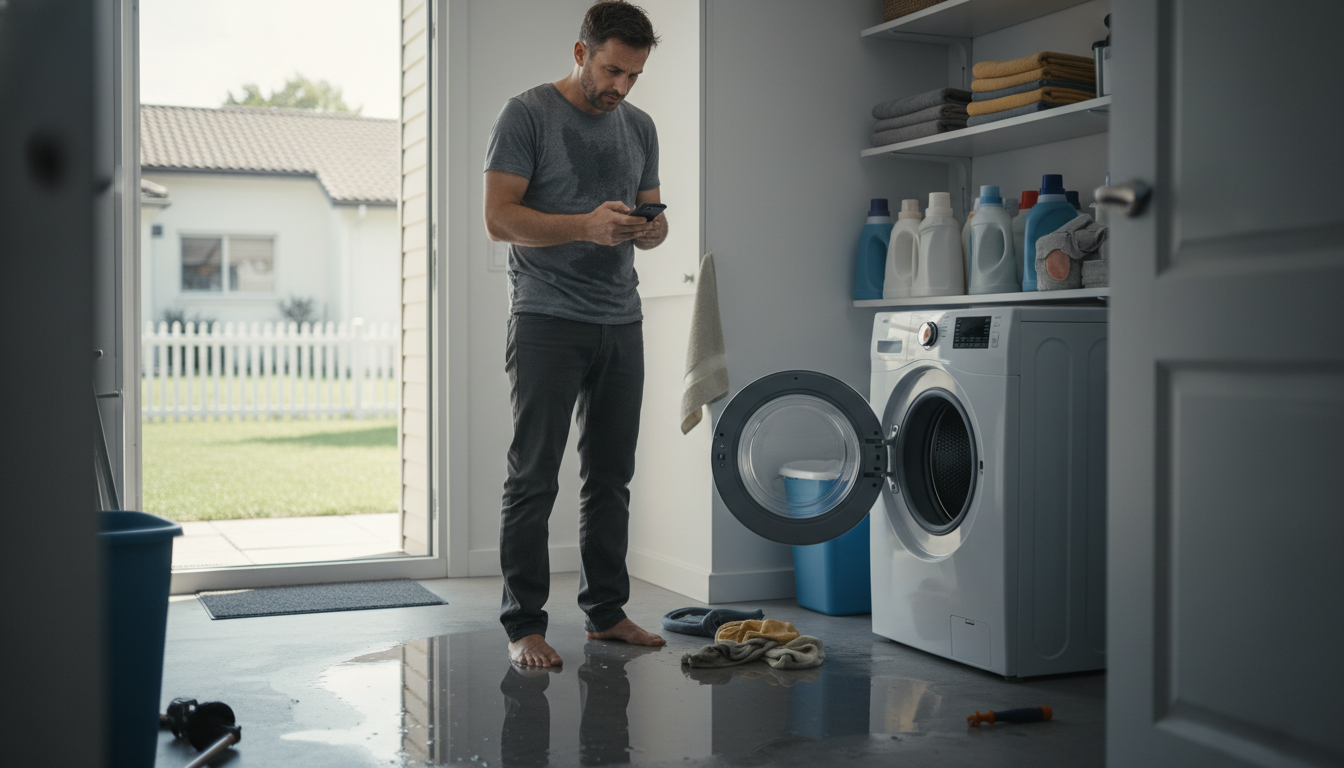
Appliance repair leads slip away to big box stores not because customers prefer buying new washers and dryers, but because local repair companies miss the critical window when a broken appliance becomes an emergency. When your phone rings at 7 PM or goes to voicemail during lunch, that homeowner with a flooded laundry room doesn't wait—they call Home Depot's installation line or click Lowe's "Schedule Today" button. The repair companies who win these leads back answer fast, book same-day appointments, and make repair feel easier than replacement.
The Problem: Why Homeowners Choose Replacement Over Repair
Your competitor isn't the repair shop across town. It's the appliance sales floor at Lowe's and the installation scheduler at Home Depot. When a washer floods or a dryer quits mid-cycle, homeowners don't start with a preference for new or repaired—they start with urgency. According to the Association of Home Appliance Manufacturers, 68% of major appliance purchases are triggered by failure, not planned replacement. That failure moment is your opportunity, but only if you're faster than the retail alternative.
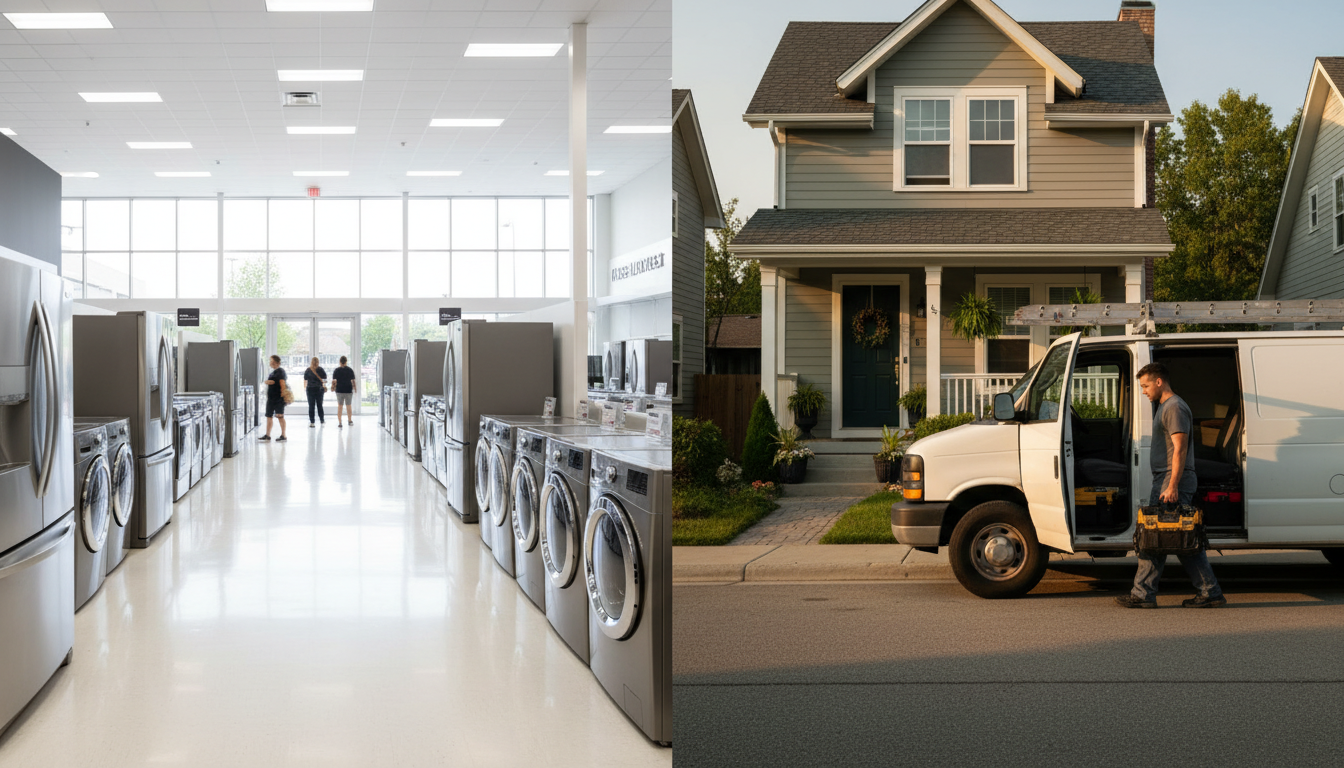
Big box stores have engineered the path from broken appliance to new purchase into a frictionless experience. Their websites promise next-day delivery. Their phone systems route to installation schedulers immediately. Their sales floors are open until 9 PM every night. Meanwhile, most appliance repair companies close at 5 PM, send after-hours calls to voicemail, and return messages the next morning—12 to 16 hours after the homeowner's crisis started.
Here's what most articles won't tell you: Homeowners don't choose new appliances because repair is too expensive. They choose replacement because repair feels uncertain and slow. A $350 washer repair is cheaper than a $1,200 new washer every time—but when the repair shop doesn't answer and Home Depot's website shows a delivery slot for tomorrow, the decision isn't about cost anymore. It's about certainty and speed. You lose the lead before you know it existed.
The statistics confirm this reality. Research from InsideSales.com shows that response times beyond five minutes reduce lead conversion by 400%. For appliance repair, where the triggering event is often water damage or ruined laundry, that window is even tighter. Miss the first call, and the homeowner has already started comparison shopping for new units while waiting for your callback.
Why This Keeps Happening to Appliance Repair Companies
Local appliance repair businesses lose washer and dryer repair leads to retail replacements because they're structured to handle service work, not lead capture. The owner-operator is under a dryer drum or diagnosing a control board when the phone rings. The single office person is at lunch or handling another call. After-hours and weekend calls—the peak times for appliance emergencies—go completely unmanaged.
This isn't a failure of skill or service quality. It's a structural mismatch between when leads arrive and when small businesses can respond. The Bureau of Labor Statistics reports that appliance repair businesses average 2.7 employees, meaning most operations have zero dedicated phone coverage. The technician doing the work is the same person expected to answer inquiries, and that's an impossible standard when you're mid-job.
The Big Box Advantage You're Competing Against
Home Depot and Lowe's don't just sell appliances—they've built entire systems to intercept repair leads at the moment of failure. Their strategy includes:
- 24/7 digital scheduling: Online booking with visible next-day slots for delivery and installation
- Extended phone hours: Installation schedulers available until 9 PM or later
- In-store urgency: Sales associates trained to position "buy today, install tomorrow" against "call a repair shop and wait"
- Bundled haul-away: They remove the broken unit, eliminating a friction point that repair can't address
For the homeowner dealing with a broken washer at 6:30 PM on a Thursday, the retailer's path feels predictable and fast. Your missed call feels like uncertainty and delay, even if you'd call back by 8 AM the next morning. That perception gap is costing you $400 to $600 per lost repair lead.
How to Win Washer & Dryer Repair Leads Back
Winning appliance repair leads away from big box replacement sales requires making repair feel faster, easier, and more certain than buying new. That starts with answering every call within three rings, booking same-day or next-morning appointments, and confirming details immediately. You don't need to outspend Lowe's on marketing—you need to out-respond them when leads contact you.
The appliance repair companies capturing these leads consistently use a dedicated front office team that handles every incoming call, text, and web inquiry the moment it arrives. Not a voicemail system. Not an answering service reading a script. A trained team that knows your service area, your technician availability, and your pricing structure well enough to book jobs on the spot.
BookAllLeads provides exactly this setup for appliance repair businesses—six front office roles working around the clock to answer calls, book appointments, follow up with leads, and collect payments. Your business is live in five days with a team that knows your market, no software for you to learn, and no contracts locking you in. It's the difference between losing evening leads to Home Depot and booking them while the homeowner is still standing next to the broken washer.
Make Same-Day and Next-Morning Appointments Your Standard
Speed isn't just about answering the phone—it's about getting a technician to the home before the homeowner starts shopping for replacements. According to Appliance Service Association data, 74% of consumers who receive same-day or next-morning service appointments choose repair over replacement, even when the repair costs 40% of a new appliance's price. Urgency creates value.
Structure your schedule to reserve same-day slots for emergency calls. Block 8 AM to 10 AM the next morning for overnight leads. Communicate these slots during the first call: "We can have a technician there by 4 PM today" beats "We'll call you back to schedule" every time. The homeowner isn't evaluating repair versus replacement in a vacuum—they're evaluating certainty. Give them a confirmed appointment time in the first conversation, and you've eliminated the reason they'd visit a showroom.
Answer After-Hours Calls with Real People, Not Voicemail
Evening and weekend calls represent your highest-intent leads. A washer breaking at 7 PM means wet clothes sitting overnight and a household disrupted. That homeowner is taking action immediately, and whoever answers first wins the job. Yet most appliance repair businesses treat after-hours as lost time rather than peak opportunity.
Research from Vendasta shows that 62% of service business leads occur outside standard business hours, and those leads convert at 23% higher rates than mid-day inquiries. The urgency is real. A front office team covering evening and weekend calls doesn't just capture more leads—it captures the leads most likely to book immediately and pay premium rates for fast service.
Real Example: From Losing Leads to Fully Booked
Mike runs a three-person appliance repair operation in a mid-sized Midwest city. For years, he noticed the same pattern: plenty of daytime work, but empty slots on weekday evenings and Saturdays. He'd check voicemail Monday morning and find eight messages from the weekend—most of them noting they'd "already scheduled something else." He estimated he was losing 15 to 20 jobs per month to unanswered calls, almost all of them washers and dryers where homeowners needed immediate help.
He switched to a dedicated front office team that answered calls live, even at 8 PM on Sundays. Within 30 days, his booked appointments increased by 34%. The team wasn't just answering—they were booking same-day and next-morning slots that Mike had previously left unfilled. His techs started their days with confirmed appointments instead of cold-calling yesterday's voicemails. Three months in, his revenue was up 28%, almost entirely from washer and dryer repairs he'd been losing to big box store replacement sales.
The shift wasn't about better marketing or more leads. It was about capturing the leads that already existed but were slipping through gaps in his availability. If you want to calculate your losses from missed calls, track your voicemail for one week and count every inquiry that didn't convert. Multiply that by your average washer or dryer repair ticket. That's your monthly revenue sitting on a disconnected phone line.
Position Repair as the Faster, Smarter Choice
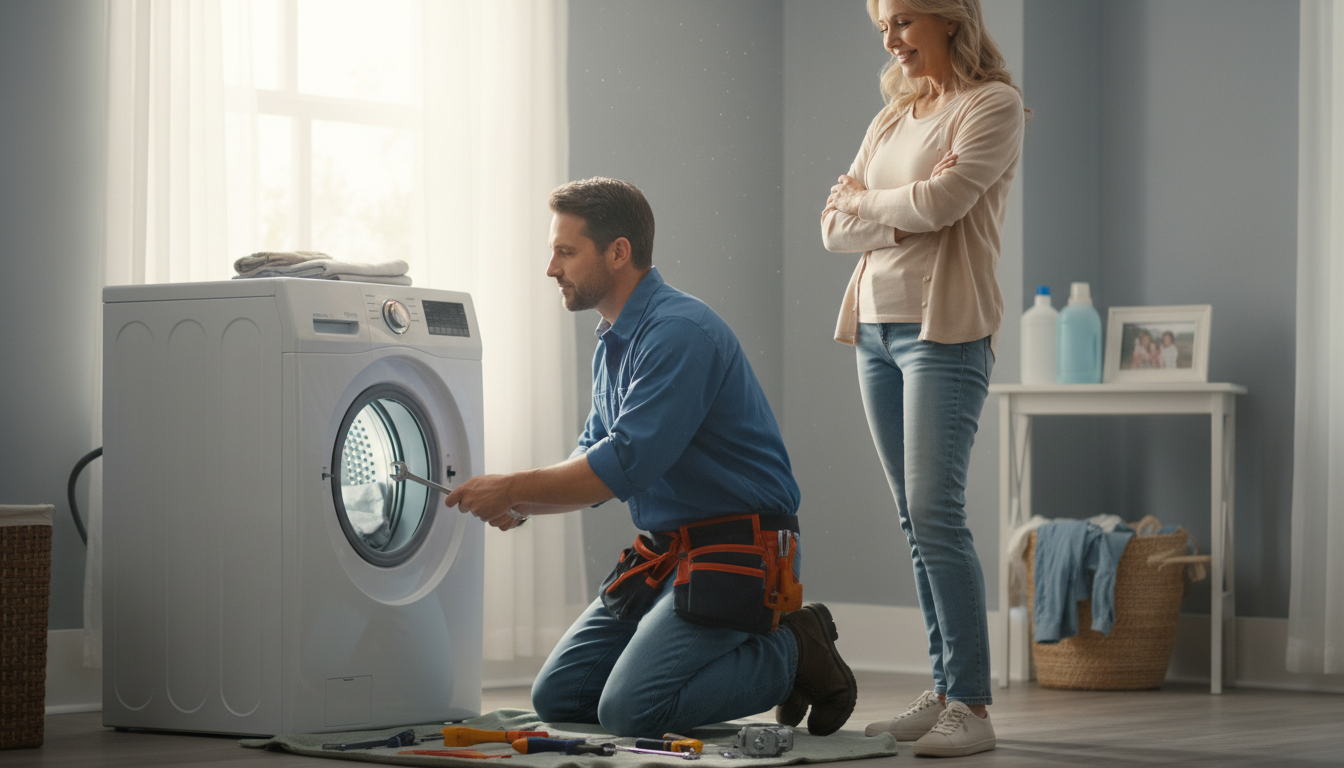
Big box stores sell replacement as convenience, but repair beats replacement on speed when you execute well. A new washer delivery typically takes two to five days, even with expedited service. A skilled appliance repair tech can diagnose and fix most washer and dryer issues in a single visit, often the same day the customer calls. That's your competitive advantage—but only if you communicate it clearly during the first contact.
Train your front office (or team) to position repair this way: "We can have a technician there this afternoon to diagnose the issue. Most washer repairs are completed the same visit, and you'll have working laundry today instead of waiting for delivery." That framing shifts the conversation from cost comparison to outcome comparison. Repair isn't the budget option—it's the fast option. That messaging wins leads.
Use Transparent Pricing to Build Trust Immediately
One reason homeowners default to big box stores is pricing clarity. They know what a new washer costs before they leave the house. Appliance repair, by contrast, often feels like a black box: "We charge a diagnostic fee, then we'll tell you the repair cost." That uncertainty pushes people toward the known cost of replacement.
Counter this by offering upfront pricing ranges during the first call. "Most washer motor replacements run $280 to $350 including parts and labor. We'll confirm the exact cost after diagnosing, but that gives you a clear picture." Even rough ranges reduce the uncertainty that drives people to retail showrooms. You're not committing to a blind quote—you're giving the homeowner enough information to make a confident decision to book.
What's Really Costing You These Leads
Most appliance repair businesses believe lead loss is a marketing problem: not enough visibility, not enough ad spend, not enough Google reviews. But data from Harvard Business Review shows that acquiring a new customer costs five to 25 times more than retaining an existing one, and increasing response speed by even 30 minutes can improve conversion rates by 21%. You're not losing because people don't know you exist—you're losing because you're not available when they need you.
Every missed call costs you roughly $450, the average revenue from a washer or dryer repair job. If you miss 10 calls per week due to after-hours timing, busy lines, or voicemail-only coverage, that's $4,500 in weekly lost revenue—$18,000 per month walking straight to big box stores. Those aren't hypothetical leads. They're real people who already searched for you, dialed your number, and got no answer. That's the gap between your current revenue and what you could be earning with full phone coverage.
Stop Competing on Price, Start Competing on Speed
You'll never beat Home Depot on appliance price. A contractor-grade washer costs them less wholesale than you pay for repair parts. But you can dominate on response time, appointment availability, and service speed. Those are the factors that matter most to a homeowner standing in a flooded laundry room at 6 PM on a Wednesday.
Reframe every customer interaction around speed and certainty: "We'll have someone there tonight," "You'll know the cost before we start any work," "Most repairs are done in one visit." That positioning makes repair the obvious choice, and it's a message you can only deliver if your phones are answered live and your scheduling is responsive. The appliance repair companies winning against big box competitors aren't outspending them—they're out-responding them. That's a fight you can win.
If you're serious about recapturing the washer and dryer leads you've been losing, start by auditing your phone coverage. Check your service operations for gaps in availability, especially after 5 PM and on weekends. Track how many leads reach voicemail versus a live person. Then close those gaps with a team that's ready when the phone rings, because in appliance repair, the first company to answer is the company that gets the job.
Frequently Asked Questions
Why do homeowners choose to replace appliances instead of repairing them?
Homeowners typically choose replacement over repair because of perceived uncertainty and slow response times, not cost. When a washer breaks and the repair shop doesn't answer immediately, but Home Depot's website shows next-day delivery, the retail option feels faster and more certain. Most repairs cost 25-40% of replacement, but urgency drives the decision more than price.
How quickly should I respond to appliance repair leads?
Response time should be under five minutes for maximum conversion. Research shows that leads contacted within five minutes are 400% more likely to convert than those contacted after 10 minutes. For appliance emergencies like flooded laundry rooms, even faster response is critical—homeowners are making decisions in real time.
What's the best way to compete with big box stores for washer and dryer repairs?
Compete on speed and availability, not price. Offer same-day and next-morning appointments, answer calls after hours when most appliances break, and communicate clear pricing ranges upfront. Position repair as faster than replacement (which requires delivery and installation), and make booking easy during the first contact.
Should I invest in more marketing or better phone coverage?
Better phone coverage delivers higher ROI than more marketing if you're already generating leads but missing calls. Missed calls represent people who already found you and took action—capturing those leads costs nothing beyond answering the phone. Marketing generates new leads, but if you're not converting existing inquiries, more leads just means more missed opportunities.
How much revenue am I losing from missed appliance repair calls?
Most appliance repair businesses lose $12,000 to $20,000 monthly from missed calls, based on average ticket values of $400-$600 and 8-12 missed calls per week. Track your voicemail and unanswered calls for one week, multiply by your average job value, then multiply by four to estimate monthly losses. Use a lead loss calculator for a detailed breakdown specific to your business.
Do after-hours calls really convert better than daytime leads?
Yes. After-hours and weekend calls typically convert 23% better than mid-day inquiries because they represent higher urgency situations. A washer breaking at 7 PM means immediate disruption and faster decision-making. These leads are also less likely to comparison shop extensively—they need help now, and whoever answers first usually wins the job.
Turn Missed Calls Into Booked Jobs
Appliance repair leads don't disappear because homeowners prefer new washers and dryers. They disappear because big box stores answer faster, book easier, and feel more certain in the moment a homeowner needs help. You already have the skills, the service quality, and the local reputation to win these jobs. What you need is a front office team that captures every lead the moment it arrives, books appointments while urgency is high, and follows up until the job is scheduled.
That's exactly what BookAllLeads delivers—a complete front office team managing your calls, bookings, and follow-ups around the clock. No missed leads. No voicemail losses. No contracts. Just more booked jobs and more revenue from the leads you're already generating. If you're ready to stop losing washer and dryer repairs to Home Depot and Lowe's, start by making sure your phone is answered every single time it rings.
John Edmonds is a native Texan and military combat veteran. He founded Book All Leads after identifying a critical gap in the service industry: business owners losing revenue not from lack of skill, but because no one was handling the calls, follow-ups, reviews, and payments while they were busy doing the work.
View LinkedIn Profile →