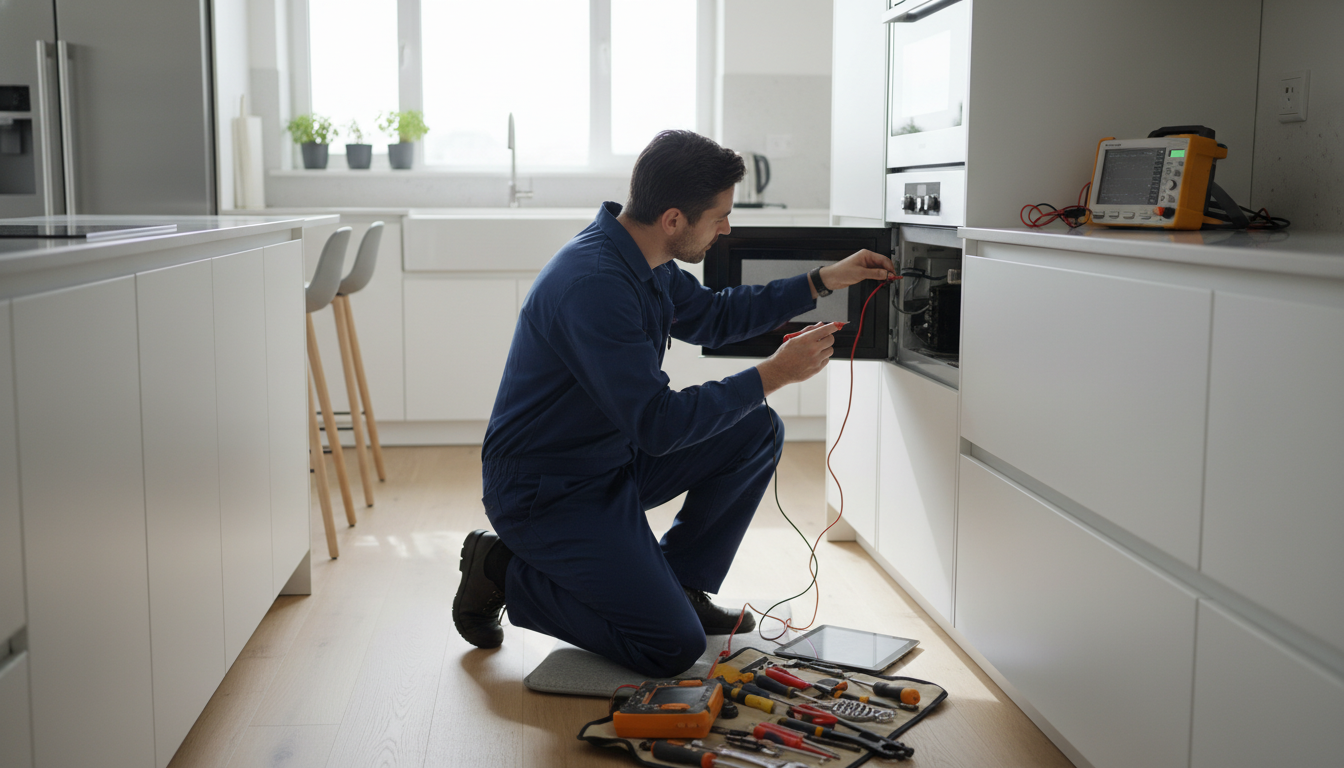
Appliance repair microwave leads are among the hardest to convert in the home services industry — not because homeowners don't need help, but because most repair shops lose these calls before they ever book the job. Built-in microwaves and range hoods require specialized service, command premium pricing, and attract homeowners who value quality work. Yet owner-operators miss 40-60% of these calls during peak hours, fumble technical questions about cavity dimensions and venting configurations, or quote prices that scare customers straight to big-box installers. The result: you're paying for leads you never capture, while your competitors with better phone operations are booking the work you should be doing.
Why Appliance Repair Shops Lose Microwave and Range Hood Leads
You're losing these calls because built-in appliances trigger a different customer conversation than countertop or freestanding units. When someone calls about a built-in microwave or range hood, they're worried about compatibility, venting, electrical work, and whether you'll leave them with a hole in their cabinetry if the unit can't be fixed. These aren't quick "can you come today?" calls — they're technical consultations that require patience, product knowledge, and confident pricing. Most shops handle these poorly because the owner is on a job, the spouse is juggling three other calls, or an inexperienced office person defaults to "we'll have someone call you back."
According to InsideSales.com, leads contacted within five minutes are 21 times more likely to convert than those contacted after 30 minutes. For appliance repair booking, that window is even tighter. A homeowner with a broken built-in microwave calls four to six companies in rapid succession. The first shop that answers with confidence and books the appointment wins — everyone else gets voicemail or "we already found someone."
Here's what most articles won't tell you: The real conversion killer isn't your technical skill or pricing — it's that you're forcing high-value, technical conversations through the same chaotic phone process you use for simple dishwasher calls. Built-in appliance customers need reassurance about scope, cost, and whether you stock parts for premium brands like Thermador, Wolf, and Bosch. They're not calling because their $89 countertop microwave died — they're calling because a $1,200 built-in stopped working and they need an expert, not a parts-swapper. When your phone rings at 2 PM and you're elbows-deep in a GE Profile repair, you can't give that caller the consultation they need. So they move on.
The Hidden Cost of "I'll Call Them Back"
Owner-operators assume they can return missed calls during lunch or after the last job. But microwave repair customers don't wait. They've already booked with someone else by the time you call back at 5:30 PM. You paid $35-$75 for that lead through Google Ads, Angi, or Thumbtack — then lost it because you were 90 minutes too late. Do that five times a week and you've burned $10,000 a year on leads that never had a chance to convert.
What Makes Built-In Appliances Different (And More Profitable)
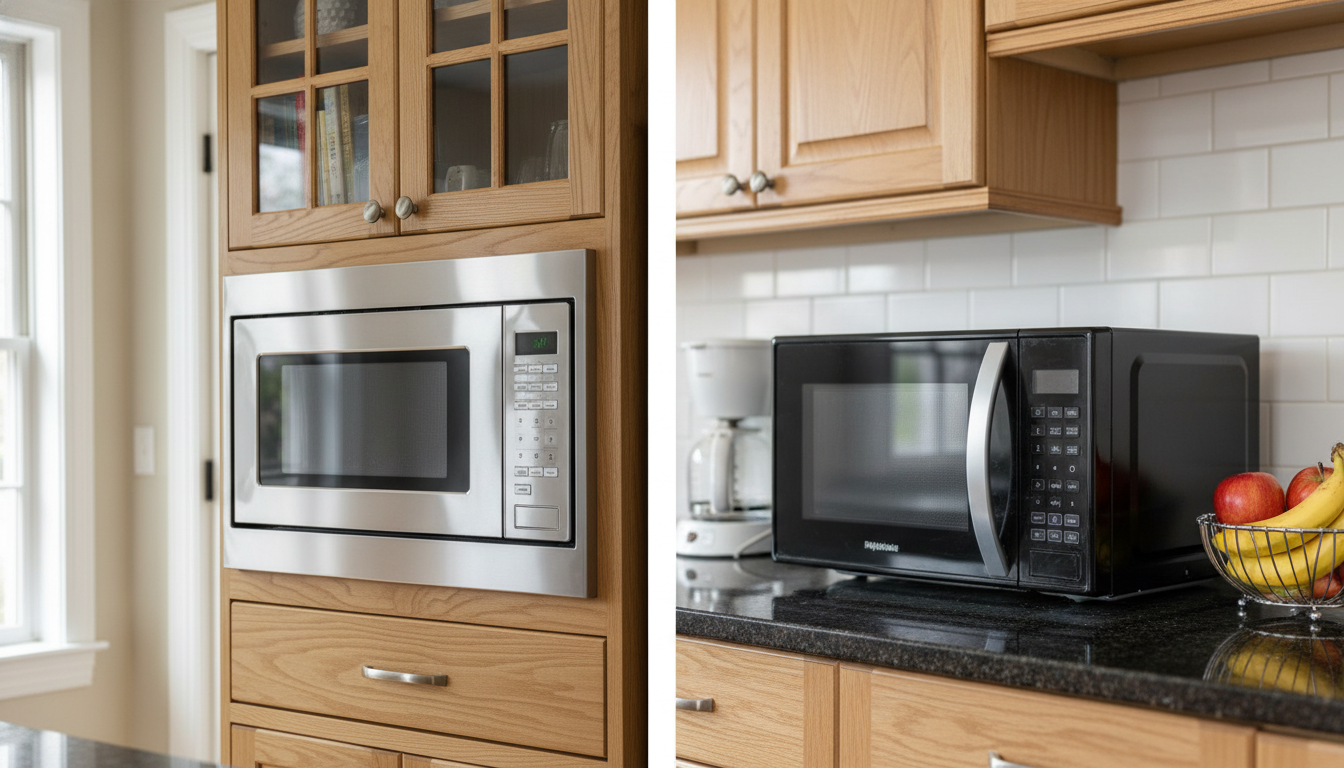
Built-in microwaves, range hoods, and wall ovens represent a fundamentally different service opportunity than freestanding appliances. These units are integrated into cabinetry, require precise measurements for replacement, often involve electrical or venting modifications, and typically belong to homeowners who invested in higher-end kitchens. The average service call for a built-in appliance runs $200-$400 compared to $120-$180 for countertop or freestanding units — and that's before you factor in installation work if the unit needs replacement.
According to the Bureau of Labor Statistics, the median hourly wage for appliance repair technicians is $22.73, but shops serving the built-in and luxury appliance market command 30-50% higher rates due to specialized knowledge and the complexity of the work. These aren't price-shopping tire-kickers — they're homeowners who understand that a botched built-in microwave repair means damaged cabinetry, electrical issues, or a $2,000 replacement job.
Yet most appliance repair companies treat these calls like any other inquiry. They don't ask about cabinet dimensions, vent configurations, or brand-specific quirks. They quote generic diagnostic fees without explaining what's included. They fail to mention that they stock parts for premium brands or have experience with complex installations. The customer hears uncertainty and calls the next shop on their list.
Why Big-Box Stores Win These Calls (And How to Beat Them)
Home Depot, Lowe's, and Best Buy capture a massive share of built-in appliance work — not because they're better at repairs, but because they answer the phone with product knowledge and clear next steps. Their intake teams know how to ask about model numbers, explain compatibility, and book installation appointments on the spot. Independent repair shops lose these customers because their phone process feels disorganized by comparison.
The fix isn't to become a big-box store. It's to professionalize your front office so that every caller gets the consultation they need, immediately, without pulling you off the job. That means someone who can answer technical questions, quote accurately, and book the appointment while the customer is still on the line.
How Most Shops Handle Microwave Leads (And Why It Fails)
Walk through a typical lost opportunity. A homeowner calls at 11:30 AM with a broken Bosch built-in microwave. The call goes to voicemail because you're at a job. You see the missed call at 1:15 PM, between appointments. You call back — it rings four times and goes to voicemail. You leave a message. They don't call back. You assume they weren't serious. In reality, they booked with the shop that answered at 11:31 AM, asked three qualifying questions, quoted a $189 diagnostic visit, and got the appointment on the calendar before the customer hung up.
Even when you do answer, the conversation often goes sideways. The customer asks if you work on built-ins. You say yes. They ask if you stock Bosch parts. You say "depends on the model." They ask how much a service call costs. You say "usually around $150, but it depends." Everything is vague, conditional, non-committal. The customer thanks you and hangs up — and calls a shop that gave clear answers.
Book All Leads solves this by putting a full front office team on your calls — six roles working 24/7, trained specifically for appliance repair. Your callers reach a live person who knows how to handle built-in appliance inquiries: asking about brand, model, symptoms, and installation type; quoting your diagnostic fee with confidence; explaining your expertise with premium brands; and booking the appointment on the spot. No software for you to learn, no hires to manage. Live in five days, no contracts. You stay on the job — your front office team captures every lead.
The Real Problem: Technical Questions You Can't Answer While You're Working
Built-in appliance calls require a different conversation than simple repairs. Customers want to know if their 30-inch cavity will fit a standard replacement, whether their venting configuration is compatible with newer models, if you can source parts for discontinued lines, and how much the whole job will cost if the unit is beyond repair. These aren't yes-or-no questions — they're consultations. And you can't deliver a consultation via voicemail or while you're diagnosing a different customer's refrigerator.
The solution isn't to drop everything and take every call. It's to ensure that someone on your team can handle these conversations competently, immediately, every single time. That means training, scripts, access to your pricing and availability, and the authority to book appointments without waiting for your approval.
What Range Hood Customers Are Really Asking
Range hood repair leads are even trickier because most homeowners don't know if their issue is the hood itself, the ductwork, the electrical connection, or the controls. They call and say "my range hood isn't working" — but they need someone who can ask the right diagnostic questions over the phone to determine if you're the right service provider or if they need an electrician or HVAC tech. Miss that triage and you're dispatching to jobs you can't complete, or worse, turning away work you absolutely could have handled.
How to Capture Built-In Appliance Work (Even During Peak Hours)
Capturing microwave repair customers and range hood repair leads comes down to three operational changes: answer every call live, handle technical questions with confidence, and book the appointment before the customer hangs up. This isn't about better marketing or more leads — it's about converting the leads you're already paying for. The shops winning this work aren't more skilled or better priced; they're just better at the phone.
First: Stop letting calls go to voicemail during business hours. Every missed call is a lead you paid for and lost. If you're a one-person operation, you need coverage. If you have a small team, someone's job needs to be answering the phone — not "helping when they can," but owning it as their primary responsibility.
Second: Train your intake person to ask the right questions. For built-in microwaves: brand, model, symptoms, whether the unit is still under warranty, cavity dimensions if replacement is likely. For range hoods: type of venting (ducted vs. recirculating), symptoms, brand, whether the issue is mechanical or electrical. These questions position you as an expert and give you the information you need to quote accurately.
Third: Quote with confidence and book immediately. Don't say "it depends" or "I'll have to check." Have clear pricing for diagnostic visits, explain what's included, and get the appointment on the calendar while the customer is on the line. According to Vendasta, 78% of customers choose the first company that responds to their inquiry. Speed and certainty win.

Use a Qualification Script (Not a Sales Pitch)
Your front office team needs a qualification script that identifies whether the call is a simple repair, a potential replacement, or a job that requires a specialist. For built-in appliances, this means asking about age, brand, symptoms, and whether the customer has already attempted any troubleshooting. A 12-year-old Whirlpool with a blown magnetron is a straightforward repair. A 6-year-old Miele with intermittent control board failures might be a warranty issue or a manufacturer defect. Your intake process should surface these distinctions so you're not quoting blind.
What to Do With Leads You Can't Serve (And How to Monetize Them)
Not every appliance repair call is a fit. Some customers need commercial service, others have units you don't work on, and some are looking for installation-only without any repair attempt. Most shops let these callers disappear. Smart shops refer them — either to a trusted partner or to a lead marketplace — and capture referral fees or goodwill that turns into future business. A customer you can't help today might have a dishwasher issue next month, but only if you treated them well when you said no.
This is where a professional front office team creates leverage. Instead of rushing a caller off the phone with "sorry, we don't do that," a trained intake specialist can say "we don't handle that specific brand, but I can connect you with someone who does" — and track the referral for follow-up. You've just turned a dead lead into a relationship.
Why Owner-Operators Can't Scale Without Fixing the Front Office
You can't grow your appliance repair business if you're still answering your own phone between jobs. Every service call you run is time you're not available to take new calls, follow up on estimates, or handle the complex scheduling that comes with built-in appliance work. According to Bain & Company, increasing customer retention by just 5% can increase profits by 25-95%, because repeat customers spend more and cost less to serve. But you'll never build a repeat customer base if half your callers can't reach you in the first place.
The shops that scale past $500K in annual revenue all have one thing in common: they stopped treating the phone as an afterthought. They either hired dedicated office staff, brought on a dispatcher, or outsourced their front office entirely. The method doesn't matter — what matters is that someone competent is capturing every lead, every time.
If you're still juggling calls while you work, you need to calculate your losses — how many leads you're missing per week, what each lost lead costs you, and how much revenue you're leaving on the table because your phone process isn't built for conversion.
Frequently Asked Questions
Why do built-in microwave leads cost more than other appliance repair leads?
Built-in microwave leads cost more because they represent higher-value service calls with customers who own premium appliances and integrated kitchen installations. These homeowners are less price-sensitive and more likely to book immediately with the right service provider. Lead sources know this and charge accordingly — but the conversion rate and average ticket size more than justify the higher cost per lead if you can capture them.
How quickly do I need to respond to appliance repair leads to win the job?
You need to respond within five minutes or you'll lose 80% of leads to faster competitors. Appliance repair customers call multiple shops in rapid succession and book with whoever answers first and sounds most competent. A response time of 30 minutes or longer means you're essentially paying for leads your competitors will convert.
What's the average ticket size for built-in microwave or range hood service?
Built-in microwave and range hood service calls typically range from $200-$400 for diagnostics and repair, compared to $120-$180 for countertop or freestanding units. If the job involves replacement or installation, tickets can reach $800-$1,500 depending on the unit and complexity. These are among the highest-margin calls in residential appliance repair.
Should I advertise that I work on premium brands like Wolf, Thermador, and Bosch?
Absolutely. Homeowners with premium built-in appliances specifically search for shops that have experience with their brands. Mentioning these brands in your marketing, on your website, and during intake calls immediately differentiates you from generalist repair shops and signals expertise. Just make sure your team can actually service these brands and source parts reliably.
Do I need separate pricing for built-in versus freestanding appliances?
Yes. Built-in appliances require more time, specialized knowledge, and often involve additional electrical or installation work. Your diagnostic fee and labor rates should reflect this complexity. Customers with built-in units expect to pay more and will respect clear, confident pricing that explains what they're getting for the premium.
Can I scale my appliance repair business without hiring office staff?
You can't scale past a certain point without professional front office support — either an in-house hire or an outsourced team. Once you're running multiple service calls per day, you physically can't answer every call, handle scheduling changes, follow up on estimates, and process payments without dedicated help. The question isn't whether you need front office support, but whether you hire it internally or outsource it to a team that's already trained and ready to go.
Stop Losing the Leads You're Paying For
Every appliance repair microwave lead you lose is revenue you've already paid for and will never recover. Built-in appliances represent some of the highest-margin work in residential service, but only if you can capture the calls when they come in. The shops winning this work aren't bigger or better — they're just answering the phone with confidence and booking the job before you call back from your last appointment.
If you're ready to stop losing leads to voicemail, competitor callbacks, and botched intake conversations, Book All Leads gives you a full front office team that captures every call, books every job, and handles the technical questions that built-in appliance customers need answered. No software to learn, no hires to manage, live in five days. Let your team handle the phones while you handle the work.
John Edmonds is a native Texan and military combat veteran. He founded Book All Leads after identifying a critical gap in the service industry: business owners losing revenue not from lack of skill, but because no one was handling the calls, follow-ups, reviews, and payments while they were busy doing the work.
View LinkedIn Profile →