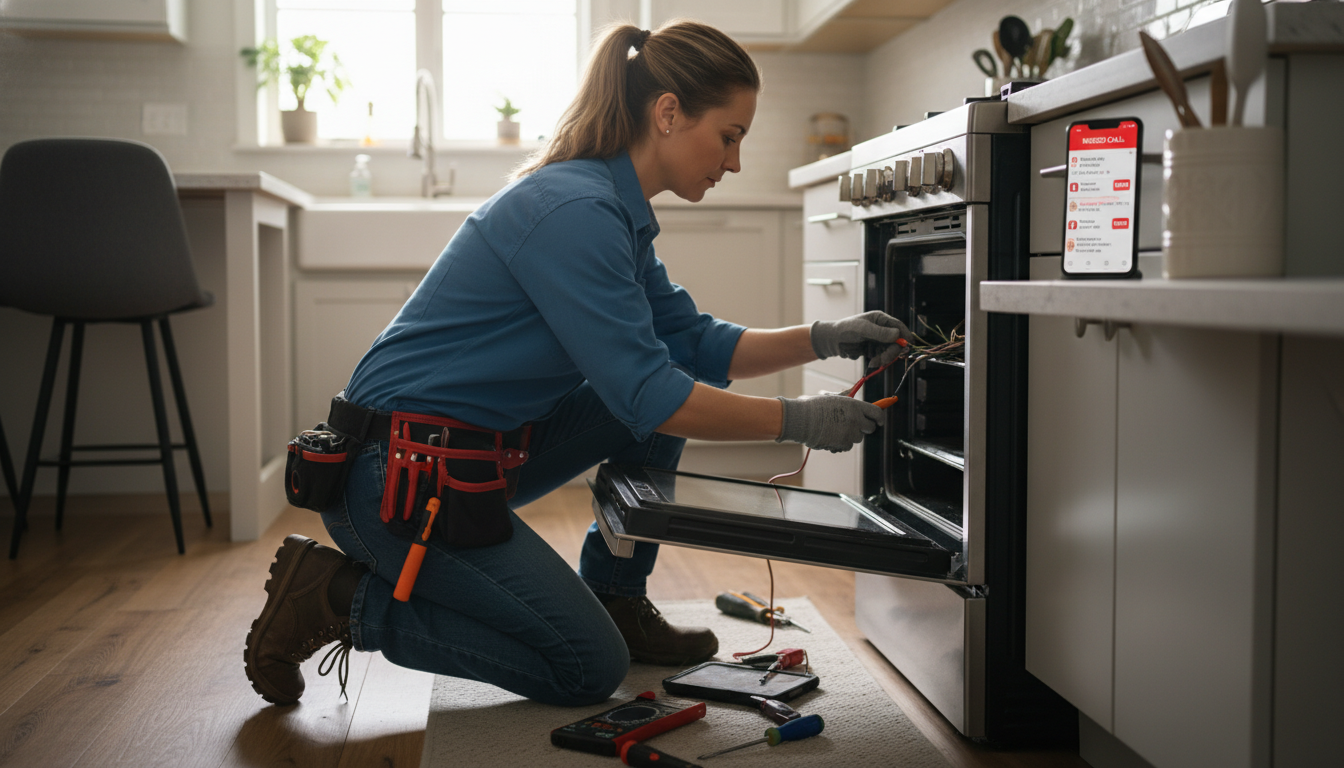
Appliance repair oven leads slip away from independent shops because big box stores answer the phone, offer same-day booking, and capture customers at the point of sale. When your phone rings at 4:30 PM and you're under a dishwasher, the homeowner calling about a broken range hears voicemail—then calls the number on their Home Depot receipt. This isn't about better technicians or pricing; it's about who answers first and books the appointment fastest. Most independent appliance repair businesses lose 40-60% of inbound oven and range repair leads simply because no one picks up.
The Problem: Big Box Stores Own the First Call Advantage
Your local appliance repair shop probably offers better service, faster repairs, and more honest diagnostics than the Home Depot or Lowe's subcontractors. But you're losing oven leads before you ever get a chance to prove it. The issue isn't your technical skills—it's that national retailers have full booking teams answering calls 24/7, while you're on your back replacing an oven element with your phone buzzing in your pocket.
According to InsideSales.com, the first company to respond to a lead has a 238% higher contact-to-conversion rate than the second responder. When someone's oven dies two hours before Thanksgiving dinner, they don't leave three voicemails and wait patiently. They call down the list until someone answers. That someone is usually a big box store call center.
Here's what most articles won't tell you: The competitive disadvantage isn't just about missing calls during business hours. It's that Home Depot and Lowe's trained millions of appliance buyers to expect instant booking through extended service plans sold at checkout. These plans convert appliance purchasers into captive repair customers before anything even breaks. Your competition isn't just winning the race to answer—they're getting a three-year head start by capturing customers at the moment of sale.
Independent shops face three specific disadvantages competing for appliance repair range repair work:
- Point-of-sale capture: Big box stores sell protection plans alongside every oven and range, creating a pre-existing relationship before the first repair need arises.
- 24/7 booking coverage: National chains staff call centers around the clock, while most independent shops rely on the owner's cell phone during off-hours.
- Instant appointment confirmation: Retail service desks book appointments in real-time using centralized scheduling, while local shops often require a callback to confirm availability.
Why Independent Appliance Repair Shops Lose Appliance Repair Stove Leads After Hours
Most oven and range failures happen when customers are actively using the appliance—early morning before work, or between 5-8 PM during dinner prep. These are exactly the hours when owner-operators are either finishing jobs, driving between appointments, or finally sitting down with their families. The phone rings. You glance at it, covered in grease, and think "I'll call them back in twenty minutes." Twenty minutes later, they've already booked with someone else.
The Bureau of Labor Statistics reports there are approximately 38,000 home appliance repairers in the United States, with the majority working in small, independent businesses or self-employed operations. These technicians handle an average of 4-6 service calls per day, which means they're actively working—hands full—during the exact hours when most emergency appliance repair calls come in.
Consider the typical timeline of a lost oven lead: A homeowner's range stops heating at 6:15 PM. They search "appliance repair near me," call the first three results, and leave messages for two local shops. The third call reaches a Home Depot service line, staffed by someone whose only job is answering phones and booking appointments. That person books a next-day slot at 6:18 PM. By the time you return the first homeowner's call at 7:30 PM, they've already mentally moved on.
The Hidden Cost of "I'll Call Them Back"
Every missed call doesn't just cost you one repair job. It costs you a customer relationship that could have generated 2-3 repeat service calls over the appliance's lifetime. Homeowners who own a range typically own 4-6 other major appliances, all of which will need service eventually. When you lose the first oven repair lead, you lose the opportunity to become their go-to appliance repair provider for dishwashers, refrigerators, and washers too.
If your average oven repair generates $200-350 in revenue, and you're missing 40% of inbound calls, calculate your losses over a year. For a shop receiving 15 appliance-related calls per week, that's roughly 312 missed opportunities annually—potentially $62,000-109,000 in lost revenue before accounting for repeat business.
How Big Box Stores Book Oven Repairs (And How to Compete Without Becoming One)
To appliance repair compete big box stores, you don't need a massive call center or corporate infrastructure. You need to match their booking experience: immediate answers, real-time scheduling, and professional intake. The reality is that most customers calling for oven repairs don't prefer big box stores—they just want someone competent to answer the phone and tell them when help will arrive.
National retailers win on process, not on service quality. They've built front office operations that handle calls, book appointments, send confirmations, collect payments, and follow up—all without involving a technician until it's time for the actual repair. Independent shops typically ask the owner or lead technician to handle these tasks between service calls, which means booking quality suffers exactly when call volume peaks.
Book All Leads operates as a complete front office team for appliance repair businesses—answering every call, booking jobs into your actual calendar, collecting payment information, and following up with customers. It's not software you learn or a virtual receptionist reading from a script. It's six specialized roles (call handling, scheduling, payment collection, customer follow-up, dispatch coordination, and quality assurance) working together 24/7. You're live in five days, and there's no contract locking you in.
What Happens When You Answer Every Appliance Repair Oven Lead
When independent appliance repair shops implement consistent call coverage and professional booking processes, they typically recapture 60-75% of previously missed leads within the first 90 days. This isn't about magically generating new demand—it's about converting inbound interest that was already there but slipping through the cracks. Every homeowner who called and hung up after four rings represents real revenue that walked to a competitor.
Here's a real example: A two-person appliance repair shop in suburban Atlanta was averaging 23 oven and range repair jobs per month while missing roughly 40% of inbound calls. The owner knew he was losing business but couldn't justify hiring a full-time office person for $35,000+ annually. After implementing 24/7 call coverage through a dedicated front office team, his booked oven repairs jumped to 37 per month within 60 days—a 61% increase from the same marketing spend and local presence. The difference wasn't better advertising; it was simply answering the phone and booking available time slots professionally.
The financial impact compounds when you factor in repeat customers and referrals. According to Harvard Business Review, acquiring a new customer costs 5-25 times more than retaining an existing one. When you capture that first oven repair lead and deliver solid service, you've just acquired a customer who may call you for their refrigerator, dishwasher, and washing machine repairs over the next decade—and refer you to neighbors.

Why Speed Matters More Than Price for Oven Repair Leads
When a range stops working, homeowners aren't comparison shopping for the lowest bid. They're in crisis mode trying to restore a critical household function. This urgency creates a decision-making environment where speed and confidence matter far more than saving $40 on the service call. The company that answers first, explains the process clearly, and offers a firm appointment time wins the job—even if they're 15% more expensive than competitors.
A study by Vendasta found that response times longer than five minutes decrease your odds of qualifying a lead by 400%. For emergency appliance repairs, that window is even tighter. Homeowners calling about broken ovens typically make 2-3 calls, then stop once someone books them. If you're the second callback, you're not even in the conversation anymore.
This reality fundamentally changes how you should think about appliance repair local vs chain competition. You don't need to undercut Home Depot's pricing to win. You need to match their responsiveness while delivering the superior service quality and local accountability that big box subcontractors can't offer. When customers reach a real person immediately, hear genuine expertise, and get booked into a specific time slot—all within three minutes of calling—price becomes secondary.
The Appointment Confirmation Gap
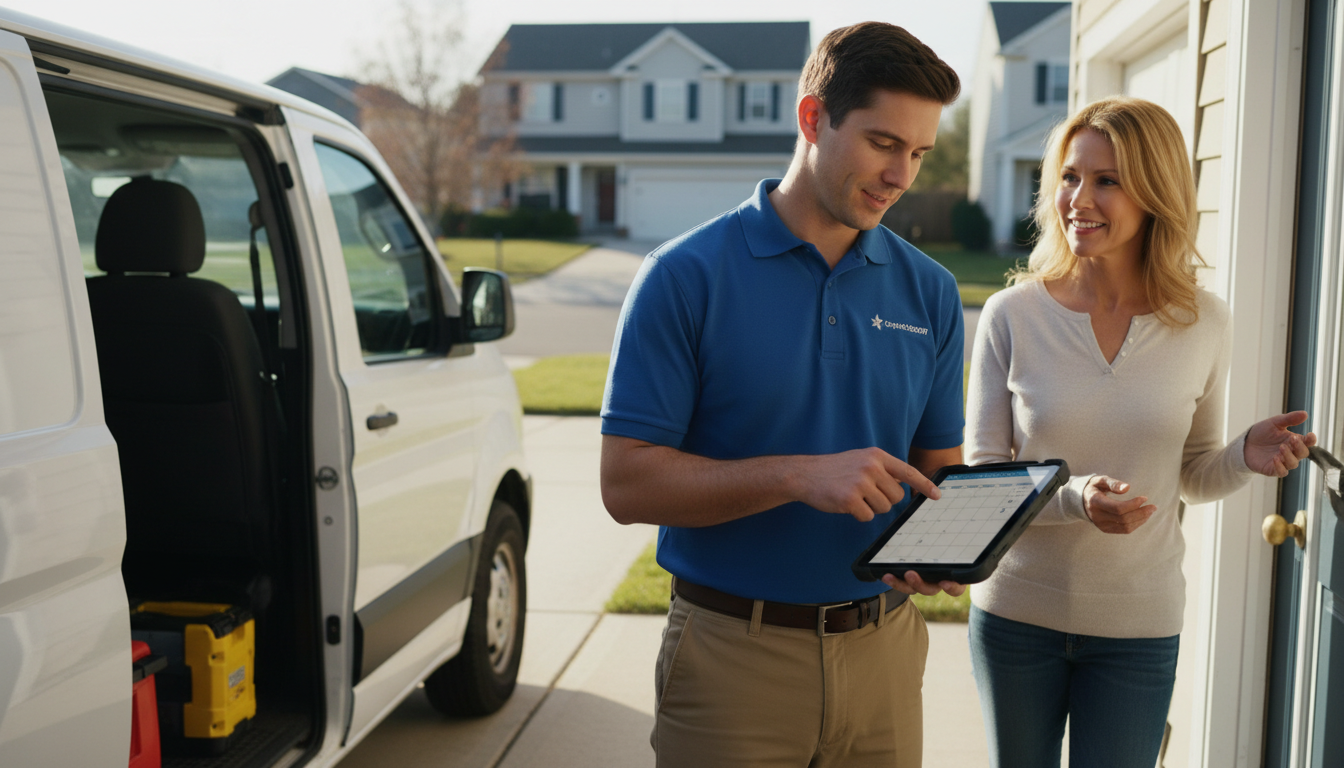
Even shops that answer calls promptly often lose leads during the confirmation phase. You tell a customer "I think I can get there tomorrow around 2 PM, let me check and call you back." That customer now waits in limbo, and if they don't hear back within 30 minutes, many will call the next company on their list. Professional booking systems confirm appointments during the initial call by accessing real-time schedule availability—no callbacks required.
What Actually Recaptures Lost Oven and Range Leads
Reclaiming market share from big box appliance repair services requires matching their booking capabilities without sacrificing the quality and accountability advantages of being local. This means ensuring every inbound call reaches a knowledgeable person who can answer basic questions, quote typical pricing, and book appointments into your actual calendar—whether that call comes at 9 AM Tuesday or 9 PM Saturday.
Three operational changes drive measurable results:
- Eliminate voicemail as first contact: Every call should reach a person, not a recording. Voicemail creates a one-way interaction that breaks momentum and introduces delays. Live answers convert at 5-8 times the rate of callbacks from voicemail messages.
- Book appointments during initial calls: Access to real-time scheduling means confirming the appointment before hanging up. This eliminates the "I'll check my schedule and call you back" dead zone where customers keep calling competitors.
- Follow up proactively: Send appointment confirmations via text and email immediately after booking, then remind customers the day before. This reduces no-shows and positions your business as organized and professional—exactly what homeowners want when inviting someone into their home.
Independent appliance repair companies that implement these three changes typically see 45-65% increases in booked oven repairs within 90 days, without spending an additional dollar on advertising. The leads were always there—you were just missing them because of operational gaps.
Why Hiring an "Office Person" Usually Doesn't Solve This
Many appliance repair shop owners recognize the call coverage problem and consider hiring a receptionist or office manager. But a single employee working 9-5 still leaves 128 hours per week uncovered, including the peak evening hours when most oven emergencies happen. That person also needs training on your services, pricing, scheduling systems, and customer handling—then vacation coverage, sick days, and management oversight.
The economics rarely work for small shops. A full-time office employee costs $35,000-50,000 annually when you include wages, taxes, benefits, and workspace. For a two- to five-person appliance repair company, that's a significant fixed cost that only solves the problem 24% of the week (40 hours out of 168). You're still missing evening calls, weekend emergencies, and any time that person steps away from their desk.
The alternative is building what amounts to a full front office team—multiple people covering different roles and shifts so every call gets answered professionally, every appointment gets booked correctly, and customers receive confirmation and follow-up communication without involving you. That's exactly what larger companies and big box stores have, and it's why they capture so many leads despite inferior service quality.
The Real Cost of DIY Office Operations
Beyond missed calls, handling your own front office creates hidden costs that erode profitability. Every hour you spend answering phones, booking appointments, and collecting payments is an hour you're not billing at your $85-150 hourly service rate. If you're averaging 90 minutes per day on administrative tasks (calls, scheduling, payment follow-up), that's 32.5 hours monthly—roughly $2,800-4,900 in lost billable time each month.
How to Win Back High-Margin Oven Work From National Chains
The appliance repair market is shifting as homeowners increasingly prefer local, independent providers who offer accountability and honest diagnostics—but only when those local shops deliver professional booking experiences. You already have the technical expertise advantage. Big box subcontractors are often entry-level technicians working on commission with incentives to recommend replacement over repair. Your experience, diagnostic accuracy, and willingness to source parts for older appliances give you natural competitive advantages—but only if customers reach you first.
Winning back market share comes down to operational execution:
- Answer every call within three rings with a knowledgeable person who can discuss oven and range repairs specifically, not a generic virtual receptionist reading from a script
- Book appointments during the initial conversation by accessing your real calendar and confirming specific time slots before hanging up
- Send immediate confirmations via text and email so customers feel the appointment is locked in and don't keep shopping
- Follow up after service to ensure satisfaction and request reviews, building the online reputation that drives future inbound leads
- Collect payments professionally with card-on-file systems and clear invoicing that matches what customers expect from larger companies
Independent appliance repair shops that execute these fundamentals consistently convert 65-80% of inbound oven repair inquiries, compared to 25-35% for shops relying on voicemail and callback-based booking. The difference is pure operational discipline—doing what big box stores do well, while maintaining the service quality advantages of being local and owner-operated.
Real Numbers: What Recovered Leads Actually Mean for Revenue
Let's make this concrete with realistic numbers for a typical independent appliance repair shop. Assume you're currently booking 20 oven and range repairs per month at an average ticket of $275 (service call plus parts and labor). That's $5,500 monthly, or $66,000 annually from oven work alone. If you're missing 40% of inbound calls—a conservative estimate for owner-operated shops without dedicated call coverage—you're currently losing approximately 13 additional oven repairs per month.
Recapturing even 75% of those missed leads (10 additional repairs monthly) adds $2,750 per month, or $33,000 annually. That's new revenue from leads that were already calling you—people who wanted to hire you but couldn't reach you. Over three years, accounting for repeat customers and referrals, a single operational improvement in call coverage and booking can generate $100,000+ in additional revenue that would have otherwise gone to Home Depot and Lowe's service contractors.
For shops in competitive markets where oven repairs represent 25-35% of total appliance service revenue, fixing the call coverage problem often translates to 15-20% growth in total business revenue within six months. This isn't growth from aggressive marketing or discounting—it's simply keeping the customers who were already trying to hire you.
Frequently Asked Questions
Why do customers choose big box store appliance repair over local shops?
Most customers don't prefer big box stores—they simply answer the phone first and book appointments immediately. Homeowners calling about broken ovens are in crisis mode and typically stop calling once someone confirms an appointment time. Local shops often provide better service, but lose the opportunity because calls go to voicemail or require callbacks to confirm scheduling. When independent shops match the responsiveness of national chains, customers prefer the accountability and expertise of local providers.
How quickly do I need to respond to appliance repair leads?
Research shows the first company to respond to a lead has a 238% higher conversion rate than the second responder. For emergency oven repairs, you should aim to answer within three rings and book the appointment during that initial call. Response times longer than five minutes dramatically decrease your odds of winning the job, as most homeowners will have already connected with and booked a competitor by that point.
What percentage of appliance repair leads do shops typically miss?
Independent appliance repair shops without dedicated call coverage typically miss 40-60% of inbound calls, especially during peak hours (early morning and 5-8 PM) when technicians are actively working. These aren't wrong numbers or spam—they're real customers looking for service who will hire whoever answers first. Each missed call represents $200-350 in immediate revenue and potentially thousands more in lifetime customer value.
Can I compete with Home Depot appliance repair pricing?
You don't need to undercut big box pricing to win—you need to match their responsiveness while providing superior service. When homeowners reach a knowledgeable person immediately and get booked into a specific time slot, price becomes secondary. Most customers prefer supporting local businesses and value the accountability of working with an independent shop, but only when the booking experience feels equally professional.
Is hiring a receptionist enough to solve missed call problems?
A single receptionist working 9-5 only covers 24% of the week, leaving evenings, weekends, and 128 other hours uncovered. Since most oven emergencies happen during dinner prep (5-8 PM) and early morning, you'd still miss the majority of peak-time calls. Additionally, one person can't handle multiple simultaneous calls, needs coverage for breaks and sick days, and costs $35,000-50,000 annually. Effective call coverage requires a team approach with multiple people covering different shifts and roles.
What's the actual revenue impact of fixing call coverage issues?
Appliance repair shops that implement 24/7 call coverage and professional booking typically see 45-65% increases in booked repairs within 90 days, without additional marketing spend. For a shop currently booking 20 oven repairs monthly at $275 average, recapturing 75% of missed leads adds approximately $33,000 in annual revenue from oven work alone, plus the compounding value of repeat business and referrals over time.
Stop Losing Oven Leads to Voicemail and Win Them Back
The appliance repair oven leads you're losing to big box stores aren't choosing corporate service over local expertise—they're choosing whoever answers the phone and books them first. You already deliver better repairs, more honest diagnostics, and actual accountability. The only thing standing between you and 45-65% more oven repair revenue is operational execution: answering every call, booking appointments during first contact, and following up professionally.
Your technical skills aren't the problem. Your phone coverage is. When customers can't reach you, they reach someone else—and you've lost not just one repair, but the entire customer relationship and all future appliance work for that household. This isn't about working harder or becoming something you're not. It's about building the front office operations that let your expertise actually reach the customers looking for it.
Book All Leads gives you a complete front office team answering calls, booking your calendar, collecting payments, and following up with customers—24/7, live in five days, no contracts. Stop losing leads to voicemail and start converting the business that's already calling you.
John Edmonds is a native Texan and military combat veteran. He founded Book All Leads after identifying a critical gap in the service industry: business owners losing revenue not from lack of skill, but because no one was handling the calls, follow-ups, reviews, and payments while they were busy doing the work.
View LinkedIn Profile →