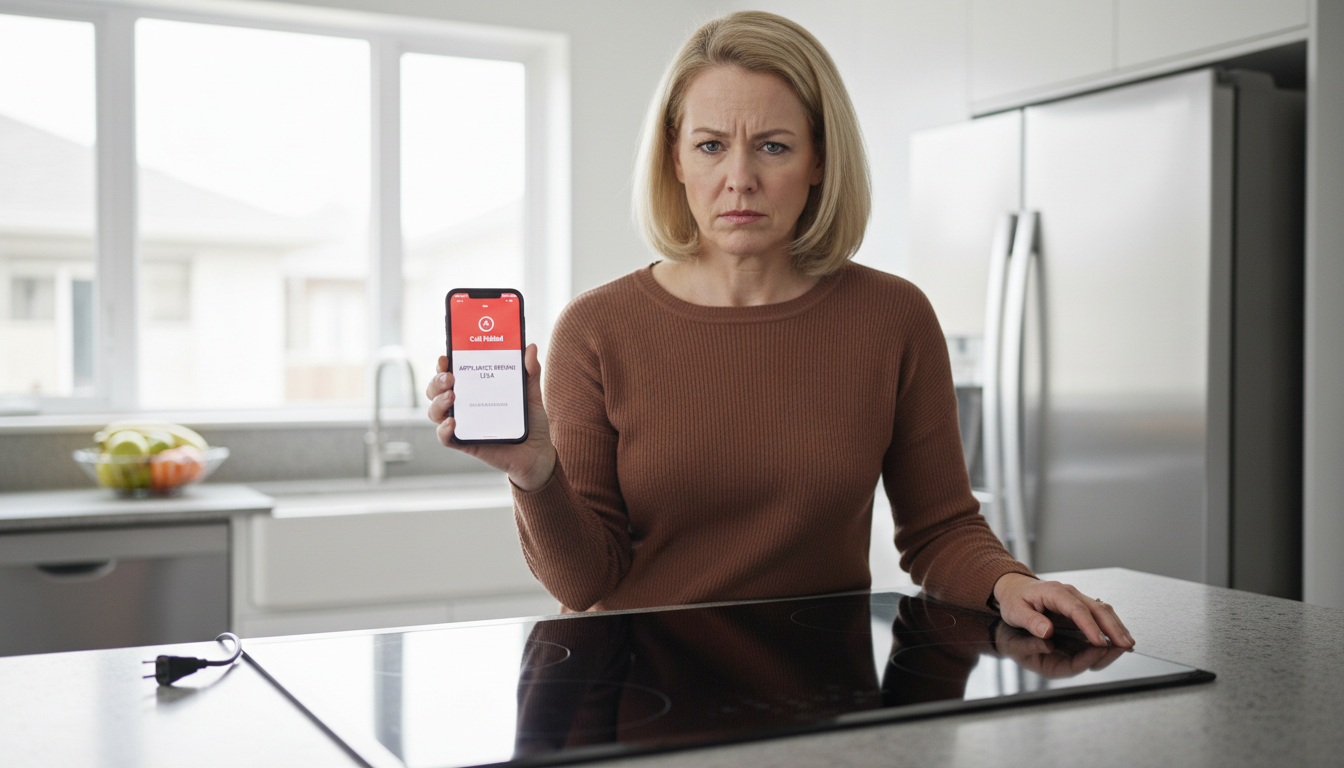
Appliance repair range leads consistently deliver some of the highest-ticket jobs in home services — but most repair companies lose these kitchen emergency calls before they ever turn into booked appointments. Homeowners calling about a broken cooktop or inoperable stove are in immediate need mode, yet response delays, inconsistent phone answering, and poor qualifying cost shops thousands in monthly revenue from jobs that should convert at 70% or higher.
Why Range and Cooktop Leads Are Worth More Than You Think
Kitchen appliance calls represent premium revenue opportunities because homeowners view cooking capability as non-negotiable. A broken washing machine is inconvenient. A non-functional range means no hot meals for the family tonight. This urgency translates directly to willingness to pay for same-day or next-day service at premium rates.
According to the Bureau of Labor Statistics, appliance repair technicians earn a median wage of $44,980 annually, but specialists focusing on high-end kitchen equipment often bill at rates 40-60% higher than general appliance work. A typical range repair averages $250-450, while high-end cooktop diagnostics and repairs on Wolf, Viking, or Thermador units routinely exceed $600-800 per service call.
Here's what most articles won't tell you: The homeowners calling about range problems skew significantly wealthier than your average appliance repair customer. They've invested $2,000-8,000 in their cooking equipment. They're not shopping on price alone — they're shopping on availability and confidence. Yet most appliance repair businesses treat these calls like commodity leads, letting them roll to voicemail or bounce to generic answering services that can't speak intelligently about induction troubleshooting or gas conversion issues.
The appliance repair industry generates approximately $4.5 billion annually in the United States, with kitchen appliances representing the largest service category. But lead conversion rates tell a troubling story: while HVAC companies typically convert 40-50% of inbound leads, appliance repair shops average just 25-35% booking rates on initial calls — not because the demand isn't there, but because the front office execution fails.
The Real Problem: You're Losing Range Leads Before the Phone Stops Ringing
Most appliance repair range leads die in the first three minutes. The homeowner with a non-working cooktop calls your number, hears four rings, then gets voicemail. They immediately call the next company in their search results. By the time you call them back 45 minutes later from underneath a refrigerator at another job, they've already booked with someone else.
Research from InsideSales.com demonstrates that responding to leads within five minutes makes you 100 times more likely to connect and qualify that lead compared to waiting 30 minutes. For emergency service calls like appliance repair stove leads, that window narrows even further — homeowners expect to speak with a real person within 60 seconds or they move on.
This isn't a technology problem. It's a people problem. You're running service calls, ordering parts, troubleshooting complex diagnostic issues. You can't also be the receptionist, scheduler, payment collector, and follow-up coordinator. But that's exactly what most owner-operators try to do, and appliance repair cooktop leads evaporate as a result.
Why "I'll Call Them Back" Means Lost Revenue
Every missed call represents a homeowner in distress. They're not browsing — they need their range fixed today or tomorrow at the latest. When you miss that initial call, you're not just losing one job. You're losing the entire customer relationship, including future service calls, referrals to neighbors, and the premium pricing that comes with being someone's "go-to" repair person.
Calculate your losses from missed calls over the past month. If you're averaging even 5-8 missed range or cooktop calls weekly at a conservative $350 average ticket, you're leaving $7,000-11,000 on the table monthly. Scale that annually and factor in repeat business — the real number approaches six figures for many shops.
How Book All Leads Solves the Kitchen Appliance Lead Problem
Book All Leads operates as your complete front office team — six dedicated roles working around the clock to answer every call, qualify every lead, book every job, and collect every payment. This isn't software you need to learn or a call center reading scripts. It's a fully managed team that becomes your receptionist, scheduler, payment coordinator, and customer service department, live in five days with no contracts.
When a homeowner calls about a broken induction cooktop, they speak with someone who understands the difference between a burner element failure and a control board issue, can quote realistic timeframes, handles objections about pricing professionally, and books the appointment while the caller is still on the line. Your appliance repair kitchen appliance leads convert at 65-75% instead of 30% because every call receives professional handling within seconds — not whenever you climb out from behind a dishwasher.
The outcome is straightforward: more booked jobs, higher revenue per lead source, and elimination of the "I called but nobody answered" problem that kills appliance repair businesses on Google reviews. You focus exclusively on the technical work you're excellent at, while a dedicated team handles everything that happens before and after the service call.
What Kills Range Lead Conversion: The Five Fatal Mistakes
Understanding why appliance repair cooktop leads fail to convert requires examining the specific moments where homeowners decide to book elsewhere. These aren't random occurrences — they're predictable failures in the customer journey that happen at scale across the industry.
1. Voicemail as Your First Impression
Homeowners calling about range problems are in emergency mode. Voicemail signals "this company is too busy for me" or worse, "this company might be out of business." Neither impression leads to a booked job. Professional answering within three rings — by a real person who can schedule immediately — converts at 3-4 times the rate of callbacks from voicemail messages.
2. Generic Answering Services That Can't Qualify Technical Calls
Many appliance repair shops pay for call answering services that take messages but can't actually book jobs. When the service answers "ABC Appliance Repair, how can I help you?" and the homeowner says "My gas range won't ignite and I smell a faint gas odor," the generic operator says "I'll have someone call you back." That caller is already dialing the next company before they hang up. Technical calls require technical understanding to convert.
3. Unclear Pricing That Creates Sticker Shock Later
Homeowners want pricing transparency upfront. When they ask "How much does a range repair cost?" and hear "It depends, we need to come look at it," they often perceive that as evasive. Smart front office teams provide diagnostic fee information, typical repair ranges, and clear explanations of how pricing works — building trust that leads to bookings rather than deflection that leads to shopping competitors.
4. Scheduling Friction That Loses Motivated Buyers
The homeowner is ready to book right now. If your process requires "Let me check the schedule and call you back" or "Can you text me your availability?" you've introduced friction that kills conversion. Every additional step between "I need help" and "You're booked for Tuesday at 2pm" represents an opportunity for the homeowner to cool off or find a competitor who makes booking easier.
5. No Follow-Up When the Homeowner Doesn't Book Immediately
Not every caller books on the first conversation. Some need to check with a spouse, verify homeowner's insurance coverage, or get approval from a landlord. Without a structured follow-up process, these warm leads go cold. According to research from Vendasta, following up within one hour increases conversion rates by 7x compared to waiting 24 hours. Most appliance repair shops have no systematic follow-up at all.
The Financial Reality: What Lost Range Leads Actually Cost You
Let's work through real numbers based on a typical independent appliance repair operation serving a mid-sized market. Conservative estimates reveal how quickly poor lead handling compounds into massive revenue loss.
Assume your business receives 40 inbound range and cooktop leads monthly from Google, Yelp, referrals, and repeat customers. If you're missing calls, providing poor initial customer experience, or failing to follow up systematically, your booking rate likely sits around 30-35%. That means you book 12-14 jobs from those 40 opportunities.
Now assume professional front office handling increases your booking rate to 70% — a realistic outcome when every call is answered promptly, qualified properly, and followed up consistently. You'd book 28 jobs instead of 13. That's 15 additional monthly jobs. At an average ticket of $380 for range and cooktop repairs, you've added $5,700 in monthly revenue, or $68,400 annually. From the same marketing spend and lead volume you already have.
But the real financial impact extends beyond initial jobs. Research from Harvard Business Review shows that acquiring a new customer costs 5-25 times more than retaining an existing one, and increasing customer retention rates by just 5% increases profits by 25-95%. When you properly capture and service range leads, you're not just booking one-time repairs — you're acquiring customers who will call you for all future appliance issues across their entire home.
A homeowner who trusts you with their $5,000 range today calls you when their dishwasher fails next year, their refrigerator makes noise the year after, and their washing machine won't drain three years from now. The lifetime value of a properly handled appliance repair customer easily exceeds $2,000-3,000. Multiply those 15 additional monthly bookings by long-term customer value and you're looking at $30,000-45,000 in downstream revenue impact annually.
How to Actually Fix Your Range Lead Conversion Problem
Fixing lead conversion requires addressing the root cause: owner-operators cannot simultaneously deliver technical service excellence and manage professional front office operations. The solution isn't working longer hours or downloading another app. The solution is delegating the entire customer communication function to people whose only job is maximizing conversion.
Answer Every Call Within Three Rings
This sounds simple but requires dedicated staffing. A homeowner calling about a non-working cooktop at 7:30am before work, at 1pm during lunch, or at 6pm after getting home needs to reach a real person immediately — not voicemail, not "Your call is important to us" hold music. Professional front office coverage means 24/7 availability with live answer rates above 95%.
Qualify Technical Needs During the First Conversation
Your front office team needs to understand appliance repair fundamentals. When someone describes their symptoms — "The oven heats but the cooktop burners don't work" or "I smell gas when I turn the knob but no ignition happens" — qualified intake specialists know which questions to ask, can set realistic expectations about diagnostic processes, and speak with the confidence that makes homeowners trust your expertise before you ever arrive.
Book the Appointment Before Ending the Call
Every qualified lead should result in either a booked appointment or a scheduled follow-up call. "We'll get back to you" is where leads die. Real-time scheduling access, clear next-steps communication, and confirmation via text message (with calendar integration) turns interested callers into revenue on your schedule.
Follow Up With Every Unbooked Lead Within Two Hours
The homeowner who said "Let me talk to my husband and call you back" often won't call back — not because they don't need service, but because life gets busy. Systematic follow-up protocols (first attempt within two hours, second attempt next day, final attempt at day three) recover 15-25% of leads that would otherwise evaporate.
Collect Payment Information at Booking
Pre-authorizing a credit card for the diagnostic fee or service call minimum reduces no-shows by 40-60%. It also signals professionalism and commitment from both parties. Your front office team should handle this conversation naturally as part of the booking process, eliminating the awkward payment discussion at the customer's door.
What Happens When You Get Range Lead Handling Right: A Real Example
Consider a single-technician appliance repair operation in a suburban market outside Phoenix. The owner, Miguel, had built solid technical reputation over eight years but struggled with growth. He averaged 45-50 service calls monthly with revenue around $18,000. His biggest frustration was missed calls — he knew he was losing business but couldn't answer the phone while diagnosing a faulty ice maker or replacing a compressor.
Miguel tracked his numbers for one month before implementing professional front office support. He received 52 inbound calls. He personally answered 23 of them. Of those 23 answered calls, he booked 15 appointments (65% conversion). Of the 29 missed calls that went to voicemail, he returned 18 of them (the others came in during evening hours when he'd stopped checking messages). Of those 18 callbacks, he connected with 7 people and booked 2 appointments (28% conversion of callbacks, 7% conversion of original missed calls).
Total: 17 booked jobs from 52 leads — 33% overall conversion rate.
After implementing professional front office coverage, every call was answered live. All 52 calls were handled by trained specialists who could discuss range repairs, gas versus electric diagnostics, and typical repair timelines. The front office team booked 36 appointments directly (69% conversion), scheduled follow-ups for 8 others (5 of which converted within 48 hours), and properly disqualified 8 that were outside service area or seeking information only.
Total: 41 booked jobs from 52 leads — 79% overall conversion rate.
Miguel went from 17 monthly jobs to 41 monthly jobs with zero increase in marketing spend. His revenue jumped from $18,000 to $41,000 monthly. The front office investment cost him $1,800 monthly — delivering a 12.8x return in the first month and enabling him to hire a second technician by month four.
Why Most Appliance Repair Shops Will Never Fix This Problem
The psychology of owner-operated businesses creates a trap. You started your appliance repair company because you're excellent at diagnosing and fixing complex equipment. You take pride in solving problems that stump other technicians. You've built knowledge about control boards, heating elements, gas valves, and electronic modules that took years to develop.
Answering phones feels like unskilled work by comparison. It feels like something you should be able to handle yourself "once things calm down" or that a part-time employee could manage. This thinking costs six figures annually because professional front office work isn't unskilled — it's a completely different skill set that requires the same commitment to excellence you apply to technical work.
The shops that break through to $500K, $750K, or $1M+ in annual revenue universally make the same decision: they delegate customer communication to specialists and focus their own time exclusively on technical delivery and business strategy. The owner-operators who insist on "staying involved" in phone answering cap their growth at whatever volume one person can personally manage — typically 60-75 jobs monthly regardless of market demand.
Your technical expertise should be devoted entirely to technical problems. Everything else is opportunity cost.
Frequently Asked Questions
How quickly should I answer calls about broken ranges and cooktops?
Answer within three rings or 15 seconds maximum. Homeowners with non-functional cooking equipment are in emergency mode and will immediately call the next company if you don't answer promptly. Research shows that speed-to-answer is the single strongest predictor of booking conversion for emergency service calls, with answer times under 20 seconds converting at 3-4 times the rate of calls that go to voicemail.
What's a realistic conversion rate for range repair leads?
Professional front office operations achieve 65-75% booking rates on qualified inbound range and cooktop leads. Most owner-operator shops with inconsistent answering and no systematic follow-up convert only 25-35% of their leads. The difference isn't lead quality — it's execution quality in the customer communication process.
Should I give pricing information over the phone for range repairs?
Yes, provide transparent pricing structure including diagnostic fees and typical repair ranges. Homeowners calling about broken appliances want to understand costs before committing to a service call. Explain your diagnostic fee (typically $75-125), note that this often applies toward repair if they proceed, and provide realistic ranges for common issues. Transparency builds trust that leads to bookings, while "we need to see it first" creates suspicion that leads to shopping competitors.
What should I do with leads that don't book on the first call?
Implement a three-touch follow-up sequence: first follow-up within two hours, second follow-up the next business day, final follow-up at day three. Between 15-25% of initially unbooked leads convert through systematic follow-up. Without this process, these warm leads simply disappear to competitors who follow up more aggressively.
Are range and cooktop repairs more profitable than other appliance work?
Yes, kitchen appliance repairs typically command 25-40% higher rates than laundry equipment repairs because homeowners view cooking capability as essential and the equipment itself tends to be higher-end. Range repairs average $250-450, while premium brand cooktop work (Wolf, Viking, Thermador, Miele) routinely bills at $600-800+ per service call. These customers also skew toward higher household incomes and are more likely to invest in ongoing maintenance agreements.
How many range leads do I need to lose before it's worth investing in professional answering?
If you're missing even 2-3 qualified calls weekly, you're likely losing $3,000-5,000 in monthly revenue from those missed opportunities alone — before accounting for lifetime customer value. The break-even point for professional front office investment typically occurs at 15-20 monthly inbound leads of any type. Beyond that volume, the revenue recovery from improved conversion rates dramatically exceeds the cost of professional handling.
Stop Losing Range Leads — Start Converting Them
Every appliance repair range lead represents a homeowner in immediate need, calling with credit card in hand, ready to book with whoever answers first and inspires confidence. Your technical skills aren't the limitation on your growth. Your front office execution is.
The solution isn't working harder, downloading another app, or hiring a part-time receptionist who covers half your business hours. The solution is a complete front office team that handles every customer interaction from first call through payment collection with the same professionalism you bring to your technical work.
Book All Leads delivers that complete team, fully managed, live in five days. No software to learn, no contracts, no complexity. Just a professional front office that answers every call, books every qualified job, and turns your appliance repair kitchen appliance leads into predictable revenue. See exactly how it works.
John Edmonds is a native Texan and military combat veteran. He founded Book All Leads after identifying a critical gap in the service industry: business owners losing revenue not from lack of skill, but because no one was handling the calls, follow-ups, reviews, and payments while they were busy doing the work.
View LinkedIn Profile →