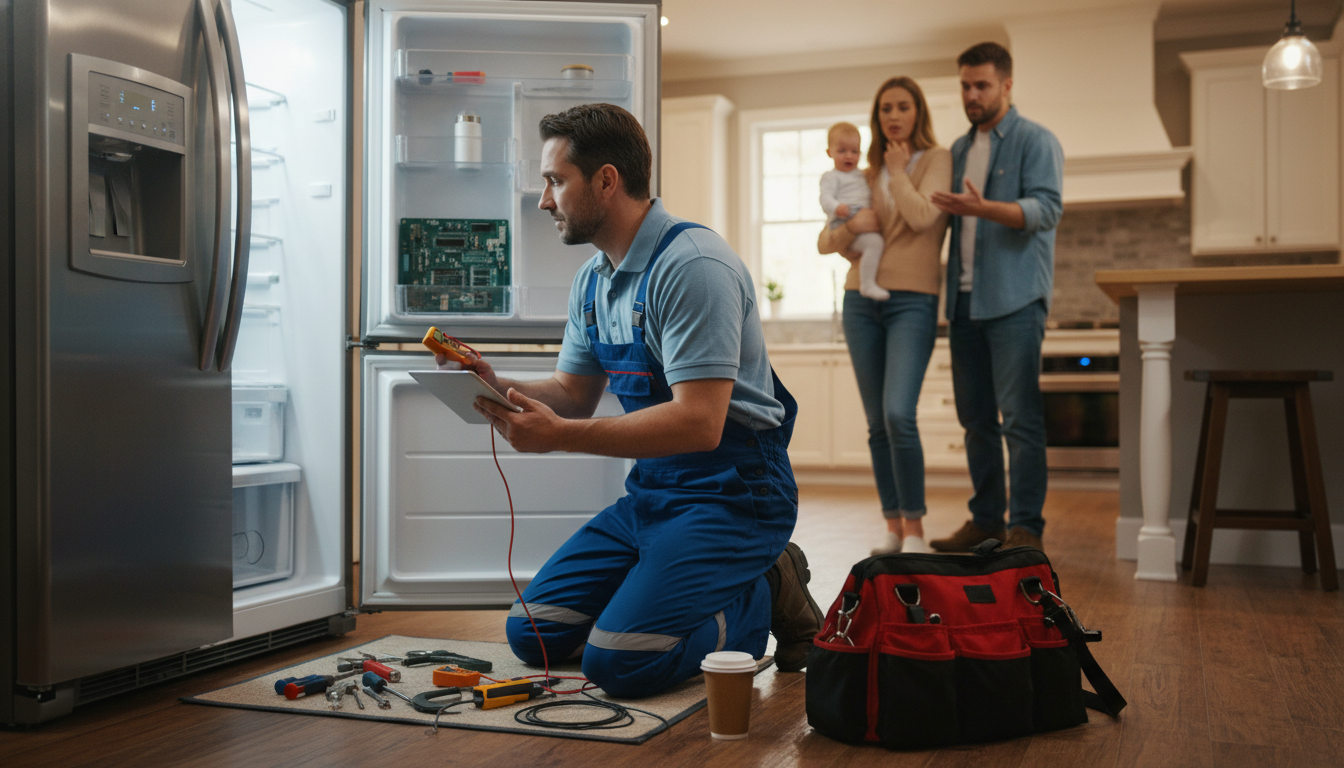
Appliance repair refrigerator leads convert at night and on weekends when food is spoiling and homeowners panic-call every shop in town. If you're not answering after 5 PM or on Saturday morning, you're handing emergency refrigerator jobs—often worth $300 to $800—to the competitor who picks up. The lost revenue isn't just one job; it's the customer relationship, the repeat work, and the referrals that follow every emergency rescue.
Why Refrigerator Leads Are Different (And Worth More)
Refrigerator repair calls aren't like dishwasher or oven requests. When a fridge stops cooling, the clock starts on hundreds of dollars of groceries. Homeowners call during dinner, at bedtime, and first thing Sunday morning—whenever they notice the milk is warm. These are high-intent, high-urgency calls that convert immediately if someone answers.
According to the Bureau of Labor Statistics, home appliance repairers earn a median of $44,980 annually, but shops that capture after-hours emergency work often see 20-30% higher revenue per technician because emergency calls command premium pricing and same-day booking rates.
Here's what most articles won't tell you: Refrigerator leads are the gateway to your most profitable customer segment. A homeowner who trusts you to save their groceries at 9 PM on a Thursday will call you first for every appliance issue for the next decade. The lifetime value of one emergency refrigerator customer often exceeds $2,000 when you factor in repeat repairs across all appliances, referrals to neighbors, and the premium they'll pay for your responsiveness.
But only if you answer the phone.
The Problem: Most Refrigerator Calls Happen When You're Closed
The majority of refrigerator repair emergency calls come in outside standard business hours—after 5 PM on weekdays, all day Saturday and Sunday, and during holidays when families are home and actually using their kitchens. Homeowners don't discover a failing compressor during your Tuesday morning availability; they notice it when they go to grab breakfast and the orange juice is lukewarm.
Research from InsideSales.com shows that 35-50% of sales go to the vendor who responds first, and in emergency home services, that window is even tighter. A homeowner with a warm fridge will call three to five shops in rapid succession and book with whoever picks up first. If you're sending those calls to voicemail, you're losing the job before you even know it existed.
Consider this: your average refrigerator repair ticket is $350 to $600. If you're missing just three after-hours calls per week—conservative for any established appliance shop—that's $4,500 to $7,200 in monthly revenue walking to competitors who simply answered their phone. Over a year, that's $54,000 to $86,400 in appliance repair refrigerator leads you paid to generate but never captured.
Why Voicemail and Answering Services Fail for Appliance Emergencies
Voicemail doesn't book jobs. A panicked homeowner facing spoiled food won't leave a message and wait for a callback—they'll dial the next number. Generic answering services are nearly as bad: they take a message and promise someone will call back, which defeats the entire point. By the time you return the call (often the next morning), the customer has already booked with someone else.
Weekend and holiday availability separates thriving appliance repair businesses from those stuck at breakeven. Yet most owner-operators can't afford to staff phones 24/7 or sacrifice every weekend to answer calls themselves.
Why After-Hours Calls Convert Better (And Command Higher Prices)
After-hours refrigerator repair calls convert at rates 40-60% higher than weekday inquiries because urgency eliminates price shopping. When a homeowner calls at 7 PM with a fridge full of thawing meat, they're not comparing three quotes—they're booking the first qualified technician who can come out tomorrow morning or, ideally, tonight.
Emergency calls also justify premium pricing. A $75 to $150 after-hours or weekend service fee is standard and accepted in the appliance repair industry. Customers understand that weekend availability and evening service carry a premium, and they pay it willingly when the alternative is replacing $400 worth of groceries.
This is where small appliance repair shops can outmaneuver larger competitors. Big box appliance retailers and national service chains often route after-hours calls to offshore call centers with limited booking authority or, worse, closed phone systems. A local shop with live answering and immediate booking has a decisive advantage every evening and weekend.
The Real Cost: Lost Customers, Not Just Lost Jobs
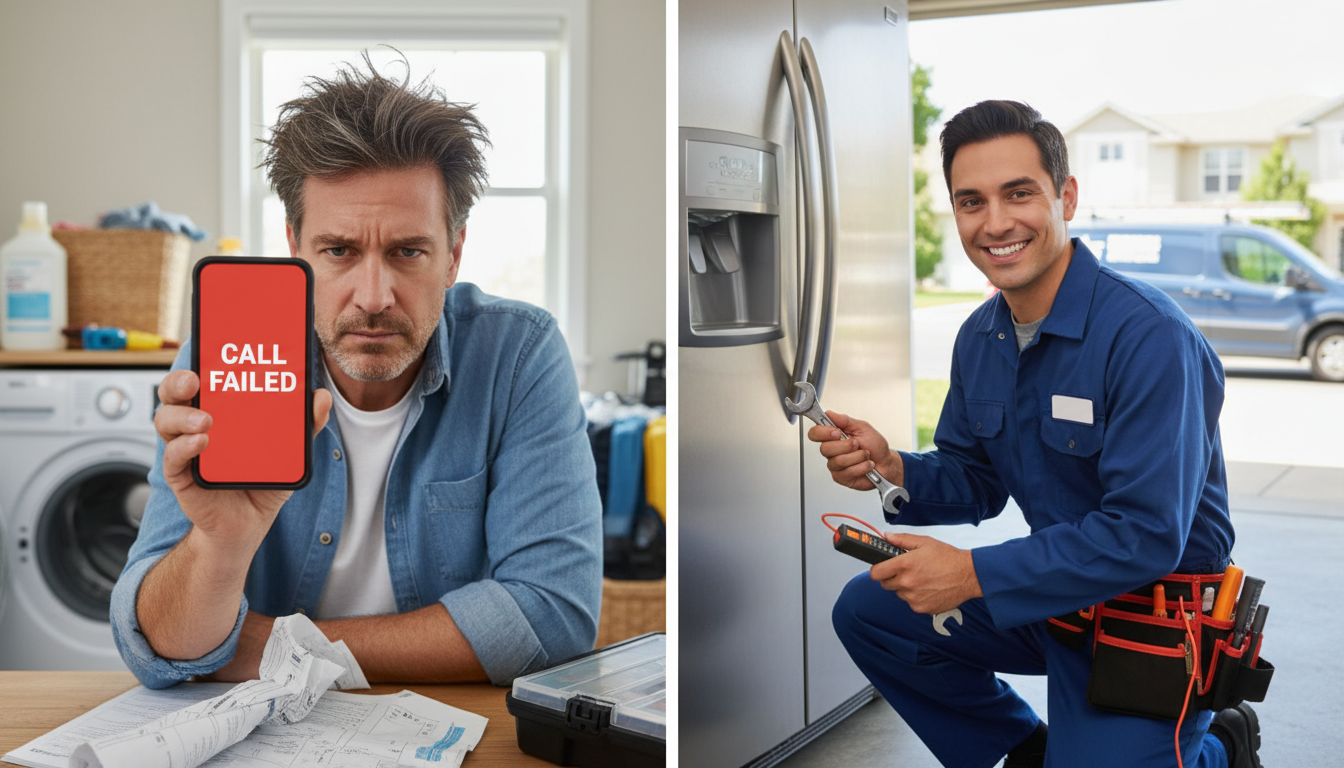
Every missed refrigerator emergency call costs more than one repair ticket. You lose the customer relationship, the future repairs across all their appliances, and the referrals they would have given after you saved their Thanksgiving dinner. According to Harvard Business Review, acquiring a new customer costs five to 25 times more than retaining an existing one, and increasing customer retention by just 5% can increase profits by 25-95%.
When you miss an emergency refrigerator call, another shop earns that trust. They become the first call for the next washer repair, the dishwasher installation, and the range issue six months later. They get the referral to the neighbor and the five-star Google review that drives more inbound leads.
The compounding effect is significant. One missed emergency call doesn't just cost you $500 today—it costs you $2,000 to $3,000 in lifetime customer value and potentially another $5,000 in referred business over the next three years.
How High-Performing Appliance Shops Capture After-Hours Revenue
The shops winning after-hours refrigerator repair work have one thing in common: someone qualified picks up every call, books the appointment on the spot, and follows up until the job is complete. They don't rely on voicemail, they don't use basic answering services that take messages, and they don't make customers wait until Monday morning for a callback.
Book All Leads gives appliance repair companies a full front office team—six roles working around the clock to answer calls, book jobs, and collect payments. No software to learn, no hiring, no training. Live in five days with no contracts. Your calls get answered by people who understand appliance emergencies, can check your calendar, quote pricing, and book the job while the customer is still on the phone.
This isn't about automation or technology. It's about having a team that works when you can't—evenings, weekends, holidays—so every refrigerator emergency call turns into revenue instead of a missed opportunity.
What Actually Happens When You Answer After-Hours Calls
Let's walk through a real scenario. It's Saturday at 8 AM. A homeowner wakes up to a warm fridge and a puddle on the kitchen floor. She searches "appliance repair near me," calls the first three shops, and gets two voicemails and one answering service that says someone will call back Monday. The fourth call? A live person who books her for a 2 PM appointment that afternoon and sends a confirmation text.
That fourth shop earns the $450 repair, the follow-up maintenance contract, and the customer's loyalty. The three shops with voicemail never even knew she called. This scenario repeats dozens of times every weekend in every market where appliance repair businesses operate.
Shops that capture weekend refrigerator calls typically see 25-35% revenue increases within the first quarter, not from raising prices or adding technicians, but simply from converting leads they were already generating and losing.
Why Most Appliance Shops Can't Staff After-Hours (And What Changes That)
Hiring a full-time receptionist is expensive—$35,000 to $45,000 annually plus benefits—and they only work 40 hours per week. Covering evenings and weekends would require multiple people, pushing the cost to $80,000 to $100,000 per year. Most appliance repair shops with fewer than five technicians can't justify that overhead.
Owner-operators try to answer calls themselves, but that means working 60-70 hour weeks, never disconnecting, and fielding price-shopping calls during family dinner. It's not sustainable, and it doesn't scale.
Offshore call centers are cheap but ineffective for emergency service work. They can't answer specific questions about your pricing, availability, or service area. They create friction instead of removing it, and customers can tell immediately they're talking to someone reading a script halfway around the world.
The solution isn't doing it yourself or hiring more staff—it's having a dedicated front office team that works as an extension of your business, knows your pricing and policies, and treats every call like it's their own company. That's the only way small appliance shops compete with national chains that have staffed call centers.
What to Do Right Now If You're Losing After-Hours Leads
Start by understanding how many refrigerator repair emergency calls you're actually missing. Check your voicemail logs, Google call history, and any tracking numbers you use. Count the after-hours calls from the past 30 days. Multiply that by your average refrigerator repair ticket value, then calculate your losses over a full year.
That number is your baseline. Now consider that for every call you counted, there are likely two or three more homeowners who called, got voicemail, and moved to the next shop without leaving a message. The actual missed revenue is probably double your initial estimate.
Next, decide how you'll cover after-hours calls moving forward. You have three realistic options:
- Answer calls yourself: Sustainable only if you're a solo operator with no family commitments and don't mind working seven days a week indefinitely.
- Hire staff to cover extended hours: Requires $80,000+ annual investment and ongoing HR management, hiring, training, and turnover risk.
- Use a dedicated front office team: Costs a fraction of hiring, starts immediately, and scales with your call volume without adding overhead.
The shops that capture after-hours appliance repair refrigerator leads don't necessarily work harder—they work smarter by ensuring every call is answered by someone who can book the job immediately.
The Competitive Advantage of 24/7 Availability
Most appliance repair shops in your market are making the same mistake you've been making—they're closed after 5 PM and all weekend. That means a massive revenue opportunity is sitting unclaimed every single week. When you start answering after-hours calls, you're not competing with every shop in town anymore; you're competing with the two or three who also answer, and you're capturing everyone else's overflow.
Homeowners remember who picked up during an emergency. That memory drives repeat business, referrals, and five-star reviews that mention your responsiveness. Emergency service excellence is one of the most effective, least expensive forms of marketing an appliance repair business can invest in.
According to research from Bain & Company, customers who have the best past experiences spend 140% more compared to those who had the poorest experiences. In service businesses, "best experience" almost always includes immediate response during an urgent need.
The businesses that dominate local appliance repair markets ten years from now will be the ones who captured emergency refrigerator calls today, built trust during crisis moments, and earned customer loyalty that insulates them from price competition and lead generation costs.
Frequently Asked Questions
How many refrigerator repair calls typically come in after hours?
Most established appliance repair businesses receive 30-50% of their refrigerator repair inquiries outside standard business hours—evenings after 5 PM, weekends, and holidays. The exact percentage varies by market, but refrigerator emergencies spike during times when families are home and using their kitchens, which naturally skews toward non-business hours.
Can I charge more for after-hours refrigerator repairs?
Yes, after-hours and weekend service fees of $75 to $150 are standard and expected in the appliance repair industry. Customers understand that evening and weekend availability commands a premium, especially during emergencies when food spoilage is imminent. Most homeowners pay the fee willingly because the alternative—losing hundreds of dollars in groceries—is far more expensive.
What's the best way to handle after-hours calls without working 24/7 myself?
The most cost-effective solution is using a dedicated front office team that answers, books, and follows up on calls as an extension of your business. This costs significantly less than hiring full-time staff to cover extended hours and starts immediately without the hiring, training, and turnover risk that comes with employees. Avoid generic answering services that only take messages—they don't convert emergency calls into booked jobs.
How quickly do I need to respond to a refrigerator repair lead?
Immediately. Research shows that 35-50% of emergency service jobs go to the first vendor who responds. With refrigerator repairs, homeowners typically call three to five shops in rapid succession and book with whoever answers first. A callback the next morning is too late—the customer has already hired a competitor by then.
Do after-hours refrigerator customers become repeat clients?
Yes, at significantly higher rates than standard inquiries. Customers who experience excellent service during an emergency develop strong loyalty and trust. They call you first for future appliance issues, refer you to neighbors and family, and leave positive reviews that drive more inbound leads. The lifetime value of one emergency customer often exceeds $2,000 when you factor in repeat repairs and referrals.
What if I don't have technicians available for same-day emergency calls?
You don't always need same-day availability to win the booking. What matters most is answering the phone immediately and scheduling the earliest available appointment—often next morning or within 24 hours. Homeowners want to know their problem is handled and someone reliable is coming. If you answer and book the 8 AM slot tomorrow, you'll beat the competitor who sent them to voicemail, even if that competitor could have come out tonight.
Stop Losing Emergency Revenue to Competitors Who Simply Answer
Every refrigerator repair call you miss after hours is revenue you generated through your marketing, your reputation, and your years of work—and then handed to a competitor who just happened to pick up the phone. The solution isn't working longer hours yourself or spending $80,000 hiring receptionists. It's having a front office team that treats your calls like their own business, books the job while the customer is on the line, and ensures every appliance repair refrigerator lead turns into revenue.
You built your reputation on fixing appliances. Don't lose customers because of an unanswered phone. See how Book All Leads captures after-hours calls and turns missed opportunities into your most profitable customer relationships.
John Edmonds is a native Texan and military combat veteran. He founded Book All Leads after identifying a critical gap in the service industry: business owners losing revenue not from lack of skill, but because no one was handling the calls, follow-ups, reviews, and payments while they were busy doing the work.
View LinkedIn Profile →