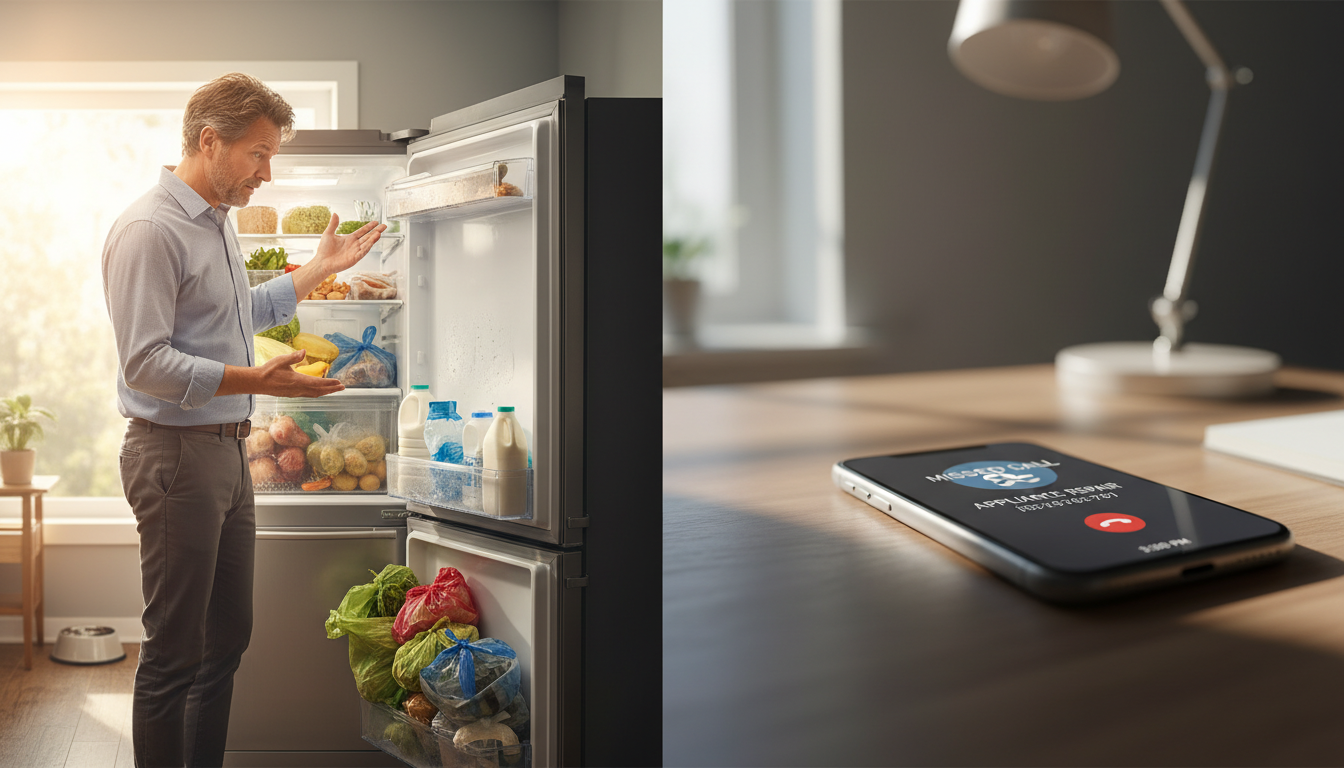
Appliance repair same-day service calls represent the highest-margin jobs in the industry, but most shops lose 60-70% of these emergency requests before the first ring ends. When a refrigerator dies at 9 PM or a washing machine floods on Sunday morning, homeowners call the first three companies they find and book with whoever answers first—not the best technician, not the cheapest rate, just the one who picks up the phone. Miss that call, and you've handed a $300-500 job to a competitor who may not even be better than you.
The Problem: Same-Day Calls Get Answered by Your Competitors, Not You
Emergency appliance calls don't wait. A homeowner with a broken refrigerator full of groceries or a washer leaking onto hardwood floors needs help now—within the hour if possible, certainly within the day. According to InsideSales.com, your odds of qualifying a lead drop by 400% if you respond after five minutes versus one minute. For same-day appliance repair, that window is even tighter.
Here's what happens in real time: Sarah's dishwasher starts pouring water across her kitchen floor at 7:30 AM. She Googles "appliance repair same-day service" and calls the first three companies that claim same-day availability. Your shop is #2 on the list. Company #1 doesn't answer—it goes to voicemail. She calls you. You're already on a job site, phone in the truck, and you don't hear it. She calls Company #3. They answer on the second ring, confirm a technician can come by 2 PM, and book the job. By the time you call Sarah back at lunch, she says "thanks, but I already found someone."
You just lost a $350 service call because you were 90 minutes slower than a competitor who may charge less and do worse work. Speed beat skill. Availability beat reputation. And you'll never get that revenue back.
Why Appliance Repair Companies Consistently Miss Emergency Calls
Most appliance repair shops operate as one-person or small-team operations where the owner is also the lead technician. You're under a cabinet fixing an oven, diagnosing a compressor failure, or driving between jobs—exactly when same-day emergency calls come in. The structural problem isn't laziness or poor service; it's that you can't physically be in two places at once, and emergency calls don't arrive on a convenient schedule.
The Phone Is in the Truck, You're on Your Back Under a Dryer
Technical work demands focus. When you're diagnosing a gas range ignition problem or replacing a washer transmission, you're not checking your phone every 30 seconds. By the time you finish the repair, wash your hands, and see the missed call, 45 minutes have passed. The customer has already booked with the shop that answered immediately.
Voicemail Doesn't Book Same-Day Jobs
Homeowners facing an appliance emergency rarely leave voicemails anymore. They call the next number on the list. According to Forbes, 80% of callers who reach voicemail hang up and call a competitor rather than leaving a message. For emergency appliance repair, that number is likely even higher—people in crisis want a human being who can solve their problem right now, not a return call in two hours.
After-Hours Is When Appliances Break
Refrigerators don't only die during business hours. Washers leak on Saturday evenings. Ovens fail on Thanksgiving morning. The shops that capture same-day appliance service revenue are the ones answering calls at 6 PM, on weekends, and during holidays—exactly when small owner-operated shops are closed or unavailable. If you're not answering, someone else is.
Here's what most articles won't tell you: The shops winning the emergency appliance repair market aren't necessarily better technicians—they're just better at answering the phone. A mediocre technician who answers every call in under 30 seconds will consistently outbook an excellent technician who calls back in an hour. Homeowners can't evaluate your diagnostic skills or repair quality during the panic of a broken appliance. They can only evaluate your availability. The first person to pick up the phone wins the revenue, and skill becomes irrelevant if you never get the chance to prove it. That's the hidden truth of same-day service: booking speed determines revenue more than technical expertise.
What Same-Day Service Calls Are Actually Worth
Emergency appliance repair jobs command premium pricing because customers value speed over cost. A homeowner with a refrigerator full of food at risk doesn't shop for the cheapest rate—they pay for immediate availability. Same-day service calls typically generate 30-50% higher revenue than scheduled appointments, with average ticket values between $300-500 depending on the appliance and issue.
If your shop currently misses 60% of after-hours and weekend calls, and you receive an average of 15 emergency calls per week, you're losing approximately $4,500 in weekly revenue—$18,000 per month, $234,000 per year. That's not hypothetical padding; that's the actual cost of unavailability. To calculate your losses based on your specific call volume and average ticket, the math is straightforward: missed calls × booking rate × average ticket value.
Beyond immediate revenue, emergency calls generate long-term customer relationships. A homeowner you help during a crisis becomes a loyal customer for future repairs and replacements. According to Harvard Business Review, acquiring a new customer costs five times more than retaining an existing one, and repeat customers spend 67% more than new ones. Every missed emergency call is both lost immediate revenue and lost lifetime value.

The Fix: Answer Every Emergency Call in Under 60 Seconds
To capture same-day appliance repair revenue, you need a front office team dedicated to answering calls while you focus on repairs. This isn't about installing call-forwarding apps or training your spouse to take messages between dinner and bedtime—it's about having trained people whose only job is answering your phone, qualifying callers, checking your schedule, and booking jobs immediately.
Book All Leads provides a complete front office team—six roles working around the clock—that answers every call in your business name, books same-day service appointments directly into your calendar, and handles payment collection. You don't learn software, manage staff, or change how you work. Your team goes live in five days, answers 24/7, and you only pay for results. When a homeowner calls at 8 PM with a broken freezer, they get a real person who books the job immediately, and you show up the next morning to a confirmed, pre-paid appointment.
What Immediate Answer Capability Actually Looks Like
A proper front office team doesn't just pick up the phone—they handle the complete booking process. When an emergency call comes in, your team answers with your business name, asks diagnostic questions to assess urgency, checks your real-time availability, quotes accurate pricing, books the appointment, collects payment details, and sends the customer a confirmation. You receive a complete job brief with the customer's issue, location, appliance details, and payment status before you ever make contact.
For after-hours calls, your team books the earliest available slot the next day and sets customer expectations appropriately. If you're fully booked for same-day service, they offer next-day morning appointments and add the customer to a priority list if a cancellation opens up. Either way, the customer speaks to a human being who helps them, and you don't lose the revenue to a competitor's voicemail.
The Economics of Capturing Emergency Revenue
Owner-operators often hesitate to invest in front office support because they mentally categorize it as an expense rather than a revenue generator. The correct framing is: How much does each missed call cost? If you're missing 36 emergency calls per month at an average value of $400 per job and a 50% booking rate, that's $7,200 in lost monthly revenue. A front office team that captures even half of those missed calls generates an additional $3,600 per month in booked jobs—revenue that currently goes to competitors simply because they answered faster.
The return isn't about saving time or reducing stress—though both happen. It's about converting emergency demand that already exists but currently flows to whoever picks up the phone first. You're not creating new market demand; you're capturing the demand that's already calling you and going elsewhere when you don't answer.
Real Example: How One Appliance Repair Shop Recovered $8,400 in Monthly Revenue
Mike runs a two-technician appliance repair shop in suburban Phoenix. For years, he handled all calls personally between jobs, which meant missing 50-60% of calls during peak hours and virtually all after-hours requests. He estimated he was losing 8-10 jobs per week to missed calls—mostly same-day emergencies where customers called multiple shops and booked with the first to answer.
After bringing on a dedicated front office team, Mike's shop went from answering 40% of calls to 98%. Emergency bookings increased by 65% in the first month. His average monthly revenue jumped by $8,400, driven almost entirely by same-day service calls that previously went to competitors. Mike didn't hire additional technicians, expand his service area, or increase advertising. He simply answered the phone every time it rang, and customers who were already trying to hire him could finally get through.
The unexpected benefit: Mike stopped working evenings and weekends returning voicemails. His team handled all after-hours calls, booked the appointments, and he started each day with a full schedule of confirmed jobs instead of a list of callbacks that might or might not convert. His close rate improved because he only spoke to customers who were already booked and ready—not cold leads who needed convincing.
What Changes When You Never Miss an Emergency Call
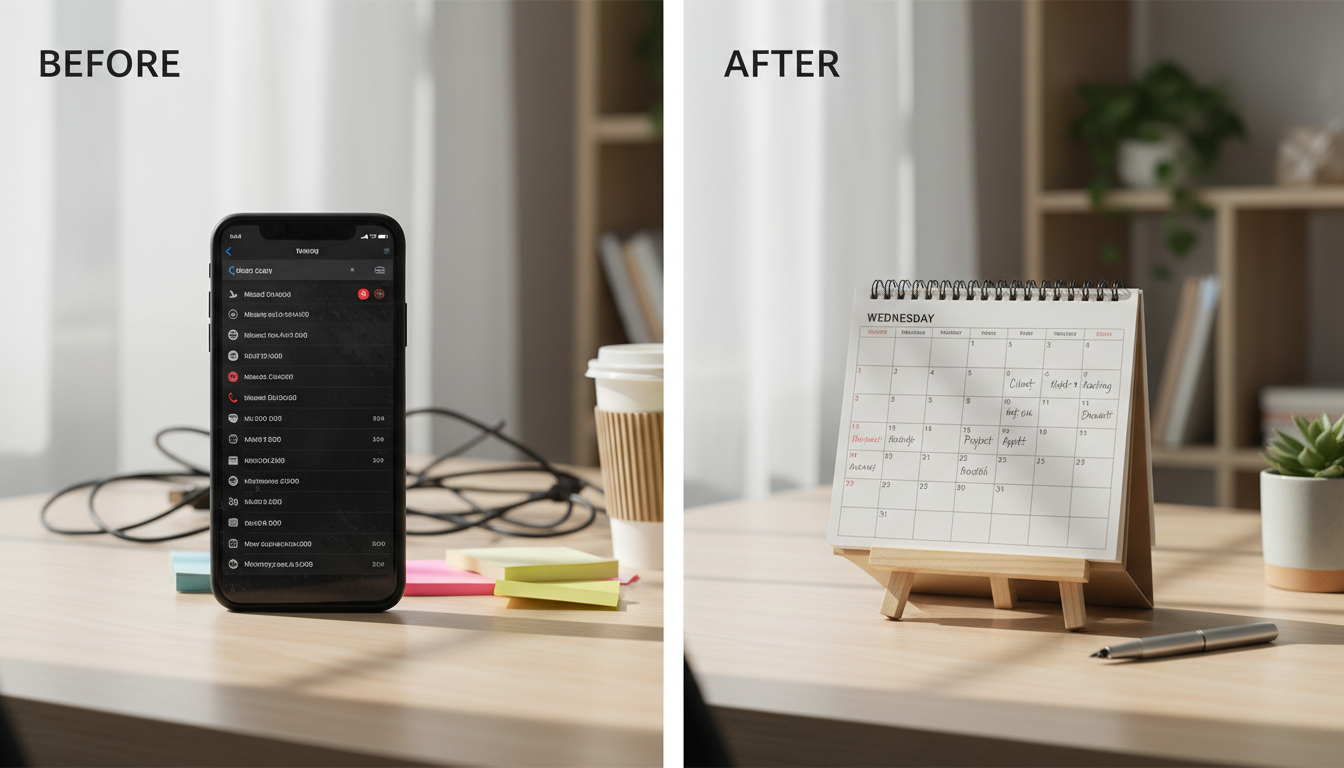
Consistent availability shifts your competitive position. When customers can always reach you, you stop competing on price and start competing on reliability. Homeowners remember which shop answered during their crisis and which one sent them to voicemail. That emotional memory creates loyalty that lasts years.
Your pricing power increases. Shops that answer immediately can charge premium rates for same-day service because they're delivering on the core promise: fast resolution. Customers accept higher prices when they receive immediate help. Shops that call back later have already lost the premium pricing conversation—they're now competing with everyone else the customer called, and price becomes the tiebreaker.
Your technician utilization improves. When every call converts to a booked appointment, your schedule fills with confirmed jobs instead of hopeful callbacks. You spend fewer hours chasing leads and more hours turning wrenches. According to IBISWorld, the appliance repair industry generates approximately $4.5 billion in annual revenue, but individual shops often struggle with utilization rates below 60% due to scheduling inefficiencies. When you answer every call and book immediately, utilization jumps to 80-90%, meaning your existing team generates significantly more revenue without working longer hours.
Why "Just Hiring Someone to Answer the Phone" Usually Fails
Owner-operators sometimes try hiring a part-time receptionist or using an answering service, and both approaches typically fail for emergency appliance calls. A part-time receptionist works 20 hours per week—exactly when you need coverage least. Emergency calls come in at 6 PM, on Saturdays, during lunch breaks. A traditional answering service takes messages but can't book appointments, quote pricing, or check your availability, so customers hang up and call someone who can.
What you need is a team that knows your pricing, understands appliance repair terminology, can assess urgency, has access to your real-time schedule, and can close the booking while the customer is still on the phone. That requires training, oversight, and 24/7 coverage—which is why most small shops can't build it in-house. The cost of hiring, training, and managing a full front office team internally runs $8,000-12,000 per month. For most appliance repair shops, that's not economically viable.
The alternative is a fully managed front office team that works as an extension of your business. You don't hire, train, schedule, or manage anyone. You get the outcome—every call answered, every job booked, every payment collected—without the operational burden of building the team yourself.
Frequently Asked Questions
How quickly do customers expect a callback for same-day appliance repair?
For genuine emergencies—refrigerator failures, water leaks, gas odors—customers don't wait for callbacks. They call multiple shops simultaneously and book with the first to answer. If you call back within 5 minutes, you might still have a chance. Beyond 10 minutes, the job is almost certainly already booked with a competitor. Same-day service calls require immediate answer capability, not callbacks.
What percentage of appliance repair calls are actually same-day emergencies?
Industry data suggests 35-45% of appliance repair calls involve urgent situations where the customer wants same-day or next-day service. Refrigerator and freezer failures, washer leaks, and gas range issues typically can't wait. Dishwasher repairs and dryer issues have more flexibility. The percentage increases during summer (refrigerator failures spike) and holidays (oven and range calls increase).
Can I charge more for same-day appliance service?
Yes, and customers expect it. Same-day service calls typically command 20-50% premium pricing over scheduled appointments. Trip charges, emergency fees, and after-hours rates are standard in the appliance repair industry. Customers value speed and availability over cost when facing an urgent failure, especially for refrigerators and freezers where delayed repair means food loss.
What happens to after-hours calls if I can't service them until the next day?
Your front office team books them for the earliest available slot the next morning and sets clear expectations. The key is that the customer speaks to a real person immediately, gets a confirmed appointment, and knows when help is coming. That's infinitely better than voicemail, and it prevents them from calling competitors. Even if you can't arrive until tomorrow, answering tonight wins the job.
How do I know my front office team understands appliance repair enough to handle calls?
A properly trained front office team learns your specific pricing, service area, diagnostic questions, and appointment types before taking calls. They're not diagnosing compressor failures—they're qualifying the customer's issue, assessing urgency, checking your availability, and booking the appointment. You provide the technical expertise when you arrive; they handle the conversation that gets you in the door.
Do customers get frustrated talking to someone who isn't the technician?
Not when the person answering can immediately book their appointment and solve their problem. Customers get frustrated by voicemail and delayed callbacks. If your front office team answers professionally, shows empathy for the customer's situation, and books the job on the spot, customers are relieved—not frustrated. They got what they needed: a confirmed time when their appliance gets fixed.
Stop Handing Emergency Revenue to Competitors Who Just Answer Faster
The appliance repair same-day service market rewards availability above all else. Technical skill, reputation, and competitive pricing matter only after you answer the phone. Every missed emergency call is immediate revenue lost and long-term customer relationships handed to competitors who may not be better than you—just faster to pick up.
If you're currently missing 40-60% of calls because you're on job sites, driving, or closed after hours, you're losing $100,000-250,000 in annual revenue that's already trying to reach you. The solution isn't working longer hours or checking your phone obsessively—it's having a dedicated front office team whose only job is answering every call and booking every job while you focus on repairs.
Book All Leads gives you a complete front office team in five days. No software to learn, no staff to manage, no long-term contracts. Just every call answered, every emergency job booked, and every payment collected—so you can stop losing same-day revenue to competitors who simply picked up the phone first.
John Edmonds is a native Texan and military combat veteran. He founded Book All Leads after identifying a critical gap in the service industry: business owners losing revenue not from lack of skill, but because no one was handling the calls, follow-ups, reviews, and payments while they were busy doing the work.
View LinkedIn Profile →