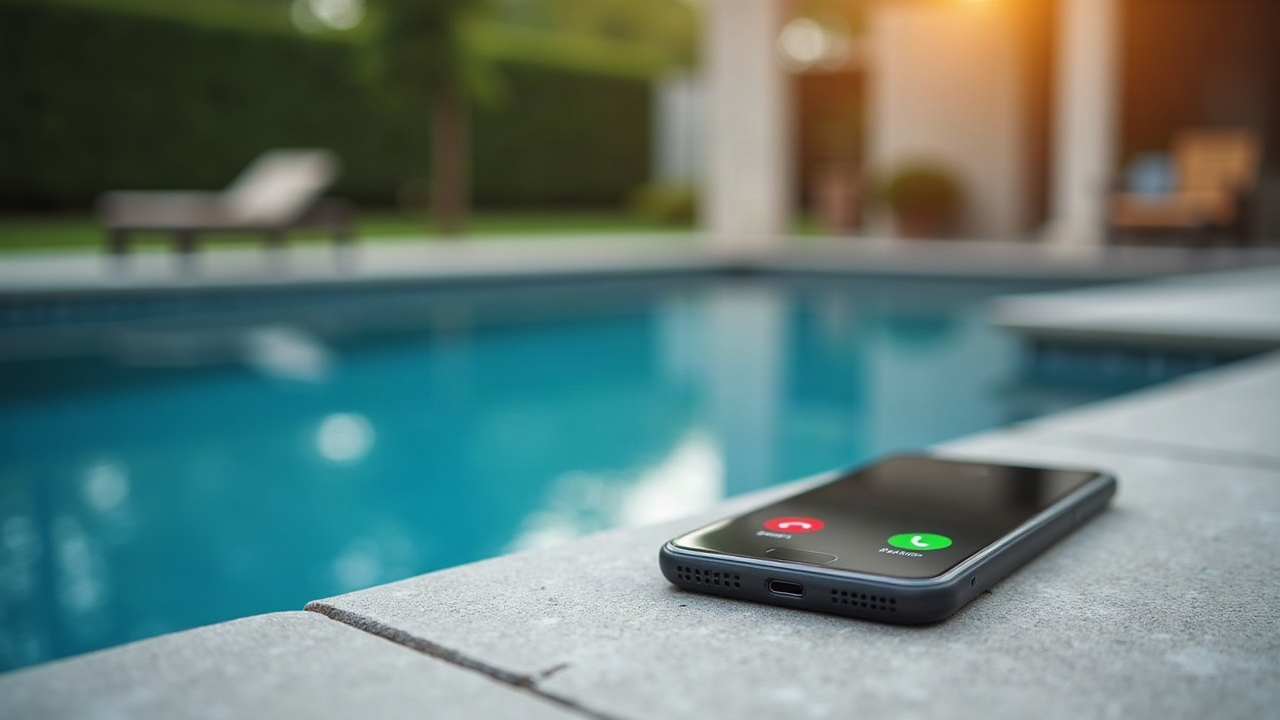
Concrete pool sales are being lost before the first consultation ever happens—not because fiberglass pools are superior, but because fiberglass salespeople answer the phone faster, handle objections more convincingly during initial calls, and book site visits while concrete pool builders are still returning voicemails. The premium market doesn't go to the best product; it goes to whoever controls the conversation in the first five minutes after a homeowner calls.
This isn't about construction quality. You know your gunite work is superior. The homeowner comparing your website to a fiberglass dealer's doesn't—yet. And they never will if the fiberglass company answers their call in 90 seconds while you're on a jobsite for the next three hours.
Here's what's actually happening: A homeowner searches "inground pool cost" on Tuesday afternoon. They call four companies in 20 minutes. The fiberglass dealer answers live. Their receptionist books a consultation for Thursday. By the time you return the call Wednesday morning, the homeowner says "we're still getting quotes"—but mentally, they've already moved you to the backup list. The fiberglass salesperson spent 12 minutes on that first call pre-framing concrete as "expensive, slow, and high-maintenance." You're fighting uphill before you ever shake hands.
Why Do Concrete Pool Builders Lose Sales Before the First Meeting?
Concrete pool builders lose sales in the first five minutes because they treat $80,000+ jobs like they're $3,000 service calls. According to InsideSales.com, lead response time is the single strongest predictor of contact rate—and contact rate determines which builder controls the sales conversation. When fiberglass dealers answer in under two minutes and concrete builders call back in three hours, the sale is functionally decided before anyone discusses coping styles or finish options.
The concrete pool industry operates with a dangerous assumption: that homeowners researching $60K–$150K purchases will wait patiently for callbacks. They won't. They're comparison shopping in real-time, calling multiple builders within the same hour. The first company to answer and book a consultation controls the narrative. The rest are playing defense.
Here's what's costing you:
- First-call speed: Fiberglass dealers typically operate with dedicated inside sales teams who answer live. Concrete builders rely on mobile phones they check between pours.
- Objection handling: The first conversation sets the frame. Fiberglass reps spend 8–12 minutes pre-empting concrete objections ("long install times," "crack concerns," "higher cost"). By the time you call back, those objections are already planted.
- Appointment conversion: The homeowner who speaks to someone first is 4x more likely to book with that company. They mentally file later callbacks as "backups."
Here's what most articles won't tell you: The concrete vs. fiberglass sales battle isn't won or lost during the site visit. It's decided in the first phone call—specifically in how that call is answered, how long the homeowner waits, and whether your team can reframe fiberglass talking points before they harden into assumptions. Most concrete builders never get the chance because they're still on the jobsite when the homeowner moves on.
What's Really Happening When Homeowners Call Pool Companies?
When a homeowner calls about an inground pool, they're simultaneously calling three to five companies within a 30-minute window. They're not methodically researching one builder at a time—they're batching calls while motivation is high, usually during lunch breaks or right after seeing a neighbor's new pool. The company that answers first gets to ask questions, uncover budget, and book the consultation. Everyone else is returning a call to someone who's already half-sold.
Fiberglass dealers understand this. Many operate with call centers or dedicated intake staff who do nothing but answer phones and book appointments. They're optimized for speed and scripted for objection pre-emption. Concrete pool builders, by contrast, usually operate with a small office team (or no office team) and rely on the owner's cell phone. When you're managing a shotcrete crew or meeting with an engineer, that phone goes to voicemail.
The gap compounds:
First call (fiberglass company, answered live): "We can usually complete installation in 4–6 weeks, and because it's a factory finish, there's no replastering every 10 years like with concrete. When would be a good time for us to come measure your yard?"
Second call (your callback three hours later): "Hi, this is Mike returning your call about a pool quote." Homeowner: "Oh, thanks. We're still getting estimates. Can you email me some pricing?"
You've lost the temperature of the lead. The fiberglass rep already booked Thursday at 6 PM. You're trying to re-engage someone who's moved into research mode.
The Objection Pre-Frame Problem
Fiberglass salespeople don't just answer faster—they use the first call to pre-frame the homeowner's perception of concrete. Common scripts include:
- "Concrete pools take 10–14 weeks to install, and with permitting delays, you might not swim this summer."
- "Concrete requires acid washing and replastering every 8–12 years—that's $8K–$12K every decade."
- "The surface is porous, so you'll use more chemicals and spend more time balancing pH."
These aren't lies—they're selectively accurate. But by the time you return the call, the homeowner is primed to ask you defensive questions: "How long does installation really take?" "How much does replastering cost?" You're no longer selling the benefits of custom design and durability. You're defending against objections you didn't know were planted.
How Do You Win Back Premium Concrete Pool Sales?
Winning back concrete pool sales requires treating the first phone call as the actual sales appointment—not a scheduling formality. That means answering live, asking qualifying questions, and booking consultations while the homeowner is still in buying mode. It also means having someone on your team whose only job during that call is to control the narrative before fiberglass talking points take root.
Most concrete pool builders don't lose jobs because of price or product. They lose because they're structurally unable to compete on response time. The owner is on-site. The office person (if there is one) is handling permits, invoicing, and contractor calls. Nobody's optimized to answer a new lead in 90 seconds and spend 10 minutes qualifying them.
That's where Book All Leads comes in. We're a fully managed front office team for pool builders who are tired of losing $100K+ jobs to companies that simply answer the phone faster. We handle every inbound call live—no voicemail, no apps for you to learn—and we're trained to qualify leads, answer common fiberglass objections, and book consultations while the homeowner is still motivated. You stay on the jobsite. We make sure every lead gets a conversation, not a callback three hours too late.
Reframe the Conversation Before the Site Visit
The companies that win concrete pool sales treat the first call as a mini-consultation. They don't just book appointments—they ask questions that shift the homeowner's focus from price and speed to customization and longevity.
Questions that work:
- "Are you looking for a standard shape, or is custom design important to you?"
- "How long are you planning to stay in this home? I ask because concrete pools actually increase property value more than fiberglass."
- "Have you thought about features like tanning ledges, beach entries, or integrated spas? Those are tough to do with a pre-fab shell."
These questions do two things: they uncover whether the lead is a good fit for concrete, and they reframe the decision away from speed and cost toward design and permanence. Fiberglass reps can't compete on customization. But if the homeowner never hears that framing, they default to the simpler, faster option.
What Should Your Front Office Be Saying on Concrete Pool Lead Calls?
Your front office should be qualifying leads and pre-selling concrete's advantages during the first call, not just collecting names for callbacks. The goal is to book a consultation with a homeowner who's already leaning toward concrete—not someone who's mentally shopping price and install speed. A good intake call for a concrete pool lead should take 8–12 minutes and cover budget, timeline, design preferences, and property constraints.
Start by acknowledging what the homeowner has probably already heard: "You're likely getting quotes from fiberglass companies too, and they'll tell you they're faster and cheaper. That's true—if you want a pre-made shell in a limited set of shapes. Most of our clients come to us because they want a pool that fits their yard and their vision, not a catalog option."
Then ask questions that uncover fit:
- Design: "Are you looking for something standard, or do you have specific ideas about shape, depth, or features?"
- Timeline: "When are you hoping to be swimming? If it's this summer, we'll let you know if that's realistic."
- Budget: "Most of our concrete pools run $60K–$120K depending on size and features. Is that in the range you're planning for?"
- Property: "Do you have any grading issues, easements, or tight access we should know about before we come out?"
This isn't interrogation—it's positioning. You're demonstrating expertise and filtering for homeowners who value what concrete delivers. The ones who just want the cheapest, fastest option will self-select out. That's fine. They weren't buying an $80K custom gunite pool anyway.
Handling the "Concrete Cracks" Objection Live
One of the most common objections fiberglass reps plant is that concrete pools crack. Your front office needs a ready answer:
"Concrete pools can develop surface cracks—usually hairline and cosmetic—but modern engineering and proper steel reinforcement make structural issues rare. That's why we use engineered gunite and rebar, not just shotcrete. The trade-off is durability: a well-built concrete pool lasts 50+ years. Fiberglass shells can fade, blister, and delaminate, and when they do, you can't just replaster—you're looking at shell replacement or major gelcoat repair."
This doesn't dismiss the objection. It contextualizes it and flips the durability conversation. Most homeowners don't know fiberglass has longevity issues too. If you're the first to explain it, you control the frame.
How Much Revenue Are You Losing to Poor Phone Handling?
Poor phone handling costs concrete pool builders $200K–$500K+ per year in lost jobs. If you're generating 10 qualified pool leads per month and losing even three to faster-responding competitors, that's $240K–$360K in unrealized revenue annually at an average job size of $80K–$120K. According to Vendasta, 62% of calls to local service businesses go unanswered during business hours—and for high-ticket home improvement services like pools, the cost per missed call is catastrophic.
Most pool builders don't track this. They see five inbound leads and assume three weren't serious because they never booked. In reality, two of those three called a competitor who answered live, had a better conversation, and closed the deal. The leads weren't bad. Your phone handling was.
Want to see what poor response time is actually costing you? Calculate your losses based on your lead volume and average job size. The numbers are worse than you think.
The Compounding Cost of Losing the Premium Market
When fiberglass dealers dominate the first-call experience, they don't just win individual jobs—they shift market perception. Homeowners who've never spoken to a knowledgeable concrete pool builder start to believe fiberglass is the default and concrete is the "luxury upgrade" only a few can afford. That perception loop reinforces itself: fewer concrete pool conversations mean fewer concrete pool sales, which means less word-of-mouth, which means the next generation of buyers also defaults to fiberglass.
Breaking that loop requires winning back the first conversation. Every time.

What Does a High-Converting Concrete Pool Sales Process Look Like?
A high-converting concrete pool sales process treats every inbound call as a sales opportunity, not an admin task. It starts with live answer (under two minutes), moves into qualification and objection reframing (8–12 minutes), and ends with a booked consultation and follow-up plan. The homeowner should leave that first call feeling like concrete is the premium choice they're lucky to be considering—not the expensive, slow alternative they're trying to talk themselves into.
Here's the structure that works:
1. Live answer and temperature check (0–2 minutes): "Thanks for calling [Company]. Are you looking to install a pool this year, or are you just starting to explore options?" This question tells you how hot the lead is and whether they're calling multiple companies today.
2. Qualification and design interest (3–8 minutes): Ask about timeline, budget, design preferences, and property constraints. Uncover whether they've talked to fiberglass dealers and what they've heard. Reframe concrete as the choice for customization and longevity, not the expensive fallback.
3. Book the consultation (8–10 minutes): "Based on what you've told me, it sounds like a custom concrete pool would be a great fit. We'd love to come out, take measurements, and show you some designs similar to what you're describing. Does Thursday at 5 PM or Saturday at 10 AM work better?" Offer two specific times. Never leave booking open-ended.
4. Follow-up and confirmation (10–12 minutes): "I'm going to send you a confirmation email with photos of a few recent projects similar to what you're picturing. If anything changes, just reply to that email or give us a call. We're looking forward to meeting you Thursday." This keeps you top-of-mind and reinforces that you're organized and professional.
This process only works if someone on your team—your front office, a dedicated inside salesperson, or a managed team like Book All Leads—is available to execute it every time the phone rings. If calls go to voicemail 60% of the time, the process is irrelevant.
Why Do Pool Builders Struggle to Staff Front Office Roles?
Pool builders struggle to staff front office roles because the job requires someone who can sell, qualify, and handle objections—not just schedule appointments. Hiring a receptionist costs $35K–$45K per year, but most receptionists aren't trained to have 10-minute sales conversations with $100K leads. Hiring an inside salesperson costs $55K–$75K, which is hard to justify unless you're closing 30+ pools per year. The middle ground—someone who can do both—is rare and expensive.
The seasonal nature of pool sales makes this worse. You need maximum phone coverage from March through July, but you're paying salary year-round. Most small pool builders can't justify a full-time role for a four-month peak season.
So they default to the owner's cell phone. Which works fine for existing client calls and subcontractor coordination. It fails catastrophically for new lead intake.
The "I'll Just Hire Someone" Trap
Many pool builders try to solve this by hiring an office manager or admin who "can also answer phones." This rarely works. Office managers are hired to process paperwork, manage schedules, and coordinate crews. They're not hired to pre-sell concrete pools to skeptical homeowners who just got off the phone with a fiberglass dealer. The skill sets don't overlap.
Even when you hire well, you're still vulnerable. That person takes PTO, gets sick, or quits in May (right when leads peak). Unless you've built redundancy into your front office—multiple people trained on intake—you're back to voicemail the moment someone's unavailable.

How Do You Compete Without Hiring a Full Sales Team?
You compete by outsourcing your front office to a team that already knows how to handle high-ticket home improvement leads. That means live answer, trained intake, objection handling, and appointment setting—without hiring, training, or managing staff. For most pool builders doing $2M–$10M per year, building an internal team for this is overkill. You need the outcome (every call answered, every lead qualified, every consultation booked), not the headcount.
Book All Leads operates as your fully managed front office. We're live 24/7, we're trained on concrete pool sales and how to handle fiberglass objections, and we integrate directly into your scheduling and follow-up process. You don't learn software, you don't manage people, and you don't worry about coverage gaps. We answer, qualify, book, and hand you a confirmed appointment with a homeowner who's already leaning toward concrete. You can see pricing here or talk to our team about how we'd fit your operation.
What Should You Say When a Homeowner Asks About Fiberglass on the First Call?
When a homeowner asks about fiberglass on the first call, acknowledge it directly and reframe the choice around what matters to them. Don't dismiss fiberglass or sound defensive. Instead, say something like: "Fiberglass is a good option if you want something fast and you're okay with limited shapes. Most of our clients come to us because they want a pool that's truly custom—specific dimensions, integrated features, unique finishes. If that's important to you, concrete is the only way to get there."
This does two things: it validates their question (so they don't feel sold to), and it repositions concrete as the choice for people who value design and permanence. You're not saying fiberglass is bad. You're saying it's a different product for a different buyer.
Then pivot to questions:
- "What kind of shape or features are you envisioning?"
- "Is this a pool you're planning to enjoy for the next 20–30 years, or is this more of a near-term amenity?"
- "Have you thought about things like tanning ledges, beach entries, or custom tile work?"
These questions move the conversation from price-and-speed (where fiberglass wins) to design-and-longevity (where concrete wins). If the homeowner's answers reveal they just want a simple rectangular pool installed fast, you can gracefully suggest they explore fiberglass options. That's fine. You've saved yourself a wasted site visit and kept your pipeline focused on buyers who value what you deliver.
Frequently Asked Questions
How much faster do fiberglass companies really respond to leads?
Fiberglass dealers with dedicated inside sales teams typically respond to inbound leads in under two minutes, often answering live on the first ring. Concrete pool builders relying on mobile phones or small office teams average 2–4 hours for first response, and many don't return calls the same day. That gap is the difference between controlling the sales conversation and playing defense.
Can concrete pool builders compete on speed without hiring a call center?
Yes, but not by doing it yourself. You either need a dedicated front office person whose only job is answering and qualifying calls, or you outsource to a managed team like Book All Leads. Trying to answer leads from the jobsite while managing crews doesn't work at scale. The calls go to voicemail, and the fiberglass dealer books the consultation.
What's the most damaging objection fiberglass reps plant about concrete pools?
The most damaging objection is timeline—specifically, the claim that concrete pools take 12–16 weeks and "you won't swim this summer." This objection is hard to counter because it's partially true, and it preys on the homeowner's urgency. The best counter is to reframe timeline as a trade-off for customization: "Yes, concrete takes longer because it's built on-site to your exact specifications. If you want a pool that's truly yours, that time is worth it."
Should I offer fiberglass pools just to capture leads faster?
Only if you're genuinely committed to selling and installing fiberglass at a competitive level. Adding fiberglass as a "backup option" to capture leads usually backfires—you end up competing with specialists who know the product better and can install faster. Most concrete builders are better off dominating their lane (custom, high-end, premium installations) and letting fiberglass dealers fight over the speed-and-price segment.
How do I know if a lead is a good fit for concrete before I drive out for a consultation?
Ask about budget, design preferences, timeline, and property constraints during the first call. If they say "we want the cheapest option installed in four weeks," they're not your buyer. If they say "we're planning to stay in this house for 20 years and we want a pool with a beach entry and custom tile," they're a great fit. The qualification happens in the first 8 minutes—don't skip it.
What's a realistic close rate for concrete pool leads if I'm handling the first call well?
If you're answering live, qualifying properly, and booking consultations while the lead is hot, a realistic close rate for qualified concrete pool leads is 30–50%. If you're losing leads to poor response time and weak first-call handling, that rate drops to 10–20%. The difference isn't your product or your pricing—it's who controlled the first conversation.
Stop Losing Premium Concrete Pool Jobs to Faster-Responding Competitors
Concrete pool sales aren't lost because homeowners prefer fiberglass. They're lost because fiberglass companies answer the phone faster, control the first conversation better, and book consultations while you're still on the jobsite. Winning back the premium market doesn't require cheaper pricing or faster installs. It requires treating the first call as the real sales opportunity—and making sure someone on your team is ready to have that conversation every single time the phone rings.
If you're tired of losing $80K–$120K jobs to companies that simply pick up the phone faster, it's time to fix your front office. Book All Leads handles every inbound call live, qualifies leads using proven concrete pool scripts, and books consultations while your competitors are still listening to voicemail. You focus on building incredible pools. We make sure every lead gets the conversation they deserve—and you get the revenue you've earned.
John Edmonds is a native Texan and military combat veteran. He founded Book All Leads after identifying a critical gap in the service industry: business owners losing revenue not from lack of skill, but because no one was handling the calls, follow-ups, reviews, and payments while they were busy doing the work.
View LinkedIn Profile →