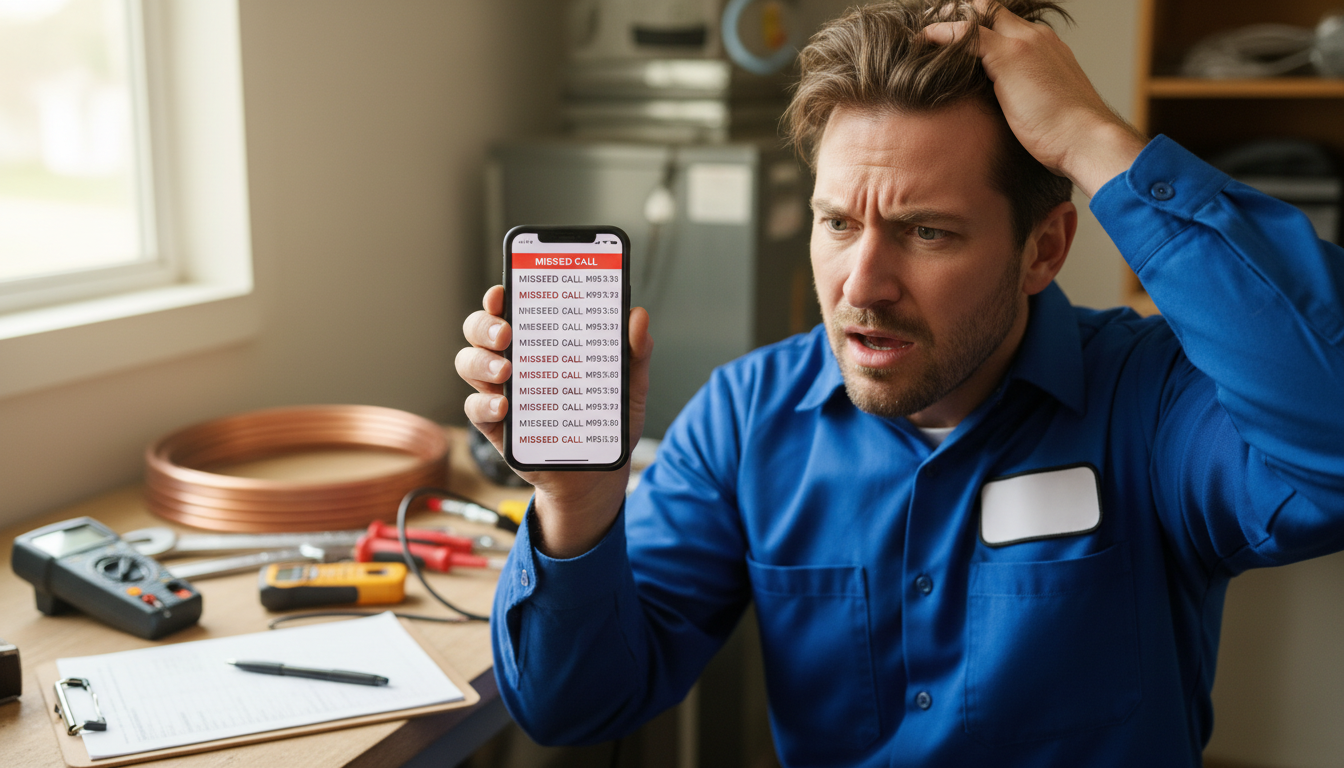
HVAC customer retention calls often fail not because of poor service in the field, but because of what happens after the phone rings. Most HVAC companies lose customers within the first 24 hours due to slow callbacks, forgotten follow-ups, unprofessional phone handling, or simply making customers repeat themselves. You booked the job, showed up on time, and did quality work—but the customer never called again. The problem isn't your technical skill. It's everything that happens between "hello" and "we'll be there Tuesday."
According to Air Conditioning Contractors of America (ACCA), acquiring a new HVAC customer costs five times more than retaining an existing one. Yet most contractor businesses focus entirely on the first visit and ignore the relationship that determines whether that customer ever calls back. You're bleeding revenue every time someone chooses a competitor for their next repair, seasonal maintenance, or system replacement—work that should have been yours.
Here are the seven reasons customers disappear after their first experience with your company, and what's actually driving them to your competitors.
1. You Take Too Long to Return Their First Call
When someone calls about a broken AC in July or a dead furnace in January, they're calling every HVAC company in your area until someone picks up or calls back first. Speed to contact determines who gets the job. If you take more than five minutes to respond, you've already lost half your potential customers to competitors who answered immediately.
Studies on lead response time show that calling back within five minutes makes you 100 times more likely to connect with a lead compared to waiting 30 minutes. For emergency HVAC calls, that window is even smaller. Your potential customer isn't waiting by the phone—they're moving down their list.
Here's what most articles won't tell you: The problem isn't just missed calls when you're on a job site. It's that homeowners can't tell the difference between "busy" and "doesn't care." When you call back three hours later, they've already booked someone else. They don't leave a voicemail for you explaining why. They just never think of your company again.
Every minute you wait costs you money. A missed call during peak season isn't just one lost job—it's lost annual maintenance contracts, future replacements, and referrals. Calculate your losses from slow response times, and you'll see why this matters more than any other marketing expense.
2. Your Voicemail Sounds Like Every Other Contractor
Generic voicemail greetings ("You've reached ABC Heating and Cooling, please leave a message") tell customers nothing about when you'll call back, whether you handle emergencies, or if you even check messages regularly. Uncertainty drives people to keep calling other companies who might actually be available.
Professional HVAC customer service phone handling means your voicemail should tell callers exactly what to expect: "We return all calls within 30 minutes. For immediate emergency service, press 2." Most contractors don't realize their voicemail is actively costing them jobs.
Between 30-40% of first-time callers won't leave a voicemail at all, according to research on consumer phone behavior. They'll simply hang up and dial the next number. Your outgoing message is either reassuring them you're reliable or confirming their suspicion that you're too busy to care about new customers.
3. Nobody Follows Up After the Estimate
You showed up, diagnosed the problem, gave them a quote, and said "let me know." Then silence. The customer expected a follow-up call to answer questions, discuss financing, or simply remind them you're ready to start. Instead, they got nothing—so they assumed you didn't really want the job and called someone hungrier.
Companies like BookAllLeads build entire front office teams around solving this exact problem: the gap between estimate and booking where most contractors lose winnable jobs. A dedicated team handles follow-up calls, answers pricing questions, and converts estimates into scheduled work—without you lifting the phone. No software to learn, no systems to manage. Just a team that makes sure nobody falls through the cracks.
The average HVAC replacement job is worth $5,000-$8,000. Yet most contractors treat estimate follow-up as an afterthought. One follow-up call within 24 hours can increase your closing rate by 25-40%. Two follow-up calls over a week can double it. But you're on a roof, not behind a desk, so it doesn't happen.

4. Customers Have to Explain Everything Twice
They told the person who answered the phone that their AC stopped working yesterday and they already checked the breaker. Then your technician arrives and asks when it stopped working and whether they checked the breaker. This seems small, but it signals disorganization. If your front office doesn't talk to your field team, what else are you forgetting?
Poor HVAC phone call handling creates friction at every touchpoint. Customers repeat their address, their problem, their schedule constraints, and their payment preferences because nothing gets written down or transferred properly. Each repetition erodes trust. They start wondering if you'll remember to order the right part or show up on the right day.
This isn't about technology. It's about having people whose only job is managing customer information and making sure your technicians arrive fully briefed. When your tech shows up already knowing the customer's name, problem, and history with your company, you look professional. When they show up asking basic questions, you look like every other contractor scrambling to stay organized.
5. You Never Call to Check If They're Happy
You completed the repair, collected payment, and left. The customer was satisfied. But satisfaction isn't loyalty. Without a follow-up call asking if everything's still working well and reminding them about seasonal maintenance, they'll simply Google "HVAC repair" next time something breaks. You're a transaction, not a relationship.
According to Bureau of Labor Statistics data on service industries, repeat customers spend 67% more than new customers over time. In HVAC, that difference is even more dramatic. A customer who uses you for one emergency repair might spend $400. A customer who uses you for annual maintenance, repairs, and eventually a system replacement might spend $15,000 over ten years.
The gap between those two outcomes is a phone call. A simple "just checking in to make sure everything's still running smoothly" call three days after service, then again in six months to schedule maintenance. Most HVAC companies never make those calls because they're too busy running service calls. So customers drift away.
Why Maintenance Contracts Start With Retention Calls
Selling annual maintenance contracts doesn't happen at the door while your technician is wrapping up a repair. It happens during the follow-up call when someone has time to explain the value without rushing to the next job. A front office team can convert one-time customers into maintenance contract holders at rates 3-4 times higher than field technicians can because they're not standing in someone's basement trying to close while also loading tools into the truck.
6. Your Phone Handling Changes Depending on Who Answers
When your office manager answers, calls get handled professionally—names recorded, appointments scheduled correctly, questions answered. When you answer from the truck, it's rushed. When your technician answers, they forget to write down the callback number. Inconsistent HVAC customer service phone experiences train customers not to trust you with important details.
Customers notice inconsistency more than almost anything else. They'll forgive a lot of small issues if your company feels reliable. But when Tuesday's phone experience contradicts Monday's, they start looking for a more stable option. Consistency signals competence.
This is why owner-operators struggle with growth. You can't personally answer every call, but you also can't trust that whoever does will represent your company the way you would. So you stay small, overwhelmed, and stuck answering phones between jobs instead of growing your revenue.

7. You Don't Call to Remind Them About Seasonal Service
Your customer had a great experience with your furnace repair last winter. But when summer hit and their AC started struggling, they didn't think to call you—because you never called to remind them you handle cooling too. Or they meant to schedule fall maintenance but forgot, and when their furnace died in December, they called whoever answered first in their panicked Google search.
Proactive retention calls—reminding customers about seasonal tune-ups, filter changes, and system checks—are how HVAC companies build predictable revenue. Reactive companies chase emergencies and wonder why their schedule is a chaotic mess. Smart companies fill their calendars with maintenance appointments because someone actually picks up the phone and books them.
The difference in revenue is staggering. An HVAC company with 500 past customers who never calls them will book maybe 20-30 maintenance appointments per year from people who happen to remember. The same company with someone calling those 500 customers twice a year will book 150-200 appointments. That's $15,000-$25,000 in easy revenue that requires no marketing, no bidding, and no competition.
Losing HVAC customers after the first call isn't about your technical skills or pricing. It's about everything that happens on the phone before, during, and after the job. Most contractors know this but can't fix it because they're too busy doing the actual work. You can't be on a roof and behind a desk at the same time.
How to Fix HVAC Customer Retention Without Hiring
You don't need more technicians. You need a front office team that treats every call like it matters—because it does. That means people answering within two rings, taking detailed notes, following up on estimates, calling to check on completed work, and proactively booking seasonal maintenance before customers forget about you.
Most contractors think this means hiring an office manager, training them, managing them, and hoping they don't quit right before summer. There's another option: a fully managed team that handles all six front office roles, works 24/7, and goes live in five days with no contracts. They answer your calls, book your jobs, follow up with customers, and collect payments—all under your business name.
The return on fixing your HVAC first impression and retention problem is immediate. Fewer missed calls mean more booked jobs. Better follow-up means higher close rates on estimates. Proactive seasonal reminders mean predictable maintenance revenue. Customers who feel taken care of refer their neighbors instead of shopping around next time.
You built your HVAC business on quality work. Don't let poor phone handling waste it. Every customer who doesn't call back is someone telling their friends and neighbors to try a different company. Fix how you handle calls, and you fix your revenue.
Frequently Asked Questions
How quickly should HVAC companies return customer calls?
HVAC companies should return calls within five minutes for the best chance of booking the job. Research shows that response times over 30 minutes reduce your connection rate by 100 times. For emergency calls during peak season, customers are calling multiple companies simultaneously, and whoever responds first usually gets the work. If you can't answer live, you need someone who can.
What's the main reason HVAC customers don't call back after their first service?
The main reason is lack of follow-up. Customers are satisfied with the work but forget about your company when the next problem arises because you never stayed in touch. A simple follow-up call within a week, plus seasonal reminders about maintenance, can increase repeat business by 60-80%. Most contractors never make these calls because they're too busy in the field.
How many follow-up calls should I make after giving an HVAC estimate?
Make at least two follow-up calls after giving an estimate: one within 24 hours to answer any questions, and another 3-5 days later if they haven't booked. This approach can double your close rate on estimates. Most customers aren't saying no—they're busy and distracted. A friendly reminder that you're ready to start often closes jobs that would otherwise go to competitors.
Do HVAC customers really care about professional phone handling?
Yes, significantly. Professional phone handling is often the only impression customers have of your company before you arrive. Consistent, organized, friendly phone experiences signal reliability and competence. Inconsistent or rushed phone calls signal disorganization and make customers worry about whether you'll show up on time, remember important details, or handle their property with care.
What's the lifetime value of an HVAC customer who stays with you?
A loyal HVAC customer is worth $10,000-$15,000+ over their lifetime, including annual maintenance, periodic repairs, system replacements, and referrals. Compare that to one-time emergency repairs worth $300-$800. The difference between those outcomes is retention—staying in touch, following up, and reminding customers you exist when they need service again.
How can small HVAC companies compete with larger companies on phone service?
Small HVAC companies can compete by ensuring every call is answered professionally and quickly, something larger companies often fail at despite their size. You don't need a huge staff—you need dedicated people handling phones who aren't also running service calls. Many small companies now use fully managed front office teams that answer calls, book jobs, and follow up with customers 24/7 without the cost and hassle of hiring in-house staff.
Stop Losing Customers You've Already Won
You're doing the hard part—showing up, diagnosing problems, completing quality HVAC work. But if your HVAC customer retention calls aren't happening, you're throwing away the easiest revenue your business will ever see. Repeat customers, referrals, and maintenance contracts all start with staying in touch after that first job.
The contractors winning in your market aren't better technicians. They're better at making customers feel remembered. That happens on the phone, not in the field. Fix your front office, and you fix your retention problem.
Ready to stop losing customers after the first call? Learn how BookAllLeads AI Business Team can handle every call, follow-up, and booking while you focus on the work only you can do.
John Edmonds is a native Texan and military combat veteran. He founded Book All Leads after identifying a critical gap in the service industry: business owners losing revenue not from lack of skill, but because no one was handling the calls, follow-ups, reviews, and payments while they were busy doing the work.
View LinkedIn Profile →