
HVAC seasonal revenue typically drops 40–60% between November and March because most companies structure their business around air conditioning sales and installations. When cooling demand disappears, they're left chasing emergency furnace calls with skeleton crews while fixed costs continue. The gap isn't just about weather—it's about business model design, pricing strategy, and how you answer phones during your busiest months.
Most HVAC owners know winter is slow. What they don't realize is how much money they're leaving on the table during those months—and how much of that loss actually starts in summer when they miss calls.
The Problem: Your Summer Success Creates Your Winter Struggle
Here's the pattern: June through September, your phones ring off the hook. You're running three install crews, turning down work, and your techs are pulling overtime. Revenue looks fantastic. Then October hits, and by mid-November, two of those crews are sitting idle. Your best installer is doing maintenance calls. By January, you're wondering if you should've saved more during the busy season.
According to the Air Conditioning Contractors of America, residential HVAC companies in heating-dominant climates see revenue fluctuations of 50% or more between peak cooling and heating seasons. In cooling-dominant markets, the winter slump can be even worse—sometimes 70% below summer peaks.
But the real problem isn't weather. It's that most HVAC companies built their entire operation around air conditioning work, then treat heating as an afterthought. Your marketing budget goes to cooling. Your salespeople are trained on AC replacements. Your financing promotions run April through August. When winter arrives, you're structurally unprepared to capture heating revenue at the same volume.
Here's what most articles won't tell you: The winter revenue gap actually starts in July. When you're slammed with cooling calls and missing 20–30% of inbound leads because nobody can answer the phone, you're not just losing summer revenue. You're losing the maintenance customers who would've called you first when their furnace quit in December. Every missed call during peak season is a customer who finds someone else—and that relationship lasts years, not seasons.
Why HVAC Winter Sales Fall Short (Even in Cold Climates)
Winter HVAC work should be profitable—furnace replacements carry similar margins to AC installs, and emergency heating calls command premium rates. Yet most companies still struggle. The revenue drop happens because of three structural problems that compound each other.
You've Trained Your Market to Think of You as "The AC Company"
Every truck wrap shows snowflakes and cool air. Your Google Ads run for "air conditioning repair." Your website hero image is a family staying cool in summer. You spent six months conditioning your market to call you for cooling, then wonder why they don't think of you when their heat goes out.
Your brand is seasonal even if your services aren't. That perception gap costs you every furnace replacement that goes to a competitor who markets heating services year-round.
Your Pricing Model Punishes Winter Work
Most HVAC companies charge the same rate for a furnace repair in January as they do in June—even though January work is harder to schedule, happens during your slow season, and often involves weather delays. Meanwhile, your fixed costs (shop rent, insurance, baseline payroll) stay constant.
Smart companies flip this. They raise summer maintenance rates when demand is high and they're turning work away. They offer winter equipment promotions to pull replacement sales into the slow season. They charge emergency premiums for after-hours heating calls because customers will pay it—heat is non-negotiable in February.
You Can't Capture Emergency Heating Calls if Nobody Answers
A furnace quits at 9 PM on a Tuesday in January. The homeowner calls four companies. Three go to voicemail. One answers—a live person, takes the details, quotes a timeframe, and books it.
Who gets the job? The one who answered.
According to InsideSales.com, the first company to respond to a lead is 238% more likely to convert that customer than the second responder. In emergency services, that gap is even wider. When someone's house is 58 degrees and dropping, they're not comparison shopping—they're hiring whoever picks up first.
Most HVAC companies lose winter revenue because they're set up to handle appointment-based cooling work, not capture emergency heating calls 24/7. You don't have someone dedicated to answering phones at 10 PM. Your on-call tech is driving and can't take a call professionally. Your voicemail says you'll call back tomorrow—but the customer needs heat tonight.
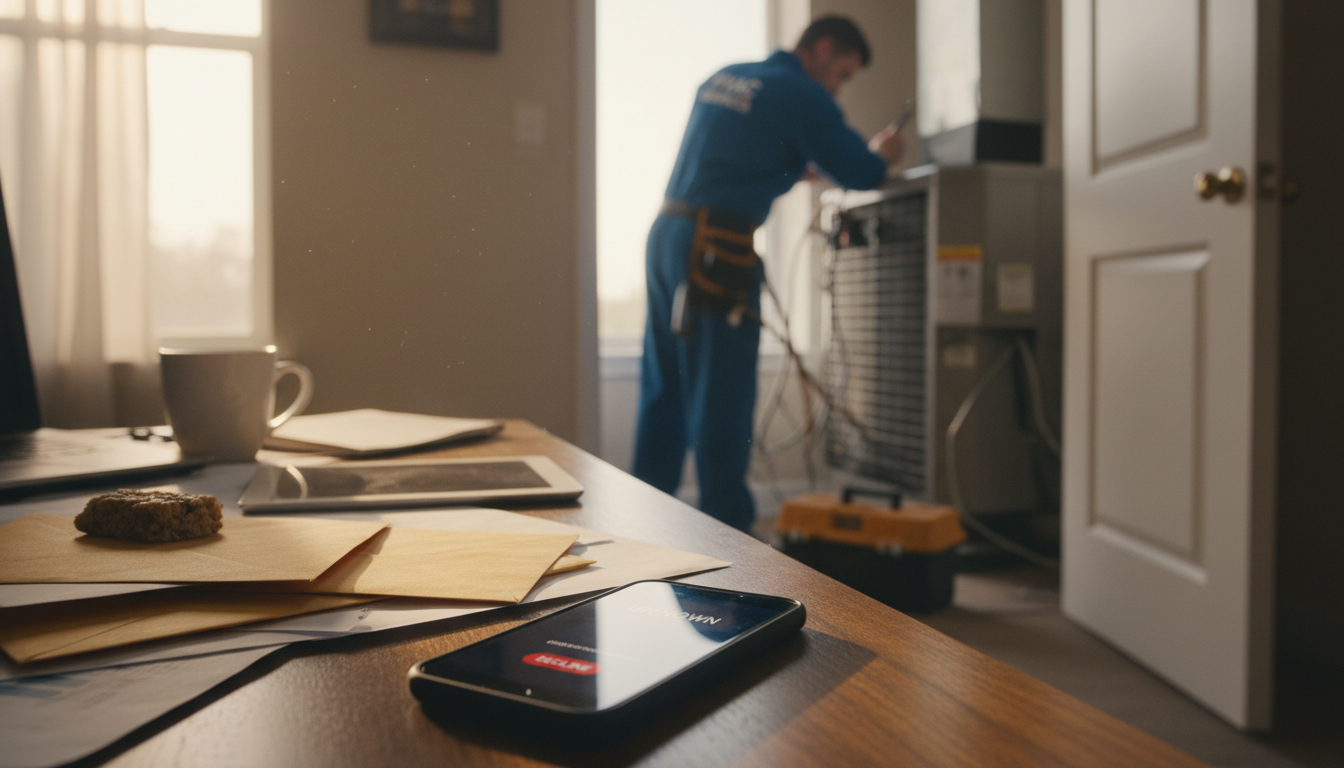
This is where companies like BookAllLeads change the math. Instead of missing calls or paying a tech to sit by the phone, you get a full front office team—live people who answer every call, qualify the job, quote pricing, and book it into your calendar. They work 24/7, so when that furnace quits at 9 PM, a real person answers. The customer books. The job goes on tomorrow's route. You built and managed nothing—the team was live in five days, no software to learn, no contracts locking you in.
The Fix: How to Smooth HVAC Seasonal Revenue Without Changing Your Business Model
You don't need to become a heating-only company or drop air conditioning work. You need to structure your operation so winter revenue supports your fixed costs and summer revenue builds profit. That means three specific changes that address the root causes, not the symptoms.
Rebalance Your Marketing Calendar to Match Service Demand
Stop going dark in winter. Your Google Ads budget should shift—not disappear. September through November, shift spend toward furnace tune-ups and pre-winter checkups. December through March, focus on emergency heating repair and furnace replacement financing.
Run a fall maintenance campaign that builds a book of business before winter. Every furnace you tune up in October is a customer who calls you first when it breaks in January. According to the Plumbing-Heating-Cooling Contractors Association, maintenance contract customers have a lifetime value 3–4 times higher than one-time service customers. They call you first, they buy replacements from you, and they refer neighbors.
Your marketing should generate leads year-round. If your phone stops ringing in November, you've designed a seasonal business when you didn't have to.
Build a Maintenance Base That Generates Recurring Winter Revenue
One-time service calls are transactional. Maintenance agreements are relationships. A customer paying $15–25/month for bi-annual tune-ups gives you predictable revenue every month and a guaranteed call list when seasons change.
The math works even better in winter. If you have 400 maintenance customers and half are due for fall furnace checkups, that's 200 scheduled jobs between September and November—work you can plan crew schedules around. Some percentage will need repairs. A few will need replacements. You've turned your slow season into a planned workload instead of hoping the phone rings.
Sell those agreements in summer when you're in customers' homes for AC work. The close rate is highest when you've just solved a problem and they trust you. Don't wait until fall to build your winter book—build it during every cooling call from May through August.
Capture Every Inbound Call (Especially After Hours)
Emergency heating calls are your highest-margin winter work, but only if you answer them. A missed call at 8 PM costs you a $400 service call and a potential $8,000 furnace replacement. Miss enough of them and your winter revenue never recovers.
You have three options: pay a tech to answer phones after hours (expensive and unreliable), use an answering service that takes messages (you lose most calls to whoever answers first), or staff a real front office team that answers, qualifies, quotes, and books.
The third option used to be unaffordable for companies under 20 trucks. Not anymore. A dedicated team costs less than the revenue you lose from missed calls, and they answer 24/7—nights, weekends, holidays. Every call gets handled. Every job gets booked. You calculate your losses from missed calls and realize you've been leaving $40,000–$80,000 on the table every winter.
What a Good HVAC Off-Season Revenue Strategy Actually Looks Like
Let's look at a real example. Mid-sized HVAC company in Ohio—cooling-dominated market, three crews, about $2.1M annual revenue. Summer months (June–August) averaged $240K each. Winter months (December–February) averaged $85K. Fixed costs ran $55K/month regardless of season. They were profitable six months a year and breaking even or losing money the other six.
Here's what they changed. First, they launched a fall furnace tune-up campaign in September—direct mail to their existing customer list plus targeted Facebook ads. $3,200 marketing spend generated 190 tune-up appointments at $89 each. That's $16,900 in revenue, but more importantly, it put them in front of customers before winter.
Second, they started answering every call—nights and weekends included. They brought on a front office team to handle inbound calls 24/7. Within the first month, they booked 31 after-hours calls they would've previously missed. Eighteen became service calls (average ticket $340). Four became furnace replacements (average sale $6,400). That's $31,720 in revenue from calls that used to go to voicemail.
Third, they shifted their pricing. Summer maintenance rates went up 12%. Winter furnace replacements got 0% financing promotions. Emergency heating calls after 6 PM carried a $150 premium. Customers didn't balk—they paid it because the value matched the urgency.
By the end of their first restructured winter, their December–February average was $138K per month—a 62% increase over the prior year. They didn't add crews. They didn't change services. They restructured how they marketed, priced, and captured demand.
How Much Revenue Are You Actually Losing Each Winter?
Most HVAC owners know winter is slow, but they've never quantified the actual gap. Let's do that now. Take your average monthly revenue from June, July, and August. Add them up and divide by three—that's your summer baseline. Now take December, January, and February. Add them up and divide by three—that's your winter baseline.
Subtract winter from summer. That's your seasonal revenue gap per month. Multiply by three (the length of your slow season). That's how much revenue you're losing every year to seasonality.
For a company doing $25K/month in winter and $60K/month in summer, that gap is $35K/month, or $105K per winter season. That's not all recoverable—weather and demand do matter—but if you could close that gap by even 40% through better marketing, maintenance agreements, and call capture, that's $42,000 in additional winter revenue. Enough to keep your crews working. Enough to cover fixed costs. Enough that you're not stressed every January wondering if you'll make payroll.
The companies that smooth their seasonal revenue don't do it with one big change. They do it with a dozen small structural shifts that compound: marketing year-round, building maintenance revenue, pricing strategically, and—most critically—answering every call when customers need help most.
Frequently Asked Questions
What percentage of HVAC revenue typically comes from winter months?
For most residential HVAC companies in mixed climates, winter months (December–February) generate 15–25% of annual revenue, compared to 40–50% during summer cooling season. In heating-dominant northern markets, that balance shifts slightly—winter might reach 30–35%—but cooling season still typically outperforms because AC replacements tend to be more frequent than furnace replacements due to system lifecycles and customer urgency during heat events.
Should I lay off crews during the HVAC off-season?
Laying off skilled techs saves short-term payroll but costs you long-term. Good techs find other work and don't come back. You spend spring rehiring and retraining, which kills productivity during your busiest season. Instead, keep crews employed doing maintenance work, equipment changeouts at promotional pricing, and commercial projects. If you absolutely must reduce headcount, offer seasonal furloughs with guaranteed callback dates rather than permanent layoffs.
How do I get more furnace replacement sales in winter?
Run financing promotions (0% for 60 months) between November and February when customers are motivated by broken equipment, not comfort upgrades. Train your techs to identify replacement candidates during every service call—a furnace that's 18 years old and needs a $600 repair is a replacement conversation. Most importantly, answer your phone after hours. Most furnace replacements start as emergency repair calls that happen at night or on weekends.
What's a realistic goal for HVAC winter revenue compared to summer?
Expecting winter to match summer is unrealistic in most markets. A better goal: winter months should cover your fixed costs plus modest profit. If your fixed costs are $50K/month, target $65K–$75K in winter revenue. That keeps you solvent, keeps crews employed, and builds customer relationships that pay off in spring. Companies with strong maintenance programs often hit 50–60% of summer revenue during winter months, compared to 30–40% for service-only companies.
Do maintenance agreements really help with seasonal revenue gaps?
Yes, but only if you sell them consistently and actually perform the services. A maintenance base of 400 customers at $20/month generates $8,000 in predictable monthly revenue year-round. More importantly, those customers call you first for repairs and replacements. The lifetime value is significantly higher—maintenance customers typically spend 3–4 times more over five years than one-time service customers because you've built trust and stayed top-of-mind.
How can I afford to staff phones 24/7 during winter when revenue is already down?
You can't afford not to. Every missed after-hours call is a $300–$8,000 job that goes to a competitor. Missing just two furnace replacements per month costs you more than a front office team. The math changes when you realize you're not adding expense—you're recovering lost revenue. A dedicated team that answers every call typically pays for itself within the first month through captured jobs that previously went to voicemail.
Stop Accepting Seasonal Revenue Loss as Inevitable
The HVAC seasonal revenue gap isn't caused by weather. It's caused by business design. You've built a cooling-focused operation and accepted that winter will be slow. But the companies smoothing their revenue aren't hoping for mild winters—they're marketing year-round, building maintenance income, pricing strategically, and capturing every emergency call when it comes in.
Most HVAC owners lose $60,000–$150,000 every winter to missed calls, poor positioning, and structural gaps they've never addressed. You can fix that. Start with the calls you're missing right now—the after-hours furnace emergencies, the weekend service requests, the leads going to voicemail because everyone's on a job.
If you're ready to stop losing revenue to seasonality, see how a full front office team can answer every call, book every job, and smooth your cash flow without adding software or complexity. Live in five days. No contracts. Just more jobs booked and fewer chances for competitors to steal your customers. Learn how BookAllLeads AI Business Team can handle every call, follow-up, and booking while you focus on the work only you can do.
John Edmonds is a native Texan and military combat veteran. He founded Book All Leads after identifying a critical gap in the service industry: business owners losing revenue not from lack of skill, but because no one was handling the calls, follow-ups, reviews, and payments while they were busy doing the work.
View LinkedIn Profile →