
Plumbing drain cleaning leads convert fast or not at all — and local plumbing companies lose the majority of these calls to franchise brands like Roto-Rooter and Mr. Rooter, not because of better service or lower prices, but because franchises answer faster and book more consistently. Independent plumbers often have better pricing, faster arrival times, and stronger community reputations, yet they watch high-margin drain work go to competitors who've simply built a tighter front office operation.
Why Do Franchise Plumbers Win Most Drain Cleaning Jobs?
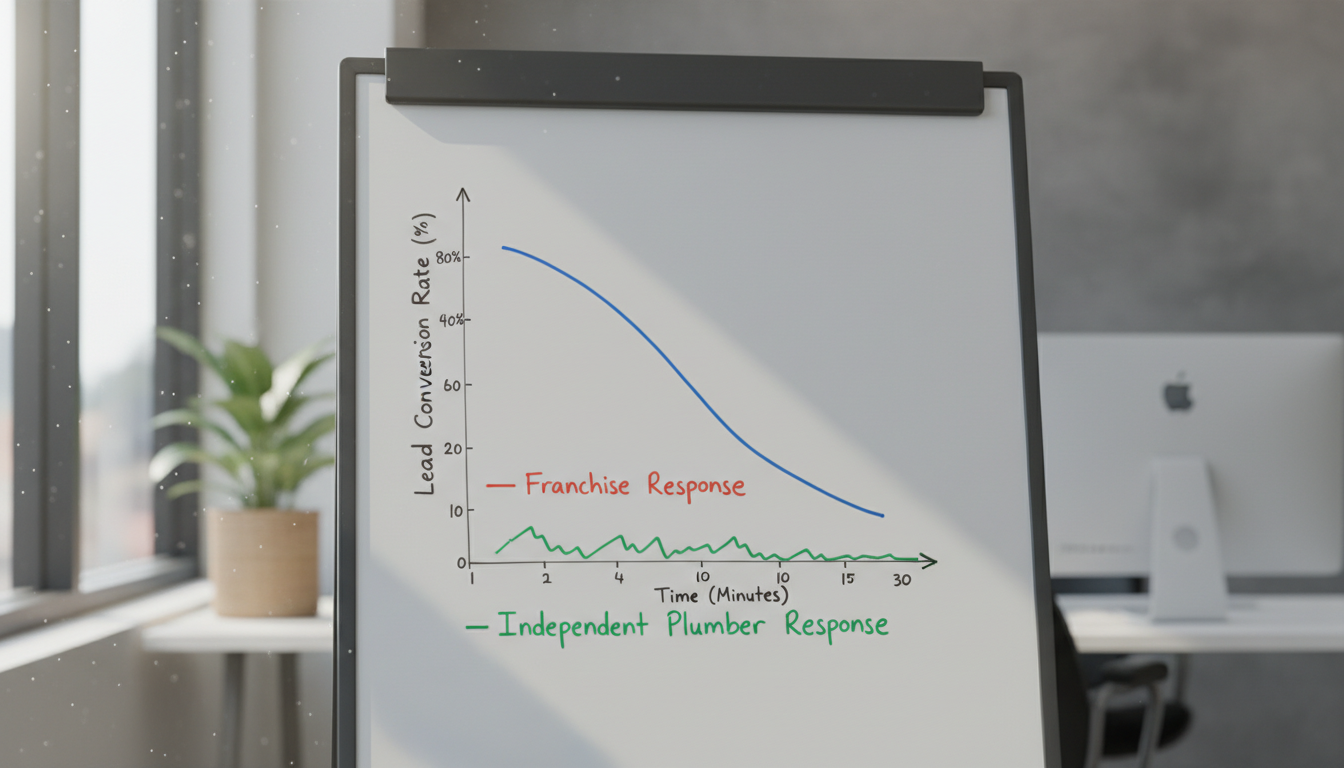
Franchise plumbers win drain cleaning jobs primarily because they answer every call within seconds, have trained booking staff available 24/7, and follow up on missed opportunities immediately. According to Vendasta, leads contacted within 5 minutes are 100 times more likely to convert than those contacted after 30 minutes. Drain emergencies don't wait — homeowners call down a list until someone picks up and offers a same-day appointment.
The drain cleaning market is worth fighting for. According to IBISWorld, the U.S. plumbing industry generates over $130 billion annually, with drain cleaning representing one of the highest-margin, most frequently requested emergency services. These aren't one-time customers — a clogged kitchen sink today becomes a water heater replacement next year, but only if you capture that first call.
Franchises don't win on skill. They win on speed and consistency. While independent plumbers are finishing a job, driving between sites, or eating lunch, franchise call centers are answering line two. The local guy who does better work at a better price loses the lead before he even knows it existed.
What's Really Happening When You Miss a Drain Cleaning Call?
When you miss a drain cleaning call, you're not just losing one $200 service visit — you're losing the customer relationship entirely, along with their average lifetime value of $2,000-$5,000 in repeat plumbing work and referrals. Worse, you're training your local market to call the franchise first because they know someone will answer.
Here's the typical sequence: A homeowner's kitchen sink backs up at 7 PM on a Wednesday. They Google "emergency drain cleaning near me" and call the top three results. Your number is second on the list. The first company — a Mr. Rooter franchise — answers on ring two, quotes a price range, and books them for a 9 PM arrival. Your phone rings four times and goes to voicemail. They never leave a message. They never call back. You never know they existed.
Here's what most articles won't tell you: The problem isn't your marketing spend or your Google ranking. Most local plumbers already appear in the top search results for their service area. The problem is conversion rate — you're paying to generate calls you can't answer. According to CallRail, small service businesses miss 62% of inbound calls during business hours and nearly 100% after hours. For drain emergencies that spike evenings and weekends, that's catastrophic.
Why Voicemail Doesn't Work for Emergency Plumbing
Emergency callers don't leave voicemails. They're standing in water. A Forbes study found that 80% of callers won't leave a voicemail, and those who do rarely wait for a callback — they've already hired someone else. By the time you return a drain cleaning voicemail two hours later, the homeowner has already paid a franchise $350 and formed an opinion about who's reliable.
How Do Franchise Brands Capture Drain Calls So Consistently?
Franchise plumbing brands capture drain calls through centralized call centers staffed 24/7 with trained booking agents who answer in under 10 seconds, quote pricing confidently, and schedule appointments instantly using shared calendars. They treat every call as revenue and track every metric — answer rate, booking rate, average ticket, callback rate. Independent plumbers treat calls as interruptions.
Roto-Rooter doesn't send their plumbers to answer the phone. They employ dedicated front office teams whose only job is to book calls. The plumber in the field focuses on plumbing. The booking team focuses on conversion. This separation of roles is the entire competitive advantage, and it's why franchises maintain 85-95% answer rates while independents average 38%.
The franchise model also standardizes the booking conversation. When you call Mr. Rooter, the person answering has a script, pricing guidelines, and authority to book immediately. When you call a local plumber, you might get the owner (rushed, distracted), an office spouse (unsure of pricing), or a technician (annoyed at the interruption). Inconsistency kills trust and conversion.
The Pricing Confidence Gap
Franchise booking staff quote prices without hesitation because they're trained and empowered to do so. Independent plumbers often dodge pricing questions — "We'll need to see it first" — which signals uncertainty and sends callers back to searching. Drain cleaning pricing is predictable enough to offer ranges. Franchises know this. Homeowners calling at 8 PM want a ballpark and a booking time, not a site visit estimate for tomorrow afternoon.
How Can a Local Plumber Compete Without a National Brand?
Local plumbers compete with franchises by solving the front office problem — having real people answer every call live within seconds, quote pricing confidently, book appointments immediately, and follow up on estimates that didn't close. You don't need a national brand or a call center; you need your phones covered the same way franchises cover theirs, which means dedicated booking staff instead of burdening technicians or letting calls go to voicemail.
Most independent plumbers try one of three solutions, and all three fail:
- Answering services: Generic receptionists who take messages but don't book. Callers can tell they're not talking to your company. Conversion rates stay low.
- Family members: The owner's spouse or semi-retired parent answers between errands. Inconsistent, untrained, and eventually burned out. This works until it suddenly doesn't.
- Technicians answering: Plumbers stop mid-job to take calls, giving distracted, short answers. Customers hear background noise and impatience. Bookings suffer and job quality drops.
What works is treating your front office like a core function, not an afterthought. BookAllLeads operates as a full front office team for local service businesses — six roles working around the clock to answer calls, book jobs, follow up on estimates, and collect payments. You don't manage software or train staff. The team goes live in five days, answers every call within seconds, and turns drain cleaning leads into booked revenue the same way franchises do. No contracts, no software to learn — just a team that picks up your phones and books your calendar.
Answering Speed Is the Entire Game
For drain cleaning specifically, response time matters more than brand recognition. Homeowners don't care if you've been in business 40 years if they're standing in sewage and you don't pick up. A newer competitor who answers immediately and books confidently will win that customer and often keep them for life. Speed converts higher than reputation for emergency work.
What Should Your Booking Process Look Like?
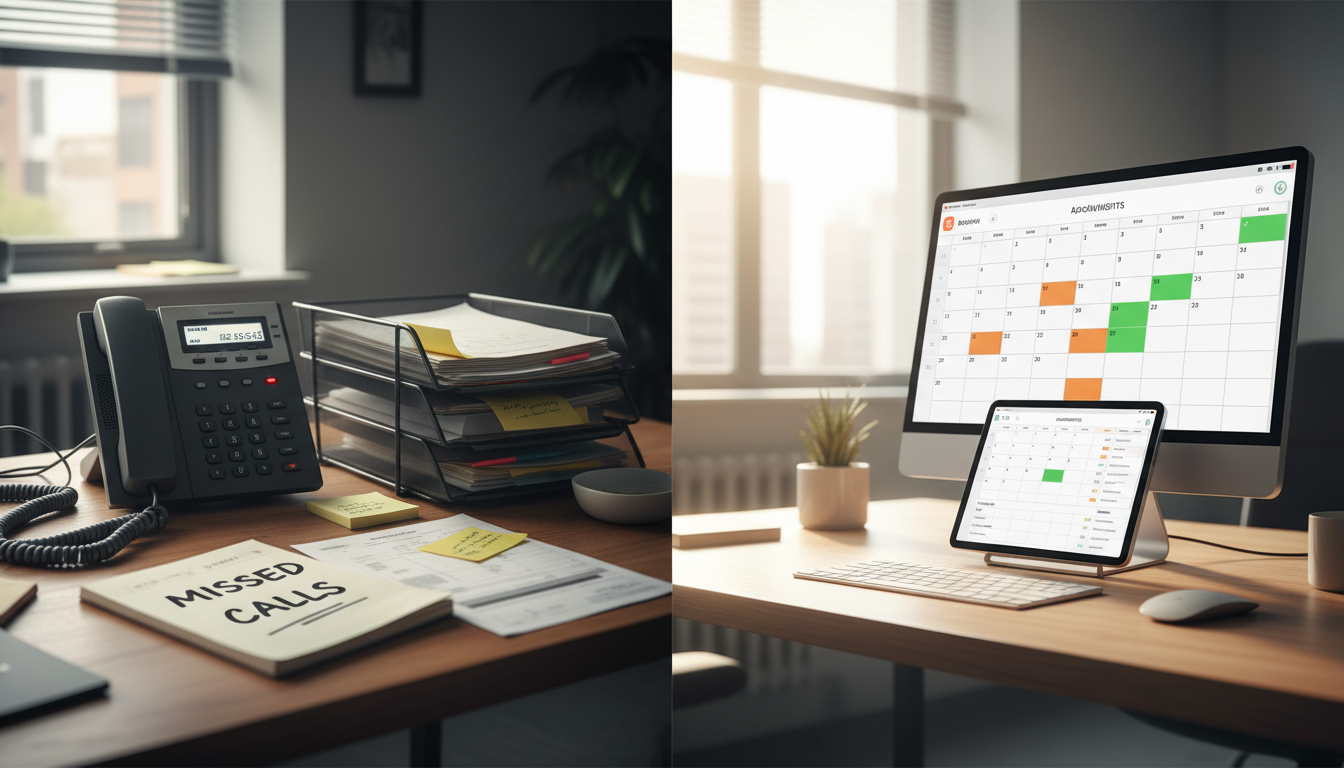
Your booking process should answer calls in under three rings, identify the problem in 30 seconds, provide a price range within the first minute, offer same-day or next-available appointment times immediately, confirm the booking with a text message, and follow up if the customer doesn't commit on the first call. Every step should feel effortless for the caller and move them toward a booked appointment, not more research.
Here's the structure that wins drain cleaning calls:
- Fast pickup: Answer before ring four. Longer than that and 30% of callers hang up.
- Professional greeting: Use your business name and ask how you can help. Skip long hold music and phone trees — drain emergencies need humans immediately.
- Problem qualification: Ask 3-4 questions to understand the issue: What's backed up? How severe? Any water damage? Have you tried anything?
- Confident pricing: Provide a range based on the problem type. "Most kitchen sink clogs run $150-$250 depending on location and severity. We can have someone there tonight."
- Immediate booking: Offer specific time slots within the next few hours for emergencies, next day for non-urgent. Get address, name, and phone number. Confirm via text instantly.
- Follow-up system: If they don't book immediately, text within 10 minutes with your availability and a link to schedule. Call back once the next day. Most competitors don't follow up at all.
Should You Offer Flat-Rate Pricing Over the Phone?
For standard drain cleaning, yes — offering flat-rate or range-based pricing dramatically improves booking rates because it removes uncertainty and mirrors what franchises do. Save "depends on the situation" language for genuinely unpredictable jobs like sewer line repairs. A clogged toilet or kitchen sink has a predictable price range. Quote it and book the appointment.
How Much Revenue Do Missed Drain Calls Actually Cost?
A plumbing company missing 60% of inbound calls and averaging 40 drain cleaning inquiries monthly loses approximately $60,000-$90,000 annually in immediate drain work alone, plus another $150,000-$250,000 in lifetime customer value from follow-on services like water heater replacement, fixture upgrades, and referrals. That's $210,000-$340,000 in total lost revenue from preventable missed calls.
The math is straightforward. If your marketing generates 40 drain cleaning leads per month and you miss 60% due to poor phone coverage, you're losing 24 opportunities monthly. At an average drain cleaning ticket of $225 and a modest 70% booking rate on answered calls, those missed calls represent $3,780 monthly or $45,360 annually in immediate lost revenue.
But drain cleaning is a gateway service. According to research from Harvard Business Review, acquiring a new customer costs 5-25 times more than retaining an existing one, and increasing retention by just 5% can boost profits by 25-95%. Every missed drain call is a lost relationship. That homeowner won't call you for their water heater, slab leak, or bathroom remodel. Use the calculator to see what missed calls are costing your specific business.
What Does a Front Office Team Actually Do for a Plumber?
A front office team for a plumber answers every inbound call live, qualifies leads and quotes pricing, books appointments directly into your calendar, sends confirmation texts and reminders, follows up on estimates that didn't close, processes payments over the phone, and manages your schedule to maximize daily revenue. You stay in the field doing plumbing while the front office handles everything that happens before and after the wrench turns.
Most plumbers underestimate how many revenue-generating tasks fall through the cracks without dedicated front office staff:
- Inbound call answering: Live pickup within seconds, 24/7 including evenings and weekends when drain emergencies spike.
- Outbound follow-up: Calling back estimates that didn't close, checking in on completed jobs for payment or additional work, reaching out to past customers for seasonal services.
- Schedule optimization: Booking jobs geographically to minimize drive time, filling gaps with smaller jobs, pushing non-urgent work to fill slower days.
- Payment collection: Calling customers with outstanding invoices, processing credit cards over the phone, sending payment reminders.
- Customer communication: Texting arrival windows, confirming appointments, rescheduling when necessary, asking for reviews after great service.
These tasks generate tens of thousands in additional annual revenue but rarely get done when plumbers are left managing their own phones between jobs. A dedicated front office turns these tasks into consistent execution rather than occasional follow-through.
Can You Really Compete on Drain Cleaning Without Lowering Prices?
Yes — competing on drain cleaning without lowering prices requires only that you answer faster and book more efficiently than competitors, because price is rarely the deciding factor when someone's sink is overflowing at 9 PM. Franchises charge premium pricing and still dominate market share because they win on speed and convenience, not cost. Match their responsiveness with better local service and you'll capture market share at higher margins.
Homeowners calling for emergency drain cleaning are buying relief from an urgent problem, not shopping for the lowest bid. They'll pay $50-$100 more to the plumber who answers immediately and arrives tonight versus the one who calls back tomorrow morning. This is why Mr. Rooter consistently charges 20-40% more than independent plumbers and maintains dominant market share — they're selling speed and certainty, not just drain cleaning.
Your competitive advantages over franchises are real: faster arrival times since you're local, better service quality because you're not a rotating cast of strangers, and stronger community reputation from years of local work. But none of those advantages matter if you don't answer the phone. Fix the front office and your natural advantages take over.
What Happens When You Match Franchise Response Times?
When local plumbers match franchise response times, they typically capture 60-80% of their inbound drain cleaning leads instead of the 20-40% they were converting before. Those customers often become lifetime clients because they got the speed of a franchise with the service quality and pricing of an independent. Your retention rates climb because you're no longer losing repeat customers to whoever picks up first next time.
Frequently Asked Questions
Why do customers choose franchise plumbers over local plumbers with better reviews?
Customers choose franchise plumbers primarily because franchises answer the phone immediately and book appointments faster, not because of reviews or reputation. When someone has a plumbing emergency, they call down a list until someone picks up and offers a same-day solution. If you don't answer within the first minute, they've often already booked with a competitor before they'd even finish listening to your voicemail greeting. Reviews matter for consideration, but availability wins the booking.
How quickly do I need to answer drain cleaning calls to compete?
You need to answer drain cleaning calls within 10-15 seconds to match franchise performance and maximize conversion rates. Research shows that answer speed directly correlates to booking rates — calls answered in under 10 seconds convert at 80-90%, while calls answered after 30 seconds drop to 40-50% conversion. For emergency drain calls specifically, many homeowners hang up if you don't pick up within three rings because they know another plumber will answer immediately.
Should I offer pricing over the phone for drain cleaning?
Yes, you should offer price ranges over the phone for drain cleaning because it builds trust, speeds up booking decisions, and matches what franchise competitors do. Most drain cleaning jobs fall into predictable price ranges — simple sink clogs ($125-$200), toilet clogs ($150-$225), main line issues ($250-$500). Providing a range with the caveat that complex situations might differ gives customers the information they need to book immediately rather than calling three more plumbers for quotes.
What's the best way to handle after-hours drain cleaning calls?
The best way to handle after-hours drain cleaning calls is to have live answering staff available 24/7 who can quote pricing, book emergency appointments, and dispatch on-call technicians immediately. Voicemail loses 90% of after-hours emergency calls because customers keep calling competitors until someone answers. If you can't staff 24/7 internally, a dedicated front office team like BookAllLeads provides round-the-clock coverage without you managing night shifts or paying for underutilized employees.
How much should I spend on marketing for drain cleaning leads?
Your marketing spend for drain cleaning leads matters less than your conversion rate — if you're missing 60% of calls, spending more on marketing just wastes money on leads you can't convert. Fix your front office first, then increase marketing spend once you're answering and booking 80%+ of inbound calls. Most established plumbers already generate enough drain cleaning inquiries through existing SEO and reputation; they just need to stop losing those leads to competitors who pick up faster.
Can a small plumbing company realistically compete with Roto-Rooter?
Yes, small plumbing companies can compete directly with Roto-Rooter by matching their front office responsiveness while leveraging advantages like faster arrival times, lower overhead, and stronger local relationships. Roto-Rooter's dominance comes from operational execution — answering every call, booking confidently, following up consistently — not from superior plumbing skills. Independent plumbers who solve the phone coverage problem capture market share quickly because customers prefer supporting local businesses when service quality is equal or better.
Stop Losing Drain Cleaning Work to Slower Competitors
Franchise plumbers don't win drain cleaning leads because of their brand name — they win because they've built front office operations that answer every call, quote confidently, and book immediately. You're likely already ranking well, generating calls, and offering better service at competitive prices. The gap isn't your plumbing skills or your marketing; it's what happens when the phone rings.
Most plumbing drain cleaning leads convert within minutes of the first call or they don't convert at all. Voicemail doesn't work. Technicians answering between jobs doesn't work. Answering services that take messages don't work. You need a real front office team dedicated to turning calls into booked revenue the same way franchises do.
BookAllLeads builds and manages your complete front office team — answering calls 24/7, booking your calendar, following up on estimates, and collecting payments. No software to learn, no staff to manage, live in five days. Let's stop losing drain cleaning work to competitors who simply pick up faster. Talk to us about covering your phones the way franchises cover theirs.
John Edmonds is a native Texan and military combat veteran. He founded Book All Leads after identifying a critical gap in the service industry: business owners losing revenue not from lack of skill, but because no one was handling the calls, follow-ups, reviews, and payments while they were busy doing the work.
View LinkedIn Profile →