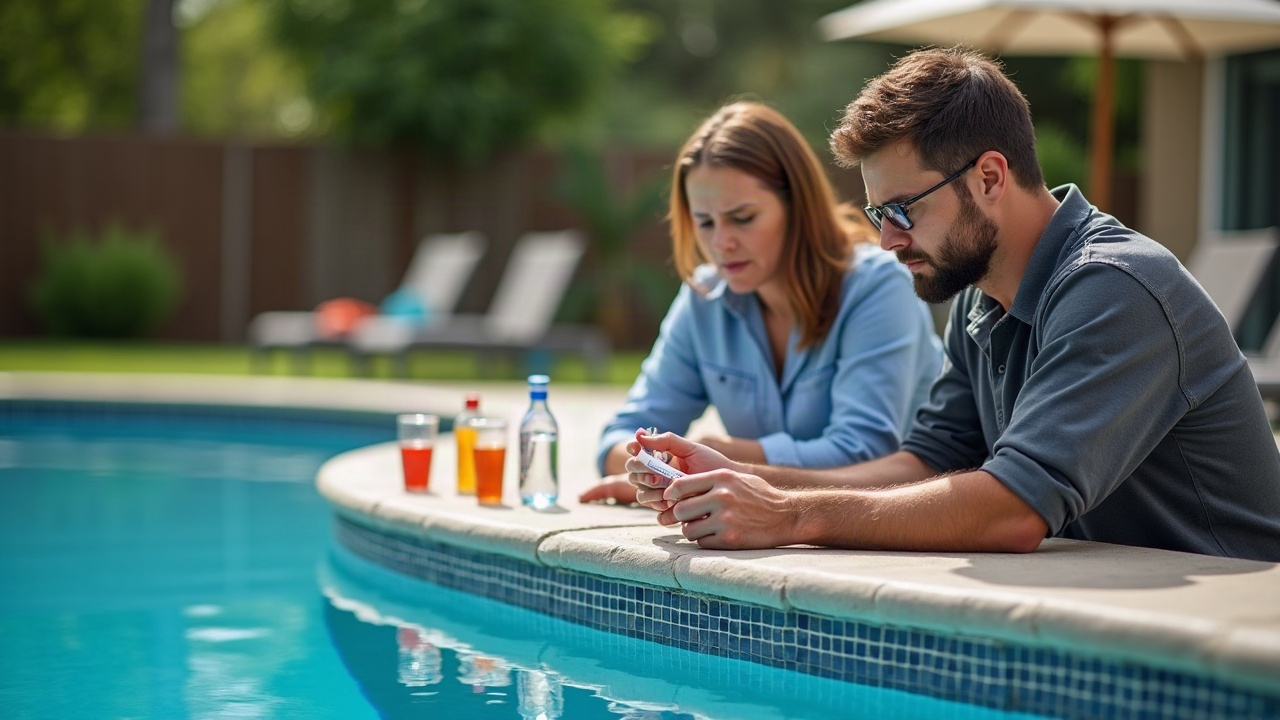
Pool companies lose pool algae callbacks because they don't follow up during the critical 3-7 day treatment window when customers expect reassurance. One missed check-in call after an algae treatment often means a lost maintenance contract—not because your work failed, but because a competitor called and you didn't. That single silence can cost you $2,400-$4,800 in annual maintenance revenue per customer.
You cleared the green. You balanced the chemistry. You explained the timeline. The customer nodded, paid, and said they'd call if anything changed.
Then day four hits. The pool still looks cloudy. They're worried. They pick up the phone—but not to call you. They call the company that sent them a text yesterday asking how things looked.
You just lost next season.
Why Do Pool Companies Lose Customers After Algae Treatments?
Pool companies lose algae treatment customers because they disappear after the initial service visit, leaving anxious homeowners to interpret treatment progress alone during the most uncertain phase of the process. The 3-7 day post-treatment window is when customers need the most reassurance, but it's exactly when most pool services go completely silent, creating a trust gap that competitors exploit.
Algae treatments aren't like equipment repairs. There's no instant gratification. You can't show a customer a fixed motor or a patched leak. Instead, you're asking them to trust a chemical process they don't understand, wait several days, and believe that murky water will eventually clear.
That uncertainty breeds anxiety. And anxiety without communication breeds doubt.
Here's what most articles won't tell you: The callback problem isn't about your treatment failing—it's about the customer's perception during the waiting period. According to Forrester Research, 73% of customers say that valuing their time is the most important thing a company can do to provide good service. When you don't reach out during the treatment window, customers interpret your silence as indifference, even if your work is perfect.
What Happens During the Silent Days
Day one after treatment: Customer feels good. You were professional, explained everything, gave them a timeline.
Day three: Pool still looks terrible. Maybe worse. Customer texts their neighbor: "Did your pool guy's treatment work right away?"
Day five: Customer Googles "how long should algae treatment take" and finds forum posts about botched treatments and rip-off companies.
Day six: Competitor calls to "check in on that estimate we gave you last month." Customer mentions the current treatment. Competitor offers to "take a look, just to make sure everything's on track—no charge."
Day seven: You've lost the callback. The competitor now has the maintenance contract.
What's Really Costing You Pool Algae Follow-Up Revenue?
The real cost isn't the one-time algae treatment—it's the recurring maintenance contract you never secure because you didn't call during the anxiety window. A single missed follow-up call costs pool service companies an average of $2,400-$4,800 annually in lost weekly or bi-weekly service agreements, plus referrals from satisfied long-term customers who never became long-term customers.
Let's break down the actual numbers. An algae treatment typically runs $300-$600 as a one-time service. That's nice revenue, but it's not the prize.
The prize is the maintenance contract that comes after. Weekly service at $100-$150 per visit, or bi-weekly at $80-$120. That's $4,800-$7,800 per year per customer. Multiply that by just five lost callbacks per season, and you're looking at $24,000-$39,000 in annual revenue walking away because nobody called to say "Hey, I know it still looks rough, but you're right on schedule."
- One-time algae treatment: $300-$600
- Annual maintenance contract: $4,800-$7,800
- Average customer lifetime (maintenance): 3.5 years
- Total lifetime value per lost callback: $16,800-$27,300
You can calculate your losses based on your own pricing and callback volume, but the pattern holds: the treatment is bait, the maintenance contract is the business.
The Referral Multiplier Nobody Tracks
Maintenance customers refer. One-time treatment customers don't.
A homeowner who's had you servicing their pool for two years will recommend you to three neighbors. A homeowner who had you treat algae once and never heard from you again won't even remember your company name by next season.
Research from Bain & Company shows that increasing customer retention rates by just 5% can increase profits by 25-95%, largely due to referrals and repeat business. In pool service, where neighborhoods cluster and neighbors talk, this multiplier effect is even steeper.
Why Pool Service Retention Falls Apart During Algae Treatment
Pool algae service retention fails because owner-operators are physically in the field during business hours, unable to make proactive check-in calls, while customers sit at home expecting contact during the exact hours you're servicing other pools. The mismatch between when customers need reassurance (daytime, during the treatment window) and when you're available to provide it (evening, after routes) creates a perception gap that competitors with dedicated office staff exploit.
You're running routes from 7 a.m. to 5 p.m. You're skimming, vacuuming, testing, dosing. Your phone is in the truck, covered in pool shock dust. You're not ignoring customers—you're literally in their neighbors' pools, doing the work that pays the bills.
But the customer who had algae treated on Monday doesn't know that. They know they're worried on Wednesday, and nobody's called.
Here's the operational breakdown of why callbacks don't happen:
Morning (7 a.m. - 12 p.m.): You're running your route. Phone rings. You're elbow-deep in a filter clean. You'll call back later.
Afternoon (12 p.m. - 5 p.m.): You're finishing routes, dealing with an equipment issue that's running long, fielding three more calls about new estimates. The callback list grows.
Evening (5 p.m. - 7 p.m.): You're finally off the route. You're exhausted. You remember you were supposed to call that algae treatment customer, but it's dinner time and it feels weird to call now. You'll do it tomorrow.
Tomorrow: You're back on the route. The cycle repeats. The callback never happens.
Meanwhile, the pool company with a dedicated front office person makes that call at 10 a.m. on Wednesday—right when the customer is staring at their still-cloudy pool and spiraling.
That's the company that gets the maintenance contract.
Book All Leads handles this exact scenario for pool companies—a full front office team tracks treatment timelines, makes proactive check-in calls during the anxiety window, and books the follow-up visit or maintenance contract while the customer still trusts the process. No software for you to learn, live in five days, and your team handles the callbacks you're too busy on route to make.
How One Missed Follow-Up Call Costs You the Whole Season
A single missed callback after algae treatment creates a decision point where the customer either trusts you're still engaged or assumes you've moved on, and that decision determines whether they sign a maintenance contract or shop for a new provider who "seems more responsive." Once a customer interprets silence as abandonment, they begin researching alternatives, and regaining trust requires exponentially more effort than a single proactive call would have taken.
Let's walk through a real example from a pool service operator in Scottsdale.
Customer calls on a Monday. Green pool, bad algae bloom after a monsoon storm. Operator schedules a treatment for Tuesday morning, arrives on time, does excellent work, explains the 5-7 day clearing timeline, and gives the customer his card.
Wednesday: Customer's pool still looks like swamp water. Customer texts a photo to a friend who uses a different pool company. Friend says, "That doesn't look right. My guy cleared mine in three days."
Thursday: Customer tries calling the operator. No answer (he's on route). Leaves a voicemail. No callback by end of day.
Friday: Customer calls a competitor for a "second opinion." Competitor comes out same day (it's a Friday, his route is light). Competitor looks at the pool, says "Honestly, the treatment is working fine, you're right on schedule. But if you want, I can take over weekly service and make sure this doesn't happen again."
Customer signs. The original operator—who did perfect work—never even knew he was in a competition.
Saturday: Original operator finally calls back. Customer says, "Oh, we're all set, thanks." Operator assumes they're happy with the treatment. Customer has already signed with the competitor.
One missed callback. One lost contract. One competitor who simply showed up during the anxiety window.
The Callback Window Is Measured in Hours, Not Days
According to InsideSales.com, the odds of qualifying a lead decrease by 400% if you wait longer than 5 minutes to respond. While algae follow-up isn't quite that time-sensitive, the principle holds: customers form judgments about your responsiveness within hours, and those judgments stick.
If you call on Wednesday morning—two days post-treatment—you're proactive. If you call on Friday afternoon, you're reactive. The customer already knows you're not thinking about them unless they chase you.
What Should Your Pool Algae Treatment Follow-Up Actually Look Like?
An effective pool algae follow-up includes a proactive check-in call 48-72 hours post-treatment to confirm progress, set expectations about what the customer should see, and preemptively address concerns before they escalate into doubt. This call should book the next step—either a follow-up visit to confirm clearance or an immediate transition into a maintenance agreement—while the customer still trusts your expertise and feels cared for.
Here's the exact timeline that retains customers:
Day 0 (Treatment Day): Finish the service. Before you leave, say: "You're going to get a call from my office in two days to check on progress. Pool should still look rough then—that's normal. By day five or six, you'll see major clearing."
This sets the expectation that contact is coming, which reduces anxiety even before the call happens.
Day 2 (48 Hours Post-Treatment): Your front office (or you, if you've blocked time) calls mid-morning. Script: "Hey [Name], this is [Your Company]. [Technician Name] treated your pool on Tuesday, and we're just checking in. It's probably still looking pretty rough right now—that's exactly what we expect at this stage. You should start seeing real clearing by this weekend. Any questions or concerns so far?"
This call does three things: confirms you're thinking about them, normalizes what they're seeing, and invites concerns before they fester.
Day 5-6 (Final Clearing Phase): Second check-in call or text. "Pool should be clearing up nicely now. We'd love to swing by early next week to confirm everything's balanced and talk about keeping it this way. Does Monday or Wednesday work better?"
This transitions from treatment to maintenance without a hard sell. You're offering a value-add visit, not pushing a contract.
Day 7-10 (Follow-Up Visit): You show up, test the water, confirm the treatment worked, and present maintenance options: "If you want to make sure this never happens again, we can add you to our weekly route. We've got a spot open on Thursdays."
Customers who've received two proactive check-ins and a follow-up visit don't shop around. They sign.

Why Most Pool Companies Can't Execute Consistent Follow-Up
Most pool service operators can't maintain consistent follow-up because they're the technician, the salesperson, and the office manager simultaneously, and route work always takes priority over callbacks when time runs short. Without a dedicated person responsible solely for customer communication, follow-up becomes the task that "you'll do tonight" but never actually happens, especially during peak season when routes run long and new calls keep coming in.
This isn't a discipline problem. It's a structural problem.
You can't be in two places at once. You can't take a thoughtful check-in call while you're wrestling a pool sweep out of a skimmer. And you can't call customers at 8 p.m. without feeling like you're intruding on their evening.
The companies that win pool algae service retention aren't necessarily better at pool service—they're better at operational structure. They've separated the technical work from the customer communication work, so both happen reliably.
That means either:
- Hiring an office person (expensive, requires training, hard to find reliable help)
- Blocking time every day for callbacks (realistic only in slow season, impossible April-September)
- Using a dedicated front office team that treats follow-up as their core job, not an afterthought
The third option is how regional pool companies scale. They stop trying to do everything and start building a team around their technician work.
The Fix: Build Follow-Up Into the Service, Not Around It
To stop losing pool algae callbacks, treat follow-up communication as a deliverable part of the service—just as non-negotiable as applying the treatment itself—and assign it to someone whose only job is customer contact, not route work. This means scripting the follow-up timeline before you leave the property, scheduling the check-in calls in advance, and making one person accountable for every callback, so nothing falls through the cracks when routes run long.
Here's how to operationalize it:
Step 1: Script the expectation at point of sale. Before you finish the treatment, tell the customer exactly when they'll hear from you next. "My office will call you Thursday morning to check progress" is a promise they'll remember.
Step 2: Schedule the callback immediately. Don't rely on memory. Either you or your office person logs the callback for 48 hours out, with the customer's name, treatment date, and expected timeline. If you're doing this yourself, set a phone reminder. If you have an office person, this is their task list.
Step 3: Make the call from a quiet place, during business hours. This can't be a rushed call from your truck between stops. It needs to sound like you have time for them. If you're the one calling, block 30 minutes mid-morning, park somewhere quiet, and work through your callback list. If you have a front office team, this is their 10 a.m. block.
Step 4: Use the call to book the next step. Every follow-up call should end with a scheduled action: a follow-up visit, a maintenance proposal meeting, or a calendar hold for weekly service. Don't leave it open-ended.
Step 5: Track callback-to-contract conversion. If you're making follow-up calls but not converting algae treatments into maintenance contracts, your script or timing needs work. Measure it. "How many algae treatments did we do last month, and how many turned into maintenance customers?" If the answer is less than 60%, your follow-up process is broken.
How Much Revenue Are You Really Leaving on the Table?
If you're completing 10 algae treatments per month during peak season and converting only 20% into maintenance contracts due to poor follow-up, you're losing approximately $38,400 in annual maintenance revenue and $134,400 in three-year customer lifetime value from that gap alone. Fixing follow-up isn't about customer service—it's about capturing the revenue you've already earned the right to by doing excellent technical work.
Let's use real numbers from a typical independent pool service operation:
| Metric | Current State (Poor Follow-Up) | Fixed State (Consistent Follow-Up) |
|---|---|---|
| Algae treatments per month (Apr-Sep) | 10 | 10 |
| Conversion to maintenance | 20% | 70% |
| New maintenance customers per month | 2 | 7 |
| Monthly maintenance revenue per customer | $400 | $400 |
| Annual revenue from converted customers | $9,600 | $33,600 |
| Revenue lost to poor follow-up | — | $24,000/year |
That's $24,000 per year from a six-month algae season. Multiply by a three-year average customer retention, and you're looking at $72,000 in lifetime value from customers you treated but never called.
The work was already done. The trust was already built. You just didn't call.
Frequently Asked Questions
How soon after algae treatment should I follow up with customers?
Follow up 48-72 hours after treatment with a proactive check-in call. This hits the customer during the anxiety window when the pool still looks rough but treatment is progressing normally. The call reassures them, normalizes what they're seeing, and prevents doubt from turning into competitor research. A second follow-up at day 5-6 confirms clearing and books the next step.
What should I say during an algae treatment follow-up call?
Start by confirming the treatment date and asking how the pool looks. Normalize their concerns: "It should still look pretty rough right now—that's exactly on schedule." Then set expectations for when they'll see clearing and ask if they have any questions. End by booking a follow-up visit or proposing a maintenance plan to prevent recurrence. Keep it conversational, not scripted.
Why do customers switch pool companies after successful algae treatments?
Customers switch not because the treatment failed, but because silence during the waiting period signals disinterest. When you don't call during the 3-7 day anxiety window, customers interpret it as abandonment and start researching alternatives. Competitors who call during that window—even just to check in—capture the maintenance contract by showing engagement when the original provider went silent.
How many algae treatment customers should convert to maintenance contracts?
With consistent follow-up, 60-70% of algae treatment customers should convert to ongoing maintenance contracts. If your conversion rate is below 40%, your follow-up process is likely broken—either you're not calling during the anxiety window, not booking the next step during the call, or not positioning maintenance as a natural extension of the treatment work.
Can I automate algae treatment follow-up with texts instead of calls?
Texts work for appointment reminders, but personal phone calls convert better for post-treatment follow-up because anxious customers want conversation, not automation. A text that says "How's the pool looking?" often goes unanswered or prompts a question you then have to call about anyway. Lead with a call—it builds trust and lets you control the conversation toward booking maintenance.
What's the biggest mistake pool companies make with algae callbacks?
The biggest mistake is waiting for the customer to call you with concerns instead of proactively reaching out first. By the time a worried customer calls you, they've already Googled their concerns, talked to neighbors, and possibly contacted a competitor. Proactive follow-up at 48 hours prevents that spiral and positions you as engaged and trustworthy before doubt takes root.
Stop Losing the Customers You've Already Earned
You're doing the hard part. You're diagnosing the problem, applying the right treatment, explaining the process. You're showing up on time, doing quality work, and leaving pools clearer than you found them.
But if you're not calling during the anxiety window, someone else is capturing the value of all that work.
Pool algae callbacks aren't about customer service—they're about revenue retention. Every treatment customer who doesn't convert to maintenance is $4,800-$7,800 walking out the door because you were too busy on your route to make a ten-minute phone call.
The fix isn't working harder. It's building a front office that treats follow-up as a core function, not an afterthought. Book All Leads gives you a full team that handles exactly this—proactive check-in calls, appointment booking, and contract conversion—so you can stay on the route while someone else makes sure every treatment turns into a long-term customer.
You've earned the callback. Make sure you're the one who gets it.
John Edmonds is a native Texan and military combat veteran. He founded Book All Leads after identifying a critical gap in the service industry: business owners losing revenue not from lack of skill, but because no one was handling the calls, follow-ups, reviews, and payments while they were busy doing the work.
View LinkedIn Profile →