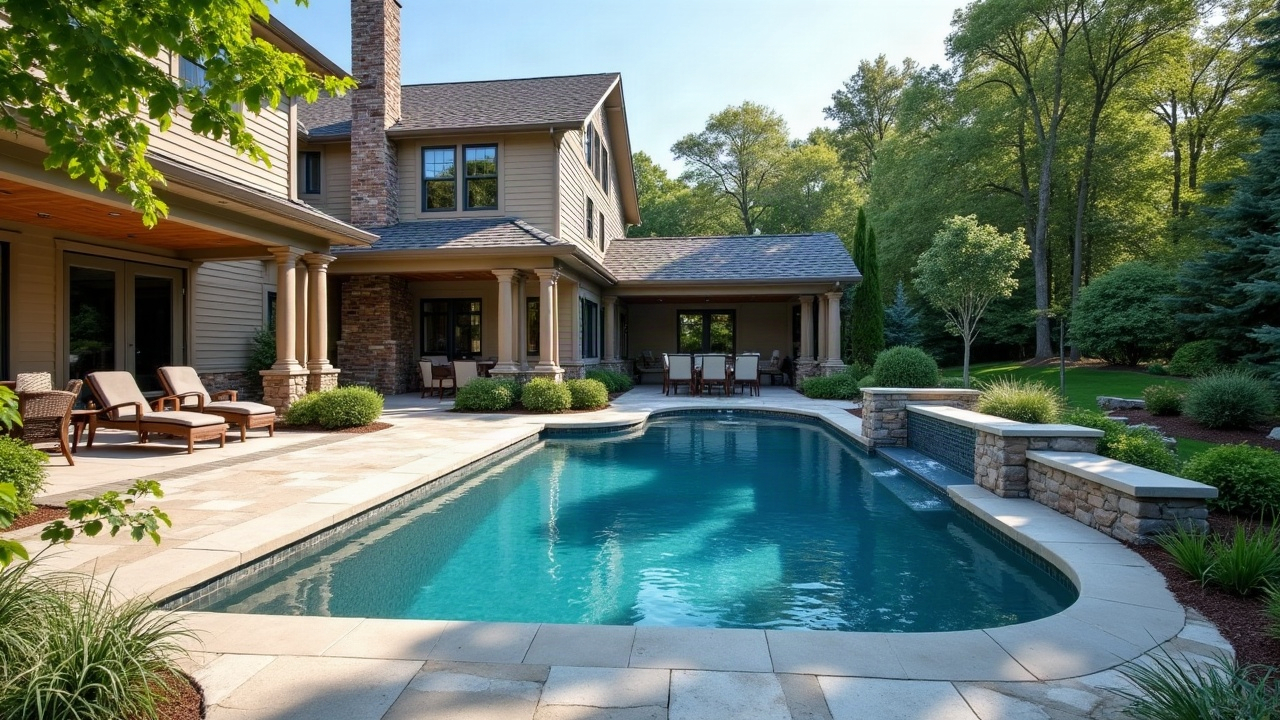
Pool companies routinely lose backyard renovation jobs to landscapers—not because of skill or price, but because landscapers answer calls faster, present a complete outdoor living vision during the first conversation, and coordinate the full project confidently. When a homeowner calls about a pool, they're often envisioning the entire transformed backyard: patio, firepit, plantings, lighting. If your team treats it as "just a pool job" or takes hours to respond, a landscaper who promises the complete package and calls back in ten minutes will win the $80,000 project while you're left quoting a $35,000 pool install.
Why Do Homeowners Hire Landscapers Instead of Pool Companies for Full Backyard Projects?
Homeowners hire landscapers for full backyard renovations because landscapers consistently present themselves as the general contractor of outdoor spaces, while pool companies often position as specialists in one element. Landscapers answer faster, speak the language of "complete transformation," and coordinate multiple trades under one contract. Pool companies that respond slowly or say "we just do pools—you'll need to hire someone else for the patio" immediately shrink their revenue opportunity and lose credibility as project leaders.
The moment you tell a homeowner they need to coordinate three different contractors, you've handed control to whoever will take that burden off their plate. Landscapers understood this years ago. They started partnering with pool subcontractors and presenting the entire vision: pool, decking, outdoor kitchen, pergola, landscaping, lighting. The homeowner gets one point of contact, one timeline, one invoice.
According to the National Association of Home Builders, outdoor living projects that include pools average $75,000–$150,000 when designed as integrated spaces, compared to $30,000–$50,000 for pool-only installations. Pool companies that position as backyard renovation leaders capture the full contract. Those that stay in the "pool specialist" lane leave 60-70% of the project value on the table.
Here's what most articles won't tell you: The company that wins these jobs isn't always the one with the best portfolio or the lowest price—it's the one that responds first with confidence about managing the entire scope. A landscaper who answers in eight minutes and says "we handle everything from excavation to the final plantings" beats a pool company that calls back three hours later, even if the pool company builds superior pools. Speed and scope win before craftsmanship ever gets evaluated.
What Makes Landscapers Better at Capturing These Leads?
Landscapers capture backyard renovation leads more effectively because their business model is already built around answering calls quickly and presenting multi-trade projects. Most landscaping companies staff a full front office with people dedicated to answering phones, scheduling estimates, and following up. Pool companies often rely on field crews or owners to handle calls between jobs, which creates response delays that kill conversion rates.
Research from InsideSales.com shows that leads contacted within five minutes are 21 times more likely to convert than those contacted after thirty minutes. Landscapers systematically beat pool companies on this metric because they treat lead response as a core competency, not an administrative afterthought.
Beyond speed, landscapers excel at consultative selling. When a homeowner calls asking about a pool, the landscaper's intake person is trained to expand the conversation: "Have you thought about the patio material? What about outdoor seating areas? Lighting for evening use?" They're building the dream and the budget in real time. Pool companies often jump straight to pool specifications—size, depth, finish—without painting the larger vision.
Do Pool Companies Lose Leads Because They Don't Answer Calls?
Yes. Pool companies lose a significant percentage of backyard renovation leads simply because calls go unanswered or are returned too late. During peak season, when field crews are on job sites and owners are managing installations, incoming calls from new prospects go to voicemail. By the time someone returns the call—often the next morning—the homeowner has already scheduled estimates with two competitors who picked up immediately.
This isn't a theory. Track your missed calls during April through July and calculate your losses based on a conservative 20% close rate and $50,000 average project value. Most pool companies are leaving $200,000–$500,000 in annual revenue sitting in their voicemail inbox.
The fix isn't hiring a receptionist who works 9-to-5 and takes lunch breaks. It's building a front office team that operates like landscapers' offices do: multiple people covering phones during all business hours, with clear protocols for immediate response, project scope expansion, and estimate scheduling. That's exactly what Book All Leads provides—a full front office team of six roles working around the clock to answer every call, qualify leads, book estimates, and follow up. No software for you to learn. Your team is live in five days and handles calls, texts, and follow-ups like they've worked for your company for years.
How Can Pool Companies Win the Full Backyard Renovation Project?
Pool companies win full backyard renovation projects by responding faster than landscapers, confidently presenting integrated designs, and either managing all trades directly or partnering with reliable subcontractors under your contract. You don't need to employ masons, electricians, and landscapers—but you do need to be the general contractor who coordinates them and maintains the client relationship throughout.
Start by training everyone who touches a lead—whether that's your front office team, estimators, or sales staff—to ask expansion questions during the first conversation. When a homeowner calls about a pool, the response should include: "Most of our clients are also thinking about the deck, patio, outdoor kitchen, and landscaping. We design and manage all of that as one cohesive project so you're not coordinating multiple contractors. Can I ask what you're envisioning for the space around the pool?"
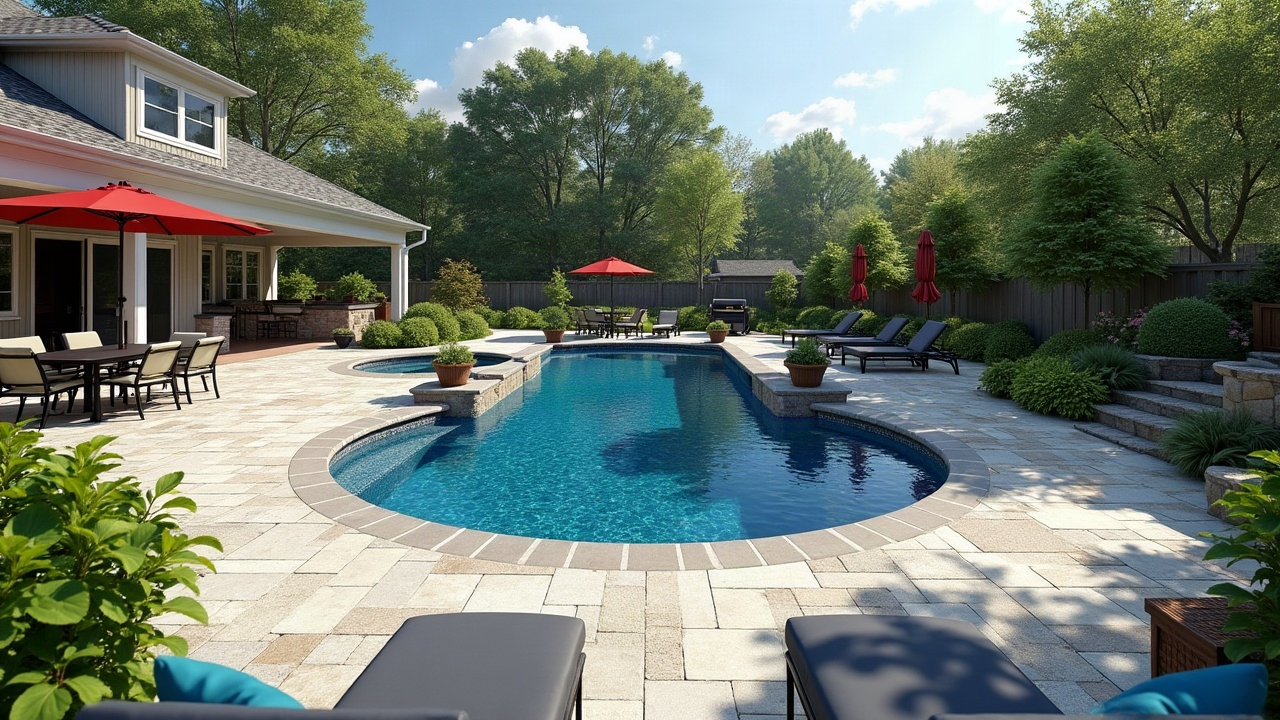
This single shift in approach positions you as the project leader rather than a subcontractor waiting to be hired. It also dramatically increases your average project value. A $40,000 pool becomes an $85,000 outdoor living project that includes travertine pavers, a built-in grill station, and mature plantings.
Should Pool Companies Subcontract Hardscape and Landscaping Work?
Yes, in most cases. Pool companies should subcontract hardscape and landscaping work while maintaining the primary contract with the homeowner. This model allows you to control the project, protect your margin, and ensure quality across all trades without the overhead of employing specialists in every discipline. The key is developing reliable partnerships with subcontractors who understand they're working under your project timeline and quality standards.
Markup on subcontracted work typically ranges from 15-25%, which adds significant profit on top of your pool installation margin. On a $90,000 project that includes a $45,000 pool (your crew), $30,000 hardscape (subcontracted), and $15,000 landscaping (subcontracted), you're earning your pool margin plus $6,750–$11,250 on coordinated trades. More importantly, you've prevented a landscaper from winning the entire contract and subcontracting your pool work at a squeezed margin.
What If Homeowners Want to Hire Their Own Landscaper?
When homeowners want to hire their own landscaper, you've usually already lost control of the project narrative. This happens when your initial response focuses narrowly on the pool instead of presenting a complete vision. Once the homeowner is thinking in terms of "I'll hire a pool company and separately hire a landscaper," you're competing as a commodity specialist rather than a solutions provider.
The prevention is better than the cure here. Lead with the integrated approach from the first call. If a homeowner still insists on managing trades separately, you can accommodate—but you should also clearly explain the risks: coordination delays, design mismatches, warranty confusion when problems arise. Most homeowners will choose the simpler path when you present it confidently.
What's the Real Cost of Losing These Jobs?
The real cost of losing backyard renovation jobs to landscapers includes the immediate lost revenue on the current project, the long-term loss of referrals from high-value clients, and the strategic weakening of your market position as a premium provider. When you consistently lose full-scope projects and win only pool-only installs, your brand becomes associated with the lower end of the market even if your craftsmanship is exceptional.
Let's quantify this with a typical pool company scenario. You receive 200 qualified backyard renovation inquiries per year. Half explicitly mention wanting hardscape, outdoor kitchens, or comprehensive landscaping. If you respond slowly or position as pool-only, you'll win perhaps 15-20 of those 100 integrated projects at an average of $45,000 (pool only, because the homeowner hired a landscaper separately). That's $675,000–$900,000 in revenue.
If you respond faster than competitors and confidently present full-scope project management, you'll win 30-35 integrated projects at an average of $85,000 (pool, hardscape, landscaping, lighting coordinated under your contract). That's $2,550,000–$2,975,000 in revenue from the same 100 leads. The difference—$1,650,000–$2,075,000—isn't just lost revenue. It's the cost of positioning yourself as a specialist rather than a solutions provider.
According to research from Bain & Company, customers who experience seamless, single-point-of-contact project management are 60% more likely to provide referrals and spend 33% more on future projects. When you win the integrated project, you're not just earning more today—you're building a client base that generates compounding returns through referrals and add-on work.
How Do Pool Companies Train Teams to Sell Integrated Projects?
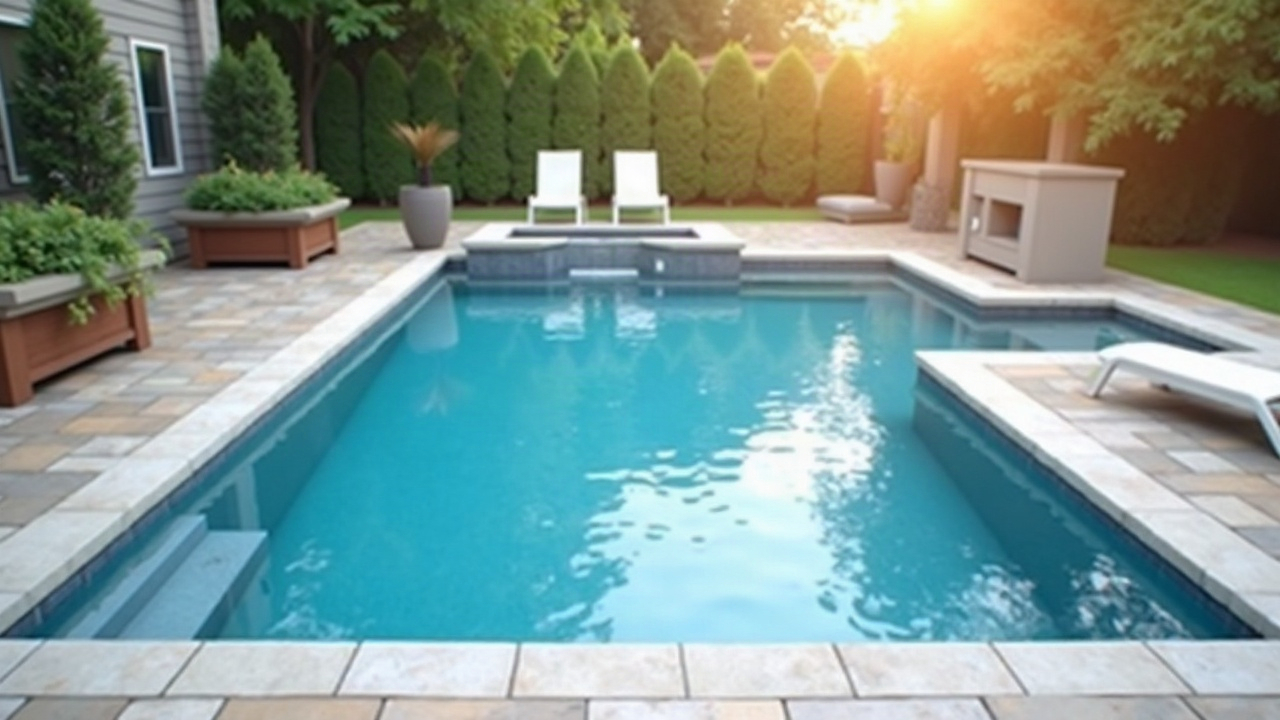
Pool companies train teams to sell integrated projects by implementing standardized discovery questions, visual design tools that show complete outdoor spaces, and clear authority to discuss and quote all project components during the first client interaction. This requires shifting from a technical "pool specs" mindset to a consultative "dream backyard" approach that explores how the family will use the entire outdoor space.
Start with your front office and estimators. Create a discovery checklist that every lead receives:
- Current backyard use: "How do you use your backyard now? What's frustrating about it?"
- Vision beyond the pool: "When you imagine this completed, what are you doing out there? Entertaining? Family dinners? Relaxing by a fire?"
- Timing and decision-making: "Are you planning this as one project, or were you thinking of phasing it?"
- Budget transparency: "Most of our clients invest between $70,000 and $120,000 for a complete outdoor living transformation. Does that align with what you're planning?"
These questions do two things: they position you as a strategic partner thinking about outcomes, and they uncover the full scope before a competitor defines it differently. Landscapers have been asking these questions for years. Pool companies that adopt the same approach immediately differentiate from competitors still talking about gunite versus fiberglass.
What Tools Help Present Integrated Backyard Designs?
Tools that help present integrated backyard designs include 3D rendering software, drone footage of the existing property, and photo portfolios organized by complete outdoor living spaces rather than isolated pool shots. The goal is helping homeowners visualize the finished environment, not just the pool basin. When you show a rendering that includes the pool, the paver deck, the outdoor kitchen with a pergola, and the landscaping that frames it all, you're selling a lifestyle transformation that justifies premium pricing.
Many pool companies already use design software but limit renderings to the pool and immediate deck. Expand your standard deliverable to show the full property context. Include placeholder elements for features you'll subcontract—outdoor kitchens, fire features, plantings, lighting—with notes like "coordinated through our trusted partners." This signals that you manage the entire vision even when you're not swinging every hammer.
What Happens When Pool Companies Ignore This Shift?
Pool companies that ignore the shift toward integrated outdoor living projects will find themselves increasingly relegated to subcontractor status, competing primarily on price for pool installations within projects controlled by landscapers or general contractors. This erodes margins, reduces client relationships to transactional interactions, and eliminates opportunities for referrals and repeat business. Within three to five years, these companies typically see average project values stagnate while overhead costs rise, creating a profitability squeeze that forces either business model changes or market exit.
This isn't speculative. Look at what happened in the deck and patio sector over the past decade. Companies that positioned as "deck builders" got squeezed as landscape design-build firms absorbed that work into integrated projects. The deck specialists still in business either expanded into full outdoor living or accepted lower margins as subcontractors. Pool companies face the same trajectory.
The market is consolidating around companies that control the client relationship and coordinate multiple trades. Homeowners increasingly prefer this model because it reduces their project management burden. If you're not the company providing that convenience, you're the subcontractor being price-shopped by the company that is.
Real-World Example: From Pool Installer to Outdoor Living Leader
Consider the case of a mid-sized pool company in North Carolina that consistently lost bids to a local landscaping firm. The pool company had superior craftsmanship and competitive pricing, but they were responding to leads 4-6 hours after initial contact, and their estimates focused exclusively on pool specifications. The landscaper answered calls within 10 minutes and arrived at estimates with renderings showing pools (which they'd subcontract) integrated into complete outdoor living designs.
The pool company made three changes over one off-season. First, they implemented a front office team that answered calls immediately and used discovery questions to explore full project scope during the first conversation. Second, they developed partnerships with two hardscape contractors and a landscape designer, formalizing subcontractor agreements with clear pricing and timelines. Third, they retrained their estimators to present integrated designs and quote complete projects, positioning subcontracted work as "coordinated through our network" rather than "you'll need to hire someone else."
The results: their average project value increased from $42,000 to $78,000 within one season. Their close rate on leads improved from 23% to 34% because they were reaching prospects first and controlling the project narrative. Most significantly, their referral rate doubled because clients experienced single-point-of-contact project management rather than coordinating multiple contractors themselves. They didn't change their core pool construction methods—they changed who answered the phone and what story they told about their role in the project.
Frequently Asked Questions
Do pool companies need to employ hardscape crews to compete with landscapers?
No. Pool companies can effectively compete by subcontracting hardscape work under their primary contract with the homeowner. The key is controlling the client relationship and project coordination, not directly employing every trade. Develop reliable partnerships with hardscape contractors, negotiate clear pricing and timelines, and present yourself as the general contractor who manages all elements. This approach captures the full project value and client relationship without the overhead of maintaining year-round crews in multiple specialties.
What's the biggest mistake pool companies make when competing for backyard renovation jobs?
The biggest mistake is responding slowly and presenting a narrow "pool only" scope during initial client contact. When you take hours to return calls and immediately start discussing pool dimensions and finishes without exploring the homeowner's complete vision, you've positioned yourself as a specialist subcontractor rather than a solutions provider. Landscapers win these jobs by answering faster and asking better questions about how the family will use the entire outdoor space, which allows them to present integrated designs that include pool, hardscape, and landscaping as one cohesive project.
How quickly do pool companies need to respond to win backyard renovation leads?
Pool companies should respond to backyard renovation leads within 5-10 minutes to maximize conversion rates. Research shows leads contacted within five minutes convert at dramatically higher rates than those contacted after thirty minutes or more. During peak season when field crews are busy, this requires a dedicated front office team that handles calls, texts, and online inquiries immediately rather than relying on owners or crew leaders to return calls between job site activities. Fast response combined with consultative discovery questions about full project scope creates the winning combination.
Can pool companies charge more for managing integrated backyard projects?
Yes. Pool companies that position as outdoor living project managers rather than pool specialists command 15-25% higher margins because they're selling convenience, design cohesion, and single-point accountability in addition to pool construction. Homeowners willingly pay a premium to avoid coordinating multiple contractors, managing conflicting timelines, and resolving disputes between trades when problems arise. Your markup on subcontracted hardscape and landscaping work adds profit on top of your pool installation margin, while your positioning as the solutions provider protects your core pool pricing from commodity competition.
What if a homeowner insists on hiring their own landscaper after the pool is done?
When homeowners insist on phasing the project with separate contractors, respect their preference but clearly explain the risks: design mismatches between pool and hardscape, coordination delays that extend your warranty exposure, and the complexity of managing multiple contractors with different timelines. Most homeowners who understand these challenges choose the integrated approach when it's presented confidently during the first conversation. If they still prefer phasing, you can accommodate—but you've lost the opportunity to capture the full project value and build the type of showcase installation that generates premium referrals.
How do pool companies find reliable subcontractors for hardscape and landscaping?
Pool companies find reliable subcontractors by networking through local trade associations, observing quality work on job sites in your market, and requesting referrals from material suppliers who see which contractors maintain professional standards. Start with two to three companies in each trade and formalize relationships with clear agreements: pricing structures, timeline expectations, warranty responsibilities, and quality standards. Test partnerships on smaller projects before committing to large integrated installations. The goal is developing a trusted network you can confidently present as "our team" rather than "some guys we sometimes use."
Stop Losing Backyard Renovation Jobs You Should Be Winning
Pool companies that continue treating backyard renovation inquiries as "pool jobs" will keep losing full-scope projects to landscapers who respond faster and present integrated visions. The solution isn't learning landscape design or employing hardscape crews—it's answering every call immediately, asking better discovery questions, and confidently positioning yourself as the outdoor living project leader who coordinates all trades under one contract.
You're already qualified to manage these projects. You coordinate excavation, plumbing, electrical, concrete, and finishing trades for every pool you build. Adding hardscape and landscaping partnerships to that coordination is a business development decision, not a capability gap. The real gap is in your front office: who's answering calls during the ten-minute window that determines whether you get the estimate appointment or the competitor does.
If you're losing pool backyard renovation jobs because calls go unanswered or responses come too late, Book All Leads solves that problem permanently. You get a full front office team—six roles working around the clock—answering calls, qualifying leads, booking estimates, and following up with the professionalism and speed that win high-value projects. No software to learn. Live in five days. No contracts. Just the front office team you'd build yourself if you had unlimited time and budget.
Your competitors are already making these changes. The landscaper who keeps winning the jobs you should be closing just answered another call in eight minutes while yours went to voicemail. How much longer can you afford to let that pattern continue?
John Edmonds is a native Texan and military combat veteran. He founded Book All Leads after identifying a critical gap in the service industry: business owners losing revenue not from lack of skill, but because no one was handling the calls, follow-ups, reviews, and payments while they were busy doing the work.
View LinkedIn Profile →