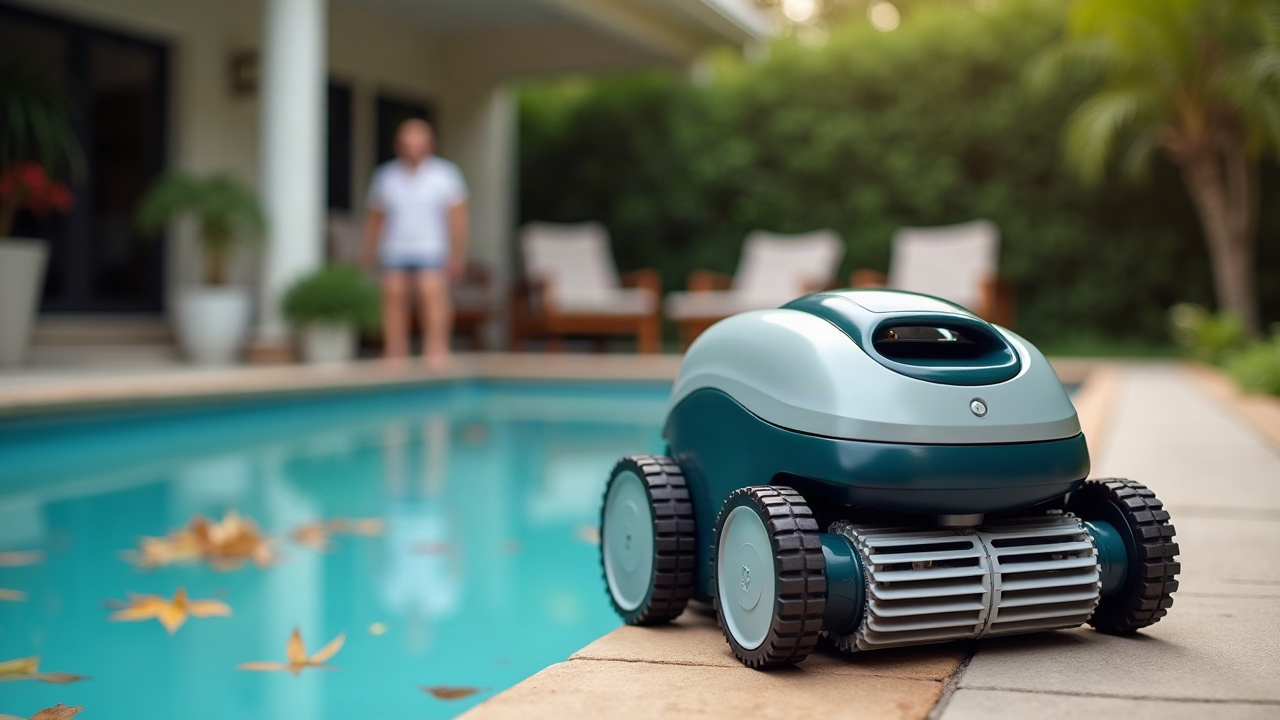
Pool cleaner repair leads are low-hanging fruit that most pool service companies fail to capture because they treat them like one-time service calls instead of the recurring revenue streams they actually represent. When a homeowner's Dolphin or Polaris breaks down mid-season, they're calling three or four companies within minutes, and whoever answers first with a clear next step wins the job—and often the maintenance contract that follows. The problem isn't demand. It's that your phone rings at 2 PM on a Tuesday when you're elbow-deep in a filter replacement, the call goes to voicemail, and by the time you call back three hours later, they've already booked with someone else.
The Problem: You're Treating Emergency Repair Calls Like Optional Side Work
Most pool companies view cleaner repairs as low-priority interruptions. They're not part of your weekly route. They don't fit neatly into your schedule. And because you've built your business around regular maintenance accounts, you've optimized everything—your truck stock, your routing, your phone answering—around servicing existing clients, not capturing new repair inquiries.
Here's what happens in real time: A homeowner's $1,200 Dolphin Premier stops working on Thursday morning. It's 95 degrees, their pool is turning green, and they have guests coming over the weekend. They search "pool cleaner repair near me" and start calling. Your business is third on the list. You're on a job site with no cell service. The call hits voicemail. Your outgoing message says "Leave a message and we'll call you back within 24 hours." They hang up and call the next company.
That next company? They answer. A real person says, "We can have someone out tomorrow morning between 9 and 11. What's the make and model?" The homeowner books on the spot. You never even knew they called.
Here's what most articles won't tell you: Robotic pool cleaner repair isn't a distraction from your core business—it's a customer acquisition channel disguised as a service call. According to Bain & Company, acquiring a new customer costs five to 25 times more than retaining an existing one, yet most pool companies spend hundreds on digital ads while ignoring the qualified, high-intent repair leads already calling them. These callers own pools that need weekly service. They're already dissatisfied with their current provider or handling maintenance themselves and realizing it's harder than they thought. The repair call is the foot in the door—but only if someone answers.
Why Pool Companies Miss Pool Cleaner Repair Leads
You lose pool cleaner repair leads because your front office can't scale with demand, not because there aren't enough calls. The issue compounds across three failure points that stack on top of each other, and by the time you realize what's happening, you've lost dozens of high-value prospects.
Your Phone Coverage Has Gaps You Don't See
You're in the truck, at a job site, or dealing with a difficult customer. Your phone rings. You glance at it—unknown number—and let it go to voicemail, planning to call back during lunch. Research from InsideSales.com shows that lead response time is the single most important factor in conversion: companies that respond to leads within five minutes are 100 times more likely to convert than those that wait 30 minutes or longer. In the pool cleaner repair market, five minutes might as well be five hours. The homeowner has already moved on.
Even if you have an office person, they're part-time, or they're handling scheduling for existing clients, or they're out running errands. The coverage gaps are invisible until you look at your call logs and realize that 40% of inbound calls during peak season went unanswered.
You're Not Qualifying or Converting Repair Inquiries
Let's say you do answer. The caller asks, "Do you repair Polaris 9650iQ robots?" If your answer is anything other than an immediate yes followed by booking a diagnostic appointment, you've probably lost them. Most pool techs answer with questions: "What's wrong with it? How old is it? Have you checked the filter canister?" You're trying to be helpful, but the caller interprets this as hesitation or unavailability.
The company that wins says: "Absolutely, we service all Polaris models. I can get you on the schedule for tomorrow afternoon—does 2 PM or 4 PM work better for you?" They're not more qualified than you. They just have a front office team trained to book the appointment first and diagnose the problem second.
You're Not Tracking Where Repair Leads Turn Into Maintenance Contracts
Even when you do win the repair job, most pool companies treat it as a standalone transaction. You fix the cleaner, collect payment, and leave. You're missing the conversion step. A trained front office follows up two weeks later: "How's the cleaner running? By the way, we have an opening on our Tuesday route if you'd like us to handle your weekly service—takes pool maintenance completely off your plate."
That follow-up call converts 30-40% of repair customers into recurring monthly contracts. But it only happens if someone is responsible for making it, tracking it, and closing it. When you're the owner-operator doing the work, the follow-up never happens.
How Missed Calls Turn Into Lost Revenue (And How to Calculate It)
Let's put actual numbers to this. If your pool service business appears in local search results for "robotic pool cleaner repair" or "automatic pool cleaner service," you're likely receiving 15-25 inbound inquiries per month during peak season (April through September). If your phone coverage is typical—meaning you're answering maybe 60% of first-time calls—you're missing 6-10 qualified leads every month.
A robotic pool cleaner diagnostic and repair typically runs $150-$400 depending on parts. But the real value is the lifetime customer. A weekly pool maintenance contract averages $125-$175 per month. If you convert just 35% of repair customers into maintenance clients, and the average client stays for 18 months, here's the math:
- 8 missed repair calls per month × $250 average repair ticket = $2,000 in immediate lost revenue
- 3 of those would have converted to maintenance (35% conversion rate)
- 3 clients × $150/month × 18 months = $8,100 in recurring revenue lost
- Total monthly impact of missed calls: $10,100 in lost lifetime value
Over a six-month season, that's over $60,000 in revenue walking away because no one picked up the phone. You can calculate your losses based on your own call volume and conversion rates, but the pattern holds: every missed call costs you far more than the immediate service ticket.
What Makes Robotic Pool Cleaner Service Different (And More Valuable)
Automatic pool cleaner repair isn't just another service add-on. It's a distinct business line with different economics, customer behavior, and growth potential than your weekly maintenance routes. Understanding why changes how you staff and answer for it.
First, the urgency is real. When a homeowner's pool cleaner dies, the pool starts deteriorating within days. Debris accumulates, algae blooms, and manual cleaning is tedious and time-consuming. They need help now, not next week. This urgency means they'll pay more and commit faster than a routine maintenance inquiry.
Second, the customer is already invested. They spent $800-$1,500 on a Dolphin Nautilus or Polaris F9550 Sport. They're not casual pool owners—they value convenience and cleanliness enough to buy a premium product. When it breaks, they want it fixed by someone who knows what they're doing, and they're willing to pay for expertise and speed.
Third, the repair relationship builds trust faster than maintenance. You're solving an urgent problem, showing up when you say you will, and delivering a tangible result they can see immediately. That trust transfers directly into willingness to hand over ongoing service. It's much easier to upsell a satisfied repair customer into weekly maintenance than to cold-call a homeowner who's never worked with you.
The insight most pool companies miss: Repair leads are warm leads with immediate buying intent. They've already decided to pay someone—the only question is who. If you're treating these calls the same way you treat general inquiries or quote requests, you're losing to competitors who recognize the urgency and staff accordingly.
The Fix: Front Office Coverage That Answers Every Call and Converts Every Lead
Capturing pool cleaner repair leads doesn't require more advertising or better SEO. It requires a front office that answers the phone every time it rings, qualifies the caller, books the appointment, and follows up to convert one-time repairs into recurring contracts. For most pool service businesses, that means adding capacity without hiring W-2 employees or learning new software.
Book All Leads provides a full front office team—six roles working around the clock—that picks up every call, books jobs using your availability and pricing, and runs follow-up to convert repair customers into maintenance accounts. You're live in five days, no contracts, and your team handles everything from answering to payment collection. You don't learn software or manage staff—you just see more jobs booked and more clients retained.
The difference is immediate. Calls that used to go to voicemail get answered by a real person who knows your service area, your pricing, and your schedule. They book the diagnostic, confirm the appointment, send reminders, and follow up two weeks later to offer a maintenance plan. You show up, do the work, and collect payment. Everything else is handled.
What a Proper Front Office Does That Voicemail Can't
Voicemail is where leads go to die. Even if you're diligent about callbacks, the delay alone eliminates 70-80% of your conversion potential. A proper front office doesn't just answer—it qualifies, books, and nurtures in ways that directly impact your revenue.
They Answer With Urgency and Availability
When a caller asks, "Can you fix my Dolphin cleaner?" the right answer is, "Yes, we service all Dolphin models. I have availability tomorrow at 10 AM or Thursday at 1 PM—which works better for you?" No hemming and hawing. No "let me check with the owner." Just clarity, confidence, and a booking path.
They Capture the Lead Even If You're Fully Booked
If you're slammed and can't fit in a repair for three days, a good front office doesn't turn the caller away—they book the appointment, set expectations, and offer a backup option. "We're scheduled out until Friday, but I can get you on the list for a cancellation if something opens sooner. In the meantime, here's a quick troubleshooting step that might get you through the weekend." The caller feels heard, stays engaged, and doesn't call your competitor.
They Track Every Lead and Follow Up Relentlessly
After the repair is complete, the front office schedules a follow-up call. "How's the Polaris running? Glad to hear it. By the way, we're adding new clients to our Tuesday and Thursday routes—would you like us to handle your weekly cleaning and chemical balancing? It's $150 a month, and you'd never have to think about pool care again."
That call happens because someone is responsible for it, tracking it, and measured on conversion. When you're the owner-operator, it falls through the cracks every time.

Why Most Pool Companies Can't Solve This Problem Themselves
You already know you're missing calls. You've probably tried to fix it. Maybe you hired a part-time office person, or you bought a call tracking number, or you committed to checking voicemail more often. None of it stuck, and here's why.
Hiring a full-time office person costs $35,000-$45,000 a year plus benefits. For a small pool service company doing $300,000-$500,000 in annual revenue, that's a huge fixed cost that doesn't flex with your seasonal demand. You need coverage from April to September, but you're paying year-round. And if that person quits or calls in sick, you're back to square one.
Part-time help doesn't solve the problem either. They're available during office hours, but pool cleaner emergencies don't respect business hours. Calls come in at 7 AM, at 6 PM, on Saturdays. A part-timer working 9-to-3 misses half the inbound volume.
You can't do it yourself. You're the technician, the scheduler, the estimator, and the collections department. Adding "receptionist" to that list means you're either not doing the work or not answering the phone. According to the Bureau of Labor Statistics, self-employed workers in the services sector work an average of 49 hours per week, and adding phone coverage on top of that leads to burnout, not growth.
The real fix is a front office team that scales with your call volume, works around the clock, and gets paid based on outcomes, not hours. That's what separates growing pool companies from those stuck at the same revenue year after year.
What Good Front Office Coverage Looks Like in Practice
Here's a real-world example. A pool service company in Gilbert, Arizona, was getting 12-15 repair inquiries a week during peak season. The owner, Mike, was answering maybe half of them. The rest went to voicemail, and he'd return calls when he could—sometimes same day, often the next morning. His close rate on returned calls was under 20%. He knew he was leaving money on the table but didn't know how much.
Mike brought in a front office team that answered every call live, booked diagnostics on the spot, and followed up with repair customers to offer weekly maintenance. Within 30 days, his repair booking rate went from 50% to 90%. More importantly, 38% of repair customers converted to ongoing service contracts. Over the summer, that added 11 new weekly maintenance accounts—$1,650 in new monthly recurring revenue—from a lead source he'd been fumbling for years.
The difference wasn't the quality of Mike's work or his pricing. It was that someone answered the phone, said yes, and booked the job before the caller could dial the next number.

The Hidden Upside: Repair Customers Refer More Than Maintenance Clients
Here's something most pool companies don't track but should: customers who start with a repair are more likely to refer than customers who start with maintenance. Why? Because you solved an urgent problem. They remember the relief of having a clean pool again after three frustrating days of failed DIY fixes. That emotional impact creates stronger loyalty and more word-of-mouth than routine weekly service.
When you combine high referral rates with strong conversion into recurring contracts, robotic pool cleaner repair becomes one of the highest-value lead sources in your business—but only if you answer the phone and handle the lead properly. Miss the call, and you lose the repair, the contract, and the referrals that would have followed.
How to Start Capturing More Pool Cleaner Repair Leads This Week
If you're serious about turning pool vacuum repair business into a real revenue stream, here's what to do immediately:
- Audit your call answering rate. Check your phone records for the last 30 days. How many inbound calls did you receive? How many went to voicemail? That's your baseline. If you're missing more than 20%, you're leaving serious money on the table.
- Set up a dedicated line for repair inquiries. Use call tracking so you know exactly where leads are coming from and which marketing channels are working. Route that line to someone who can actually book the job—not just take a message.
- Train whoever answers to book first, diagnose second. The goal of the first call is to get the appointment on the calendar. Save the technical troubleshooting for the on-site visit. Your front office should sound confident, available, and ready to help now.
- Build a follow-up process. Every repair customer gets a call two weeks later offering weekly maintenance. Track your conversion rate and optimize from there. If you're converting under 30%, your pitch needs work. If you're not tracking it at all, you're guessing.
- Expand your coverage to nights and weekends. Pool emergencies don't happen on your schedule. If you can't staff those hours yourself, bring in a team that can.
Most pool companies will read this, nod along, and do nothing. They'll keep missing calls, losing leads, and wondering why growth is so hard. The ones who actually implement these steps will capture a revenue stream their competitors are ignoring—and they'll do it without working longer hours or spending more on advertising. For more on how a full front office team works, or to see what it costs versus hiring in-house, explore the options that fit your business size and call volume.
Frequently Asked Questions
How many pool cleaner repair leads should I expect per month?
It depends on your local market size and online visibility, but a pool service company with decent local SEO and Google Business Profile optimization can expect 10-25 repair inquiries per month during peak season (April-September). Off-season drops to 3-8 per month. If you're getting fewer than that, your visibility needs work, not your phone answering—though you should fix both.
What's a good conversion rate for repair calls to booked jobs?
If you're answering calls live and responding with urgency, you should be booking 70-85% of qualified repair inquiries. If you're calling back from voicemail, expect 15-25%. The difference is almost entirely about response time and confidence during the first conversation. If your rate is below 70% on live answered calls, your front office needs better training or scripting.
Should I charge for diagnostics on robotic pool cleaners?
Most successful pool companies charge a diagnostic fee ($75-$125) that applies toward the repair if the customer proceeds. This filters out tire-kickers and ensures you're compensated for your time even if they decline the repair. Make the fee clear when booking the appointment—transparency builds trust and reduces no-shows.
How do I convert repair customers into weekly maintenance contracts?
Two weeks after the repair, call and ask how the cleaner is running. Then offer weekly service as a convenience upgrade: "Since we're already familiar with your pool, we have an opening on our Tuesday route if you'd like us to handle everything—cleaning, chemicals, equipment checks. Most clients find it's worth it just for the peace of mind." Close rate should be 30-40% if your repair work was solid and your pricing is competitive.
Do I need special parts inventory for robotic pool cleaner repairs?
Not initially. Start by offering diagnostics and common repairs (filter replacements, cable repairs, track replacements). Order parts as needed for specific jobs. As you build volume, stock the most common parts for popular models (Dolphin Nautilus, Polaris 9550, Hayward TigerShark). You'll learn quickly which parts turn over and which sit on the shelf.
Can I make real money on pool cleaner repairs or is it just a side gig?
Robotic pool cleaner repair can generate $3,000-$8,000 per month in direct revenue during peak season, but the real value is customer acquisition. If you're converting 35-40% of repair customers into weekly maintenance contracts, you're adding $1,500-$3,000 in new monthly recurring revenue every month during the season. That's how it becomes a core profit center, not a side gig.
Stop Losing Pool Cleaner Repair Leads to Competitors Who Just Answer the Phone
You don't need better marketing, a bigger service area, or lower prices to capture more pool cleaner repair leads. You need someone to answer the phone when it rings, book the job confidently, and follow up to turn one-time repairs into long-term clients. Every call you miss is revenue walking straight to a competitor who's doing exactly that.
The solution isn't working longer hours or hiring expensive in-house staff. It's putting a trained front office team in place that handles every call, books every job, and converts every opportunity—without you lifting a finger. If you're ready to stop losing leads and start growing recurring revenue from a market you've been ignoring, Book All Leads gets you live in five days with a full team that works around the clock. No contracts. No software to learn. Just more jobs booked and more revenue captured from the calls that are already coming in.
John Edmonds is a native Texan and military combat veteran. He founded Book All Leads after identifying a critical gap in the service industry: business owners losing revenue not from lack of skill, but because no one was handling the calls, follow-ups, reviews, and payments while they were busy doing the work.
View LinkedIn Profile →