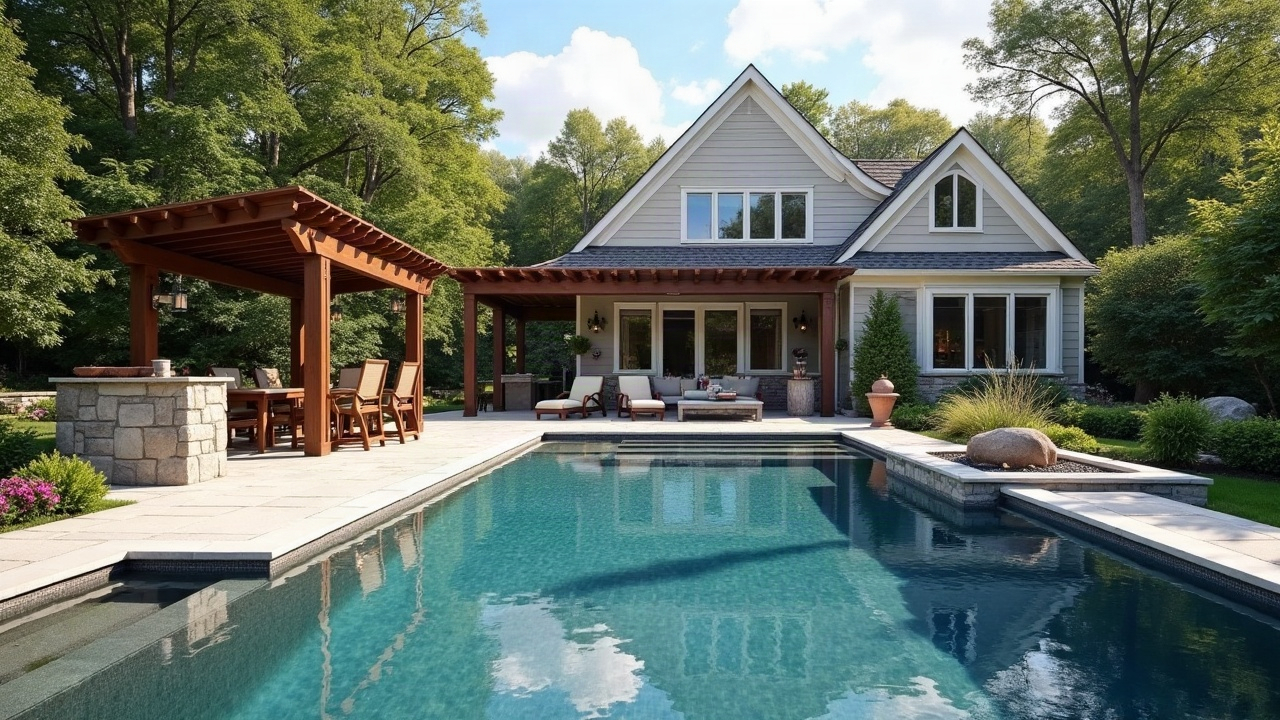
Pool company backyard projects often go to general contractors instead of pool specialists because homeowners making $75,000+ renovation decisions can't reach you during the critical 48-hour decision window. When a prospect calls three pool companies and two general contractors about a full outdoor living transformation, the business that answers first and stays responsive through the multi-week planning phase captures the contract—and the pool company that misses calls gets relegated to subcontractor status or loses the job entirely.
The Real Problem: You're Losing $80,000 Projects Over Missed Calls
The issue isn't your pool installation skills. It's that homeowners planning integrated backyard renovations are interviewing multiple trades simultaneously, and they award the prime contract to whoever makes them feel heard during the chaotic research phase. When your phone rings at 11 AM on a Tuesday and you're on-site managing a gunite pour, that call goes to voicemail. The general contractor with a full office team answers on ring two. By the time you call back four hours later, the homeowner has already scheduled an on-site consultation with someone else.
According to InsideSales.com, leads contacted within five minutes are 100 times more likely to convert than those contacted after 30 minutes. For high-dollar pool backyard integration projects, that window is even tighter. These aren't impulse buys—homeowners have done months of Pinterest research and they're calling six to eight contractors in a compressed 48-72 hour period.
Here's what most articles won't tell you: General contractors don't win these jobs because they're better at pools. They win because they're better at the first conversation. They answer. They follow up. They send proposals within 24 hours. They stay reachable during the two-week decision process. Pool companies with superior technical expertise get cut from consideration before they ever step on the property—not because of price or portfolio, but because of unresponsiveness.
- Homeowner calls on Monday morning during your morning route
- They leave a voicemail describing a $95,000 pool plus outdoor kitchen project
- You return the call Tuesday afternoon after finishing an equipment install
- They've already booked three on-site estimates with contractors who answered live
- Your name never makes it onto their comparison spreadsheet
This pattern repeats weekly during peak season. Each missed opportunity represents $60,000-$120,000 in revenue walking to a competitor who simply picked up the phone.
Why Pool Companies Get Downgraded to Subcontractor Status
Even when you do land the initial consultation, inconsistent availability during the proposal phase costs you the prime contract. Full backyard transformations involve coordinating pools, hardscaping, outdoor kitchens, lighting, landscaping, and sometimes structures like pergolas or pool houses. The contractor who can discuss all these elements coherently—and remains available for the homeowner's endless questions—becomes the project lead. Everyone else becomes a subcontractor working under their contract and pricing.
The financial difference is brutal. As the prime contractor on a $110,000 outdoor living project, you control scheduling, change orders, and client relationships. Your margin runs 18-25% on the full scope. As a subcontractor providing just the pool install under someone else's contract, you're locked into a fixed price with 8-12% margin and zero ability to upsell additional features when the homeowner inevitably wants to upgrade the spa jets or add a tanning ledge.
Between the second and fourth week of the sales process, homeowners typically reach out 6-12 times with questions: "Can we move the pool three feet closer to the house?" "What if we did pavers instead of stamped concrete?" "How does the pool equipment room integrate with the outdoor kitchen plumbing?" The contractor who answers these questions promptly gains trust. The one who takes eight hours to respond gets mentally categorized as "hard to work with" and loses negotiating power.
Many pool companies solve this by hiring an office person for $18-$22/hour. That works until they call in sick during your busiest week, or quit six weeks before summer season peaks. Training someone to understand pool terminology, pricing variables, and how to handle complex multi-trade questions takes months. Most pool company owners end up doing it themselves, which means they're either on the phone or on the jobsite—never both.
This is exactly why Book All Leads exists. You get six people working as your front office team—answering calls, following up with leads, booking estimates, and collecting payments. They're trained on pool terminology and backyard project coordination before they ever touch your phone line. No hiring, no training, no coverage gaps when someone's sick. Your callers talk to a real person who understands the difference between a gunite pool and a fiberglass insert, and who can confidently discuss how pool equipment placement affects outdoor kitchen design. Live in five days, no long-term contract.
How General Contractors Win Pool Full Backyard Install Projects
General contractors win integrated pool outdoor living projects by positioning themselves as the single point of contact for a complex multi-trade renovation. When a homeowner calls about a backyard transformation, the GC immediately books an on-site walkthrough, asks questions about the full vision (not just the pool), and sends a comprehensive proposal covering every element from grading to landscape lighting. They subcontract the pool work to a specialist—often the same pool company that could have won the prime contract—but they own the client relationship and the profit margin.
Their advantage isn't technical knowledge. Most GCs know less about pool hydraulics than you've forgotten. Their advantage is project orchestration and communication infrastructure. They have someone in the office who calls the homeowner every Thursday with a progress update. They send payment reminders that actually get paid on time. They follow up on the proposal three times in ten days instead of sending it once and hoping.
According to the National Association of Home Builders, outdoor living projects have grown 34% since 2020, with integrated pool and hardscape installations averaging $87,000-$145,000 depending on region. These aren't small-ticket impulse buys. Homeowners treat them like kitchen remodels—they interview multiple contractors, check references obsessively, and award the job to whoever makes them feel most confident during a stressful decision process.
The contractor who wins isn't always the most qualified. They're the most responsive and organized. They return calls within an hour. They send follow-up emails summarizing the conversation. They answer texts at 7 PM when the homeowner has a panicked question about HOA restrictions. Pool companies lose these jobs not because GCs are better builders, but because GCs are better at the business of building.
What Pool Backyard Integration Actually Requires
Winning the full backyard renovation contract means demonstrating competence across six interconnected systems: pool structure and equipment, decking and hardscaping, drainage and grading, gas and electrical rough-ins, outdoor kitchens or structures, and landscaping. You don't need to self-perform all this work, but you need to speak credibly about how each element affects the others and coordinate the trades so nothing gets built out of sequence.
When a homeowner asks, "If we add a fireplace on the north side, does that change where the pool equipment goes?" you need a confident answer immediately. If you say, "Let me check with my electrician and get back to you," you've introduced doubt. The GC who answers, "We'll run the gas line under the decking before we pour, so it won't affect your equipment pad placement at all," just moved ahead in the trust ranking.
This doesn't require you to become a licensed electrician or hardscape expert. It requires you to understand sequencing, have reliable trade partners, and communicate in a way that makes complex projects feel manageable. Most pool companies already have this knowledge—they just don't have the communication infrastructure to demonstrate it during the sales process.
How to Quote Integrated Projects Without Losing Your Margin
Pricing pool outdoor living projects requires breaking the scope into clear line items while still presenting a cohesive vision. Homeowners need to see the full investment, but they also want flexibility to cut or upgrade individual elements. If you quote a single $112,000 lump sum with no detail, they'll get a competitor to itemize it and you'll lose on perceived transparency. If you send 47 line items, they'll get overwhelmed and pick the simpler proposal from the GC.
The winning format: Five to seven major categories (pool and equipment, decking, outdoor kitchen, landscaping, lighting, structures) with two to four line items under each. Show a base scope and two or three upgrade options per category. This lets the homeowner customize without renegotiating the entire project, and it positions you as consultative rather than transactional.
Always include a contingency line for site conditions—grading issues, rock removal, utility conflicts. On integrated projects, something unexpected happens 80% of the time. If you don't budget for it, you're either eating cost overruns or having awkward conversations about change orders, both of which damage trust.
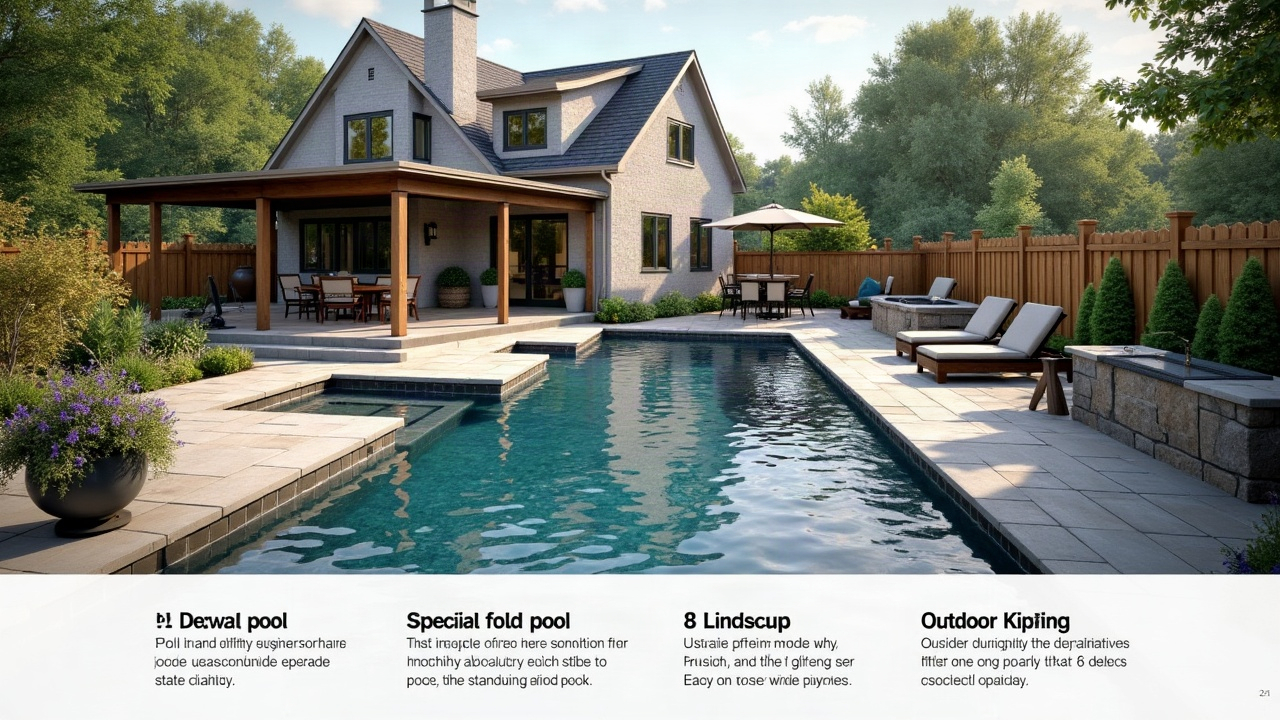
The Fix: Winning Full Backyard Projects as the Prime Contractor
To capture pool company backyard projects as the prime contractor instead of losing them to GCs, you need to solve three operational gaps: immediate lead response, consistent availability during the two-week decision window, and professional project communication that makes $100,000 purchases feel safe. None of these require you to leave the jobsite or hire three office people. They require you to route calls to someone trained to handle them.
Start by auditing your current lead response. Calculate your losses from missed calls over the last 90 days. If you're running four to six estimates per week but converting only one, your problem likely isn't pricing or portfolio—it's the leads who never got far enough to see your pricing or portfolio. Those are the calls that went to voicemail while you were pressure-washing a deck or explaining waterline tile options to a client on-site.
The fix isn't working more hours. It's routing your front office work to people whose only job is front office work. That means every call gets answered by someone who knows your pricing structure, can describe your portfolio, understands pool terminology, and can book estimates into your actual calendar without the back-and-forth texting. It means follow-ups happen on schedule without you setting phone reminders. It means payment reminders go out before invoices are overdue, not after.
For pool companies specifically, your front office team needs to understand how to talk about integrated projects. When someone calls asking about a pool, the team should ask about the full backyard vision—outdoor kitchen plans, patio size, landscaping budget, timeline. That conversation positions you as the contractor who thinks holistically, not the pool guy who shows up to dig a hole and leaves. It's the same conversation GCs have been having to win these contracts, and there's no reason you can't own it.
Second, tighten your proposal process. Proposals for pool backyard integration work should go out within 24 hours of the on-site visit, with a follow-up call 48 hours later and another touch at day seven if they haven't decided. This isn't pushy—it's professional. Homeowners making six-figure decisions appreciate structure. The contractor who follows up appropriately gets remembered; the one who sends a proposal and disappears gets forgotten.
Third, communicate proactively during the project. Weekly update calls or emails, photos of progress, heads-up about upcoming phases that might create noise or restrict access to the yard. This is what separates prime contractors from subcontractors. GCs know that client confidence comes from predictability, and predictability comes from communication. Pool companies who adopt this approach stop competing on price and start winning on trust.
Real Example: From Subcontractor to Prime in One Season
A pool company in suburban Atlanta was doing $1.8 million annually, almost entirely in standalone pool installs. The owner had the skills to manage full outdoor living projects—he'd coordinated with hardscape and outdoor kitchen contractors dozens of times—but he kept losing integrated projects to a local GC who'd then hire him as the pool subcontractor. Same houses, same scope, different margin.
The pattern was predictable: Homeowner would call about a pool, mention plans for a patio and outdoor kitchen, and ask if he handled that work. He'd explain he could coordinate it, but by the time he called back three hours later, they'd already talked to the GC who answered live and confidently described managing the full scope. The GC would book the project, then call him to subcontract the pool portion at a fixed price that left no room for his usual margins.
He brought in a front office team to answer calls, follow up on leads, and manage proposal tracking. Within four months, his close rate on integrated projects doubled. He went from landing one full-scope backyard project every six weeks to two or three per month. His average project value jumped from $48,000 to $91,000 because he was now winning contracts that included hardscaping, outdoor kitchens, and structures—not just pools. By the end of the season, revenue was up 43% with the same crew size, and he'd stopped taking subcontractor work from the GC entirely.
The technical work didn't change. His installation quality was always high. What changed was responsiveness and project communication. His team answered calls on ring two, booked estimates while the homeowner was still excited, sent proposals within 18 hours, and followed up three times over ten days. For the first time, he was competing on the same operational footing as the GCs who'd been beating him—and his superior pool expertise became the tiebreaker instead of an irrelevant detail.
Frequently Asked Questions
How do I quote a full backyard project if I don't self-perform all the work?
Break the project into clear scopes—pool and equipment, hardscaping, outdoor kitchen, lighting, landscaping—and get firm bids from your trade partners before quoting the homeowner. Mark up each scope 15-25% to cover your project management, coordination, and risk. Present the full proposal as a cohesive package with you as the prime contractor responsible for quality and timeline, even if you're subcontracting portions of the work.
What if a homeowner wants to hire their own hardscape or outdoor kitchen contractor?
Explain that sequencing matters—pool plumbing, electrical, and gas lines need to be coordinated with patio layout and outdoor kitchen placement, and you can't warranty your work if another contractor disrupts grading or damages equipment during their phase. Offer to include their preferred contractor as a sub under your contract, which gives them the relationship they want while keeping you in control of coordination and quality.
How do I compete with general contractors who've been doing full backyard projects for years?
Emphasize your pool expertise as the foundation of the project. Pools are the most complex and expensive element of outdoor living renovations—they require engineering, permits, inspections, and specialized equipment knowledge GCs don't have. Position yourself as the contractor who's a pool expert first and project coordinator second, versus a GC who's a generalist managing all the trades at arm's length. Homeowners appreciate depth of knowledge on the most critical scope.
Should I offer design services for integrated backyard projects?
At minimum, offer conceptual layouts showing how the pool integrates with other backyard elements—deck space, outdoor kitchen placement, traffic flow, sun exposure. You don't need to become a landscape architect, but homeowners expect visual guidance on how everything fits together. Partner with a designer or use 3D pool design software that lets you add hardscaping and structures. The contractor who shows them what it'll look like wins more often than the one who just talks about it.
How long should I give a homeowner to decide on a large backyard project proposal?
Include a 14-day proposal validity window in your quote. This protects you from material price fluctuations and creates gentle urgency. Follow up at 48 hours, seven days, and 13 days. If they need more time, extend it—but always give a new deadline. Open-ended proposals signal you're not busy, which makes homeowners question your quality. Busy contractors have timelines, and homeowners trust contractors who are in demand.
What's the biggest mistake pool companies make when bidding full outdoor living projects?
Quoting only the pool scope and telling the homeowner "you can hire someone else for the rest." This immediately positions you as a subcontractor in their mind, and they'll find a GC to manage the full project—who will then hire you at a lower rate or find a different pool company. If the homeowner is planning an integrated project, quote the integrated project. You can always value-engineer it down, but you can't win the prime contract if you don't bid for it.
Stop Losing Full Backyard Contracts You Should Be Winning
Pool company backyard projects are growing larger and more complex, and homeowners are awarding those premium contracts to the businesses that make them feel confident during a stressful buying process. If you're watching general contractors capture $95,000 outdoor living jobs and then hiring you as the pool sub at half your normal margin, the problem isn't your skills or pricing—it's the operational gap between when leads reach out and when you're available to respond.
You already know how to coordinate trades, design functional outdoor spaces, and deliver quality installations. The missing piece is consistent availability during the two-week window when homeowners are making decisions. When every call gets answered, every lead gets followed up, and every proposal gets sent on schedule, you stop losing work to contractors with inferior pool knowledge and start winning based on the expertise you've always had.
See how Book All Leads gives you a full front office team that answers calls, follows up with leads, books estimates, and keeps projects moving—without you hiring, training, or managing office staff. Live in five days with no contracts.
John Edmonds is a native Texan and military combat veteran. He founded Book All Leads after identifying a critical gap in the service industry: business owners losing revenue not from lack of skill, but because no one was handling the calls, follow-ups, reviews, and payments while they were busy doing the work.
View LinkedIn Profile →