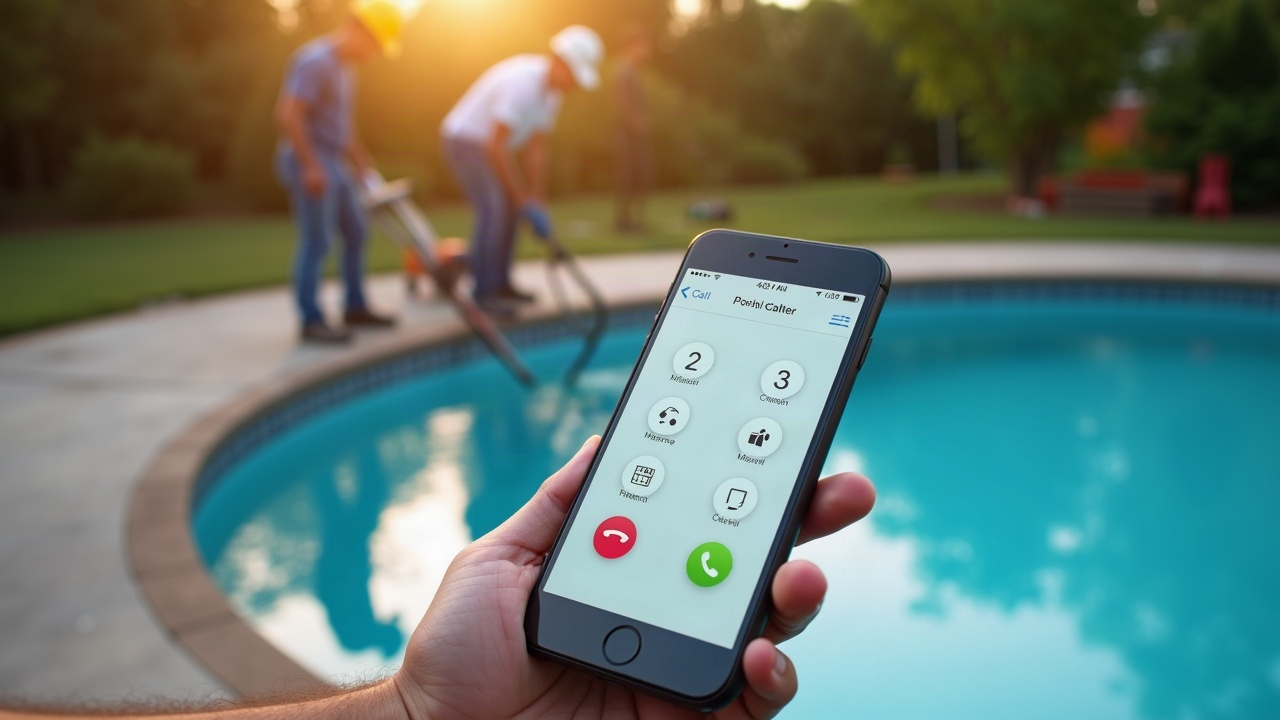
Pool company inbound calls spike 200-300% during installation season, and most pool builders miss more than half of them. When you're managing a $65,000 pool install on-site and a homeowner calls to book their project, that phone rings into the void. Every missed call during March through May represents a five-figure contract walking straight to your competitor who picked up on ring two.
Themath is brutal. Miss five calls during peak season, lose two to three installations. That's $130,000 to $195,000 in revenue gone because you were elbow-deep in rebar when the phone rang.
This isn't about being bad at business. It's about the impossible physics of running installs while capturing new work. But the companies growing 40% year-over-year have figured out something the rest haven't.
Why Pool Companies Miss Half Their Calls During Peak Season
Pool installation season creates a perfect storm of maximum revenue opportunity and minimum availability. When homeowners are ready to buy, you're unreachable. The typical pool company loses 52-67% of inbound calls between March and May because the owner and crew are on job sites from 7 AM to 6 PM.
According to InsideSales.com, 78% of customers buy from the vendor who responds first. In pool installation, where projects range from $45,000 to $120,000, response speed isn't a nice-to-have. It's the difference between booking your calendar solid and watching competitors fill theirs while you're setting steel.
Here's what actually happens during install season:
- Your phone rings while you're supervising excavation or shooting gunite
- The homeowner waits through four rings, gets voicemail, hangs up
- They call the next pool builder in their search results within 90 seconds
- That builder answers, books the site visit, and closes the deal before you check your messages
- You return the call six hours later to a homeowner who "already went with someone else"
The volume multiplies the damage. A pool company running three concurrent installs might field 15-25 serious inquiry calls per week during peak season. Miss half of those, and you're bleeding seven to twelve qualified leads weekly. Even at a conservative 25% close rate on returned calls versus 60% on live answers, that's two lost installations per week.
The False Choice Between Servicing Current Jobs and Booking New Ones
Most pool company owners believe they have two options: deliver excellent on-site service to current clients or answer phones for prospective clients. Pick one.
This false binary costs the industry millions. The builder who leaves the job site every hour to take calls delivers subpar supervision. The builder who ignores calls to focus on quality loses half their pipeline. Neither wins.
Here's what most articles won't tell you: The problem isn't that you're too busy during install season. The problem is that residential pool installation exists in a 12-week window where 70% of annual installation revenue gets decided, and traditional staffing models assume consistent call volume year-round. You can't hire a full-time receptionist for three months of chaos, but you can't afford to miss calls during the only quarter that determines whether you're profitable.
What Happens When You Return Calls Six Hours Late
Speed-to-lead research shows that calling back within five minutes yields a 900% higher contact rate than waiting 30 minutes. Wait six hours, and you're not just late—you're irrelevant. The homeowner has already spoken with two competitors, received quotes, and mentally moved on.
Walk through a typical scenario. A homeowner in your service area searches "inground pool installer near me" on Tuesday at 2 PM. They're serious—they've already gotten HOA approval, set aside $70,000, and want the pool finished by July. They call you first because your Google reviews are strongest.
You're at a job site managing plumbing rough-in. Phone goes to voicemail. They call Competitor A at 2:03 PM. Competitor A's office person answers, books a site visit for Thursday morning, and sends a follow-up text confirming the appointment. At 8 PM, you finally check messages and return the call. The homeowner is polite but clear: "Thanks, but we already have two estimates scheduled."
You've lost a $70,000 contract because you were doing your job well. The cruelty is that you provided better service to the client you already had, but lost the client you needed.
Research from Harvard Business Review shows that customers interpret responsiveness as a proxy for reliability. The homeowner hiring a pool builder is making a decision that affects their property for decades. If you can't answer the phone, they assume you won't answer when the equipment fails in year three.
Why Voicemail, Call-Back Services, and "I'll Get To It" Don't Work
Pool companies try three common fixes. All fail during peak season because they misunderstand what the caller needs. The caller isn't leaving information—they're making a buying decision in real time.
Voicemail: Homeowners shopping pool installations don't leave voicemails. They're comparing vendors live. A voicemail greeting that says "leave a message and we'll call you back" is functionally identical to a busy signal. According to consumer behavior studies, 67% of callers won't leave a message when researching high-ticket home services. They just dial the next number.
Automated call-back services: The robotic "we'll call you back" recording that captures numbers sounds like a solution. In practice, it delays the same problem by four hours. The homeowner wanted to talk now, got a robot, and called your competitor who had a human. By the time you return the automated callback, they've already booked site visits with two other builders.
"I'll check messages between jobs": The owner-operator who commits to checking voicemail at lunch and after work is making a noble effort with doomed execution. Installation schedules don't respect lunch breaks. A plumbing inspection runs late, lunch becomes 3 PM, and those 11 AM calls are six hours cold. You're returning calls to people who've already made decisions.
None of these approaches solve the core problem: during pool installation season, homeowners are comparison shopping live, and the builder who engages first wins the contract. Delayed response isn't slow service—it's no service.
How the Busiest Pool Builders Capture Every Call During Install Season
The pool companies booking 40-60 installs per season don't answer their own phones. They've stopped pretending one person can supervise gunite application and qualify leads simultaneously. Instead, they've built or hired a front office team that handles pool company inbound calls as a dedicated function, separate from field operations.
This isn't about adding an employee. Most 10-person pool companies can't justify a full-time receptionist who only gets busy three months per year. The winning model involves a full front office team—intake specialists, booking coordinators, payment collectors—who scale with your call volume and disappear when you don't need them.
Book All Leads operates as your complete front office: six specialized roles working around the clock to answer calls, book site visits, send estimates, and collect deposits. There's no software for you to learn, no part-time employee to manage, and no gap when someone calls in sick during your busiest week. You're live in five days, and when install season ends, you're not stuck paying for capacity you don't need. No contracts means you're buying outcomes, not overhead.
Here's what changes when every call gets answered by a real person who knows your booking calendar, service area, and project minimums:
Immediate qualification: Not every caller is worth a site visit. A dedicated front office qualifies budget, timeline, and property access before you drive 45 minutes to a neighborhood you don't service. Your estimating time focuses on closeable deals.
Same-day booking: When a homeowner calls at 10 AM ready to move forward, your front office checks your calendar and books the site visit for tomorrow or Saturday. The speed signals professionalism and keeps you ahead of slower competitors.
After-hours coverage: Thirty-eight percent of pool installation inquiries happen after 5 PM—homeowners researching after work. A front office covering evening and weekend calls captures leads your voicemail loses. This alone can add 12-15 qualified leads per month during peak season.
Follow-up that actually happens: The site visit happened, you sent the estimate, and now it's Thursday. Your front office calls to answer questions, clarify scope, and ask for the deposit. This follow-up—which field crews never have time for—converts 30-40% of pending estimates that would otherwise ghost.
The Real Cost of Missed Calls: Running the Numbers
Let's calculate what missed pool company inbound calls actually cost during a 12-week install season. Use your own numbers, but here's a typical scenario for a pool builder running $1.8M in annual installation revenue.
| Metric | Volume | Impact |
|---|---|---|
| Inbound calls per week (peak season) | 22 | 264 total calls over 12 weeks |
| Calls missed (58% miss rate) | 13 per week | 153 missed calls |
| Qualified leads among missed calls (45%) | 6 per week | 69 lost qualified leads |
| Close rate if you'd answered live (55%) | 3.3 per week | 38 lost installations |
| Average pool installation value | $68,000 | $2,584,000 in lost revenue |
That's not a typo. A pool company missing 58% of calls during install season—the industry average—loses $2.6 million in potential revenue over three months. Even if half those callers weren't serious or were price shopping, you're still looking at $1.2M in lost contracts.
Now factor in what you actually spend to generate those calls. If you're running Google Ads, SEO, and local service ads, you're paying $180-$400 per pool installation lead. Multiply that by 153 missed calls, and you've spent $27,500 to $61,200 on leads that went to voicemail.
You can calculate your losses using your actual call volume and average project value, but the pattern holds: the cost of missed calls during install season exceeds what most pool companies spend on all marketing combined.
Why "Just Hire a Receptionist" Doesn't Solve This
The obvious fix seems simple: hire someone to answer phones during install season. The economics don't work for most pool builders.
A receptionist handling phones, scheduling, and basic intake costs $15-$18/hour plus employer taxes, bringing the real cost to $19-$23/hour. For 12 weeks of install season coverage (40 hours per week), that's $9,120 to $11,040. Add training time, payroll setup, and the risk they quit mid-season, and you're over $12,000 for partial coverage.
That employee works 9-5, Monday through Friday. They can't answer the 6 PM call from a homeowner researching after work, or the Saturday morning call from someone ready to book. You're still missing 35-40% of inbound calls because you've only covered business hours.
And when install season ends in June, you're stuck with an employee who has nothing to do until next March—or you're running a hiring cycle every spring hoping to find someone competent who wants 12 weeks of work.
What to Do About Pool Company Inbound Calls This Season
If you're reading this in February or March, installation season is starting or already underway. You don't have time for a long-term staffing project. You need a solution that works this week.
Start by auditing where you're losing calls right now. Check your phone records for the last 30 days. How many inbound calls did you receive? How many went to voicemail? What time of day do most calls happen? If you're already missing 40% of calls in the slow season, you'll miss 60% once install volume ramps up.
Next, decide if you're going to solve this internally or externally. Internal means hiring, training, and managing someone to answer phones. External means handing the entire front office function to a team that already knows how to handle pool installation inquiries, booking, and follow-up.
For most pool companies running 15-50 installs per year, the external model wins on speed and cost. You're operational in days instead of weeks, you pay for results instead of hours, and you're not managing employees during your busiest season.
Here's what effective pool service call handling looks like during install season:
- Every call answered by a real person within three rings, 7 AM to 9 PM, seven days a week
- Callers qualified on budget, timeline, and service area before booking your calendar
- Site visits scheduled in real-time using your actual availability
- Follow-up calls made on pending estimates without you prompting
- After-hours and weekend calls captured instead of lost to voicemail
This doesn't require new software, integrations, or months of setup. The right front office team uses your existing calendar, your pricing, and your service area. You keep doing what you do best—building pools—and every call gets handled like you're a 50-person company with dedicated office staff.

The Difference Between Answering Calls and Converting Them
Capturing the call is step one. Converting it to a booked site visit and then a signed contract requires a different skill set than most pool builders realize. Answering the phone with "Hello?" doesn't win $70,000 contracts. Strategic intake does.
The homeowner calling about a pool installation has questions you need to answer before you spend two hours on a site visit. Do they own the property? Is their budget remotely close to realistic pricing? Is the property in your service area? Do they want the work done in a timeline you can meet?
A trained intake specialist asks these questions conversationally, without sounding like a gatekeeper. They're not interrogating—they're helping the homeowner understand if you're the right fit. This protects your estimating time and increases your close rate because you're only visiting properties where you can actually win the work.
Here's the conversion path that works:
Call answered in 10 seconds: Homeowner doesn't have time to hang up and dial the next pool builder. You've captured the lead.
Qualification in first 90 seconds: "Let me make sure we're a great fit—what area is the property in? And what timeline are you hoping for?" You've learned if this is worth pursuing.
Site visit booked same day: "I have availability Thursday afternoon or Saturday morning—which works better for you?" You've moved from inquiry to scheduled appointment while competitive bids are still theoretical.
Confirmation sent immediately: Text and email confirmation with date, time, and what to expect. Homeowner feels confident they've made progress. No-show rate drops to under 8%.
Follow-up after estimate: Three days post-estimate, your front office calls to answer questions and move toward deposit. This is where 35% of pending deals convert.
Most pool builders handle steps one and two inconsistently, skip step four entirely, and never do step five. The companies growing fastest have turned this into a repeatable process that doesn't depend on whether the owner remembers to check voicemail.
Why Speed Matters More in Pool Installation Than Other Trades
Pool installation is uniquely time-sensitive compared to other home services. An HVAC system that fails needs immediate replacement—the customer calls until someone answers. A pool installation is a discretionary purchase made during a narrow decision window.
According to National Association of Home Builders research, homeowners shopping major outdoor renovations contact an average of 3.2 contractors and make a decision within 6-9 days. That's a one-week window where your responsiveness determines if you're even considered.
The homeowner who calls you Tuesday afternoon is calling two other pool builders Tuesday afternoon. Whoever books the site visit first has a structural advantage—they're setting the quality and pricing expectations that the second and third bids get compared against. Answer in five minutes, and you're the standard. Answer in five hours, and you're competing against an incumbent.
This is why voicemail is so damaging during pool installation season. It's not that you eventually return the call—it's that the homeowner has already formed a relationship with the builder who answered live. You're playing catch-up in a sales cycle where first position wins 60% of the time.

Case Study: How One Pool Builder Recovered $420K in One Season
A pool installation company in North Carolina was running 18 installs per year at an average contract value of $72,000, generating roughly $1.3M in annual revenue. The owner knew he was missing calls but assumed it was an unavoidable cost of being on job sites.
In February, he reviewed his phone records from the previous March through May. Out of 187 inbound calls during that 12-week period, he'd missed 114—a 61% miss rate. Assuming a conservative 40% of those were qualified leads (46 leads) and a 50% close rate if he'd answered live (23 contracts), he'd lost approximately $1.65M in potential revenue.
That number seemed impossible until he factored in that he'd only booked 18 installs all year. If he'd captured even six of those 23 lost opportunities, he would have grown revenue by 33%.
He implemented a front office team in late February, just as spring inquiries started increasing. The team answered every call, qualified leads using his criteria (minimum $50K budget, specific service area, start date between April and August), and booked site visits directly into his calendar.
Over the next 12 weeks, here's what changed:
- Call answer rate: 94% (up from 39%)
- Qualified leads captured: 41 (up from estimated 18)
- Site visits completed: 38 (up from 22)
- Contracts signed: 24 (up from 18)
- Additional revenue: $432,000
Six extra installations don't sound transformative until you multiply by $72,000. The company didn't increase marketing spend, expand service area, or hire additional crews. They just stopped losing half their inbound calls during the three months that determine annual profitability.
The owner's only regret: "I wish I'd tracked this three years ago. I've probably lost $3 million since 2021 because I thought being on the job site was more important than answering the phone. Turns out I needed to do both, and I'm not capable of doing both alone."
Frequently Asked Questions
What percentage of pool installation leads call outside business hours?
Approximately 38-42% of pool installation inquiries happen after 5 PM or on weekends. Homeowners research high-ticket home improvements after work when they have time to compare options. If you're only covering 9-5 Monday through Friday, you're missing nearly half your potential leads. Evening and weekend coverage captures these callers before they move on to competitors with broader availability.
How quickly do I need to return pool installation calls to still win the contract?
Research shows contact rates drop 900% after the first five minutes. For pool installations specifically, homeowners typically contact 3-4 builders within a two-hour window and make site visit decisions the same day. If you return the call within 30-60 minutes, you still have a chance. Beyond two hours, you're competing against builders who've already scheduled appointments and started building rapport. Live answer rates convert at 55-60%; callbacks after two hours convert at 12-15%.
Can't I just use voicemail and call people back between jobs?
Voicemail loses 67% of pool installation leads because homeowners comparison shopping don't leave messages—they call the next builder. The ones who do leave messages have usually called 2-3 competitors simultaneously. By the time you return calls between jobs (typically 4-6 hours later), they've already scheduled site visits with faster responders. Voicemail isn't slow service; it's functionally invisible during competitive shopping cycles.
How many calls should a pool company expect during peak installation season?
Volume varies by market size and marketing spend, but a typical pool installation company running regional Google Ads and maintaining strong SEO receives 18-28 inbound calls per week during March through May. Companies in high-growth markets like Texas, Florida, and Arizona can see 35-50 calls weekly. Track your call volume from last season to establish your baseline, then calculate how many you're currently missing.
What's the ROI of answering every pool installation call during peak season?
If you're missing 50-60% of calls (industry average), capturing those leads typically adds 4-8 installations per season depending on your close rate. At $60K-$80K per install, that's $240K-$640K in additional revenue. Most front office solutions cost $1,500-$3,500 per month during peak season (3-4 months), meaning you're spending $4,500-$14,000 to capture $240K-$640K. The ROI ranges from 17:1 to 45:1—among the highest returns of any business investment.
Do I need different call handling for service calls versus installation inquiries?
Yes. Service calls require immediate scheduling for repairs or maintenance—customers want the next available appointment. Installation inquiries need qualification and consultation before booking site visits. Your front office should route these differently: service calls go straight to scheduling, installation inquiries go through budget/timeline/location qualification first. This protects your estimating time and ensures you're only visiting properties where you can win contracts.
Stop Losing Five-Figure Contracts to Voicemail
Pool installation season is 12 weeks long. Every missed call during that window represents potential revenue you'll never recover. You can't add a 13th week to make up for lost leads in April, and you can't close contracts with homeowners who booked your competitor while your phone rang unanswered.
The solution isn't working harder or checking voicemail more often. It's accepting that one person can't supervise gunite application and qualify installation leads simultaneously. The pool companies capturing 95% of pool company inbound calls during peak season have stopped trying to do both.
Your next install season starts in 60-90 days. The question isn't whether you'll get enough calls—you will. The question is whether you'll answer them or whether your competitor will.
If you're ready to stop losing half your leads to voicemail, Book All Leads builds and manages your complete front office in five days. No software to learn, no employees to manage, no contracts locking you in past install season. Just a team that answers your calls, books your calendar, and turns inquiries into signed contracts while you focus on the job site.
John Edmonds is a native Texan and military combat veteran. He founded Book All Leads after identifying a critical gap in the service industry: business owners losing revenue not from lack of skill, but because no one was handling the calls, follow-ups, reviews, and payments while they were busy doing the work.
View LinkedIn Profile →