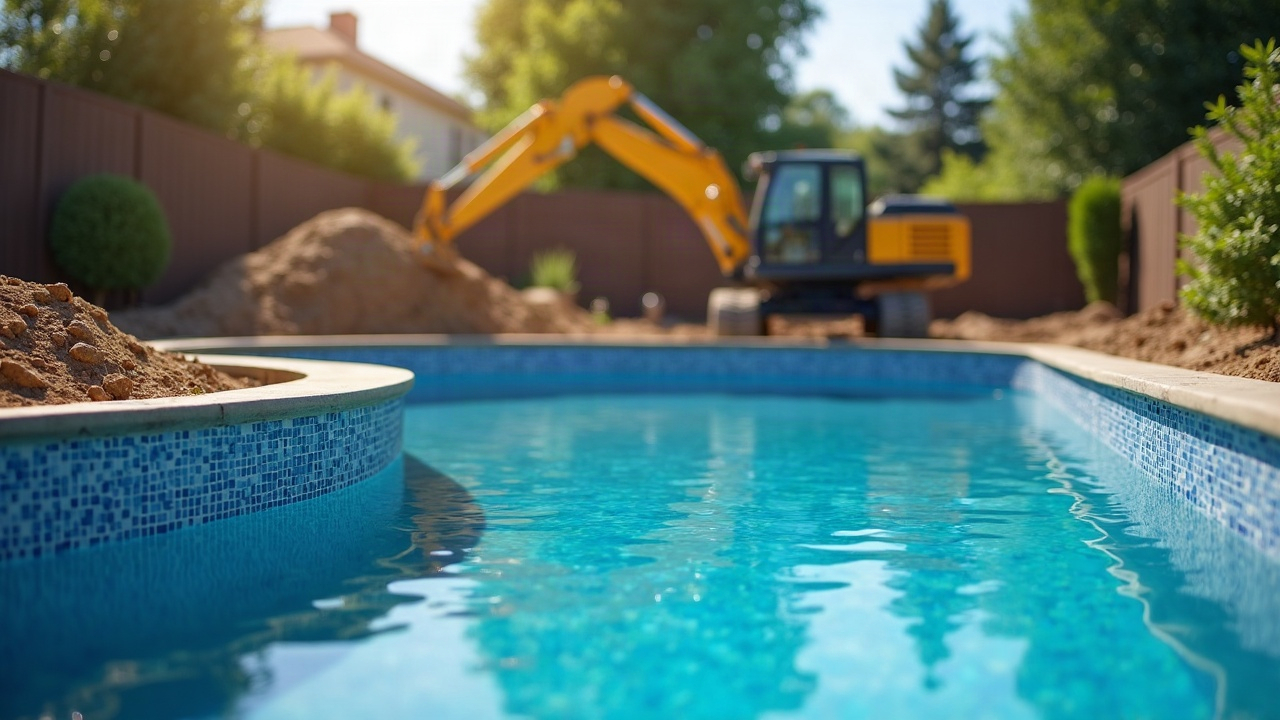
Pool company inground installs are lost within minutes of a homeowner's inquiry, even when your work is superior and your pricing is competitive. The difference between winning and losing a $60,000 installation project often comes down to who calls back first, not who submits the best proposal. A homeowner requesting quotes for an inground pool contacts an average of 4-5 contractors, and according to InsideSales.com, the company that responds within 5 minutes is 100 times more likely to qualify and convert that lead than one that waits 30 minutes or longer.
The Problem: Homeowners Book Before You Even See Their Message
You're on a job site overseeing a $75,000 pool excavation. Your phone buzzes three times — two voicemails and a web form submission. By the time you wash the dirt off your hands and check your messages two hours later, all three homeowners have already scheduled consultations with competitors. Not because your prices were too high. Not because your portfolio wasn't impressive enough. Because someone else answered their call on the second ring.
Here's the reality of inground pool inquiries: homeowners treat them like emergency purchases even though they're planned investments. They've spent weeks researching pool styles, financing options, and contractor reviews. By the time they pick up the phone, they're ready to move. They want answers now. They want someone to visit their property this week. They want to feel like their project matters.
When you don't answer, they interpret silence as disinterest. They assume you're too busy, too successful to need their business, or worse — unreliable. So they move to the next name on their list. The competitor who answers might charge $5,000 more, but the homeowner never finds out because you never got the chance to quote.
Here's what most articles won't tell you: The pool installation lead response problem isn't about being lazy or disorganized. You're a skilled tradesperson running crews, managing permits, dealing with inspectors, and solving on-site problems that can't wait. The expectation that you should also function as a full-time receptionist is structurally impossible for owner-operators. Yet the market punishes you for it anyway, because homeowners don't care about your operational constraints — they care about their backyard transformation.
Why Fast Callbacks Matter More for Inground Installs Than Almost Any Other Trade
Inground pool installation callbacks need to happen within minutes because the purchase decision psychology is completely different from other home improvement projects. Unlike a leaky faucet or broken AC unit, pool projects are emotionally driven, high-investment decisions where homeowners are simultaneously excited and anxious. Speed signals competence, availability, and eagerness to earn their business in ways that matter more than your years of experience or certifications.
Consider the numbers. The average inground pool installation costs between $50,000 and $100,000 according to industry data, making it one of the largest discretionary purchases a homeowner will make. At this price point, homeowners conduct extensive research — they know what they want before they call. They've already eliminated dozens of contractors based on online reviews, portfolio photos, and website professionalism. By the time they dial your number, you've made the shortlist. The callback speed determines whether you make the finalist round.
The competitive landscape intensifies the urgency. Most local markets have 8-12 pool installation companies actively competing for the same leads. Homeowners know this. They intentionally contact multiple contractors, often within the same hour. The first company to respond gets the psychological advantage of setting expectations — pricing ranges, timeline estimates, design possibilities. Every contractor who calls later is positioned as the alternative, not the frontrunner.
The Five-Minute Window Isn't Arbitrary
Research from InsideSales.com found that lead response times beyond 5 minutes drop conversion rates exponentially. After 10 minutes, you've lost 400% of the qualifying power compared to a sub-5-minute response. After 30 minutes, the homeowner has often already scheduled two consultations with competitors and mentally disqualified slower responders.
For pool companies specifically, this window is even more critical because the sales cycle is short despite the high price tag. Homeowners want pools installed before summer. They're working backward from Memorial Day or July 4th. Every day of delay in the sales process pushes installation further into peak season, increasing their anxiety about timing. The company that responds fastest signals they can move quickly throughout the entire project.
What Happens When You're Four Hours Late on a Pool Lead
Let's walk through a real scenario. A homeowner in a suburban neighborhood decides Tuesday morning that this is finally the year for a pool. She fills out contact forms on four pool company websites between 9:00 and 9:30 AM. She's requesting quotes for a 16x32 gunite pool with a sun shelf and integrated spa — a $70,000 project.
Company A has a dedicated front office team. She receives a call at 9:07 AM. The person on the phone is friendly, knowledgeable, and asks qualifying questions about her timeline, budget range, and property. They schedule an on-site consultation for Thursday at 4:00 PM. The homeowner feels heard and excited.
Company B calls at 9:45 AM. The homeowner answers but mentions she's already scheduled a consultation. Company B offers to come out Wednesday, trying to get there first. She agrees, now having two appointments booked.
Company C calls at 1:30 PM, during her lunch break at work. She doesn't recognize the number and lets it go to voicemail. She never listens to the message because she's already mentally committed to comparing the two scheduled consultations.
Company D — your company — calls at 4:15 PM. You finally got off the job site, saw the lead, and immediately dialed. She doesn't answer because she's picking up kids from school. You leave a detailed voicemail explaining your 18 years of experience and offering a free 3D design rendering. She never calls back.
You lost a $70,000 job before you even knew you were competing. Not because of price. Not because of quality. Because you were four hours late to a race you didn't know had started.

Why Pool Company Owners Can't Answer Every Call (And Shouldn't Have To)
The assumption that pool company owners should answer their phones within minutes is operationally absurd, yet the market demands it anyway. If you're overseeing excavation, you can't stop a trackhoe mid-dig to take a sales call. If you're meeting with a building inspector, you can't pause the conversation to answer your phone. If you're troubleshooting a plumbing issue on an installation, you can't walk away from your crew to discuss someone's dream pool timeline.
Your highest-value activity is building pools and managing installations. Every hour you spend on the phone with unqualified leads or playing phone tag with homeowners is an hour you're not generating the revenue that actually pays your bills. According to the Bureau of Labor Statistics, the median hourly wage for construction managers in specialty trades is $51.50, but your actual billable value as an experienced pool contractor is far higher — often $150-250 per hour when you're on-site solving problems or closing sales in person.
Yet most pool companies operate without any front office support. The owner is also the estimator, the project manager, the customer service representative, and the emergency contact. This model worked when leads came from referrals and word-of-mouth, where homeowners expected to wait. It fails completely in the digital lead era, where homeowners expect instant responses because every other service industry has trained them to.
The Hidden Cost of Missed Pool Installation Leads
Let's calculate the actual revenue impact. If you receive 15 inbound leads per month for inground installations, and your close rate on leads you actually speak with is 20%, you should be closing 3 new installations monthly. At an average project value of $65,000, that's $195,000 in monthly revenue, or $2.34 million annually.
Now assume you miss or delay response on 60% of leads because you're on job sites. You're now only having real conversations with 6 leads per month. At the same 20% close rate, you close 1.2 projects monthly instead of 3. You've just lost $117,000 in monthly revenue — $1.4 million annually — because you couldn't answer the phone.
Use our calculator to see what missed calls are actually costing your pool company based on your lead volume and average project size.
The Fix: Your Front Office Team That Works While You Build
The solution isn't working longer hours or strapping a phone to your hip. You need a dedicated front office team that handles every inbound lead the moment it arrives — answering calls, qualifying homeowners, scheduling consultations, and following up persistently until they book or explicitly decline. This team should know your business, represent your brand professionally, and treat every inquiry with the urgency it deserves.
For pool companies, this means having people who understand the difference between fiberglass and gunite, who can speak intelligently about permits and timelines, and who can pre-qualify homeowners based on budget and property suitability before wasting your time with on-site consultations. The goal isn't just speed — it's speed combined with competence.
Book All Leads provides a complete front office team for pool companies — six dedicated roles working around the clock to answer every call, respond to every web form, and book qualified consultations directly onto your calendar. You don't manage software or train team members. You just show up to pre-qualified appointments with homeowners who are ready to move forward. The team is live within 5 days, and there are no long-term contracts locking you in.
This approach transforms your lead conversion because it eliminates the structural problem: you're no longer choosing between building pools and answering phones. Your front office handles every inquiry within minutes while you focus on the high-value work only you can do — designing custom pools, managing installations, and closing sales in person.
What a Professional Pool Install Lead Response Actually Looks Like
When a homeowner submits a contact form or calls your pool company, the response should follow a consistent pattern designed to qualify, engage, and schedule — all within the first conversation.
Within 5 minutes: The phone rings. A real person answers using your company name. They're friendly, professional, and immediately focused on the homeowner's project. They confirm the homeowner is looking for an inground installation and ask two qualifying questions: timeline and approximate budget range.
During the call: They explain your process briefly — free on-site consultation, 3D design rendering, detailed quote typically within 48 hours. They position you as experienced and busy, which creates urgency rather than desperation. They offer two specific appointment times within the next 3-5 days, creating a forced choice that leads to booking.
After the call: The homeowner receives a confirmation text and email with the appointment details, your address, and what to expect. If they didn't book immediately, they receive a follow-up call later the same day and again the next business day. Persistence without annoyance.
Before the appointment: The homeowner receives a reminder text 24 hours before and 2 hours before the consultation. No-show rates drop from 30% to under 5% with proper reminder systems.
This level of responsiveness and follow-through is standard in every other professional service industry. Pool companies that implement it consistently win against competitors who still rely on voicemail and callback delays.

Why "Just Hire a Receptionist" Doesn't Work for Pool Companies
The obvious solution seems simple: hire someone to answer your phones. But pool company owners who try this discover several problems quickly. First, the cost. A full-time receptionist in most markets costs $35,000-45,000 annually plus payroll taxes and benefits — closer to $50,000 all-in. That person works 40 hours per week, leaving you uncovered evenings, weekends, and during lunch breaks, which is exactly when many homeowners make calls.
Second, the skill gap. An entry-level receptionist can answer phones, but they can't qualify pool leads effectively. They don't know your installation process, permitting requirements, or typical pricing ranges. They can't confidently discuss the difference between vinyl liner and gunite pools. Every call becomes a message for you to return, defeating the purpose of having someone answer.
Third, the management burden. You now have an employee to train, schedule, cover during vacations and sick days, and potentially replace when they leave. You're running a pool company, not an HR department. The administrative overhead pulls you further away from revenue-generating work.
Fourth, the infrastructure. A receptionist needs a workspace, phone system, scheduling software, CRM access, and training materials. You're now managing technology systems instead of pool installations. The complexity compounds when you realize you need backup coverage, call recording for quality control, and performance metrics to know if it's working.
What Pool Companies Actually Need Instead
You need a complete front office operation that's already built, trained, and managed — not a single hire you have to integrate yourself. This includes multiple team members covering all hours, shift managers ensuring quality, ongoing training on your specific processes, and performance reporting so you know exactly how many leads are being converted to appointments.
The structure should include:
- Live answer coverage during all business hours and beyond, including evenings and weekends when homeowners are most likely to research pool contractors
- Lead qualification protocols specific to pool installations — budget confirmation, timeline verification, property ownership confirmation, and basic site suitability questions
- Appointment setting directly to your calendar with automatic confirmations and reminders that reduce no-shows
- Follow-up sequences for leads that don't book immediately, with multiple touchpoints over several days
- Overflow and after-hours handling so you're never losing leads because someone called at 7 PM on a Saturday
- Performance visibility showing exactly how many leads came in, how many were contacted, how many booked, and how many are still being worked
This isn't a receptionist. It's a revenue operation designed specifically for high-ticket home improvement companies where speed and professionalism directly impact close rates.
How to Know If Slow Callbacks Are Costing You Pool Installation Revenue
Most pool company owners suspect they're losing leads to slow response times but don't have concrete data proving it. Here are the warning signs that callback speed is damaging your revenue:
You're generating leads consistently but closing fewer projects than expected. If you're spending $500-1,500 per lead on Google Ads, Angi, or HomeAdvisor but closing less than 15% of them, response time is likely the culprit. Industry benchmarks for well-qualified pool leads should produce 20-30% close rates when handled properly.
Homeowners frequently say "we already went with someone else" when you return their call. This is the clearest indicator that competitors are outpacing you on response time. If you hear this phrase more than once per month, you're losing five-figure projects to speed alone.
Your voicemail is full of unreturned inquiries from days or weeks ago. When you finally get around to calling them back, they've either hired someone else or are no longer interested. Each of these represents $50,000-100,000 in lost revenue that was handed to you and then abandoned.
You rely heavily on referrals because your lead conversion is inconsistent. Referrals are valuable, but if they're your only reliable source of new business, it means your inbound lead handling is failing. You're leaving money on the table every month.
Check your call logs and lead sources for the past 90 days. Calculate your average response time to new inquiries. If it's over 30 minutes, you're losing at least 40% of your potential revenue according to lead response research. If it's over 2 hours, you're likely losing 60-70% of opportunities to faster competitors.
What Homeowners Actually Think When Pool Companies Don't Call Back Quickly
Understanding the homeowner's internal narrative when you don't respond quickly helps explain why speed matters so much. When someone requests a pool installation quote and doesn't hear back within an hour, they don't think "they must be busy with important work." They think:
"They probably don't need my business. They must be so successful they can ignore new customers." This interpretation makes them feel small and unimportant, triggering them to call competitors who will make them feel valued.
"If they can't return a simple phone call quickly, how will they handle problems during my installation?" Your responsiveness to the initial inquiry becomes a proxy for your reliability as a contractor. Slow callbacks signal poor project management, even if that's not accurate.
"Maybe they saw my address and don't want to drive out here." Homeowners in rural or distant locations are especially sensitive to this. They assume geography is the reason for silence, making them more likely to book with local competitors even if pricing is higher.
"They're probably not very good if they're this desperate for work... but also, why haven't they called me back?" Homeowners hold contradictory beliefs — they want you to be successful and busy (social proof), but they also want immediate attention (urgency). When you don't call back, you fail both tests.
The emotional stakes of a $70,000 pool installation amplify all of these thoughts. Homeowners are already anxious about making the right choice. Your silence increases their anxiety, while a competitor's quick callback provides relief and builds trust. By the time you finally reach out, they've emotionally committed elsewhere.
Frequently Asked Questions
How quickly do I really need to respond to inbound pool installation leads?
Within 5 minutes for maximum conversion rates. Research shows that lead response times beyond 5 minutes reduce your likelihood of qualifying and converting that lead by 400% compared to sub-5-minute responses. For high-ticket pool installations where homeowners contact multiple companies simultaneously, the first responder gains a significant psychological advantage. If you can't consistently hit 5 minutes, aim for under 15 minutes as a minimum standard — beyond that, you're losing more than half your potential conversions to faster competitors.
What if I'm on a job site and can't answer when a new lead calls?
This is exactly why pool companies need a dedicated front office team handling inbound inquiries separately from your installation work. You shouldn't be expected to stop managing a $75,000 project to answer a sales call. The solution is having trained team members whose only job is answering calls, qualifying leads, and booking consultations onto your calendar. This separates your highest-value work — building pools and closing sales in person — from the necessary but time-consuming work of lead management and initial customer contact.
How many pool installation leads am I losing to slow callbacks?
If your average response time exceeds 30 minutes, you're likely losing 40-60% of your inbound leads to competitors who respond faster. Calculate your total monthly leads, then multiply by your current close rate. Now calculate what a 20-30% close rate would produce if you responded to every lead within 5 minutes. The difference is your lost revenue. For most pool companies generating 15-20 leads monthly, this represents $800,000 to $1.5 million in annual lost revenue directly attributable to callback speed.
Can I just hire a receptionist to handle pool company calls?
A single receptionist solves part of the problem but creates new ones. They only work 40 hours weekly, leaving you uncovered during evenings and weekends when many homeowners call. They require training on pool-specific terminology, your installation process, and qualifying questions. You need backup coverage for vacations and sick days. And you're now managing an employee plus the phone systems and software they need. A complete front office team provides multiple trained team members, 24/7 coverage, ongoing management you don't handle, and proven qualification processes specific to high-ticket pool installations.
What should someone say when they answer a pool installation inquiry call?
The first response should accomplish three things: confirm the project type, qualify budget and timeline, and schedule an on-site consultation. Start with a friendly greeting using your company name, then immediately acknowledge their pool project interest. Ask two qualifying questions: "What's your ideal timeline for installation?" and "Do you have a budget range in mind?" This filters serious buyers from tire-kickers. Then offer specific appointment times within 3-5 days rather than asking "when works for you?" which creates decision paralysis. End with confirmation via text and email to reduce no-shows.
How do I know if my current lead response system is working?
Track three metrics: average response time to new inquiries, percentage of leads you actually speak with (not just leave voicemails for), and conversion rate from inquiry to booked consultation. Industry benchmarks for well-managed pool companies are under 5 minutes average response time, 75%+ contact rate, and 40-50% of contacted leads booking consultations. If you're significantly below these numbers, your response system is costing you revenue. Most pool companies don't track these metrics at all, which is why they don't realize how much money they're leaving on the table.
Stop Losing Pool Installations to Competitors Who Just Answer Faster
Pool company inground installs are won and lost in the first five minutes after a homeowner reaches out, not during the sales presentation or proposal phase. You can have the best portfolio, the most experience, and the fairest pricing in your market — none of it matters if you're the fourth company to call back. Homeowners interpret speed as competence, and they book consultations with whoever makes them feel important first.
The structural problem isn't your work ethic or commitment to customer service. You're running complex installations that demand your full attention. You can't be on a job site and answering phones simultaneously. The solution isn't working harder — it's building a front office operation that handles every inbound lead with the speed and professionalism that high-ticket projects require.
Every day you operate without dedicated front office support, you're handing five-figure projects to competitors who simply answered the phone when you couldn't. If you're ready to stop losing pool installation revenue to callback delays, Book All Leads provides the complete team you need, live within 5 days, with no software to learn and no long-term contracts. You focus on building exceptional pools. We'll make sure every homeowner who wants one gets a fast, professional response from your company first.
John Edmonds is a native Texan and military combat veteran. He founded Book All Leads after identifying a critical gap in the service industry: business owners losing revenue not from lack of skill, but because no one was handling the calls, follow-ups, reviews, and payments while they were busy doing the work.
View LinkedIn Profile →