
A pool company onboarding process determines whether new customers stay past their first service visit or quietly switch to a competitor. Most pool companies lose 20-30% of new customers within the first 90 days—not because of poor service quality, but because of miscommunication, unmet expectations, and a rushed transition from sale to service. The customer signs up excited, then feels abandoned the moment money changes hands.
You know the pattern. The sales call goes great. They're thrilled about weekly service, ready to hand over their pool. Then the first tech shows up, does the work, leaves a generic door hanger, and the customer is left wondering: What did you actually do? When will you be back? Why does my pool still look cloudy?
That confusion is expensive. According to Bain & Company, a 5% increase in customer retention can increase profits by 25-95%. Yet most pool companies treat onboarding as an afterthought—a handoff from sales to service with no transition plan. The result? Customers who feel buyer's remorse before you've even proven your value.
Why Do Pool Companies Lose Customers Right After the First Visit?
Pool companies lose customers during the first service visit because they fail to bridge the gap between what was promised during the sales call and what the customer actually experiences in their backyard. The technician who shows up is often a stranger with different communication habits than the person who made the sale. No one explains what "weekly service" actually includes, what the pool should look like week-to-week, or how long it takes to fix problems the previous owner ignored for years.
The customer expected a relationship. They got a transaction. They thought weekly service meant their pool would be crystal clear by Friday. Instead, the tech treated algae, said "give it a week," and drove off. No follow-up. No reassurance. Just silence until the next visit.
Here's what happens in that silence: doubt creeps in. They check their neighbors' pools. They Google "how long should pool clearing take." They see three competitors advertising faster results. By week three, they're taking calls from other companies.
The Expectation Mismatch That Kills Retention
Your sales process sells outcomes: "We'll keep your pool swim-ready all season." Your first service visit delivers tasks: brushed walls, skimmed surface, adjusted chemicals. The customer doesn't understand the gap between those two things.
They don't know that green-to-clear takes 10-14 days. They don't know their filter needs backwashing twice before flow improves. They don't realize you're treating problems created over months of neglect. You know this. Your techs know this. But no one told the customer.
Here's what most articles won't tell you: The most damaging moment in pool service onboarding isn't a missed visit or a billing error—it's the 72 hours after the first visit when the customer looks at their pool, doesn't see immediate improvement, and concludes they made a mistake. That window is where retention is won or lost, and most companies don't even know it's open. The customer isn't upset about the work quality. They're upset because no one prepared them for what "progress" actually looks like when you inherit a neglected pool.
What's Really Broken in Most Pool Service Onboarding
Most pool service onboarding fails because companies treat it as paperwork rather than relationship-building. The customer signs a contract, gets added to a route, and receives a generic welcome email with payment terms. Then nothing until a truck pulls into the driveway. There's no communication plan, no expectation-setting, and no human touch between "yes" and "we're here."
The breakdown happens in three places:
- The handoff from sales to service is invisible to the customer. Sales promises weekly visits and proactive care. Service operates on routes and efficiency. No one explains how those two things align.
- The first visit is optimized for speed, not trust. Your tech has 12 other stops. They do the work, check the boxes, move on. The customer wanted to meet you, ask questions, understand the plan.
- No one follows up to close the loop. The tech finishes, the customer waits to see results, and you assume silence means satisfaction. It doesn't. It means they're deciding whether to call you with concerns or just call someone else.
That's not a training problem. It's a structural problem. Your techs aren't going to spend 20 minutes at each new customer's house explaining pool chemistry and timelines—they have a route to finish. But someone needs to do that job, or you'll keep losing customers who were ready to stay.
How Do You Fix a Pool Company Onboarding Process?
A strong pool company onboarding process starts before the first visit and extends through the first 30 days, with structured communication at each milestone. The customer needs to hear from you three times in the first week: before the first visit to set expectations, during the visit to explain what's happening, and after the visit to confirm progress. Every message answers the same question: "What should I expect next?"
Here's the fix, broken into five non-negotiable steps:
Step 1: The Pre-Visit Call (24 Hours Before Service)
Someone from your office—not a tech between stops—calls the new customer the day before their first visit. This call accomplishes three things: confirms the appointment, sets expectations for what the tech will do, and gives the customer a chance to ask questions before a stranger shows up in their backyard.
The script is simple: "Hi, this is Sarah from [Company Name]. Your first pool service visit is tomorrow between 9 and 11. Our tech will test your water, brush and skim, and check your equipment. If your pool has algae or cloudiness, we'll start treatment, but it typically takes 7-10 days to see full clearing. Do you have any questions before we get started?"
That 90-second call prevents 80% of first-visit confusion.
Step 2: The First Visit Documentation
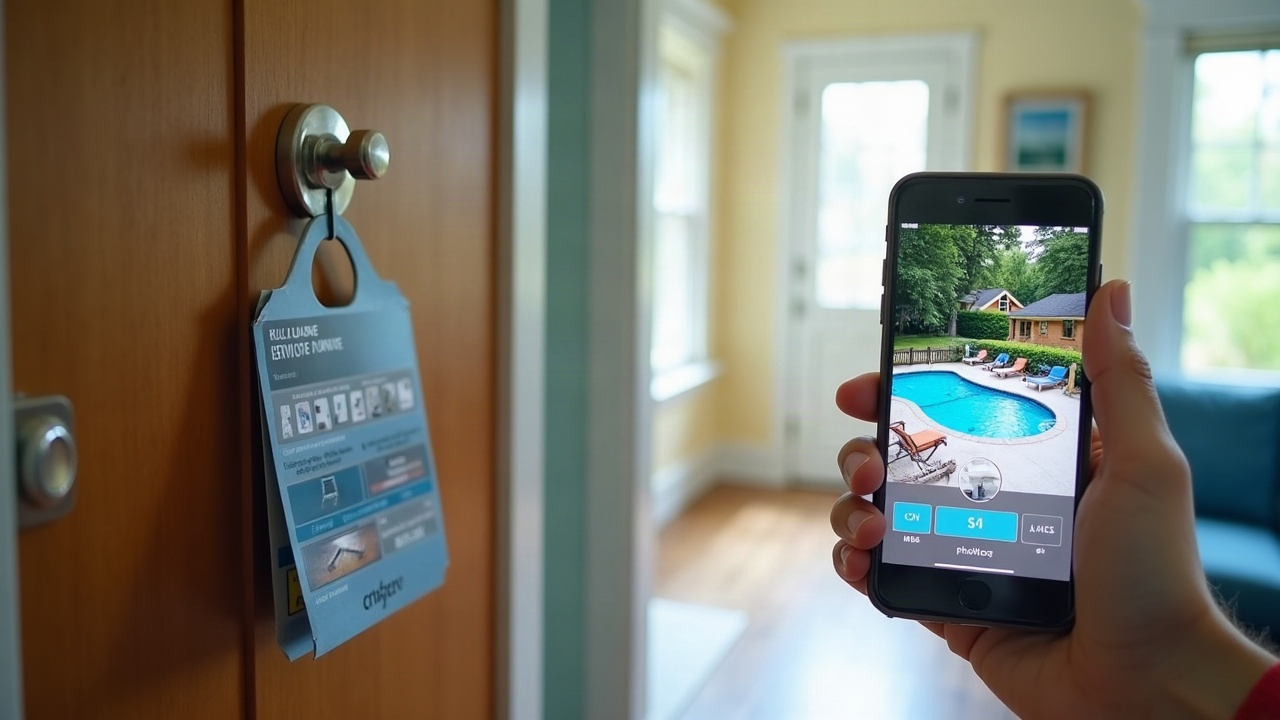
Your tech needs to document the pool's starting condition with photos and notes. Not for you—for the customer. They need to see "before" so they can appreciate "after." Cloudy water on day one, clear water on day ten. Green steps in week one, white steps in week three.
This doesn't require expensive software. A shared folder, a group text, or a basic photo app works. The tech snaps three photos—full pool, skimmer, equipment—and adds one sentence: "Started algae treatment, adjusted pH, backwashed filter." That gets sent to the office, and the office forwards it to the customer with context.
Step 3: The Post-Visit Follow-Up (Same Day)
Within four hours of the first visit, someone calls or texts the customer: "Hi [Name], our tech finished your first service this morning. We treated the algae and adjusted your chemical balance. You should start seeing clearing within the next few days. We'll be back next [Day]. Any questions?"
This is where Book All Leads makes the biggest difference for pool companies. You don't have time to make these calls between jobs, and your office staff is buried in scheduling and billing. A dedicated front office team handles pre-visit confirmations, post-visit follow-ups, and the "just checking in" calls that keep new customers engaged. They know your service model, they follow your communication calendar, and they're available when customers call back with questions. You stay focused on routes. They handle the relationship-building that prevents early churn.
Step 4: The Week-Two Check-In
After the second visit, someone reaches out again: "We've completed two visits now. Your pool is progressing as expected. You should see [specific improvement] by next week. Let us know if you have any concerns."
This is the moment when doubt peaks. The pool isn't perfect yet. The customer is wondering if they made the right choice. This call reassures them that you're paying attention and that progress is on track.
Step 5: The 30-Day Review
At the one-month mark, you schedule a brief conversation: "We've been servicing your pool for four weeks now. How's everything going? Any questions about your service or what we're doing?"
This isn't a sales call. It's a retention call. You're catching small problems before they become cancellation reasons. Maybe they're confused about billing. Maybe they want service on a different day. Maybe they just want to know why you're adding the same chemicals every week. These are easy fixes—if you ask.
What Should Pool Service First Visit Communication Include?
Pool service first visit communication should explain what the technician will do, what the customer should expect to see over the next two weeks, and how to reach you with questions. The biggest mistake is assuming the customer understands pool service terminology. They don't. "Shocking the pool" sounds violent. "Algaecide treatment" sounds toxic. "Backwashing" sounds like something broke.
Your communication needs to translate technical work into customer-friendly outcomes:
| What You Say Internally | What the Customer Needs to Hear |
|---|---|
| "Started algae treatment" | "We're clearing the green tint—you'll see improvement over the next 7-10 days" |
| "Backwashed filter" | "We cleaned your filter so water flows better and stays clearer" |
| "Adjusted pH and alkalinity" | "We balanced your water chemistry to protect your equipment and keep the water comfortable" |
| "Brushed walls and steps" | "We scrubbed surfaces to prevent buildup and keep algae from returning" |
Notice the pattern: outcome, not task. The customer doesn't care about pH levels. They care that their pool will be swim-ready and their equipment will last.
Why Pictures Matter More Than Reports
Your detailed chemical readings mean nothing to most customers. A photo of their pool going from cloudy to clear means everything. Visual proof builds trust faster than any explanation.
After the first visit, send a photo with a caption: "Here's your pool today. We've started treatment. Here's what it should look like in 10 days." Then follow up with a comparison shot. That before-and-after is your most powerful retention tool.

How Do You Manage Pool Customer Expectations Without Over-Promising?
Managing pool customer expectations means being honest about timelines and explaining why pools don't improve overnight. The most effective approach is to frontload the bad news: "Your pool has significant algae. Treatment takes 10-14 days. You'll see some improvement after the first visit, but it won't be crystal clear until week three. That's normal, and we'll monitor it every step."
When you set realistic expectations early, customers give you time to deliver. When you stay vague to avoid disappointment, they fill in the gaps with optimistic assumptions—then feel misled when reality doesn't match.
Here's a framework that works:
Acknowledge the problem clearly: "Your pool has X issue." Don't soften it. They can see it.
Explain the timeline honestly: "This typically takes X weeks to fully resolve." Give a range, not a guarantee.
Describe what progress looks like: "You'll notice less cloudiness after visit two, and by visit four it should be clear." Break the journey into milestones.
Reassure them it's under control: "We see this all the time. We'll handle it." Confidence matters.
According to Forrester Research, 73% of customers say that valuing their time is the most important thing a company can do to provide good service. That includes not wasting their time with false hope. Honest timelines build trust. Vague promises build resentment.
What's the Real Cost of Poor Pool Service Customer Experience?
Poor pool service customer experience costs you twice: first in lost revenue when customers cancel, and again in marketing spend to replace them. If you're losing 25% of new customers in the first 90 days, and your average customer is worth $2,400 per year, you're losing $600 per failed onboarding. For a company adding 10 new customers per month, that's $18,000 per year in preventable churn.
But the damage goes deeper. According to Harvard Business Review, acquiring a new customer costs five times more than retaining an existing one. Every customer you lose in month one costs you five times what you spent to win them—because you're replacing them instead of growing.
Then there's the reputation cost. Unhappy customers don't stay quiet. They leave reviews. They tell neighbors. They create doubt in the minds of prospects who were ready to sign. One bad first-visit experience can poison three potential sales.
Want to see what poor onboarding is really costing you? Calculate your losses based on your current churn rate and customer lifetime value. The numbers are sobering.
The Lifetime Value of Getting Onboarding Right
Flip the equation. A customer who stays past 90 days typically stays for years. Weekly service at $150/month is $1,800 per year. Over five years, that's $9,000. Add equipment upgrades, repairs, and referrals, and a well-onboarded customer can be worth $15,000 or more.
The first visit isn't just a service call. It's a $15,000 decision point. Treat it that way.
What Does a Real Pool Service Onboarding Failure Look Like?
Here's a story from a pool company owner in Arizona. We'll call him Mike. He added 23 new customers in April—his best sales month in three years. By July, nine of them had canceled. Not because of service quality. Because they felt ignored.
Here's what happened: Mike's sales process was excellent. He visited homes, assessed pools, explained service plans, answered questions. Customers signed up excited. Then they got handed off to the service team with zero transition. The tech showed up, did the work, left a door hanger with checkboxes, and moved to the next stop.
Customers called the office with questions. "Why is my pool still cloudy?" "What did your tech do today?" "When should I expect improvement?" Mike's office staff didn't have answers—they weren't on the service calls. They promised callbacks that took days. Customers got frustrated. By week three, they were researching competitors.
Mike didn't realize he had a problem until he saw the pattern in his cancellation reasons: "lack of communication," "felt ignored," "not sure what I'm paying for." These weren't service complaints. They were relationship complaints.
How Mike Fixed It
Mike rebuilt his onboarding in three phases. First, he created a pre-visit checklist: every new customer got a call 24 hours before their first visit explaining what to expect. Second, he required first-visit photos and sent them to customers with a summary of what was done. Third, he assigned his office manager to call every new customer after visit two and visit four to check in.
The results showed up fast. His 90-day retention jumped from 61% to 87% in three months. Customers stopped calling with anxious questions because they were getting proactive updates. Referrals increased because people felt cared for, not serviced.
The entire process added maybe 15 minutes per new customer. That 15 minutes was worth thousands in retained revenue.
Frequently Asked Questions
How long should a pool company onboarding process take?
A pool company onboarding process should span the first 30 days, with structured touchpoints at the pre-visit, post-visit, week two, and week four marks. The goal isn't to drag out onboarding—it's to ensure the customer feels supported during the critical period when they're evaluating whether they made the right choice. After 30 days, most customers have seen enough progress and received enough communication to feel confident in their decision.
What's the most common mistake in pool service first visit communication?
The most common mistake is assuming the customer understands what "weekly pool service" actually involves. Technicians do their work and leave, expecting customers to infer value from clean skimmers and balanced chemicals. But customers don't speak that language. They need someone to translate technical tasks into outcomes: "We removed debris so your filter runs efficiently," or "We treated algae—you'll see clearing in 7-10 days." Without that translation, customers feel they're paying for invisible work.
How do you handle customers with unrealistic expectations about pool clearing timelines?
You address unrealistic expectations before the first visit, not after. During the initial sale or welcome call, be explicit: "Your pool has significant algae buildup. Full clearing typically takes 10-14 days with weekly service. You'll see improvement after each visit, but crystal-clear water takes time." Then reinforce that timeline after visit one and visit two. Customers accept reality when you present it early and confidently. They resist it when they discover it on their own after expecting faster results.
Should pool service techs spend time talking to customers during the first visit?
Pool service techs should make contact during the first visit—a quick introduction, a summary of what they're doing, and an invitation to ask questions—but they don't need to deliver the full onboarding conversation. That's what pre-visit and post-visit calls are for. The tech's job is to do great work and be professional. The office's job is to provide context and follow-up. Trying to make techs do both creates rushed conversations that satisfy no one.
What's the best way to document pool service work for new customers?
The best documentation for new customers is simple: three photos (full pool, skimmer, equipment) plus one sentence describing what was done and what to expect next. Detailed chemical logs and technical reports can go in your records, but customers need visual proof and plain-English explanations. Send those photos and notes within a few hours of the visit, before the customer starts wondering what happened while they were at work.
How many touchpoints should a pool company have with new customers in the first month?
A pool company should have at least five touchpoints with new customers in the first 30 days: a pre-visit confirmation, a post-visit follow-up after visit one, a check-in after visit two, a midpoint progress update around week three, and a 30-day review. This isn't overkill—it's relationship-building. Each touchpoint answers the question "Is this working?" before the customer asks it. After 30 days, communication can shift to as-needed unless there's a specific issue to address.
Stop Losing Customers You Already Sold
Your pool company onboarding process is either building loyalty or creating doubt. There's no neutral outcome. Every new customer is evaluating you in real time—not just on the quality of your work, but on whether you make them feel valued, informed, and confident they made the right choice.
The companies that grow aren't the ones with the best trucks or the cheapest prices. They're the ones that make customers feel seen. That happens in the details: the pre-visit call, the post-visit follow-up, the week-two check-in that says "we're paying attention." Those touchpoints cost almost nothing, but they determine whether a customer stays for one season or ten.
You're already doing great work. You just need someone making sure customers know it. If you're tired of losing customers you fought to win, Book All Leads can handle every touchpoint from first call to 30-day follow-up. Your front office team, fully managed, live in five days. No software to learn. Just better retention and fewer holes in your onboarding.
John Edmonds is a native Texan and military combat veteran. He founded Book All Leads after identifying a critical gap in the service industry: business owners losing revenue not from lack of skill, but because no one was handling the calls, follow-ups, reviews, and payments while they were busy doing the work.
View LinkedIn Profile →