
Pool company phone answering is the single largest leak in your lead funnel. When a homeowner calls three pool companies about a green swamp in their backyard or a pump that died mid-summer, the company that picks up first books the job—even if they're more expensive. Missed calls don't just delay revenue; they hand your best inbound leads directly to competitors who staff their phones with live people during business hours and beyond.
You're spending money on Google Ads, truck wraps, and yard signs. You're generating calls. But if those calls hit voicemail because you're elbow-deep in a filter replacement or finishing a chemical balance at a commercial property, you've paid for lead generation without lead capture. The homeowner moves to the next name on their search results, and your competitor—who answered on ring two—gets the $3,200 pool opening or the $8,500 equipment upgrade you should have won.
This isn't about customer service. It's about revenue retention. Every call that goes unanswered is a call someone else is answering.
The Problem: Pool Companies Generate Leads but Lose Them to Voicemail
You're running a tight operation. You've got routes scheduled, techs in the field, and a calendar that's mostly full. But here's the gap: you're optimized for service delivery, not inbound lead capture. When a new lead calls at 10:47 a.m. on a Tuesday, you're skimming a filter or explaining to a homeowner why their salt cell is corroded. Your phone buzzes in your pocket. You glance at it, see an unknown number, and let it ring. You'll call them back at lunch.
Except by lunch, they've already booked with someone else.
According to InsideSales.com, 78% of customers choose the business that responds first, not the one with the best reputation or lowest price. In the pool service industry, where seasonal demand spikes create urgency—a homeowner needs their pool open before Memorial Day, or their heater fixed before a family gathering—response time isn't a courtesy. It's the deciding factor.
Here's what's happening in real time while you're on a job:
- A homeowner searches "pool opening service near me" and calls the top three results within 90 seconds of each other.
- Your listing shows up first. They call. Voicemail. They hang up and dial the next number.
- Competitor B answers live, asks three qualifying questions, and books the appointment before the homeowner finishes their coffee.
- You call back 90 minutes later. The homeowner says, "Thanks, but I already scheduled someone."
You didn't lose because you're less qualified. You lost because you were unavailable for 90 minutes during peak call hours.
Here's what most articles won't tell you: Pool service businesses often assume their reputation or Google reviews will make homeowners wait for a callback. But consumer behavior research from Harvard Business Review shows that high-intent service searches—especially for urgent or seasonal needs—follow a "first responder" purchasing pattern. The lead isn't comparing proposals. They're looking for the first credible business that can confirm availability and price. If you don't answer, you're not in the running.
Why Pool Service Phone Calls Go Unanswered (And Why It's Getting Worse)
Pool business missed calls stem from a structural problem, not a work ethic problem. Most pool companies operate with owner-operators or small crews who are revenue-generating only when they're on site. Every minute spent on the phone is a minute not servicing a pool, which creates a perverse incentive: prioritize the customer in front of you, defer the unknown caller.
That logic works for retention. It fails catastrophically for acquisition.
Here's why the problem is intensifying:
Seasonal demand compression: Pool service calls spike hard in April and May (openings), July and August (repairs and water chemistry), and September (closings). During these windows, you're getting 3-5x your off-season call volume while working the same number of hours in the field. Your callback list grows faster than you can work through it.
Consumer expectation shift: A decade ago, homeowners expected to leave a voicemail and wait. Today, they expect immediate confirmation. If they're comparing three companies, they're doing it in one 15-minute session on their phone, not over three days of back-and-forth voicemails.
Advertising effectiveness without capture infrastructure: You're running Google Local Services Ads or paying for SEO. It's working—your phone is ringing more than it used to. But if your call handling capacity hasn't scaled with your lead generation, you've just built a more expensive way to lose leads. You're paying $40-$80 per pool service lead and converting 50% of them because the other 50% never reach a human.

What Happens to Pool Leads That Hit Voicemail
Most pool company owners believe missed calls become callbacks. The data tells a different story. When you finally return a call from an unknown number two hours later, you're not rejoining the sales process—you're trying to resurrect a lead that's already moved on.
Research from Vendasta found that 85% of callers who reach voicemail will not leave a message. They simply hang up and call the next business. Of the 15% who do leave a message, fewer than one in four wait for a callback before booking elsewhere. That means for every 10 missed calls, you might recapture one or two leads—if you're diligent about callbacks.
But here's the compounding problem: callbacks take longer than live answers. A live call might take 3-4 minutes to qualify, quote, and book. A callback requires redialing (often multiple times), navigating voicemail tag, and re-establishing context. You're spending more time per lead to convert fewer of them.
Let's map a real scenario. You run a two-truck pool service operation in a mid-sized market. You spend $1,800/month on Google Ads and generate 45 inbound calls. You're in the field from 8 a.m. to 5 p.m., so you answer maybe 40% of those calls live. The other 27 go to voicemail. You call back 20 of them. You reach 8. You book 3. That's a 6.7% conversion rate on missed calls versus an estimated 60-70% conversion rate on live-answered calls. You've lost 16-18 bookings—potentially $18,000 to $35,000 in revenue—because of pool company call handling gaps.
Use our calculator to estimate your own missed-call revenue loss based on your market and average job value.
How Pool Companies with Live Answering Win Your Leads
Your competitors aren't necessarily better at pool service. They're better at pool company phone answering. Specifically, they've made a structural decision: every inbound call during business hours—and often after hours—reaches a live person trained to qualify, quote, and book.
Some have hired a full-time office person. Others use a family member. A growing segment is using a dedicated front office team that handles calls, texts, and booking around the clock without requiring the owner to manage staff or learn software.
Book All Leads operates as a full front office team for pool service companies—six roles working 24/7 to answer calls, respond to texts, qualify leads, book appointments, and follow up. There's no software for you to learn, no hiring or training, and no contract locking you in. The team goes live in five days and handles the entire front office workload so you can focus on service delivery while every lead gets answered, qualified, and converted.
Here's what that looks like in practice:
A homeowner calls at 11:30 a.m. about a cloudy pool two weeks before a graduation party. You're finishing a pump replacement and can't pick up. The front office team answers on ring two, asks when the party is, what the pool looks like now, and whether they've had recent chemistry issues. They quote a service visit, offer a same-day or next-day slot, and book the appointment. The lead is confirmed, calendared, and sent an automated reminder—all while you're tightening the last union on the pump.
That's not a luxury. It's the baseline expectation for homeowners calling service businesses in 2025. If you're not meeting it, someone else is.
What Live Pool Company Call Handling Actually Includes
Live answering isn't just picking up the phone and saying "thanks for calling." Effective pool service phone systems—whether it's an in-house person or an outsourced team—perform four distinct functions that directly impact revenue:
Immediate Qualification and Triage
Not every call is a $5,000 equipment replacement. Some are existing customers asking about their service day. Others are price shoppers who'll never book. A trained front office person or team qualifies every caller in the first 60 seconds: Are they a new lead or existing customer? What's the service need? What's the urgency? This sorting prevents you from spending 20 minutes on the phone with someone who's collecting five quotes and always picks the cheapest.
Real-Time Booking with Calendar Access
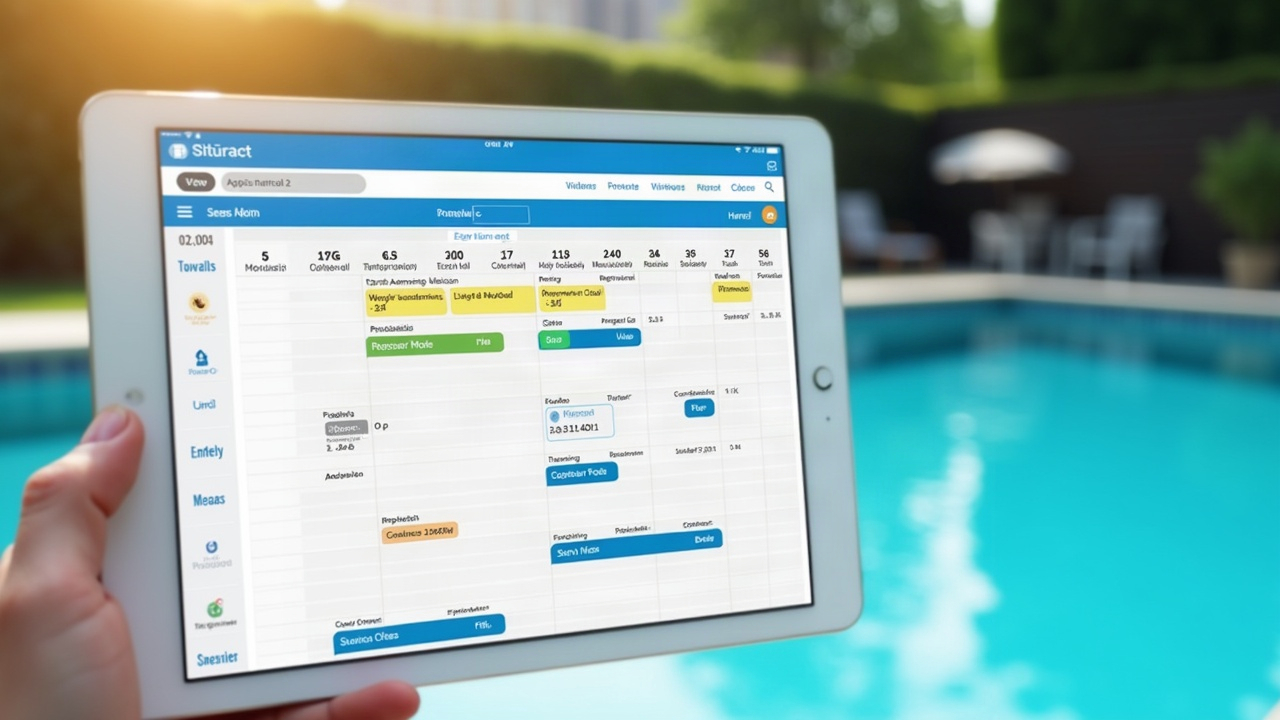
Saying "I'll have someone call you back to schedule" loses leads. Homeowners want confirmation now. A live answering setup with access to your calendar can book the appointment during the first call—no callback loop, no lead leakage. For seasonal services like openings and closings, this eliminates the multi-day text-and-voicemail dance that causes 30-40% of leads to ghost.
After-Hours and Weekend Coverage
Pool emergencies don't happen on a schedule. A pump failure on Saturday afternoon or a green pool discovered Sunday morning generates calls outside your business hours. If those calls hit voicemail until Monday, the homeowner either calls a competitor or tries a DIY fix that makes your eventual job harder. After-hours coverage captures leads your competitors miss and builds trust with customers who need urgent help.
Follow-Up on Quotes and No-Shows
A significant percentage of booked appointments don't convert immediately. The homeowner wants to "think about it" or compare one more quote. Most pool companies let these leads go cold. A dedicated front office follows up 24-48 hours later, answers remaining questions, and closes 15-25% of quotes that would otherwise be lost. This follow-up work is nearly impossible to execute consistently when you're in the field all day.
The Real Cost of DIY Call Handling for Pool Service Owners
Many pool company owners handle their own phones because they believe it's cheaper than hiring help and more reliable than outsourcing. Both assumptions are false when you account for opportunity cost and conversion loss.
Let's model it. You're a one-truck owner-operator averaging $850 per service call (openings, closings, equipment repairs, and chemistry corrections). You generate 50 inbound leads per month. You answer 22 live (44%) and convert 15 of them (68% close rate). The other 28 go to voicemail. You call back 18. You book 4 (22% close rate on callbacks). Total monthly bookings: 19. Total revenue: $16,150.
Now model the same lead volume with live answering on every call. You'd convert an estimated 60% of all 50 leads (industry standard for live-answered, qualified leads), booking 30 jobs. Revenue: $25,500. The difference—$9,350 per month—is the hidden cost of handling your own calls while working in the field.
That's $112,200 annually. Enough to hire a full-time office person, fund a second truck, or take a real vacation without your phone buzzing in your pocket.
And here's the part no one talks about: DIY call handling doesn't just cost you revenue. It costs you time with your family, evenings spent returning calls, and the mental load of knowing you're always one missed call away from losing a great lead. The stress of being both the service provider and the front office creates burnout that shows up as shortened tempers with customers, slower response times, and higher mistake rates on jobs.
How to Choose the Right Phone Answering Solution for Your Pool Business
Not all answering solutions are equal. Some are designed for high-volume, low-touch businesses (e.g., pizza delivery). Others are built for appointment-based service companies where every call is a potential $2,000+ job. Pool companies fall into the latter category, which means your call handling needs to be consultative, not transactional.
Here's what to evaluate:
Industry-specific training: Generic answering services read from scripts and take messages. You need people who understand pool service language—openings, closings, green-to-clean, pump vs. filter vs. heater issues—and can have a credible conversation with a homeowner without sounding like a call center in another industry.
Calendar integration and booking authority: If the answering team can't see your availability and book appointments, they're just a better voicemail. You want a solution that closes the lead during the first call.
After-hours and overflow coverage: Seasonal demand spikes mean some weeks you'll get 15 calls and other weeks you'll get 50. Your solution should scale with volume without requiring you to hire, train, or schedule additional staff.
No software learning curve: If adopting a new phone solution requires you to learn a CRM, set up integrations, or manage logins, it's adding work instead of removing it. The best solutions are fully managed—someone else builds it, runs it, and updates it while you just see the results (booked appointments and answered calls).
Transparency and no long-term contracts: You should be able to see call logs, listen to recordings, and cancel anytime if it's not working. If a provider requires a 12-month contract, they're betting you won't leave even if the service is mediocre.
What Pool Service Owners Get Wrong About Hiring for Phones
The default solution most pool companies consider is hiring a part-time or full-time office person. It's intuitive: bring someone in-house, train them on your business, and let them handle calls while you're in the field.
This works for some businesses. But it fails more often than it succeeds, and here's why:
Coverage gaps: A single person can't cover 7 a.m. to 7 p.m., six days a week, plus after-hours emergencies. They take lunch breaks, get sick, and go on vacation. Every gap is a missed-call window.
Training and turnover: According to the Bureau of Labor Statistics, the median tenure for office and administrative support workers is just 3.9 years, with much higher turnover in small businesses. You'll spend weeks training someone on pool terminology, your pricing, and your calendar—only to restart the process when they leave for a higher-paying role.
Seasonal mismatch: You need maximum phone coverage in April, May, and June when call volume is 3-4x higher than winter. But hiring a full-time person means paying year-round for capacity you only need four months of the year.
Overhead beyond salary: A $15/hour part-time office person costs $31,200 annually. Add payroll taxes, workers' comp, training time, and the cost of coverage when they're unavailable, and the real cost is closer to $40,000—before accounting for missed calls during gaps.
For many pool service companies, a fully managed front office team that scales with demand and operates 24/7 delivers better coverage at a lower total cost than a single in-house hire.
Why Pool Companies Are Moving to Dedicated Front Office Teams
The fastest-growing segment of pool service businesses—those adding trucks, expanding service areas, and hitting $500K to $2M in revenue—aren't answering their own phones or hiring a single office person. They're outsourcing the entire front office function to a team that handles calls, texts, booking, follow-up, and payment reminders without requiring the owner to manage people or software.
This isn't a cost-cutting move. It's a growth move. By removing the owner from the phone and the daily calendar Tetris of booking appointments, these companies free up 10-15 hours per week that can be reinvested in hiring another tech, expanding service offerings, or pursuing commercial contracts.
Here's what changes operationally:
Your phone stops ringing in your pocket. Inbound calls route to a team trained on your business. You get a text or email summary of each new lead with the details and booked appointment time. You show up to the job with context, not confusion.
Lead conversion improves without you doing anything. Because every call is answered live and every lead is followed up with, your conversion rate climbs from 35-45% (industry average for owner-handled calls) to 60-75% (industry average for dedicated front office teams).
You stop losing evenings and weekends to callback lists. The front office team handles follow-ups, quote confirmations, and reschedules. Your evenings are yours again.
Seasonal surges don't break your operation. When call volume triples in April, the team scales coverage to match. You don't scramble to hire temp help or work until 9 p.m. returning calls.
This model isn't theoretical. Pool companies using dedicated front office teams report 20-40% revenue growth in the first year—not because they got better at cleaning pools, but because they stopped losing leads to voicemail and competitors who answered live.
A Real-World Example: How One Pool Company Stopped Losing Leads
Mike runs a two-truck pool service operation in a suburban market outside Charlotte. His average job value is $780, and he was generating 55-60 inbound leads per month from Google Local Services Ads and word-of-mouth referrals. His problem: he was personally answering about 40% of those calls live while working in the field. The rest went to voicemail.
He'd return calls in the evening, but by then most leads had already booked with a competitor. His conversion rate sat at 38%—21 jobs per month from 55 leads. He was leaving $26,000+ on the table every month in lost bookings.
He tried hiring a part-time office person to answer calls from 9 a.m. to 2 p.m. It helped during that window, but calls before 9 a.m., after 2 p.m., and on weekends still hit voicemail. Turnover was an issue—his first hire lasted four months before taking a full-time job elsewhere. His second hire called in sick frequently. He spent more time managing the office person than he'd spent managing callbacks.
He switched to a fully managed front office team that covered calls and texts 24/7. Within the first month, his live answer rate jumped to 96%. His conversion rate climbed to 67%—37 jobs from the same 55 leads. That's 16 additional bookings per month, or $12,480 in monthly revenue he'd been losing to competitors. Annualized, that's nearly $150,000 in recovered revenue.
The kicker: he stopped working evenings. No more callback lists. No more guilt about missed opportunities. He showed up to jobs, did the work, and went home. The business grew faster, and he worked less.
Frequently Asked Questions
How much does a pool company lose per missed call?
The average pool service job is worth $600 to $1,200 depending on the service mix (maintenance, openings, repairs, equipment). If your live-call conversion rate is 65% and your voicemail-callback conversion rate is 20%, every missed call costs you roughly $300 to $550 in expected revenue. For a company missing 20-30 calls per month, that's $6,000 to $16,500 in monthly lost revenue.
Can a generic answering service handle pool service calls?
Generic answering services can take messages, but they rarely convert leads. Pool service calls require someone who understands the difference between a green pool, a broken pump, and a heater issue—and can quote accordingly. Most pool companies that try generic services see minimal improvement in conversion rates because the service sounds like a call center, not an extension of the business.
What's the best way to handle after-hours pool emergency calls?
After-hours emergency calls—pump failures, leaks, heater issues before a party—are high-value leads. The best approach is a live answering team that can triage urgency, provide an estimated response time, and either dispatch you for true emergencies or book a priority appointment for the next morning. Voicemail loses these leads to 24-hour competitors.
Should I hire an in-house receptionist or use an outsourced team?
An in-house receptionist works if you need coverage only during a narrow window (e.g., 9 a.m. to 3 p.m., Monday through Friday) and have low turnover risk. For most pool companies, an outsourced front office team provides better coverage (24/7, no sick days, no turnover) at a lower total cost when you account for payroll taxes, benefits, training, and replacement hiring.
How quickly do I need to return a pool service call to still win the lead?
Data shows that leads contacted within 5 minutes are 21 times more likely to convert than leads contacted after 30 minutes. In pool service, where homeowners are often calling multiple companies in one session, responding within 5 minutes is the difference between being in the conversation and being forgotten. Live answering eliminates the response delay entirely.
Do pool customers expect live answering or is voicemail acceptable?
Customer expectations have shifted. A decade ago, voicemail was acceptable. Today, especially for new leads, homeowners expect immediate confirmation. Existing customers are more forgiving, but new leads comparison-shopping will move to the next name on their list if the first call goes unanswered. Live answering is now the baseline expectation, not a premium service.
Stop Losing Pool Leads to Competitors Who Just Pick Up the Phone
You didn't get into the pool service business to spend your evenings returning calls or losing jobs to companies that aren't better than you—just more available. Every missed call is revenue you generated through marketing but failed to capture. Pool company phone answering isn't a back-office detail. It's the front line of your revenue operation.
The companies winning in your market aren't outspending you on ads or undercutting you on price. They're answering their phones live, booking appointments in real time, and following up with leads who don't commit immediately. They've built a front office that matches the quality of their field work.
You can do the same without hiring, training, or learning new software. Book All Leads handles the entire front office for pool service companies—calls, texts, booking, follow-up, and payment reminders—so you can focus on the work you're great at while every lead gets answered, qualified, and converted. No contracts. Live in five days. Let's stop the revenue leak and start booking every lead that calls.
John Edmonds is a native Texan and military combat veteran. He founded Book All Leads after identifying a critical gap in the service industry: business owners losing revenue not from lack of skill, but because no one was handling the calls, follow-ups, reviews, and payments while they were busy doing the work.
View LinkedIn Profile →