
Pool company text leads are won or lost in the first five minutes—not because homeowners are impatient, but because your competitor already texted them back. Most pool service companies rely on phone calls and voicemail boxes, leaving urgent inquiries from homeowners sitting unread for hours. Meanwhile, competitors with a pool service text response habit capture those same leads in under two minutes, often before you've even checked your messages. The difference isn't technology—it's speed and communication preference. Homeowners expect businesses to meet them where they are, and increasingly, that's their text inbox.
Why Do Pool Companies Lose Leads Who Text Instead of Call?
Pool companies lose text leads because most operations are built around answering phone calls, not monitoring text messages. When a homeowner texts your business number and receives no response for an hour—or worse, an automated message saying "call us instead"—they move to the next company. According to InsideSales.com, leads contacted within five minutes are 21 times more likely to convert than those contacted after 30 minutes. That window closes even faster for text inquiries, where response expectations are measured in minutes, not hours.
Here's the breakdown of why this happens:
- Techs are in the field: Your team is skimming pools, repairing pumps, or installing heaters—not watching a phone for incoming texts.
- Office staff is stretched thin: The one person answering phones can't simultaneously monitor text platforms, emails, and walk-ins.
- Text-enabled numbers aren't monitored: Many pool companies have a "text-enabled" line but no one actually checks it consistently throughout the day.
- Homeowners assume silence means unavailability: When your text sits unread, they don't assume you're busy—they assume you don't want their business.
The result? Leads who preferred texting over calling are captured by the pool company who responds first, even if that competitor has worse reviews or higher prices.
What Makes Homeowners Choose Text Over Calling a Pool Company?
Homeowners text pool companies instead of calling because texting fits their schedule, avoids phone tag, and feels less confrontational than a sales call. They can send a quick message during a work meeting, from their car, or while standing in their backyard staring at a green pool—without blocking out 15 minutes for a phone conversation. This isn't a generational preference anymore; it's a universal shift in how people communicate with service providers.
Consider the typical scenario: A homeowner notices their pool pump making a grinding noise on a Tuesday morning. They're headed to work, can't take a call, but want to get the issue on someone's radar. They pull out their phone, search "pool repair near me," and text the first three companies with visible phone numbers. The company that texts back first—confirming they received the inquiry, asking a clarifying question, and offering a time window for a call or visit—wins the job. The companies who only return voicemails later that afternoon get nothing.
Here's what most articles won't tell you: The homeowners who prefer texting aren't just younger customers or tire-kickers. They're often your highest-value prospects—busy professionals with disposable income who want efficient service and are willing to pay for it. They're not avoiding calls because they're price-shopping; they're avoiding calls because they're time-constrained. When you force them to play phone tag, you're filtering out exactly the customers you want to attract.
How Fast Do Pool Leads Expect a Text Response?
Pool leads expect a text response within five to ten minutes, and most make a hiring decision within the first hour of outreach. Research from Harvard Business Review shows that response speed is now a primary factor in vendor selection for service businesses, often outweighing price and reputation. In the pool service industry, this is amplified during peak season when homeowners are fielding multiple quotes and scheduling work weeks in advance.
Here's the reality: When a homeowner texts four pool companies about a green pool cleanup or pump repair, the first company to respond sets the standard. If Company A texts back in three minutes with "Got your message—when's a good time to call?" and Company B calls back 90 minutes later, Company A has already established themselves as more responsive. Even if Company B has better reviews or a lower price, the homeowner often moves forward with Company A because they demonstrated availability.
This dynamic is especially costly for pool companies during April through July, when inquiry volume spikes and homeowners are in a hurry to get pools ready for summer. A delayed response doesn't just lose one lead—it loses the entire seasonal relationship, including weekly service contracts and referrals.
What's the Real Cost of Ignoring Pool Lead Text Messaging?
Ignoring pool customer texting costs companies between 30% and 50% of inbound leads, representing tens of thousands in lost revenue annually. For a pool service company averaging $800 per new customer (between one-time cleanups, repairs, and ongoing service contracts), losing just five text leads per week equals $208,000 in missed revenue over a year. That's not counting referrals, upsells, or repeat seasonal work from those lost customers.
But the financial damage goes deeper. When you don't respond to text inquiries, you're training the local market that your competitors are more accessible. Homeowners who get ignored once won't text you again—they'll call your competitor directly next time. You're not just losing individual leads; you're losing long-term market share.
Many pool company owners don't realize how many text leads they're losing because those inquiries never make it into their awareness. A homeowner texts, gets no response, hires someone else, and the original company never knows the lead existed. To calculate your losses, track how many text inquiries you receive versus how many convert—then multiply the gap by your average customer value.
One solution that addresses this is Book All Leads, which provides a full front office team that monitors and responds to text inquiries 24/7. Instead of forcing your office staff to juggle phones, texts, and walk-ins, a dedicated team handles pool lead text messaging within minutes, books the appointments directly into your calendar, and follows up until the job is confirmed. You stay focused on the work; they stay focused on capturing every inquiry before your competitor does.
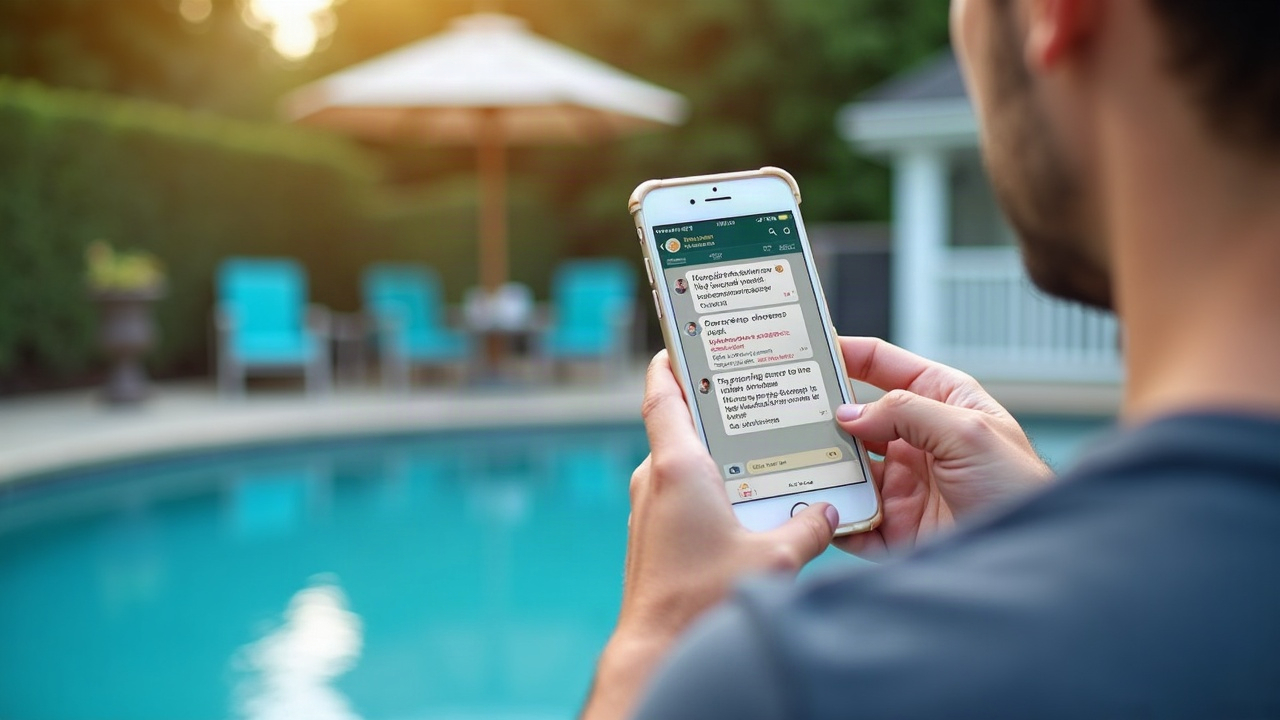
Why Don't More Pool Companies Respond to Texts Consistently?
Most pool companies don't respond to texts consistently because they lack dedicated staff to monitor messages in real time, and field techs are too busy with jobs to handle inquiries. Unlike retail businesses with front-desk staff, pool service operations run lean—one office manager handling phones, scheduling, invoicing, and vendor orders can't simultaneously watch a text inbox for new leads. The techs are at job sites, often without cell service or covered in pool chemicals, unable to respond professionally even if they wanted to.
This creates a predictable failure pattern. A homeowner texts at 10:00 AM. The office manager is on a call with a supplier. The text notification gets buried under three other app alerts. By the time someone checks messages at 1:30 PM, the homeowner has already booked with a competitor who responded at 10:03 AM. The pool company never had a chance, not because of service quality or pricing, but because their operation wasn't built to handle text-based inquiries.
Do Text-to-Call Conversion Tools Actually Help Pool Companies?
Text-to-call conversion tools—software that routes text inquiries into voicemail or call queues—rarely solve the core problem for pool companies because they add friction instead of removing it. These tools assume the homeowner wants a phone call, which contradicts why they texted in the first place. When a homeowner texts and receives an automated response saying "Thanks for reaching out, we'll call you soon," they feel ignored. The expectation was a two-way text conversation, not a forced phone interaction.
Effective pool service text response isn't about converting texts into calls—it's about meeting homeowners in their preferred communication channel, answering initial questions via text, and smoothly transitioning to a call or appointment only when both parties are ready. That requires human judgment, not routing software.
How Do Competitors Win Pool Leads With Text Responses?
Competitors win pool leads with text responses by replying within minutes, asking clarifying questions, and confirming appointments—all before you've checked your voicemail. They've built operations around the reality that most homeowners now prefer texting as first contact. This doesn't require expensive software or complicated systems; it requires someone whose job is to monitor incoming messages and respond immediately.
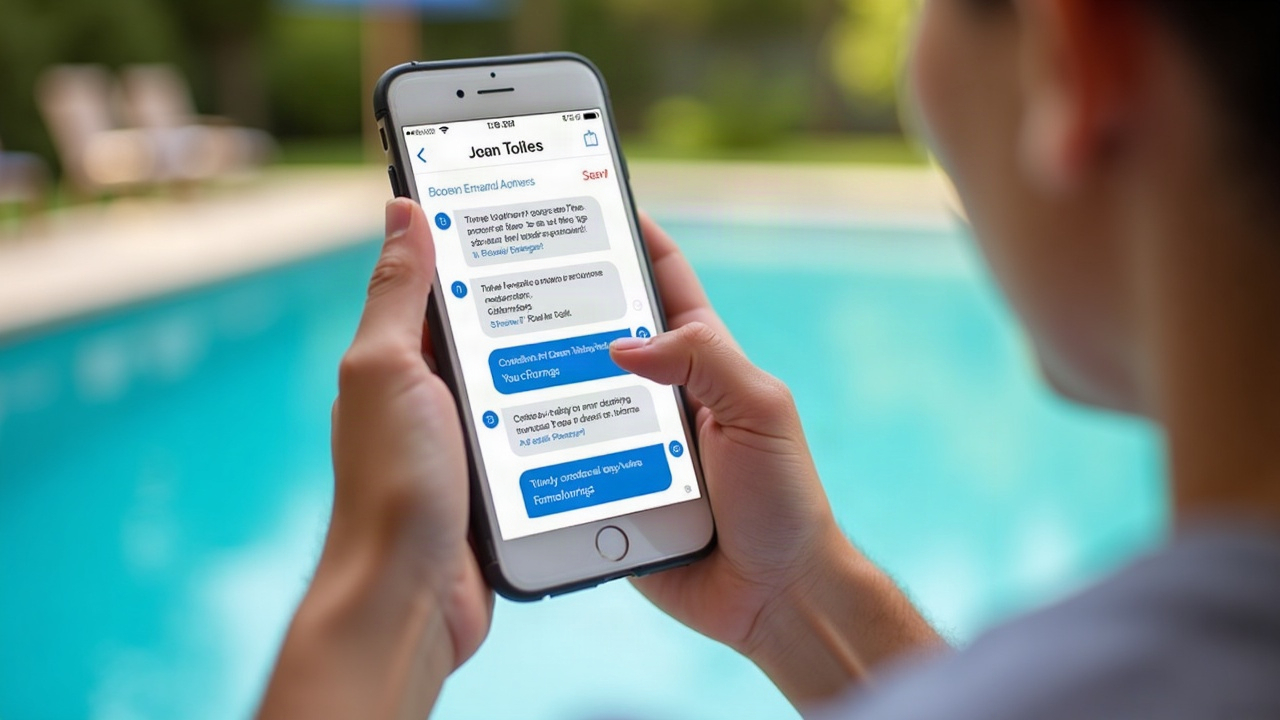
Here's what a winning text response looks like in practice:
10:12 AM – Homeowner: "Hi, my pool is green and I need it cleaned before a party this Saturday. Can you help?"
10:14 AM – Pool Company: "Absolutely, we can help. What's your address? I'll check our schedule and get back to you in a few minutes with availability."
10:18 AM – Pool Company: "We have an opening Thursday at 9 AM or Friday at 1 PM. Which works better for you? Service runs $350-$450 depending on condition."
10:21 AM – Homeowner: "Friday at 1 works. Here's my address: 1247 Oak Street."
10:22 AM – Pool Company: "Perfect, you're booked for Friday, June 14 at 1 PM. I'll text you the morning of with our arrival window. Can I grab your name and best contact number?"
That entire exchange took ten minutes and locked in a $400 job. Meanwhile, the three other pool companies the homeowner texted are still finishing morning jobs, unaware they ever had a lead.
What Should Pool Companies Do to Stop Losing Text Leads?
Pool companies should assign someone to monitor and respond to text inquiries in real time, or hire a dedicated front office team to handle pool company text leads before competitors do. This doesn't mean adding software—it means adding capacity. The solution is operational, not technological. You need a person (or team) whose primary responsibility is capturing and converting inbound inquiries the moment they arrive, regardless of communication channel.
Here are the practical steps to stop the bleeding:
- Audit your current response time: For the next week, track every text inquiry you receive and log how long it takes to respond. If your average is over ten minutes, you're losing leads.
- Designate a text monitor: Assign one person to own text responses during business hours. If that's impossible with current staff, acknowledge you have a capacity problem, not a training problem.
- Create text response templates: Draft 5-6 common responses (initial acknowledgment, pricing range, appointment confirmation, follow-up reminder) so whoever monitors texts can respond quickly without starting from scratch.
- Set an internal SLA: Commit to responding to every text inquiry within five minutes during business hours. Measure and review weekly.
- Test your competitors: Text three local pool companies as a secret shopper. Note who responds first, what they say, and how they handle booking. You'll immediately see why you're losing leads.
For companies without the staff to monitor texts consistently, bringing in a dedicated front office team is the only solution that doesn't require pulling techs off jobs or overloading your office manager. Your team stays focused on service delivery; the front office team stays focused on lead capture and appointment booking.
When Should a Pool Company Answer With a Call Instead of a Text?
A pool company should answer with a call instead of a text when the inquiry is complex (major repairs, full renovations, or commercial contracts) or when the homeowner specifically requests a call. For most initial inquiries—routine maintenance, cleanups, equipment repair estimates—text is faster and preferred. The key is reading the inquiry itself: "Can you give me a quote on resurfacing my pool?" benefits from a call. "Do you service my area?" or "How much for a green pool cleanup?" should be answered by text first.
The mistake most pool companies make is defaulting to calls for everything because that's how they've always operated. But defaulting to calls when a homeowner chose to text signals that you're not listening. Start with a text response, provide the information they requested, and offer to jump on a call if needed: "Happy to walk through options on a quick call if that's easier—what works for you?" That puts the homeowner in control and positions you as flexible.
Frequently Asked Questions
How many pool leads do companies lose by not responding to texts?
Most pool companies lose between 30% and 50% of inbound leads by ignoring or delaying text responses. Research from InsideSales.com shows that leads contacted within five minutes are 21 times more likely to convert than those contacted after 30 minutes. For pool companies, text inquiries have even shorter windows—homeowners typically decide within the first hour of outreach. If you're not monitoring texts in real time, you're effectively conceding a third of your lead volume to faster competitors.
Do homeowners prefer calling or texting pool companies?
Homeowners increasingly prefer texting pool companies for initial inquiries because it fits their schedule and avoids phone tag. While older demographics still lean toward calls for complex projects, the majority of routine service inquiries (cleanups, maintenance, repairs) now arrive via text. The preference isn't generational—it's situational. Busy homeowners text because they can fire off a quick message during work hours without blocking out time for a conversation. Pool companies that force calls are filtering out time-constrained, high-value customers.
What's the best way to respond to a pool service text inquiry?
The best way to respond to a pool service text inquiry is within five minutes, with a direct answer to their question and a path to booking. Start with acknowledgment ("Got your message—yes, we can help"), provide the information they requested (pricing range, availability, service area), and offer next steps ("We have openings Thursday or Friday—which works better?"). Avoid automated responses or deflecting to a call unless the inquiry is genuinely complex. The goal is to move from inquiry to booked appointment within a few text exchanges.
Can office staff realistically monitor texts and answer phones?
Most pool company office staff cannot realistically monitor texts and answer phones simultaneously without sacrificing response time on both channels. Office managers are already handling scheduling, invoicing, vendor orders, and customer callbacks—adding real-time text monitoring overloads their capacity. The result is delayed responses, missed leads, and burnout. The solution isn't better multitasking; it's dedicated capacity. Pool companies either need to hire additional front office staff or partner with a team that handles inquiries across all channels without pulling your existing staff away from their core responsibilities.
Do pool companies need special software to handle text leads?
Pool companies don't need special software to handle text leads—they need dedicated people to monitor and respond in real time. Most business phone numbers are already text-enabled through carriers. The bottleneck isn't technology; it's capacity. Adding software without adding staff just creates another inbox to ignore. The companies winning text leads have someone whose job is to watch for inquiries and respond immediately, not another dashboard for an already-overloaded office manager to check sporadically throughout the day.
How much revenue do pool companies lose from slow text responses?
Pool companies lose between $100,000 and $300,000 annually from slow or non-existent text responses, depending on lead volume and average job value. If your average customer is worth $800 (combining one-time services and potential ongoing contracts) and you're losing five text leads per week to faster competitors, that's $208,000 in missed revenue over a year. This doesn't include lost referrals, repeat business, or seasonal contracts that would have originated from those initial jobs. The cost isn't just individual transactions—it's long-term market share.
Stop Losing Pool Leads to Faster Competitors
Pool company text leads are decided in minutes, not hours. Every inquiry sitting unread in your text inbox is revenue walking straight to a competitor who built their operation around response speed. The solution isn't working harder or adding more software—it's acknowledging that your current team doesn't have the capacity to monitor every channel in real time, and fixing that gap before it costs you another season of lost leads.
If you're tired of losing jobs to competitors who simply text back faster, it's time to add dedicated capacity to your front office. Book All Leads provides a full front office team that monitors calls, texts, and inquiries 24/7, responds within minutes, and books appointments directly into your calendar. No software for you to learn, no contracts locking you in, and live in five days. Your techs stay focused on pools; we stay focused on making sure every lead gets captured before your competitor does. Visit bookallleads.com to see how we've helped pool companies stop leaving money on the table.
John Edmonds is a native Texan and military combat veteran. He founded Book All Leads after identifying a critical gap in the service industry: business owners losing revenue not from lack of skill, but because no one was handling the calls, follow-ups, reviews, and payments while they were busy doing the work.
View LinkedIn Profile →