
Swimming pool companies lose pool equipment repair calls because homeowners call big box stores first when their pump fails on Saturday morning—and those retailers answer immediately, book a diagnostic within hours, and capture what should be your $800 repair ticket. Independent pool service companies miss these calls while running routes, and by the time you call back three hours later, the customer has already scheduled with Lowe's or Home Depot's contractor network.
The Problem: You're Losing Emergency Repair Calls During Your Busiest Hours
Pool equipment failures don't wait for convenient timing. They happen Saturday mornings when families are getting ready for a party. They happen Monday afternoons when your crew is elbow-deep in a filter replacement across town. They happen at 6:47 PM when you've finally sat down for dinner after running service calls since dawn.
Here's the pattern that's bleeding your revenue: A homeowner's variable speed pump stops working. The pool is turning green. They have guests coming over in 48 hours. They call you first because you've serviced their pool for three years. You don't answer—you're diagnosing a heater issue and can't break away. They call the big box store where they bought the pump. Someone answers on the second ring. That person books a diagnostic appointment for tomorrow morning with a contracted technician.
You call back 90 minutes later. The homeowner is polite but firm: "Thanks, but I already have someone coming out tomorrow at 10."
You just lost a $650 pump repair or a $1,200 replacement installation. Not because you weren't qualified. Not because your pricing wasn't competitive. Because you didn't answer the phone.
Here's what most articles won't tell you: The speed advantage big box stores have isn't about having better technicians or lower prices—it's pure call response infrastructure. They staff dedicated phone teams during peak hours when independent pool companies are in the field. According to InsideSales.com, leads contacted within 5 minutes are 21 times more likely to convert than those contacted after 30 minutes. Big box stores answer in under 60 seconds. Independent pool companies average 2-4 hours for callback.
Why Pool Equipment Repair Calls Are Worth More Than You Think
Equipment repair calls represent the highest margin work in your business. A pump replacement takes 2-3 hours and bills $1,200-$2,800 depending on the unit. A heater repair runs $400-$900 for a diagnostic and parts. A filter valve replacement is $350-$600 for 90 minutes of work. These jobs require your expertise but don't demand the ongoing relationship management of weekly service contracts.
They're also gateway opportunities. A homeowner calling about a broken pump is already in problem-solving mode. If you diagnose the pump and notice their filter is 12 years old and their salt cell is corroded, you've opened a $3,500 equipment upgrade conversation. But only if you're the one who answers the call.
The Bureau of Labor Statistics reports that pool and spa service technician employment is projected to grow 7% through 2031, faster than the national average for all occupations. That growth is driven largely by equipment complexity—variable speed pumps, automation systems, advanced sanitization—that requires professional expertise. Big box stores know this. They're positioning themselves as the first-response solution, then subcontracting the actual work to technicians who split the revenue.
What Each Missed Call Actually Costs
Let's quantify this. If you miss five equipment repair calls per month—a conservative estimate for a solo operator or small crew during peak season—here's your actual loss:
- Immediate job revenue: $650 average repair × 5 calls = $3,250 monthly
- Upsell opportunities: 40% of emergency calls identify additional needed work worth an average $1,800 = $3,600 additional monthly revenue
- Annual missed revenue: $82,200 from calls you never converted
- Customer lifetime value: Equipment repair customers become weekly service customers 22% of the time—each worth $2,400 annually
Use our calculator to see what missed calls are actually costing your specific operation based on your call volume and average ticket.
Why This Keeps Happening (Even When You Know It's a Problem)
You already know missed calls hurt revenue. Every pool service owner does. The problem isn't awareness—it's execution. Here's why this pattern persists even for sharp operators:
Your phone rings during technically complex work. You're balancing pool chemistry, diagnosing a circulation problem, or programming an automation panel. Stopping mid-task to answer a call means losing your mental model of the problem. You let it go to voicemail with full intention to call back in 20 minutes. Twenty minutes becomes two hours because the next job runs long.
Voicemail is where leads go to die. Homeowners with broken equipment don't leave one voicemail and wait patiently. They call three pool companies and a big box store simultaneously. Whoever answers first gets the appointment. The callback you make at 3 PM for a call that came in at 11 AM is already too late—they booked at 11:07 AM with the retailer who answered immediately.
Hiring front office staff only works if you have the volume. A full-time receptionist costs $35,000-$42,000 annually plus payroll taxes and benefits. Most pool service companies with 2-8 employees can't justify that overhead for 15-25 inbound calls per week. The math doesn't work until you're doing $750,000+ annually with consistent call volume.
Automated answering services feel automated. You've tried the $89/month answering service. Customers hear the generic greeting, sense they're talking to someone reading a script with zero pool knowledge, and either hang up or leave a message you discover four hours later. These services answer calls but don't book jobs—which means they don't solve your actual problem.
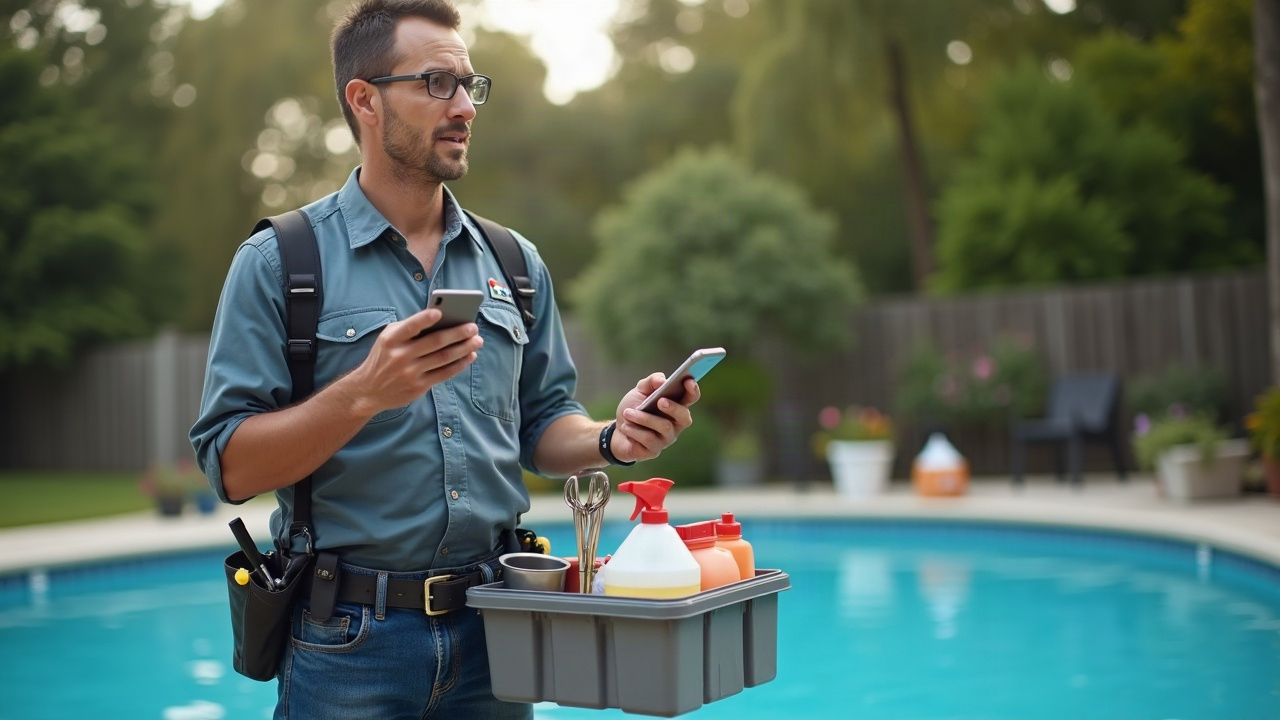
How Big Box Stores Capture Pool Equipment Repair Calls
Big box retailers have systematized the first-response advantage. Here's their playbook—and why it works even though their actual service delivery is often mediocre:
Dedicated call teams during peak hours. Home Depot and Lowe's staff their service desks heaviest from 8 AM to 2 PM on weekends and 10 AM to 6 PM on weekdays—exactly when pool equipment failures spike and independent contractors are in the field. They answer in 30-60 seconds consistently.
Same-day or next-day diagnostic booking. They don't send their own technicians—they maintain networks of subcontractors who agree to rapid-response availability in exchange for steady lead flow. The customer books a "next available" slot, which is often same-day or within 24 hours. Speed creates the perception of superior service even when the actual technician is less experienced than you.
Brand familiarity reduces friction. When a homeowner bought their Hayward pump at Lowe's three years ago, calling Lowe's for repair feels like a natural first step. The retailer already has their purchase history, warranty information, and credit card on file. Booking feels easier than researching independent contractors, even though you'd provide better service.
They convert the call, then outsource the work. Here's the part that should frustrate you most: big box stores often subcontract to the same pool technicians they're competing against. They capture the call, book the appointment, take a 20-35% referral fee, and send a local contractor to do the work. You're doing the same job for 65-80% of the revenue because you didn't answer your phone.
The Fix: Win Back Pool Equipment Repair Calls Without Hiring Full-Time Staff
Winning equipment repair calls requires matching the response speed of big box stores without their overhead structure. That means someone knowledgeable answers every call within 90 seconds, qualifies the lead, books the diagnostic appointment, and sends you only the confirmed details. Here's how to build that capability:
Stop treating your phone like an interruption. Every ring is a revenue opportunity. Equipment repair calls are time-sensitive leads with defined intent—the homeowner has a broken pump and needs it fixed. These convert at 40-60% when answered immediately versus 8-12% when called back hours later. Your phone deserves the same priority as your wrench.
Deploy a front office team that knows your trade. Generic answering services fail because they can't distinguish an emergency heater failure from a routine cleaning question. You need people who understand pool equipment, can ask qualifying questions (Is it leaking? Is it making noise? When did you last service it?), and can communicate your value over a big box alternative.
Book All Leads builds full front office teams—six specialized roles working 24/7—for pool service companies without the overhead of hiring. The team answers every call live, qualifies equipment repair leads, books appointments directly into your calendar, and follows up with confirmation details. You show up to jobs that are already sold and scheduled. No software to learn, live in five days, no long-term contracts. It works because the team understands pool equipment and selling service value, not just answering phones.
What to Say When You Answer Pool Equipment Repair Calls
Speed gets you the conversation. What you say during the first 60 seconds determines whether you book the job. Here's the structure that converts emergency repair calls:
Acknowledge the urgency. "A non-functioning pump is a real problem—let's get you fixed fast." This signals that you understand the stakes and won't treat this like a routine callback.
Ask one diagnostic question. "Is the pump making any noise when you flip the breaker, or is it completely silent?" This demonstrates expertise immediately and helps you assess whether this is a $200 repair or a $2,000 replacement before you drive out.
Offer specific availability. "I can be there tomorrow morning at 10 AM or Thursday at 2 PM—which works better?" Specific times convert better than vague "I'll check my schedule and call you back" responses that leave the door open for them to keep calling other companies.
Differentiate from big box options. "I've been servicing pools in this area for twelve years, and I'll diagnose the actual problem—not just sell you a new pump if that's not what you need." This plants doubt about the retailer alternative without directly attacking competitors.
Stop Competing on Price—Compete on Response Time
Most pool service companies try to win equipment repair work by advertising lower prices than big box stores. This is a losing strategy. Homeowners calling about broken equipment aren't price shopping—they're emergency shopping. They need the problem fixed before the weekend, before guests arrive, before the pool turns into a swamp.
Research from Harvard Business Review shows that customers in urgent need states value speed and certainty significantly more than price savings. A homeowner will pay $1,400 for a pump replacement tomorrow over $1,150 for the same work "sometime next week" because the cost of a green pool and disappointed family outweighs $250 in savings.
Your competitive advantage isn't cheaper pricing—it's faster response and superior expertise. Answer immediately. Book same-day or next-day diagnostics. Demonstrate pool-specific knowledge in the first 30 seconds of the call. These factors close emergency repair jobs even when you're 15-20% higher than big box referrals.
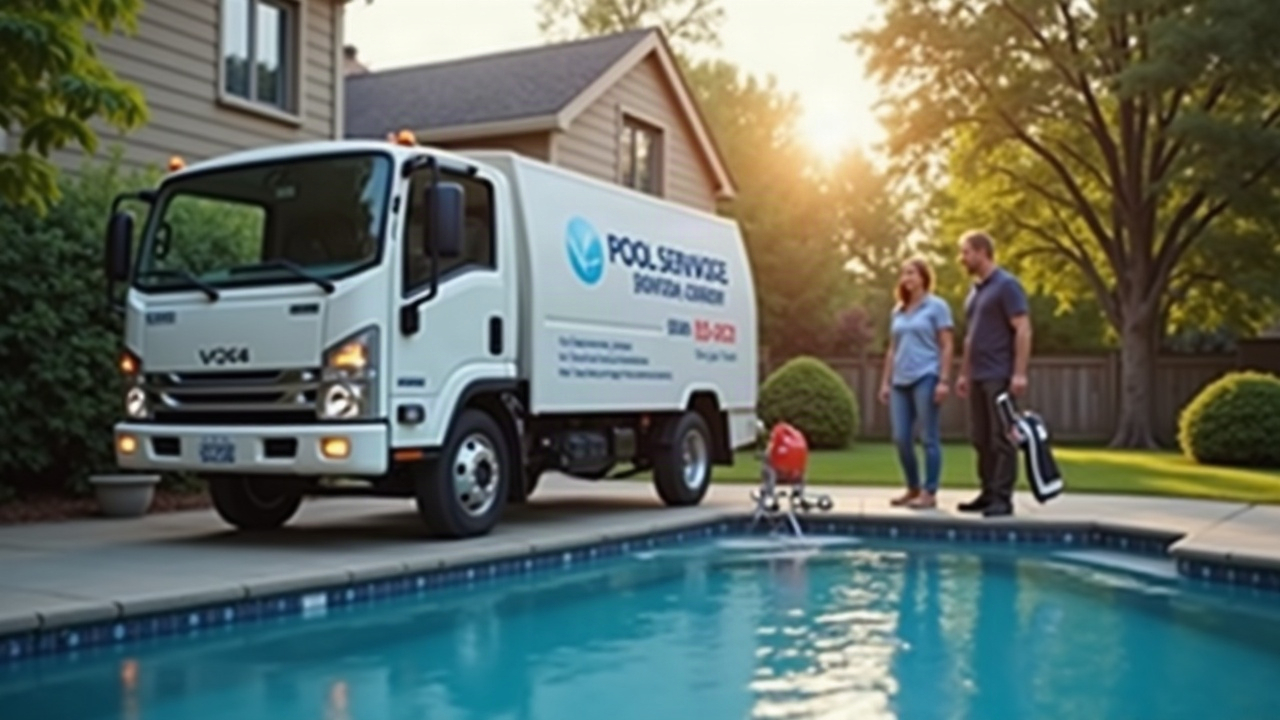
How to Message Your Equipment Repair Availability
Answering calls faster only helps if customers call you in the first place. Here's how to position your equipment repair capability so you're in the initial consideration set when a pump fails:
Update your Google Business Profile. Add "emergency pool equipment repair" and "same-day pump service" to your business description. Upload photos of common equipment repairs—pumps, heaters, filters—so homeowners searching "pool pump repair near me" see visual proof you handle this work.
Text existing service customers quarterly. "Quick reminder: if your pool equipment ever fails between service visits, call or text this number for same-day diagnostics. We prioritize our existing customers." This positions you as the first call before they ever think about retail alternatives.
Add equipment repair to every service invoice. A simple footer: "Equipment problems? Call [number] for rapid response repair and replacement." You're already in their home weekly—remind them you handle the emergency work too.
Claim your niche in local search. Most pool companies optimize for "pool service" and "pool cleaning." Far fewer optimize for "pool pump repair," "pool heater repair," or "pool equipment troubleshooting"—the exact terms homeowners search during equipment emergencies. Dedicated service pages for each equipment type capture these high-intent searches.
What Happens When You Answer Pool Equipment Repair Calls Consistently
The revenue impact of consistent call answering compounds over time. Here's what changes when you capture equipment repair calls instead of losing them to big box stores:
Higher average ticket per job. When you're on-site for a pump diagnostic, you inspect the entire pad—filter condition, heater operation, plumbing integrity, automation settings. You identify $2,400 in additional needed work that a subcontracted big box technician rushes past to get to the next call. Your average equipment repair call becomes a $3,200 multi-item project instead of an $800 single fix.
Equipment customers become service customers. A homeowner who called you for emergency heater repair and experienced fast response, clear communication, and expert diagnosis remembers that when their weekly service contract comes up for renewal. Converting even 15% of equipment repair customers to ongoing service accounts adds $28,000-$42,000 in annual recurring revenue for a typical operation.
Referrals increase. Emergency repairs are high-stress, high-relief moments. The pool company that showed up fast and fixed the problem before the party becomes the company they recommend to neighbors. Equipment repair jobs generate more word-of-mouth referrals per interaction than routine service visits because the emotional contrast—broken and stressed to fixed and relieved—creates memorable experiences.
You stop subsidizing competitor lead generation. When big box stores capture the call, book the appointment, and subcontract to local techs, they're essentially running a lead generation service funded by your missed calls. Answering your own phone keeps that revenue in your business instead of paying a 25% referral fee to a retailer who contributed nothing but call infrastructure.
Frequently Asked Questions
How quickly do I need to answer pool equipment repair calls to actually book the job?
You need to answer within 5 minutes to have a realistic chance of booking the job. According to InsideSales.com research, lead response time drops conversion rates by 80% after the first 5 minutes and by 90% after 10 minutes. Homeowners with broken pool equipment call multiple companies simultaneously—the first one to answer and offer specific availability gets the appointment. If you're consistently calling back 2-4 hours later, you'll capture less than 10% of your inbound equipment repair leads.
Should I offer emergency pricing for same-day pool equipment repairs?
Yes, but frame it as priority scheduling rather than penalty pricing. A 15-20% premium for same-day or after-hours emergency service is standard and accepted in the pool service industry. The key is positioning: "I can prioritize your repair and be there this afternoon for $950, or schedule you Thursday morning at my standard rate of $825." Offering the choice lets customers self-select based on urgency while capturing premium revenue when time sensitivity is high.
How do I compete with big box stores that offer equipment warranties and guarantees?
Focus on diagnosis accuracy and long-term customer relationships. Big box stores often push equipment replacement because their subcontracted technicians are incentivized to sell new units. You can differentiate by thoroughly diagnosing problems and repairing when appropriate—saving customers money and building trust. Emphasize that you'll service the equipment long-term, not disappear after installation. Warranty matching is table stakes; superior ongoing support is your competitive advantage.
What's the best way to handle equipment repair calls when I'm alone on a job site?
Have someone else answer them—whether that's a spouse, an office manager, or a dedicated front office team. Stopping mid-repair to take calls disrupts your current customer's service and still doesn't provide the immediate response that books new jobs. The economics are clear: paying someone $15-25/hour to answer calls and book $800-1,500 repair jobs generates 10x-15x ROI. Trying to do both roles yourself means doing neither well.
How many pool equipment repair calls should I expect to get per month?
A typical independent pool service company serving 80-150 residential accounts receives 8-15 equipment repair calls per month during peak season (May-September) and 3-6 per month during off-season. Volume spikes after heat waves, storms, or pool opening season when equipment that sat dormant starts failing. If you're getting fewer calls than this, it likely indicates a visibility problem—you're not top-of-mind when customers' equipment breaks—rather than lack of demand.
Can I realistically offer same-day diagnostics for pool equipment repairs?
Yes, if you structure your schedule with buffer capacity. Block 2-3 hours per week specifically for emergency equipment calls rather than filling every slot with routine service. This lets you offer same-day or next-day response consistently without disrupting your service route. The premium pricing on emergency repairs (15-20% higher) more than compensates for the schedule flexibility, and the customer acquisition from rapid response generates ongoing service revenue that makes the model highly profitable.
Start Answering Every Pool Equipment Repair Call
Big box stores don't win pool equipment repair calls because they're better at the work—they win because they answer the phone. Every call you miss is revenue you're handing to a retailer who'll subcontract the actual work to someone less qualified than you, keep 25% of the ticket, and insert themselves between you and the customer relationship.
The fix isn't complicated: answer every call within 90 seconds, demonstrate pool-specific expertise immediately, book diagnostics same-day or next-day, and show up ready to solve the problem. Do this consistently, and you'll capture the $65,000-$95,000 in annual equipment repair revenue currently leaking to big box competitors.
If you're ready to stop losing pool equipment repair calls to retailers, Book All Leads builds full front office teams that answer every call, qualify leads, and book appointments 24/7—so you can focus on the repair work instead of racing to check voicemail between jobs.
John Edmonds is a native Texan and military combat veteran. He founded Book All Leads after identifying a critical gap in the service industry: business owners losing revenue not from lack of skill, but because no one was handling the calls, follow-ups, reviews, and payments while they were busy doing the work.
View LinkedIn Profile →