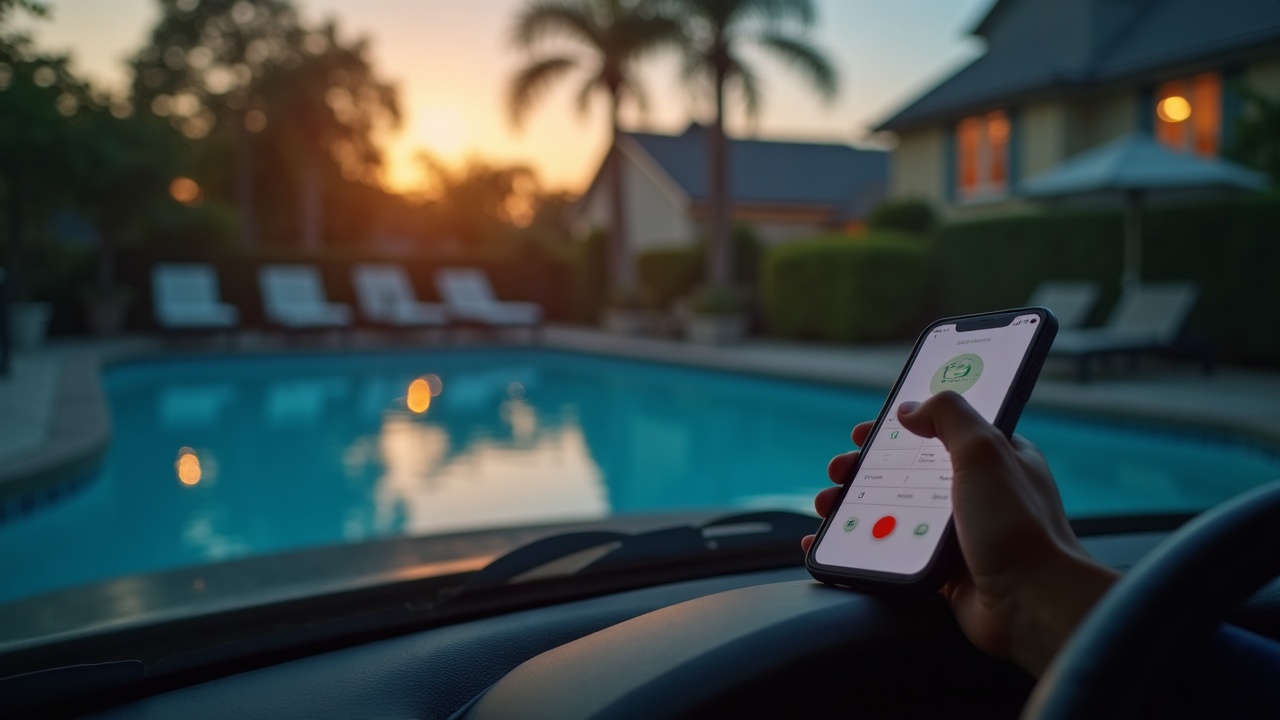
Swimming pool companies lose the majority of their pool filter repair calls to competitors who answer the phone after 5 p.m. and on weekends—precisely when most filter failures happen. These urgent, high-margin calls go to whoever picks up first, and if your phone rings to voicemail while you're finishing a job or home with your family, that revenue walks straight to the competitor who staffed their phones for evening coverage.
Why Pool Equipment Repair Calls Are the Revenue You Can't Afford to Miss
Pool filter repair calls represent some of the most profitable work in your service mix because customers need the problem fixed immediately, they're less price-sensitive than maintenance shoppers, and the work often uncovers additional billable repairs. A clogged or failing filter means the pool goes cloudy or green within 24-48 hours, creating visible urgency that drives homeowners to call multiple companies until someone answers.
Unlike scheduled maintenance or seasonal opening work, equipment failures happen on the customer's timeline, not yours. Pumps seize up after running all day in summer heat. Filters clog during weekend pool parties. Pressure gauges spike on Thursday evenings when you've already gone home.
According to InsideSales.com, response time is the single strongest predictor of which service provider wins the job—and in emergency repair scenarios, response time starts the moment the customer dials, not when you return their voicemail six hours later.
Here's what most articles won't tell you: Your competitors aren't necessarily better technicians or cheaper—they're just reachable when the failure happens. Pool owners calling at 6:30 p.m. on a Friday don't leave three voicemails and wait until Monday. They call down the list until someone picks up, books them for tomorrow morning, and collects the deposit over the phone.
The revenue gap isn't about your technical skills. It's about phone coverage during the exact hours when residential pool equipment fails most often:
- 5:00-8:00 p.m. weekdays when homeowners first notice the problem after work
- Saturday mornings when families plan to use the pool that afternoon
- Sunday evenings when they realize the filter hasn't cleared up and Monday guests are coming
- Holiday weekends when usage spikes and you're closed
If you're the owner-operator running service calls until 6 p.m., you're unreachable during the highest-value call window of the day. If you close the office on weekends, you've surrendered 48 hours of emergency repair leads to competitors who didn't.
What Actually Happens When You Miss a Pool Filter Repair Call
When a pool filter repair call goes to voicemail, the customer doesn't wait—they move to the next search result or the next yard sign they remember seeing. You lose the immediate repair revenue, the relationship with a homeowner who now has a new "pool guy," and often years of future maintenance contracts that follow from that first emergency fix.
Let's walk through the actual sequence. A homeowner notices their pool pressure is low and the water looks hazy on a Thursday evening. They Google "pool filter repair near me" and call the first three results. Your listing appears second. Their call reaches your business line at 6:45 p.m.
You're wrapping up a pump replacement across town, hands covered in PVC primer, phone in the truck. The call rings four times and goes to your voicemail greeting. The homeowner hangs up before the beep—because nobody leaves voicemails for service providers anymore—and dials the next number.
That company has after-hours phone coverage. Someone answers, asks diagnostic questions, explains it's likely a clogged cartridge or failing pressure gauge, quotes a service call fee and typical repair range, and books them for 9 a.m. Friday. The homeowner pays a $100 deposit over the phone to hold the appointment.
You listen to your missed call log at 7:30 p.m. when you get back to the truck. You return the call at 7:45 p.m. It rings twice and goes to voicemail—because the homeowner already solved their problem and isn't answering unknown numbers during dinner.
Even if they do pick up, they're now in an awkward position. They've already booked someone else, paid a deposit, and feel committed. You've gone from "first choice" to "backup plan" purely based on who answered first.
The financial loss compounds beyond that single $350-$600 filter repair:
- You lose the upsell opportunity when the technician discovers the pump motor bearings are failing ($800-$1,400 replacement)
- You lose the trust-building first interaction with a homeowner who likely needs $1,200-$2,000 in annual maintenance and chemical services
- You lose the referral pipeline from a satisfied emergency customer who tells three neighbors about the company that "came right away"
- The competitor who answered gains all of the above, plus they're now the incumbent when that customer needs any future pool work
Multiply this scenario by 8-12 times per month during peak season, and the annual revenue loss from missed after-hours pool equipment repair calls easily exceeds $40,000-$70,000 for a small pool service company.
Why Pool Filter Failures Happen After Hours (And Why That Matters)
Pool equipment doesn't fail on your schedule—it fails after running under load all day, which means problems surface in the evening when homeowners first check the pool after work, or on weekends when they're actually home to notice the pressure gauge in the red or the water turning cloudy.
Filters accumulate debris throughout the day as the pump runs its cycle. By evening, a cartridge that was marginal in the morning is fully clogged, pressure spikes, and flow drops to a trickle. The homeowner notices when they get home at 6 p.m. and the pool looks dull instead of sparkling.
Pumps seize after running hot all afternoon in summer heat—bearings fail, capacitors blow, impellers jam with debris. The failure becomes obvious when the system shuts down or starts making grinding noises during the evening runtime cycle.
Weekend failures happen because that's when families actually use the pool. Higher bather load means more sunscreen, body oils, and debris hitting the filter. A system that handled Monday through Friday fine gets overwhelmed by a Saturday pool party, and by Sunday morning the water's cloudy and the pressure's maxed out.
This timing pattern creates a predictable gap between when customers need help and when most pool service companies are reachable. If your business hours are Monday-Friday 8 a.m. to 5 p.m., you're unavailable during the majority of filter failure discovery moments.
The pool service companies that capture these after-hours calls aren't necessarily bigger or better—they just have someone covering the phones when residential customers are home and noticing problems.
How Pool Companies Actually Solve the After-Hours Coverage Gap
The companies winning after-hours pool filter repair calls use live phone coverage that extends beyond standard business hours—typically until 8 or 9 p.m. on weekdays and at least half-days on weekends. They don't answer every call themselves; they have a dedicated front office team handling intake, booking, and payment collection while technicians stay focused on the work.
This isn't about buying answering service software or setting up voicemail transcription. It's about having actual people who understand pool equipment terminology, can ask diagnostic questions, quote realistic price ranges, and book appointments with paid deposits that stick.
Book All Leads provides a full front office team for pool service companies—six roles working together to answer every call, qualify leads, book jobs, and collect payments. It's live in five days, requires no software for you to learn, and runs 24/7 so you never miss another filter repair call during evening or weekend hours. No contracts, no setup fees—just a team that becomes your front office and starts capturing revenue you're currently losing to competitors who pick up after hours.
The ROI is immediate and measurable. If you're missing even six filter repair calls per month at an average ticket of $450, that's $2,700 in monthly revenue walking to competitors—$32,400 annually—before accounting for the long-term customer value of maintenance contracts and future repairs.
Most pool service owners try one of three approaches before finding a solution that actually works:
The "I'll Answer Everything Myself" Approach
You keep your phone in your pocket and try to answer between jobs. This works until you're shoulder-deep in a plumbing repair, on a ladder, driving, or finally sitting down to dinner with your family. You miss 30-40% of inbound calls, and the high-urgency evening calls are exactly the ones you miss because you're off the clock.
You can't scale this approach beyond yourself, which means your revenue caps at your personal availability. And if you do answer every call, you're interrupting billable work to have 12-minute conversations that a dedicated booking person could handle better.
The Traditional Answering Service
Generic answering services take messages but can't book jobs, quote prices, or answer basic pool equipment questions. The customer experience is "I'll have someone call you back," which is just delayed voicemail. According to Vendasta, 67% of customers hang up or move to a competitor if they can't get immediate answers to booking and pricing questions—they don't wait for callbacks.
You end up playing phone tag, calling leads back hours later when they've already booked someone else, and paying monthly fees for a service that captures information but doesn't capture revenue.
The "Hire a Part-Time Office Person" Route
You bring someone in to answer phones during business hours, but they leave at 5 p.m. and don't work weekends—which means you've only covered half the problem. Evening and weekend calls still go unanswered, and you're now managing payroll, training, and coverage gaps when they're sick or on vacation.
Extending their hours to 8 p.m. and adding weekend shifts turns a part-time role into full-time-plus, but you still only have one person. When they're on another call or away from the desk, you're back to missing inbound leads.
What Good After-Hours Phone Coverage Actually Looks Like for Pool Service
Effective after-hours coverage for pool equipment repair calls means the person answering can do more than take a message—they can triage the urgency, ask the right diagnostic questions, quote a realistic service call fee and repair range, book the appointment into your actual calendar, and collect a deposit that makes the booking stick.
When a homeowner calls at 7 p.m. saying their filter pressure gauge is pegged in the red and the water's getting cloudy, the conversation should go like this:
"Okay, let's get this sorted out for you. How long has the pressure been high? Have you backwashed or cleaned the cartridges recently? Is the pump still running normally, or are you hearing any unusual sounds?"
Those three questions tell an experienced pool service intake person whether it's a simple cleaning, a failed cartridge, a valve issue, or a pump problem—and let them quote accordingly.
"Based on what you're describing, it sounds like your cartridges are likely clogged and may need replacement. We can get someone out tomorrow morning at 9 or 10:30. The service call is $95, and if it's cartridge replacement, the total typically runs $275-$425 depending on your filter size. I can hold that spot for you with a $100 deposit by card right now—does that work?"
That's a booked, paid appointment created in a two-minute phone call. The homeowner hangs up with confidence that their problem is getting fixed tomorrow. You wake up to a confirmed job on your calendar with payment already collected. Nobody played phone tag. Nobody moved on to a competitor.
Contrast that with what happens when the same call reaches voicemail, or reaches an answering service that says "I'll take your information and have someone call you back." The customer keeps dialing, and you lose the revenue.
How Much Revenue Are You Actually Losing to Missed After-Hours Calls?
Most pool service company owners underestimate their missed call revenue because they only see the calls they returned—not the ones where the customer never called back or left a voicemail. Your phone system log shows missed calls, but it doesn't show you the customer who hung up after two rings and dialed your competitor instead.
Here's how to estimate your actual loss. Pull your call logs for the last 90 days and filter for calls received outside your staffed hours—typically before 8 a.m., after 5 p.m., and all day Saturday and Sunday. Count how many inbound calls you received during those windows.
Industry data suggests 35-50% of inbound calls to residential service businesses happen outside standard business hours, with spikes on weekday evenings and weekend mornings. If you're receiving 120 inbound calls per month total, roughly 45-60 of those are coming in when you're likely unavailable.
Now assume a conservative conversion rate. Not every call is a qualified lead—some are vendors, spam, or existing customers with quick questions. But for after-hours calls, urgency is higher. These aren't people browsing—they have a problem right now. A reasonable estimate is that 40-50% of after-hours calls represent bookable repair jobs.
So from those 45-60 after-hours calls, you have 18-30 potential jobs per month. If you're missing even half of those because you don't have coverage, that's 9-15 lost jobs monthly.
Average filter repair ticket—including service call, labor, and parts—runs $350-$600. Use $450 as a conservative midpoint. Losing 10 filter repair jobs per month costs you $4,500 in immediate revenue, or $54,000 annually.
That calculation only includes the initial repair. It doesn't account for:
- Upsells discovered during the service call (pump motor replacements, valve rebuilds, heater repairs that average $800-$1,600 additional)
- The lifetime value of a new customer relationship (annual maintenance, chemical sales, future equipment replacements typically worth $1,800-$3,500 per year)
- Referrals from satisfied emergency repair customers
When you factor in customer lifetime value, each missed filter repair call costs you significantly more than the immediate ticket price. A single lost call at $450 that would have converted into a long-term maintenance customer represents $6,000-$12,000 in lost three-year revenue.
You can calculate your losses based on your actual call volume and average ticket size, but the pattern is consistent: companies that answer after-hours calls capture 60-80% more emergency repair revenue than competitors with identical technical skills who let those calls go to voicemail.
Why Voicemail and Texting Don't Work for Urgent Pool Equipment Repairs
Pool owners calling about a failing filter or non-functioning pump don't leave voicemails and wait for callbacks—they move to the next available provider who can solve their problem immediately. Text-back systems and voicemail transcription tools might work for appointment reminders or non-urgent inquiries, but they fail catastrophically for emergency repair calls where timing determines who wins the job.
When someone's pool is turning green before a weekend gathering, or their pump is making grinding noises and they're worried about a $2,000 replacement, they want a human conversation that provides reassurance, a realistic timeline, and a confirmed appointment. A text that says "Thanks for contacting us, we'll get back to you soon" doesn't solve their problem—it sends them to the next number on the list.
Research from Forrester Research shows that customer anxiety peaks during service emergencies, and the provider who delivers immediate reassurance and a clear action plan wins the emotional decision before price shopping even begins. Voicemail provides neither reassurance nor action—it's a dead end that signals "we're not available when you need us."
Even if you return the call within an hour, you've already lost positioning. The customer either booked someone else, or they're now comparing you against the company that answered live—and you're starting from behind.
Texting works for confirmations, reminders, and follow-ups. It fails for first contact on urgent repairs because it lacks the interactivity needed to diagnose urgency, answer questions, and create commitment through payment. A customer who texts "my filter pressure is high" and gets "We'll call you tomorrow" has learned nothing and committed to nothing. A customer who speaks with a knowledgeable person, gets a diagnosis and price range, and pays a deposit has a confirmed solution and stops calling other companies.
The Real Cost of Being the Second Company to Call Back
Returning missed calls quickly feels productive, but if you're the second or third company to call back, you've already lost most of the opportunity. The homeowner who called four pool companies at 6:30 p.m. has usually booked with whoever answered first by the time you return their call at 8 p.m., and they're no longer taking your call seriously—they're just being polite or keeping you as a backup in case their first choice falls through.
Speed-to-lead research consistently shows the same pattern across all service industries: the first responder wins 35-50% of jobs outright, the second responder wins 20-25%, and everyone after that is fighting for table scraps. For urgent repairs where the customer is anxious and needs immediate reassurance, first responder advantage is even steeper—often 60-70%.
You can be faster, cheaper, and more qualified than the competitor who answered first, but you'll still lose because they've already provided the psychological relief the customer was seeking: "Someone is handling this. I can stop worrying."
By the time you call back, the customer has mentally closed the loop. Your call reopens a decision they've already made, which creates cognitive friction. They're polite, they thank you for calling back, they might even say "let me think about it"—but they've already committed to the company that picked up live.
This timing penalty applies even when you call back within 30-60 minutes. The window on urgent repairs is measured in minutes, not hours. After-hours calls are especially unforgiving because customers are trying to solve the problem before they go to bed or before weekend plans—they're not going to wait until tomorrow morning for you to open.

What to Look for in After-Hours Coverage That Actually Books Jobs
Not all after-hours phone coverage delivers the same results. Basic answering services take messages. Effective front office teams book appointments, collect deposits, and hand you a confirmed calendar of paid jobs—which is the actual outcome that drives revenue.
When evaluating after-hours coverage for pool equipment repair calls, here's what separates revenue-generating teams from glorified voicemail:
Can They Speak Pool Service Language?
Your intake team needs to understand the difference between a cartridge filter and a DE filter, know what a high-pressure reading means, and ask the diagnostic questions that determine urgency. A caller saying "my pump won't turn on" could mean a tripped breaker (15-minute fix), a bad capacitor ($180 repair), or a seized motor ($1,200 replacement). The intake conversation should triage that before quoting.
Generic answering services can't do this. They read scripts that apply to any business, which means they can't answer customer questions, can't assess urgency accurately, and can't quote realistic prices—so they default to "someone will call you back," which loses the lead.
Do They Book Into Your Real Calendar?
Taking a name and number is not booking an appointment. Real booking means checking your actual availability, offering specific time slots, confirming the customer's choice, and creating a calendar entry that you wake up to in the morning. If your coverage team can't see and update your schedule in real-time, they're just taking messages with extra steps.
Can They Collect Deposits to Lock in the Booking?
An appointment without payment is a reservation that falls through 30-40% of the time. Customers who pay a deposit show up. Customers who "scheduled" without payment are still shopping around, and half of them will cancel or no-show when they get a cheaper quote or their brother-in-law offers to look at it for free.
Your coverage team should collect $50-$150 deposits by card over the phone for every booked repair call. This creates commitment, reduces no-shows to under 5%, and turns your calendar into predictable revenue instead of optimistic guesses.
Do They Work the Hours Your Customers Actually Call?
Coverage until 6 p.m. doesn't solve the problem if most of your after-hours calls come in 6-8 p.m. Weekend mornings matter more than Sunday nights. Look at your actual call patterns and make sure coverage aligns with when homeowners discover pool equipment problems—typically weekday evenings and Saturday mornings.
Frequently Asked Questions
What percentage of pool filter repair calls happen outside normal business hours?
Industry data suggests 40-55% of residential pool equipment repair calls occur after 5 p.m. on weekdays or during weekends, because that's when homeowners are actually at home and using the pool. Filter failures that develop during the day become visible problems in the evening when pressure drops or water clarity declines. If your phone coverage ends at 5 p.m., you're unreachable during the majority of high-urgency repair calls.
How quickly do pool owners move to the next company if I don't answer?
Most homeowners with urgent pool equipment failures call 3-4 companies in quick succession and book with whoever answers first. If your call goes to voicemail, they're dialing the next number within 30-60 seconds. By the time you return the call an hour later, 60-70% have already booked with a competitor and paid a deposit. Speed-to-response determines who wins the job more than price, reputation, or technical skill.
Can't I just use an answering service to capture after-hours calls?
Traditional answering services take messages but can't answer technical questions, quote realistic prices, or book appointments with deposits—which means they provide the customer with no more value than voicemail. The caller still has to wait for a callback, and by that time they've usually booked someone else. Effective after-hours coverage requires people who understand pool equipment, can triage urgency, and can complete the booking with payment while the customer is on the line.
What's the average value of a pool filter repair call I'm missing?
The immediate ticket for a filter repair typically ranges from $275-$600 depending on whether it's cleaning, cartridge replacement, or more extensive valve or housing work. But the real loss is larger: each missed repair call represents a potential long-term customer worth $1,800-$3,500 annually in maintenance, chemicals, and future equipment work. Losing 10 filter repair calls per month costs you $54,000 in immediate revenue and potentially $180,000-$350,000 in three-year customer lifetime value.
How do I know if I'm losing money to missed after-hours calls?
Check your phone system logs for calls received after 5 p.m. and on weekends. If you're seeing 15-30+ inbound calls during those windows each month, and you don't have live coverage answering and booking those calls, you're losing revenue. The calls that don't leave voicemails—typically 60-70% of after-hours attempts—are invisible losses that walk straight to competitors who picked up. Even a handful of missed calls per week adds up to $40,000-$70,000 in lost annual revenue.
What makes after-hours pool equipment calls more valuable than regular maintenance inquiries?
Emergency repair callers have higher urgency, lower price sensitivity, and higher booking intent than people calling to schedule routine maintenance. They need the problem fixed now—often within 24 hours—which means they're less likely to shop on price and more likely to book with whoever can get there fastest. Repair calls also uncover additional equipment issues that lead to larger tickets, and they convert into long-term maintenance customers at higher rates because you've earned their trust during a stressful moment.
Stop Losing High-Margin Filter Repairs to Competitors Who Just Pick Up the Phone
The pool service companies growing fastest right now aren't the ones with the most trucks or the fanciest equipment—they're the ones who answer every pool filter repair call when it comes in, book it with a deposit, and show up the next morning with a confirmed, paid appointment. That's the difference between hoping your phone rings and actually capturing the revenue those calls represent.
You don't need to hire a full office staff or answer your phone during dinner. You need a front office team that covers the hours when pool equipment failures happen—evenings, weekends, and holidays—and books those urgent repair calls while your competitors are sending callers to voicemail.
Book All Leads builds and manages your complete front office team so you never miss another after-hours pool equipment repair call. You're live in five days, every call gets answered by someone who understands pool service, and every booking comes with a deposit that turns your calendar into predictable revenue. No software to learn, no contracts, no hiring headaches—just a team that becomes your front office and starts capturing the calls you're currently losing.
The revenue is already there. The calls are already coming in. The only question is whether you're going to capture them or keep handing them to competitors who simply picked up the phone.
John Edmonds is a native Texan and military combat veteran. He founded Book All Leads after identifying a critical gap in the service industry: business owners losing revenue not from lack of skill, but because no one was handling the calls, follow-ups, reviews, and payments while they were busy doing the work.
View LinkedIn Profile →