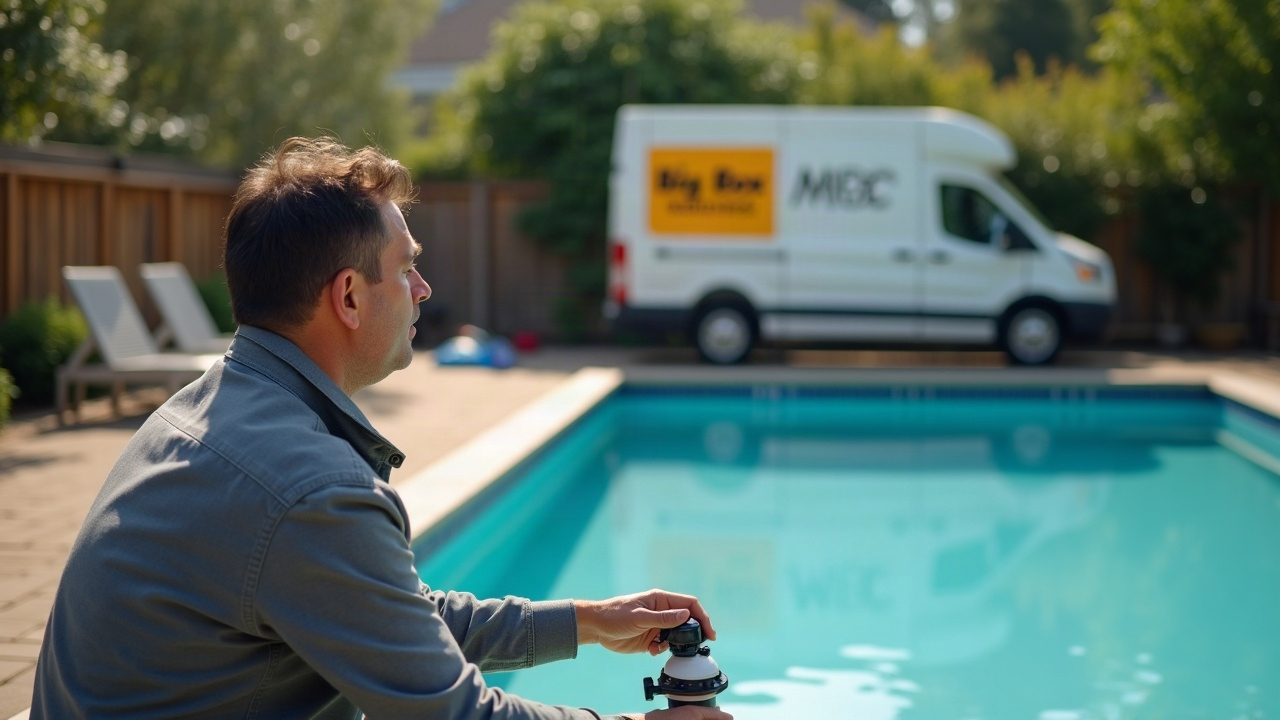
Pool companies lose filter repair calls to big-box stores because of slow response times and limited availability. When a homeowner searches for pool filter repair, they're often dealing with cloudy water and a weekend party approaching—they call whoever answers first and can show up fastest. Leslie's, local pool supply chains, and even DIY-focused retailers have built entire service models around capturing these urgent calls while independent pool companies are out servicing routes or stuck on the phone with another customer.
Why Are Homeowners Calling Big-Box Stores Instead of Pool Companies?
Homeowners call big-box stores for pool filter repair because they answer immediately, book same-day appointments, and maintain consistent availability. Most pool companies miss 30-40% of inbound calls during peak season, forcing callers to the next number on their search results—often a retail chain with dedicated call centers and flexible scheduling. These stores have turned filter service into a loss leader that drives equipment sales, while independent pool companies treat it as a low-priority add-on.
The margin on filter repair should make it a priority, not an afterthought. A cartridge replacement or D.E. filter cleaning runs $150-$300 with minimal parts cost and 45 minutes of labor. But when you're already running six service stops and managing chemical deliveries, that seventh call goes to voicemail. The homeowner hears a generic greeting, doesn't leave a message, and scrolls to the next result.
Here's what most articles won't tell you: Big-box stores don't win on price—they win on certainty. A homeowner would rather pay $249 to someone who answers now and confirms a 2pm appointment than save $50 with a company that might call back tomorrow. According to InsideSales.com, lead response times over five minutes reduce conversion rates by 400%. When your technician calls back three hours later, the job's already booked with someone else.
The retail chains have also normalized same-day and next-day service windows. They staff their service divisions knowing that filter calls spike on Thursday and Friday when homeowners realize the pool isn't ready for the weekend. Independent pool companies, by contrast, often schedule reactive service calls 3-5 days out because their routes are already full. By the time you can fit them in, they've either hired the chain or attempted a DIY fix that you'll need to undo.
What Makes Filter Repair Calls So Valuable (And Why Losing Them Hurts)
Filter repair calls generate $150-$300 in immediate revenue with minimal overhead, but their real value lies in recurring service conversions and equipment replacement opportunities. A homeowner who trusts you to diagnose a filter problem will call you first when their heater fails or when it's time to replace the entire filtration system—often a $2,000-$5,000 sale. Losing the initial service call means losing the relationship before it starts.
Consider the lifetime value breakdown:
- Initial filter repair: $200 average ticket with 70% gross margin
- Annual chemical service conversion: 35% of one-time repair customers become regular service clients worth $1,200-$2,400 annually
- Equipment replacement cycle: Filter systems need replacement every 7-10 years; being the incumbent service provider gives you first shot at a $3,000+ job
- Referral pipeline: Homeowners with pools cluster in neighborhoods; one satisfied customer generates 1.2 referrals on average within 18 months
When you add up those numbers, a missed $200 filter repair call could cost you $8,000-$12,000 over five years. Big-box stores understand this customer acquisition math—they're willing to operate their service divisions at break-even because they recover margin on chemicals, parts, and equipment sales through their retail channels.

The Real Reason Pool Companies Can't Compete on Availability
Pool companies can't compete on availability because owner-operators and route technicians can't answer calls while working, and most small businesses don't have dedicated office staff. You're balancing a test kit, diagnosing an algae bloom, or wrestling a pump lid—picking up an unknown number isn't an option. By the time you finish your route at 5pm, you've missed eight calls and the weekend booking window has closed.
The typical small pool service company has one of three phone setups, and all of them leak revenue:
The Owner's Cell Phone (The Default Bottleneck)
You're the technician, the salesperson, and the office manager. Calls come in while you're cleaning a filter, so you send them to voicemail with good intentions. By lunch, you have six voicemails, three texts, and two chemical deliveries running behind schedule. You'll call people back tonight—except tonight you're restocking the truck and updating invoices. Half the callers never answer when you finally return the call.
The Part-Time Office Person (The 9-3 Gap)
Your spouse, retired parent, or part-time hire answers phones from 9am to 3pm. They're great at booking existing customers and taking messages, but they don't know how to field technical questions or close a skeptical caller who's price shopping. Early morning calls and late afternoon emergencies go unanswered. Weekend calls—when filter problems spike—go straight to a voicemail box that doesn't get checked until Monday.
The Voicemail-and-Pray Method (The Silent Revenue Killer)
You've accepted that you'll miss calls and rely on voicemail to sort serious inquiries from tire-kickers. The problem: homeowners with urgent filter issues don't leave voicemails anymore. They expect immediate contact. According to research from Forrester Research, 67% of consumers say that valuing their time is the most important thing a company can do to provide good service. Forcing them into a voicemail queue signals that you don't value their time—so they call the next company.
Meanwhile, Leslie's and regional chains staff call centers with shift coverage from 7am to 7pm, seven days a week. They route calls to available technicians in real time and confirm appointments before the customer hangs up. You're not losing on skill or service quality—you're losing on operational capacity you can't afford to build in-house.
How to Capture Filter Repair Calls Before Big-Box Stores Do
To capture filter repair calls before big-box stores, you need live call coverage during business hours and a booking process that confirms appointments on the first call. This doesn't mean hiring a full-time receptionist—it means structuring your front office so that every inbound call reaches a person who can answer basic questions, check your availability, and lock in a time slot before the caller moves to the next search result.
That's where companies like Book All Leads fit the gap. Instead of learning software or hiring office staff, you get a full front office team—people who answer your calls, book jobs into your actual schedule, and collect payments—live in five days without contracts. They work as an extension of your business, not a disconnected call center reading scripts.
The operational shift looks like this:
Answer Every Call Within Three Rings
Speed to answer is the first filter. If a homeowner hears ringing past four rings, they're already opening a new browser tab to call the next company. Your front office team picks up immediately, greets the caller by your company name, and starts the qualification process while the caller is still mentally committed to the conversation.
Qualify and Book on the First Call
Most filter repair calls follow a predictable script: "My pool is cloudy and I think it's the filter." Your team needs to ask three questions—what type of filter, when it was last serviced, and when they need it fixed—and give a price range and availability on the spot. No "let me have someone call you back." No "we'll check the schedule and get back to you." Book the appointment before hanging up.
Send Immediate Confirmation and Reminders
The booking isn't real until the customer receives a text or email confirmation with the technician's name, arrival window, and service details. This reduces no-shows and reinforces that you're organized and professional. Automated reminders the day before the appointment cut cancellations by 30-40% and free you from the "just checking we're still on for tomorrow" callback loop.
Extend Your Availability Into Evenings and Weekends
Filter problems don't respect business hours. A cartridge that was marginal on Wednesday fails completely by Friday afternoon when the homeowner is hosting a BBQ. If your phone coverage ends at 5pm, you're invisible to everyone who realizes they have a problem after work. Extending coverage to 7pm on weekdays and offering Saturday morning slots captures the demand that big-box stores have trained customers to expect.
You don't need to run service calls at 7pm—you just need to answer at 7pm and book them for the next available morning slot. The competitive advantage isn't working longer hours; it's being reachable when homeowners are ready to make a decision.
The Filter Repair Call That Became a $6,800 Account
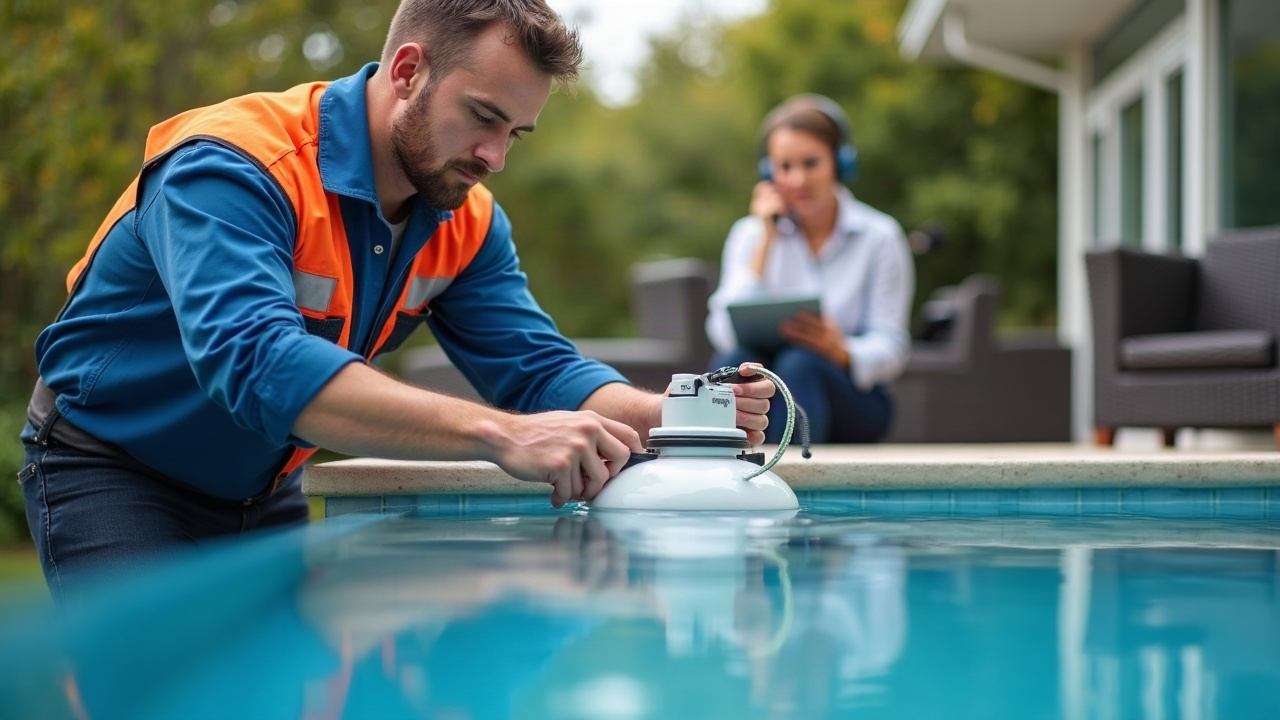
Here's a real example from a pool service company in Phoenix that started answering calls live instead of relying on voicemail. A homeowner called at 4:45pm on a Thursday—cloudy water, party on Saturday, panicking. Before the change, that call would have gone to voicemail and been returned Friday morning, probably too late to book before the weekend.
Instead, the front office team answered immediately, confirmed a cartridge filter cleaning for 8am Friday, quoted $185, and sent a confirmation text within two minutes of hanging up. The technician arrived on time, cleaned the filter, and noticed the heater pilot light was out. He relit it, mentioned that the unit was near end-of-life, and left a quote for replacement.
Two weeks later, the homeowner called back to replace the heater—$3,200. Three months after that, they signed up for biweekly service at $140/month. Over the first year, that single Thursday evening call generated $6,800 in revenue. If it had gone to voicemail, the homeowner would have called Leslie's, gotten same-day service, and never known the pool company existed.
The lesson isn't that every filter call turns into a $6,800 account. It's that you'll never know which ones will unless you answer the phone.
What Pool Owners Actually Want When They Search for Filter Repair
Pool owners searching for filter repair want fast confirmation that someone can fix their problem before the weekend, and they're willing to pay a premium for certainty over savings. They're not comparing your $200 service call to a $180 competitor—they're comparing your immediate answer and Friday morning slot to a voicemail box and a callback that might come Monday. Speed and availability beat price in this category almost every time.
The search behavior reveals the urgency. Homeowners don't Google "pool filter repair" in January when the pool is covered—they search when the filter is actively failing and they have an immediate need. Peak search volume occurs Thursday through Saturday during swim season, when people realize their weekend plans are at risk. These aren't researchers—they're buyers with credit cards ready.
If you calculate your losses based on missed calls during peak season, the numbers get uncomfortable fast. Assume you miss 35% of inbound calls May through September, averaging three filter repair inquiries per week. That's roughly five missed calls per month at $200 average ticket—$1,000 in immediate revenue lost monthly, $5,000 for the season. And that's before accounting for the service conversions and equipment replacements you never get a chance to quote.
Why DIY Filter Repair Content Helps You More Than It Hurts You
Publishing DIY filter cleaning guides and troubleshooting videos positions you as the expert homeowners call when their DIY attempt fails, which happens more often than not. Yes, 20% of your audience will successfully clean their own cartridge and never call you. The other 80% will attempt it, realize they don't have the right tools or can't get the filter housing open, and call the company whose video they just watched—because you've already built credibility.
Big-box stores figured this out years ago. Leslie's runs free in-store water testing and filter inspection knowing that DIY customers eventually convert to service customers when they get tired of wrestling with clamps and O-rings. You can do the same with content—create the guide, earn the visibility, and be the obvious call when they give up.
The content also serves your existing customers. A cartridge cleaning video with your branding keeps you top-of-mind between service visits and reinforces that you're the authority they should call for bigger problems. It's not about preventing service calls—it's about controlling the relationship so that when service is needed, you're the first call, not the fourth.
How to Price Filter Repair to Compete Without Discounting
Price filter repair based on speed and certainty, not just labor and parts. A cartridge cleaning shouldn't be $89 because that's what the parts and time cost—it should be $185-$225 because you showed up same-day, diagnosed the real problem, and gave them a weekend pool instead of a swampy disappointment. Homeowners don't have a reference price for filter repair; they have a reference expectation for outcome and speed.
The pricing conversation happens during booking, not after the technician arrives. Your front office should quote a flat-rate range based on filter type and issue description: "Cartridge cleaning and inspection runs $185 to $225 depending on condition. If we find something that needs replacement, we'll call you with a quote before proceeding." This eliminates the "how much will this cost?" anxiety and positions you as transparent and professional.
Don't compete with big-box store pricing by lowering your rates. Compete by offering better communication, faster response, and deeper expertise. The homeowner who wants the absolute cheapest option was never your customer anyway—they're going to buy a $40 cartridge at the pool store and spend their Saturday wrestling with it. Your customer is the one who values their time and wants the problem solved correctly, and they'll pay 20-30% more for that certainty.
If price objections are common, the issue isn't your pricing—it's your positioning. You're either attracting the wrong leads or failing to communicate value before quoting. Adjust your messaging to emphasize outcomes: "same-day filter repair so your pool is ready for the weekend" beats "affordable filter service" every time for the customers you actually want.
Frequently Asked Questions
How quickly do I need to return a pool filter repair call to win the job?
You need to return the call within five minutes to have a realistic chance of booking the job. Research from InsideSales.com shows that lead response times beyond five minutes reduce conversion rates by 400%. Most homeowners call 2-3 companies when searching for pool filter repair, and they book with whoever confirms availability first. If you're calling back an hour later, the job is already scheduled with a competitor.
Can I compete with Leslie's and big-box stores on filter repair pricing?
You can compete, but not by discounting. Big-box stores often price filter service as a loss leader to drive equipment and chemical sales. Instead, compete on response time, expertise, and relationship. Homeowners will pay 20-30% more for a company that answers immediately, shows up on time, and explains what's wrong in plain language. Your pricing should reflect the value of certainty and speed, not just labor and parts.
What percentage of filter repair customers convert to regular service accounts?
Industry averages show that 30-40% of one-time repair customers convert to recurring service contracts if you follow up appropriately and deliver excellent initial service. The key is treating the filter repair as an audition, not a transaction. Show up on time, explain what you found, and leave information about your maintenance plans. Most homeowners who call for reactive repairs are silently exhausted by pool upkeep and ready to hand it off—you just need to make the offer.
Should I offer same-day filter repair service?
Yes, if you can staff it without disrupting existing service routes. Same-day availability is the single biggest competitive advantage against both big-box stores and other independent pool companies. You don't need to guarantee same-day for every call—having two or three flex slots per week during peak season is enough to capture the urgent Friday afternoon calls that drive most filter repair revenue.
How do I stop missing calls during peak pool season?
You need live call coverage that doesn't depend on you personally answering your phone. This means either hiring dedicated office staff, using a front office team service, or routing calls to a trained family member who understands your schedule and can book appointments confidently. Voicemail and callback systems don't work for time-sensitive service calls—homeowners expect immediate answers and move on within minutes if they don't get them.
What's the best way to follow up after a filter repair to win ongoing service contracts?
Send a follow-up text or email within 24 hours thanking them for their business and offering a free pool water test on your next route through their area. This low-pressure touchpoint keeps you top-of-mind and creates an opportunity to talk about recurring service when you're face-to-face. Roughly 35% of homeowners who receive a follow-up contact convert to service plans within 90 days, compared to less than 10% who receive no follow-up.
Stop Letting Big-Box Stores Steal Your Filter Repair Revenue
Every missed call is a customer relationship that starts with a competitor instead of you. Pool filter repair calls are rarely just about the filter—they're about earning trust during a moment of need and converting one-time emergencies into long-term service accounts. Big-box stores win these calls because they've built operational systems that prioritize speed and availability, not because they're better technicians or offer superior service.
You can reclaim this revenue by answering every call, booking appointments on first contact, and treating filter repair as the customer acquisition channel it actually is. The homeowner searching for pool filter repair today is the weekly service client, equipment replacement buyer, and neighborhood referral source of tomorrow—but only if you pick up the phone.
If you're tired of losing jobs to voicemail, Book All Leads can give you a fully managed front office team that answers your calls, books your jobs, and collects payments—live in five days with no contracts. Stop competing with one hand tied behind your back.
John Edmonds is a native Texan and military combat veteran. He founded Book All Leads after identifying a critical gap in the service industry: business owners losing revenue not from lack of skill, but because no one was handling the calls, follow-ups, reviews, and payments while they were busy doing the work.
View LinkedIn Profile →