
Pool inground installation deposits are won or lost in the first 24 hours after the estimate, yet most pool companies take 48–72 hours to collect them — long enough for homeowners to accept a competitor's bid. Speed from quote to signed contract with deposit in hand determines who books the $50,000+ job, and the companies that respond within hours instead of days consistently convert 3–4 times more installation leads into paying projects.
Why Do Pool Installation Leads Go Cold So Fast?
Pool inground installation leads cool faster than almost any other home improvement project because homeowners typically request three to five estimates within a single weekend, then make a decision within 48 hours. Unlike smaller service calls, families treat inground pool installation as a major life decision they want resolved quickly once they commit emotionally. The contractor who stays in front of them — through immediate follow-up, same-day contract delivery, and frictionless deposit collection — wins the job before competitors even send their proposal.
According to InsideSales.com, leads contacted within five minutes are 21 times more likely to convert than those contacted after 30 minutes. For pool installations, that window extends slightly — you have roughly 24 hours — but the principle holds: first to follow up with a complete, sign-ready proposal almost always wins.
Here's what most articles won't tell you: The problem isn't just speed to quote. It's speed to deposit. You can deliver a gorgeous estimate in two hours, but if your deposit collection process requires mailing a contract, waiting for signatures, then waiting again for a check, you've handed the job to whoever makes it easier. Homeowners don't ghost you because they changed their minds. They ghost you because someone else made it simpler to say yes.
What Happens in the First 48 Hours After the Estimate
Here's the typical timeline for a homeowner who requested pool bids:
- Saturday morning: Three pool companies visit, measure, discuss options
- Saturday afternoon: One company emails a PDF estimate immediately; two promise to "send something by Monday"
- Saturday evening: Homeowner opens the PDF, excited — but there's no clear next step, so they wait
- Sunday: A fourth company they forgot they contacted shows up unannounced with an iPad, builds the quote on-site, collects a $5,000 deposit via credit card before leaving
- Monday: The first three companies follow up. Too late. Job's gone.
The company that collected the deposit on Sunday didn't necessarily have the best price or the fanciest design. They had the fastest path from "yes" to "done."
How Does Deposit Collection Speed Affect Pool Installation Lead Conversion?
Pool installation lead conversion hinges on eliminating friction between verbal agreement and signed contract with deposit. Most pool companies lose 60–70% of "hot" leads not because their pricing is off, but because their post-estimate process requires too many steps, too much waiting, and too much opportunity for the homeowner to reconsider or accept a competitor's offer. The faster you move from handshake to deposit, the higher your close rate climbs — often doubling conversion without changing a single other variable.
Research from Harvard Business Review shows that customers who experience friction during the buying process are 96% more likely to abandon the purchase. For custom pool installations, "friction" means:
- Waiting days for the written proposal
- Printing, signing, and scanning contracts
- Writing and mailing physical checks
- Scheduling a second visit just to pick up the deposit
Every extra step is a decision point where the homeowner can hesitate, comparison-shop, or accept another bid.
The Real Cost of Slow Deposit Collection
Let's put numbers to it. If you run 100 inground pool estimates per season at an average contract value of $55,000, and your current close rate is 20%, you're booking 20 jobs and generating $1.1 million in revenue. If slow deposit collection is costing you even 10 percentage points — meaning you'd close at 30% with a faster process — you're leaving $550,000 on the table every season. That's not marketing spend. That's pure conversion loss from operational friction.
You can calculate your losses based on your own numbers, but the pattern holds: most pool companies are sitting on a conversion problem they mistake for a lead quality problem.
What Slows Down Pool Inground Contract Speed?
Pool inground contract speed gets bottlenecked by three operational realities: the owner or estimator is too busy to follow up the same day, the proposal process requires manual document creation and delivery, and deposit collection depends on physical checks or in-person meetings. Even well-run pool companies struggle here because the owner is often on-site managing installations, leaving sales follow-up for evenings or weekends — by which time the homeowner has already moved forward with someone else.
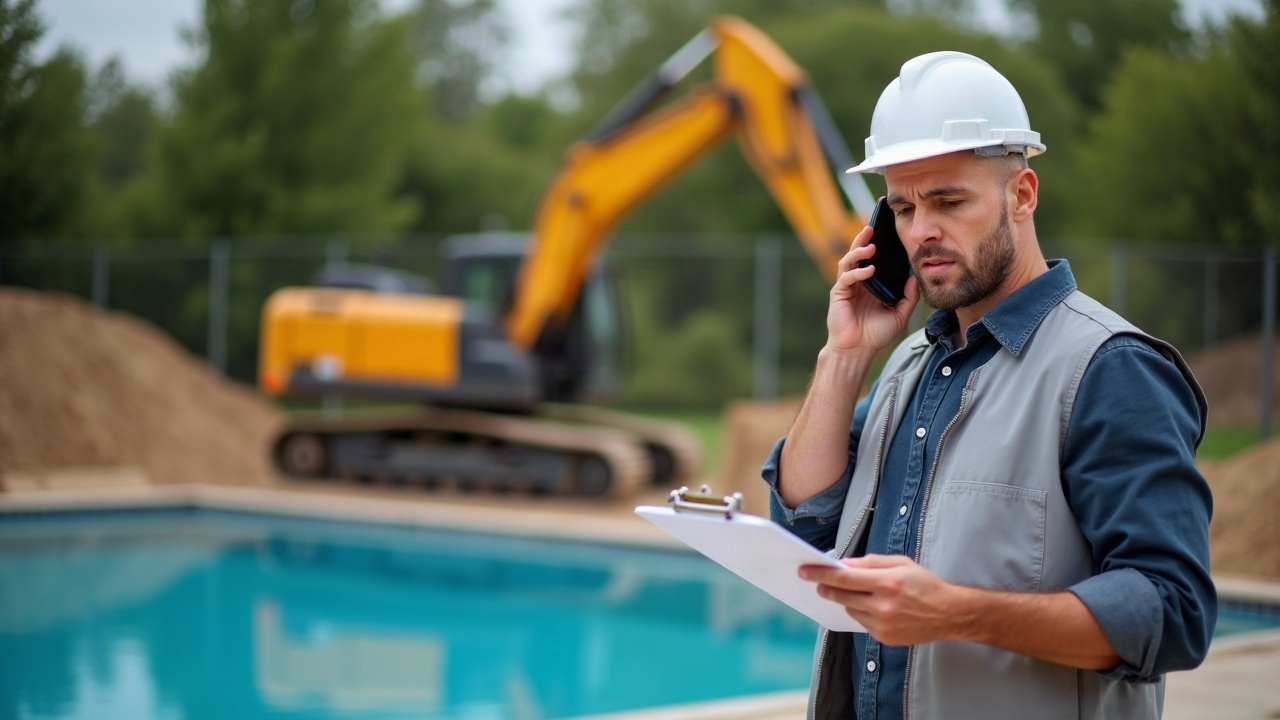
Here's what typically happens after you leave the estimate appointment:
You get back to the truck, check your phone, and see two missed calls from existing clients, a supplier issue, and a crew question. The estimate you just completed gets added to your mental to-do list. You'll write it up tonight. Except tonight you're dealing with a delayed equipment delivery. So it becomes tomorrow. By Tuesday, you send a beautiful, detailed proposal. The homeowner thanks you, says they'll review it, and never responds again. They signed with someone else Sunday evening.
The problem isn't your work ethic. It's that you're doing six jobs at once, and sales follow-up is the easiest one to delay because it doesn't feel urgent until it's too late.
Why Manual Proposal Processes Kill Speed
Even if you're disciplined about same-day proposals, manual processes eat hours. You're building the quote in a spreadsheet or Word doc, customizing language, creating a PDF, emailing it, then waiting. When the homeowner has questions, you're back on the phone — but you're on a job site, so you miss the call. You call back three hours later. They don't answer. Phone tag adds another day.
Meanwhile, your competitor uses pre-built proposal templates they can generate in 10 minutes, send via text with a link to sign and pay, and close the deal before you've even opened your laptop.
What's the Fix for Losing Installation Leads to Faster Competitors?
The fix is treating deposit collection as a front-office function, not a sales task you squeeze in between job sites. Pool companies that separate revenue-generating activities (estimates, installations) from revenue-capture activities (follow-up, contracts, deposit collection) convert installation leads at double or triple the rate of competitors who expect the owner to do everything. You need a dedicated team handling the follow-up, proposal delivery, contract execution, and deposit collection the moment you finish the estimate — not when you find time later.
This doesn't mean hiring a full-time salesperson. It means having people whose only job is ensuring every estimate turns into a signed contract and collected deposit within 24 hours. Some pool companies build this in-house. Others realize it's faster and cheaper to hand the entire front office to a team that's already built and trained.
Book All Leads handles exactly this problem — a full front office team that answers every call, books estimates, follows up after site visits, delivers contracts, collects deposits, and keeps homeowners engaged through the entire pre-construction phase. You focus on running the estimate and building pools. The team handles everything else. Live in five days, no software to learn, no contracts locking you in.
How to Structure Your Post-Estimate Process for Speed
If you're building this in-house, here's the structure that works:
- Finish the estimate and set the follow-up expectation immediately: "You'll have a detailed proposal in your inbox within two hours, and my team will call you this evening to walk through it."
- Have someone else — not you — create and send the proposal within those two hours. Use templates. Speed beats perfection.
- Call the homeowner that same evening. Don't wait for them to read it. Walk them through it. Answer questions live.
- Offer instant deposit options: Credit card over the phone, payment link via text, even Venmo or Zelle if that's what it takes. Remove every barrier.
- Follow up every 12 hours until they say yes or no. Persistence wins here. Most pool companies give up after one unreturned voicemail.
According to National Association of Home Builders, homeowners who receive follow-up contact within 24 hours of an estimate are 60% more likely to move forward with the project. The ones who get same-day proposals and same-evening follow-up calls? They convert at rates near 50%.

Real-World Example: How One Pool Company Doubled Close Rates in 30 Days
A pool installation company in Arizona was running about 80 estimates per season and closing 18–20 jobs, a 23% close rate. The owner knew he was losing jobs to competitors, but he assumed it was pricing. He started offering small discounts. Close rate didn't budge. Then he tracked what happened after estimates and realized the problem: he was averaging 52 hours from estimate to proposal delivery, and another 3–4 days before he followed up if the homeowner didn't respond. By the time he reconnected, most had already signed elsewhere.
He hired a part-time office assistant whose only job was estimate follow-up. She called every homeowner the same day, delivered proposals within four hours, and scheduled follow-up calls every 24 hours until she got a clear yes or no. She also started collecting deposits over the phone via credit card instead of waiting for checks. Within 30 days, close rate jumped to 41%. Same leads. Same pricing. The only variable was speed to deposit.
The next season, he handed the entire front office — inbound calls, estimate scheduling, follow-up, contract delivery, deposit collection — to a managed team. Close rate hit 53%. He went from 20 jobs per season to 42 without spending a dollar more on marketing.
What Should Pool Companies Prioritize to Improve Custom Installation Deposit Speed?
Pool companies should prioritize immediate post-estimate follow-up and frictionless deposit collection above nearly every other operational improvement. This means having someone — whether in-house or outsourced — who calls the homeowner within hours of the estimate, delivers a sign-ready proposal the same day, and offers multiple instant payment options. The goal is to eliminate every excuse, every delay, and every opportunity for the homeowner to drift toward a competitor who makes saying yes easier.
Here are the highest-leverage changes:
- Same-day proposal delivery: Template-driven, personalized enough to feel custom, delivered within 2–4 hours
- Same-day follow-up call: Don't wait for the homeowner to read the proposal. Call and walk them through it.
- Instant deposit options: Credit card, ACH, payment links — anything that doesn't require waiting for checks or scheduling another visit
- Dedicated follow-up owner: One person whose job is ensuring every estimate turns into a decision within 48 hours
Most pool companies optimize for estimate volume — more leads, more marketing, more appointments. But if you're closing 20% of estimates and your competitor is closing 50% because they're faster to deposit, you don't need more leads. You need a better post-estimate process. Learn more about how a full front office team handles this for you.
Frequently Asked Questions
How quickly should I follow up after a pool installation estimate?
Follow up within 2–4 hours with a written proposal, and call the homeowner the same evening to walk through it. Research shows leads contacted within 24 hours convert at 60% higher rates than those contacted later. For pool installations, the homeowner is comparing multiple bids in a compressed timeframe — the first company to deliver a complete, sign-ready proposal and collect a deposit typically wins the job, regardless of price differences of a few thousand dollars.
What's the best way to collect deposits for inground pool installations?
Offer multiple instant payment options: credit card over the phone, ACH transfer, or payment links sent via text or email. Avoid requiring physical checks or in-person deposit collection unless the homeowner specifically requests it. The easier you make it to pay, the faster you close. Many pool companies now collect 60–80% of deposits remotely within hours of sending the proposal, compared to waiting days or weeks for mailed checks.
Why do homeowners ghost pool companies after getting an estimate?
Homeowners rarely ghost because they lost interest — they ghost because another company made it easier to move forward. If your follow-up takes 48+ hours and requires printing, signing, scanning contracts and mailing checks, you've created friction. The competitor who calls the same day, delivers a clickable contract, and accepts a credit card deposit wins by default. It's not rejection; it's operational speed.
Should I lower my price to compete with faster pool companies?
No. Speed to deposit beats price in most cases. Homeowners choosing between a $52,000 pool delivered through a slow, complicated process and a $55,000 pool with instant proposals and easy deposit collection will usually pick the latter. They're already spending tens of thousands — an extra few thousand matters less than confidence, clarity, and ease. Fix your follow-up speed before you touch pricing.
How many times should I follow up after sending a pool installation proposal?
Follow up every 12–24 hours until you get a clear yes or no. Most pool companies give up after one unreturned call or email. Persistent, professional follow-up — a call, a text, an email — demonstrates reliability and keeps you top of mind while the homeowner is reviewing other bids. Set a boundary (e.g., five touchpoints over one week), but don't assume silence means disinterest. Often it just means they're busy and need a nudge.
Can I automate pool installation follow-up without losing the personal touch?
You can semi-automate reminders and proposal delivery, but the actual follow-up calls and deposit collection should be handled by real people. Homeowners spending $50,000+ expect to talk to a human, ask questions, and feel confident in their decision. Automated emails are fine for document delivery, but conversion happens in conversations. Whether that's you, an in-house assistant, or an outsourced front office team, keep it human.
Stop Losing Pool Installation Jobs to Competitors Who Move Faster
Pool inground installation deposits are won in the first 24 hours, not the first week. If you're delivering great estimates but losing jobs to competitors who aren't better — just faster — the problem isn't your pricing, your designs, or your reputation. It's that you're trying to do sales follow-up, contract delivery, and deposit collection in the cracks between running job sites and managing crews. You need a front office team whose only job is turning every estimate into a signed contract and collected deposit before the homeowner even opens your competitor's email.
Book All Leads gives you that team — live in five days, no software to learn, no long-term contracts. Just a full front office handling every call, every follow-up, every contract, and every deposit so you can focus on what you do best: building pools. Get started today.
John Edmonds is a native Texan and military combat veteran. He founded Book All Leads after identifying a critical gap in the service industry: business owners losing revenue not from lack of skill, but because no one was handling the calls, follow-ups, reviews, and payments while they were busy doing the work.
View LinkedIn Profile →