Swimming pool companies lose inground pool installation jobs after hours because homeowners planning $50,000+ backyard projects call multiple builders in a single evening—and the first contractor to answer, qualify the lead, and book a site visit wins the job. When your phone rolls to voicemail at 6 PM, you're not just missing a call. You're handing a qualified buyer to the competitor whose phone coverage extends beyond business hours.
This isn't about convenience. It's about the buyer behavior of high-intent homeowners who've spent weeks researching pool styles, permitting requirements, and financing options. They call after work hours because that's when they're home, looking at their backyard, and ready to commit. Miss that window, and you've lost before you knew you were competing.
Why Do Pool Installation Jobs Get Lost After Hours?
Inground pool installation jobs slip through after-hours gaps because homeowners make buying decisions during evening and weekend research sessions—not during your 9-to-5 office hours. These are deliberate, high-intent calls from people who've already decided to build a pool and are now selecting their builder. According to InsideSales.com, leads contacted within 5 minutes are 21 times more likely to convert than those contacted after 30 minutes. After hours, most pool companies don't respond for 12-18 hours.
The homeowner planning a $50,000 pool installation isn't leaving one voicemail and waiting patiently. They're working down a list of three to five builders, calling each one in sequence. The first company that answers, asks qualifying questions, and schedules a site visit has an overwhelming first-mover advantage. The homeowner mentally commits to that builder before your voicemail even finishes playing.
Here's what most articles won't tell you: The problem isn't that homeowners prefer calling after hours—it's that they distrust pool builders who don't answer. A missed call signals a small operation, poor organization, or a builder who's too busy to care about new clients. For a project that will take 8-12 weeks and involve heavy equipment tearing up their backyard, homeowners interpret responsiveness as a proxy for reliability. Your voicemail greeting doesn't reassure them. It confirms their fear that you'll be just as hard to reach when problems arise mid-project.
What Time Do Most Pool Installation Inquiries Actually Come In?
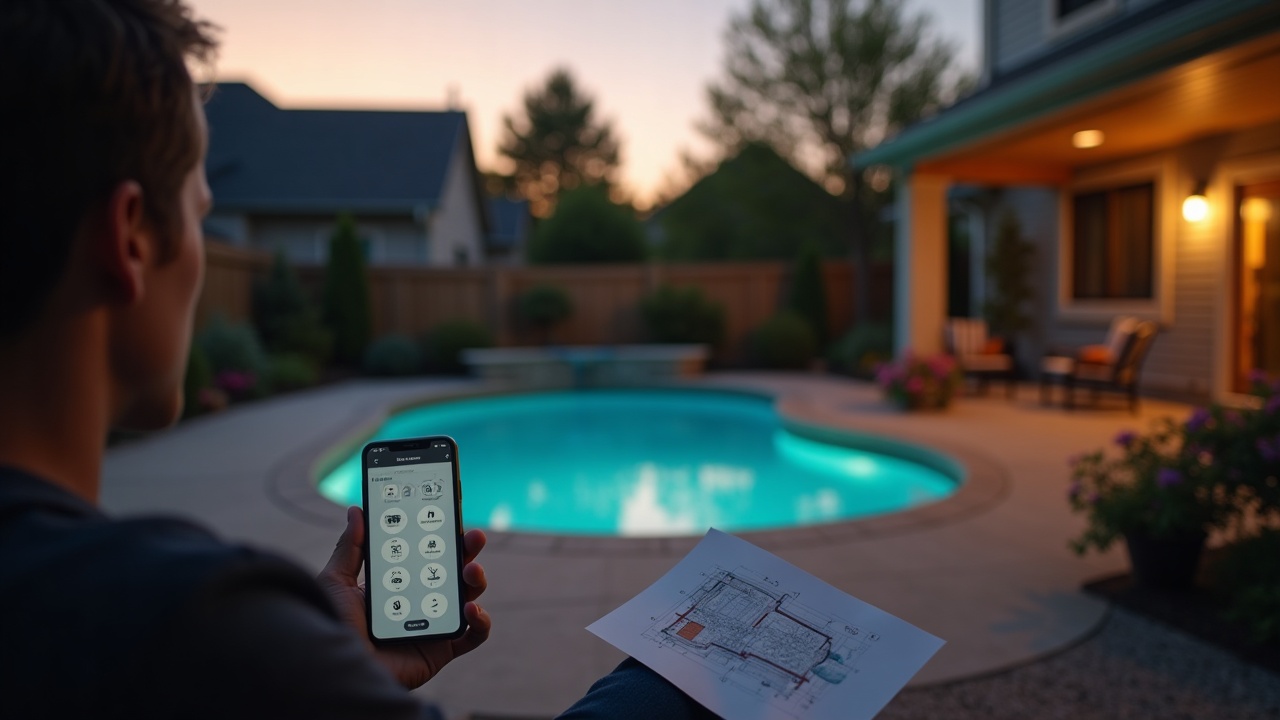
Peak inquiry times for inground pool installations cluster between 6 PM and 9 PM on weekdays and throughout Saturday and Sunday afternoons. Homeowners research pool options during lunch breaks at work, but they call builders when they're home, standing in their backyard, visualizing the finished product. They want to discuss placement, sizing, and budget while looking at the actual space—not from a desk at the office.
This timing pattern intensifies during spring and early summer, when homeowners are desperate to get on a builder's schedule before the season books solid. A call that comes in at 7 PM on a Tuesday in April represents a buyer who wants to break ground within weeks, not months. That urgency doesn't pause until you check voicemail Wednesday morning.
What's the Real Cost of Missing After-Hours Pool Installation Calls?
Every missed after-hours call for an inground pool installation costs you approximately $3,000 to $8,000 in lost gross profit—not just lost revenue, but the margin you would have earned on a project you were already equipped to complete. The national average cost for an inground pool installation ranges from $35,000 to $65,000 according to industry data, with builder margins typically between 15% and 25% depending on project complexity and regional market conditions.
But the loss compounds beyond a single project. Pool installations generate secondary revenue streams that most builders undervalue when calculating the cost of a missed call: referrals from neighbors who see the construction process, deck and patio add-ons, ongoing maintenance contracts, and equipment upgrades. A single installation often generates 1-2 qualified referrals within the same neighborhood as homeowners ask their new pool owner who did the work.
Here's the math most pool builders miss: If you receive 8 after-hours inquiries per month during peak season (April through August) and your phone coverage forces 6 of those to voicemail, you're losing 4-5 convertible leads per month. At an average gross profit of $5,000 per installation, that's $20,000 to $25,000 in lost monthly profit during your busiest revenue period. Across a five-month peak season, missed after-hours calls cost the average pool builder $100,000+ in profit that required zero additional capacity, crews, or equipment to capture.
You can calculate your losses based on your specific call volume and conversion rates, but the pattern holds across markets: the smaller your after-hours coverage gap, the higher your close rate on inbound leads.
Why Can't Pool Builders Just Return Calls the Next Morning?
Returning calls the next morning doesn't work for inground pool installation leads because the homeowner has already scheduled site visits with the two or three builders who answered the night before. By the time you call back at 9 AM, the buyer has moved past the "gathering quotes" phase and into the "comparing specific proposals" phase—and you're not being compared because you never got a chance to present.
Book All Leads runs a full front office team for pool builders—six roles working around the clock to answer every call, qualify leads, and book site visits while the caller is still standing in their backyard visualizing the pool. Your phone coverage goes live in 5 days, handles every call like your best office manager, and costs less than the single installation job you'd lose this month to voicemail. No software to learn. No contract locking you in. Just a team that picks up when your customers call.
The psychology of callback timing matters enormously in high-ticket home improvement sales. When a homeowner calls at 7 PM Tuesday and you return the call at 9 AM Wednesday, you're interrupting their workday. They're distracted, they can't look at their backyard while talking, and they've already had two or three positive conversations with your competitors. Your callback feels like an obligation, not an opportunity. The competitor who answered at 7:01 PM had the homeowner's full attention, emotional engagement, and momentum.
Even if you do reach them the next morning, you've lost positioning. You're now the backup option—the company they'll get a quote from "just to compare," but they've already developed rapport with the builder who answered first. In pool installation sales, rapport drives decisions as much as price. Homeowners are buying trust that you'll manage a complex, disruptive construction project professionally. First contact establishes that trust.
Don't Voicemail Messages Convert Some Leads?
Voicemail messages convert less than 5% of inbound pool installation inquiries compared to live answer rates above 40%. The homeowners who do leave voicemails are often price shoppers gathering quotes from six or seven builders, not high-intent buyers ready to select a contractor. The valuable leads—homeowners who've researched thoroughly and are ready to move forward—won't wait. They're calling the next builder on their list within 90 seconds of reaching your voicemail.
What Type of Pool Builders Lose the Most After-Hours Jobs?
Owner-operators who handle sales calls personally lose the most inground pool installation jobs after hours because they're physically on job sites until dark during peak season, then too exhausted to field calls during evening inquiry windows. These are typically established builders with 4-12 employees who've grown past the startup phase but haven't yet built out dedicated sales staff. Revenue falls between $800K and $3M annually—profitable enough to be busy, not yet large enough to justify a full-time office manager or inside sales team.
This growth stage creates a painful trap: You're successful enough that you can't answer your phone, but not yet large enough to hire full-time phone coverage that sits idle during slow periods. Adding a $45K/year office position to capture seasonal evening calls feels like dangerous overhead, so you let calls roll to voicemail and tell yourself you'll call everyone back in the morning. Meanwhile, competitors with better phone coverage take market share despite being less experienced builders.
The builders who maintain the highest close rates on inbound leads aren't the biggest operations—they're the ones who answer the phone consistently regardless of time or day. Some use family members, some rotate phone duty among crew leaders, and increasingly, some use dedicated front office teams that cost less than a full-time hire but provide 24/7 coverage.
What Questions Do After-Hours Callers Actually Ask?
After-hours callers planning pool installations ask qualifying questions that reveal whether they're ready to buy or just starting to research. The most common questions center on timeline availability ("How soon could you start if we signed this week?"), budget fit ("What's your typical range for a 16x32 gunite pool with a shallow end bench?"), and builder credentials ("How many pools do you install per year?" or "Can I see photos of recent projects in my neighborhood?"). These aren't tire-kickers—they're buyers trying to narrow a list of five potential builders down to two finalists.
The difference between a skilled receptionist and a voicemail greeting is that a live person can answer these qualifying questions immediately, building confidence and momentum. The caller learns that you have availability in June, that their $55K budget fits your typical project scope, and that you've completed three pools within two miles of their address. That single conversation moves them from research mode to decision mode.
When the same caller reaches your voicemail, they gain no information, no confidence, and no reason to stop calling other builders. Even worse, they now have a negative data point: you're hard to reach. That perception colors every subsequent interaction, even if you call back promptly the next morning.
How Do After-Hours Callers Differ From Weekday Callers?
After-hours callers for pool installations have typically completed more research than weekday callers and are further along in the buying process. They've already browsed pool styles online, checked permitting requirements with their city, and discussed budget with their spouse. The evening call represents a transition from "Should we do this?" to "Who should we hire?" They're not asking if they can afford a pool—they're asking if you're the right builder.
What Do Competitors Who Answer After Hours Actually Do Differently?
Competitors who win after-hours pool installation leads answer the phone within three rings and immediately shift into qualification and scheduling mode. They're not just taking messages—they're asking square footage preferences, discussing budget ranges, checking lot access for equipment, and booking site visits for the next available day. The entire call takes 6-8 minutes and ends with a confirmed appointment on the calendar. The homeowner hangs up feeling productive and one step closer to their new pool.
These high-performing pool builders treat every after-hours inquiry like a scheduled sales appointment, because that's exactly what it is. The homeowner has chosen to call during their free time, which means they're focused and ready to engage. The builder who answers captures that attention and channels it toward next steps. The builder who returns the call 14 hours later tries to recreate momentum that's already been captured by someone else.
Some winning pool builders route after-hours calls to a dedicated sales closer who works evening hours specifically to capture these high-value leads. Others use answering services that do more than take messages—they qualify leads, answer basic questions from a script, and book appointments directly into the builder's calendar. The specific solution matters less than the outcome: every caller speaks to a knowledgeable person who can move them toward a site visit.
The pattern is consistent: Builders who treat phone coverage as a profit center rather than an expense invest in after-hours solutions that pay for themselves with a single additional installation per quarter. Builders who view phone answering as overhead try to minimize the cost, then wonder why their close rates lag behind competitors with worse crews and higher prices.
How Much Does After-Hours Phone Coverage Actually Cost?
Professional after-hours phone coverage for pool builders ranges from $800 to $2,500 per month depending on call volume and service level. Basic answering services that take messages cost $800-$1,200 monthly. Full front office teams that answer, qualify, and book appointments cost $1,500-$2,500 monthly but deliver dramatically higher conversion rates because they replicate what your best inside salesperson would do—not just what a message-taker provides.
Compare that monthly cost to the gross profit on a single inbound pool installation ($3,000 to $8,000), and the ROI becomes obvious. You need to convert one additional after-hours inquiry every 2-3 months to break even on comprehensive phone coverage. Most pool builders converting just 30% of answered after-hours calls close 3-5 additional projects per peak season—generating $15,000 to $40,000 in gross profit against $7,500 to $12,500 in annual phone coverage costs.
The alternative—hiring a full-time office manager or inside salesperson to cover extended hours—costs $38,000 to $55,000 annually plus benefits, and still leaves gaps during nights, weekends, and vacation periods. You're paying for 2,080 hours of availability per year (40 hours/week × 52 weeks) but only receiving coverage during scheduled shifts. A dedicated front office team provides 8,760 hours of annual coverage (24/7/365) at a fraction of the cost because the service spreads staffing costs across multiple clients.
What Should Pool Builders Look For in After-Hours Phone Coverage?
Effective after-hours phone coverage for pool installation inquiries requires three capabilities: the ability to answer basic project questions without sounding scripted, the authority to book appointments directly into your calendar, and the judgment to identify and prioritize hot leads over casual researchers. A service that only takes messages delivers minimal value because it doesn't move leads toward conversion—it just delays the same conversation you'd have the next morning, after the lead has cooled and booked appointments with competitors.
The best phone coverage solutions for pool builders integrate directly with your scheduling system and provide call summaries that include key details: property address, approximate project size, budget range, desired start date, and any concerns or special requests the caller mentioned. This intelligence allows you to prepare for the site visit properly and tailor your proposal to their specific priorities. Generic messages like "Please call Bob about a pool" waste time and create friction.
Look for phone coverage that understands seasonality. Pool installation inquiries spike dramatically in March, April, and May as homeowners try to get on builders' schedules before summer. Your phone coverage should scale seamlessly during these peak months without requiring you to hire and train temporary staff. Services that can't handle volume surges create the same voicemail problem you were trying to solve—just at a higher call threshold.
Should Pool Builders Use Automated Booking Systems Instead?
Automated booking systems and online scheduling forms capture less than 15% of after-hours pool installation inquiries because homeowners planning $50,000+ projects want to speak with a human before committing to a site visit. They have questions about lot access, soil conditions, HOA restrictions, and timeline—concerns that can't be addressed by a booking widget. Automation works for simple service appointments (pool cleaning, equipment repair), but fails for complex sales processes where trust and rapport drive conversion.
Frequently Asked Questions
What percentage of pool installation inquiries come in after normal business hours?
Between 45% and 60% of inbound pool installation inquiries arrive outside standard business hours (weekdays 8 AM-5 PM), with the highest concentration between 6 PM and 9 PM on weekdays and throughout weekend afternoons. This pattern reflects homeowner behavior—they research and call builders when they're home looking at their backyard, not during their own work hours.
Can't I just use my personal cell phone to handle after-hours calls?
Using your personal cell phone for after-hours coverage works initially but becomes unsustainable as call volume grows and personal boundaries erode. You'll answer during family dinners, vacations, and weekends, creating burnout and resentment. More importantly, your answer rate will still drop during times you're unavailable (driving, sleeping, at your kid's game), meaning you're sacrificing personal time without actually solving the missed-call problem.
How quickly do I need to answer after-hours calls to convert the lead?
Pool installation leads should be answered within 3 rings (15-20 seconds) to maximize conversion. Calls that roll to voicemail after 5-6 rings signal to the homeowner that they've reached a business that's closed, prompting them to immediately call the next builder on their list. Speed-to-answer is the strongest predictor of whether you'll get a chance to quote the project.
What if the after-hours caller is just price shopping and not serious?
Price shoppers and serious buyers both call after hours, but skilled phone coverage can distinguish between them in the first 90 seconds by asking qualifying questions about timeline, budget range, and project scope. Even price shoppers deserve professional responses—they may not convert immediately, but a helpful conversation positions you as the expert they'll call when they're ready to proceed. Poor phone coverage can't tell the difference, so you miss both casual inquiries and hot leads equally.
Do I need different phone coverage during peak season versus slow months?
Yes—pool installation inquiry volume can increase 3-5x during peak season (March through June) compared to winter months, so effective phone coverage should scale with demand. Fixed solutions like hiring an office manager create overstaffing problems during slow periods, while fully flexible front office teams adjust to your actual call volume without requiring you to manage staffing decisions.
What information should after-hours phone coverage collect from callers?
Essential information includes property address, approximate pool size preferences, budget range, desired timeline, lot access considerations, and whether they've spoken with other builders. This intelligence allows you to prepare properly for the site visit and qualify whether the project fits your current capacity and typical project profile. Generic messages without these details waste your time and the homeowner's time during follow-up.
Stop Losing Pool Installation Jobs to Competitors With Better Phone Coverage
Your after-hours phone coverage directly determines how many inbound pool installation inquiries convert into booked site visits and signed contracts. Every call that rolls to voicemail after 5 PM is a qualified lead choosing your competitor before you even know they called. This isn't about convenience or customer service—it's about capturing revenue that's already seeking you out.
The pool builders gaining market share in your area aren't necessarily better installers or cheaper bidders. They're the ones who answer when homeowners call. That operational advantage compounds across dozens of inquiries per month, generating hundreds of thousands in additional annual revenue from leads that cost you nothing to generate.
Book All Leads gives you a full front office team that answers every pool installation inquiry within seconds, qualifies the lead properly, and books site visits while the homeowner is still standing in their backyard planning their pool. You'll be live in 5 days, never miss another after-hours call, and finally convert the inbound leads your reputation and marketing are already generating. Stop letting voicemail choose your competitors for you.
John Edmonds is a native Texan and military combat veteran. He founded Book All Leads after identifying a critical gap in the service industry: business owners losing revenue not from lack of skill, but because no one was handling the calls, follow-ups, reviews, and payments while they were busy doing the work.
View LinkedIn Profile →