
Swimming pool leak detection leads evaporate when pool companies answer the phone too slowly or send calls to voicemail. Unlike routine maintenance jobs, leak detection is urgent — homeowners see their water bill climbing, their yard flooding, or their pool level dropping daily. They call the first company they find, and if no one picks up, they immediately dial the next number. The business that answers fastest books the job, often before competitors even check their messages.
Why Pool Companies Lose Leak Detection Jobs Before They Know They Exist
You lose swimming pool leak detection leads because homeowners don't wait. When a pool owner discovers a leak, they're already worried about structural damage, landscape erosion, or a $600 monthly water bill. According to InsideSales.com, response times beyond five minutes reduce conversion by 400%. In pool leak detection, five minutes is generous — most callers have moved on within ninety seconds.
The typical leak detection call follows a pattern: homeowner notices the problem Tuesday afternoon, searches "pool leak detection near me" on their phone, and taps the first three results. First call rings six times, goes to voicemail. Second call gets answered by someone in a truck who can't access the schedule and promises to call back. Third call reaches a person who answers questions, checks availability, and books Thursday morning. That third company wins — not because they're better technicians, but because they picked up the phone.
Here's what most articles won't tell you: Pool leak detection has higher profit margins than most pool services, but owner-operators treat these leads like routine maintenance calls. A leak detection visit typically bills $300-$600 for the diagnostic alone, with repair work often adding $1,200-$3,500 to the ticket. Compare that to weekly cleaning at $125/visit. Yet the technician doing the $125 cleaning gets his calls answered immediately by the office, while the leak detection caller — worth potentially ten times more — hits voicemail because the owner is skimming a filter and doesn't recognize the number.
- Leak detection calls convert at 60-75% when answered live versus 15-20% from voicemail callbacks
- Average repair job following leak detection: $2,400, according to pool service industry data
- Time window before caller moves to next company: 60-90 seconds
- Percentage of pool owners who call multiple companies for leak detection: 87%
What Makes Pool Leak Detection Different From Other Service Calls
Pool leak detection leads behave differently than routine pool service inquiries because urgency eliminates patience. When a homeowner calls for weekly cleaning or seasonal opening, they're planning ahead — often weeks in advance. They'll leave a voicemail and wait for a callback. But leak detection calls happen in crisis mode: the pool has lost three inches overnight, the yard is swampy, or the equipment pad is flooding.
This urgency creates a specific caller behavior: rapid sequential dialing. The homeowner opens Google Maps or a search results page and calls down the list until someone answers. Your missed call notification arrives at 2:47 PM. You call back at 3:15 PM feeling pretty responsive. But they booked with your competitor at 2:48 PM — thirty seconds after you didn't answer.
The financial impact compounds because leak detection leads to repair work. You're not just losing a $350 diagnostic visit. You're losing the $2,800 pipe repair, the $950 pool deck patch work, and the relationship with a homeowner who now trusts your competitor. That single missed call just cost you a $4,100 job and a customer who will call that other company for every future need.
Why Voicemail Callbacks Don't Recover These Jobs
Pool companies assume they can recover missed calls with quick callbacks, but leak detection jobs don't work that way. When you call back, the homeowner answers while your competitor's technician is already explaining the diagnostic process in their driveway. Or they simply don't answer — because they've already solved their problem and don't want to talk to the companies who weren't available when they needed help.
Even when you reach them, the conversation starts from a defensive position. "Sorry I missed your call earlier" immediately frames you as the backup option. Meanwhile, the company that answered live has already built rapport, explained the process, confirmed pricing, and secured a credit card deposit. You're trying to win back a lead that was yours to lose.
How Faster-Booking Competitors Actually Answer Every Call
Pool companies that book every leak detection lead don't rely on owner-operators carrying two phones or technicians pulling over to check schedules. They staff their front office properly — either with in-house teams dedicated to phones or with a managed front office service that handles calls as part of the business operation, not as an interruption to it.
Book All Leads builds a full front office team for pool service companies — six roles working around the clock to answer calls, book jobs, and collect payments. There's no software to learn, no system to maintain. The team goes live in five days and operates without contracts. For a pool company drowning in leak detection leads they can't answer fast enough, it eliminates the gap between the phone ringing and the job getting booked.
The businesses winning pool leak repair leads understand a simple truth: you can't grow a pool leak detection business while personally answering every phone call. The owner-operator model works until call volume exceeds your ability to pick up the phone while running service routes. At that point, every growth effort — better SEO, paid ads, truck wraps — just generates more missed calls and wasted marketing budget.
The Real Cost of "I'll Call Them Back in Twenty Minutes"
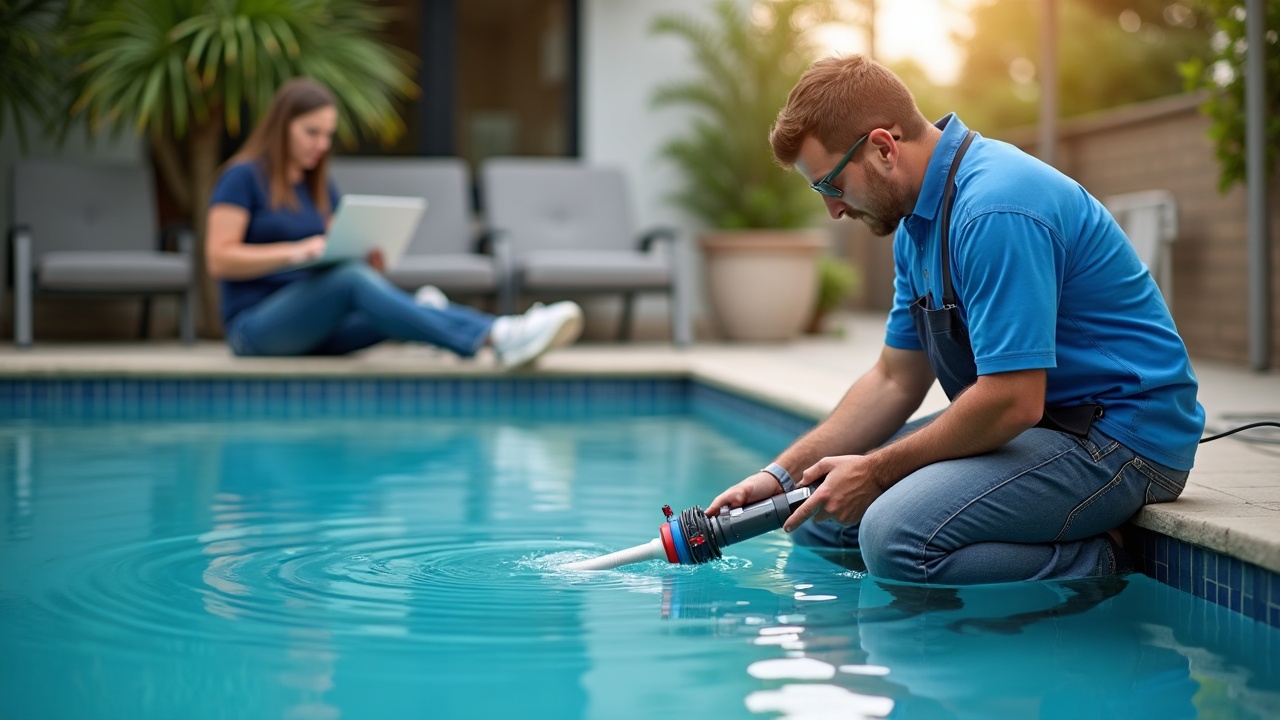
Pool service owners dramatically underestimate what missed calls cost them because the loss is invisible. You see the missed call notification. You don't see the $3,200 job your competitor booked while you were pressure-washing a deck. You can calculate your losses by tracking weekly missed calls and multiplying by average leak detection job value, but most pool companies never run that math until they realize they're busier than ever but revenue isn't growing proportionally.
Consider a typical pool service company that misses twelve calls per week because the owner is in the field and the part-time office person works mornings only. Four of those calls are leak detection leads averaging $2,600 in total work (diagnostic plus repair). That's $10,400 in lost weekly revenue — $540,800 per year — from jobs that were already inbound and pre-qualified. You paid for the marketing that generated the call. You have the expertise to do the work. You lost the job because you were on another job.
The irony deepens when you realize those missed leak detection calls often come from neighborhoods where you already service three other pools. The caller found you because they saw your truck in their neighbor's driveway. They wanted to hire you specifically. And they hired someone else because "you guys must be really busy" — which sounds like a compliment but means "you weren't available when I needed you."
Why Hiring a Part-Time Receptionist Doesn't Fix This
Pool companies often try solving missed calls by hiring a part-time receptionist for weekday mornings. This captures some calls but misses the reality of when leak detection emergencies happen. Homeowners discover pool leaks on Saturday afternoons, Sunday evenings, and weekday evenings after work when they're actually home and looking at the pool. Your part-time receptionist works Monday through Thursday, 9 AM to 1 PM. The leak detection calls come in at 6:30 PM on Wednesday and 11 AM on Saturday.
Even during covered hours, a single receptionist creates new problems. They go to lunch, take bathroom breaks, help a customer at the counter, and step away for deliveries. A leak detection call that comes in during that twelve-minute gap is still a missed call. And when they're out sick or on vacation, you're back to missing calls personally while trying to balance a pool testing kit and a phone.
What Actually Happens When Every Call Gets Answered
Pool service companies that answer every call consistently report booking rates above 70% for leak detection leads. That's not because they're better technicians or have lower prices. It's because they're the first company the homeowner actually talked to. The conversation shifts from "are you available?" to "when would you like us there?" — and that reframing changes everything about conversion.
When a homeowner reaches a live person who can immediately check availability, quote pricing, explain the diagnostic process, and book the appointment, urgency works in your favor instead of against you. They wanted fast help. You provided it. The booking happens in that same call, often with payment collected upfront. Your competitor's callback thirty minutes later goes straight to voicemail because the homeowner is no longer in buying mode — they're in "problem solved" mode.
Research from Harvard Business Review shows that customers who receive immediate response during urgent service needs exhibit 2.3 times higher lifetime value than those who experience delayed response, even when the eventual service quality is identical. For pool companies, this means the leak detection job you book by answering immediately doesn't just generate $2,600 this week — it establishes a relationship that brings back that customer for openings, closings, equipment upgrades, and weekly service for years.
Why Speed Matters More Than Price in Leak Detection
Pool leak detection defies normal price sensitivity because homeowners aren't comparison shopping — they're problem-solving under pressure. When a pool loses 500 gallons per day, the homeowner's primary concern isn't finding the cheapest diagnostic. It's stopping the water loss before it undermines the deck, damages the foundation, or racks up another $200 in wasted water and chemicals.
This urgency premium means the first company that answers and sounds competent typically wins the job regardless of price differences. A homeowner will pay $495 for a leak detection from the company that answered their call over $395 from the company that called back later. The callback company never gets the chance to quote because the job is already booked.
Price shopping requires time and emotional bandwidth. Leak detection callers have neither. They're stressed about the damage, worried about costs spiraling, and relieved to find someone who can help them now. That psychological state favors the company that picks up the phone, not the company with the best website or the lowest price.
How to Position Leak Detection Pricing When You Answer Fast
When you answer leak detection calls immediately, you control the pricing conversation because you're not competing against anyone yet. The caller hasn't spoken to three other companies and collected quotes to compare. You can explain your diagnostic process, justify your pricing with equipment quality and technician expertise, and set proper expectations for repair costs — all before they've heard anyone else's version.
Companies that answer slowly enter the conversation after the homeowner has already heard "$295 for basic detection" from a competitor. Now you're explaining why your $495 service is better. But companies that answer first frame the entire pricing expectation: "Our comprehensive leak detection is $495, which includes electronic listening equipment, pressure testing, and dye testing. We find leaks other companies miss, which saves you money on callbacks and repeated diagnostics."
The Competitive Advantage You Can't Advertise
Here's what makes answering speed so powerful: your competitors can't easily copy it. They can match your pricing, steal your ad copy, and replicate your truck graphics. But if they're still operating as owner-operators personally answering phones between jobs, they cannot match your response time without fundamentally changing how their business operates.
Most pool service companies will read this article and think "I should answer my phone faster" — then change nothing about their operations because they don't know how to solve it without hiring multiple people they can't afford yet. That hesitation creates a sustained competitive moat for companies that solve the front office problem properly. Your competitors keep missing calls and losing leak detection jobs while you keep booking them, and the gap widens every week.
This advantage compounds over time. The homeowner whose leak you fixed tells their neighbor. That neighbor calls you first when they discover a leak next month — and you answer immediately, again. Your competitor never even gets the call because you've become the "pool leak guy" in that neighborhood. You didn't win through better marketing or lower pricing. You won because you picked up the phone.
How to Fix Your Lead Response Without Hiring Three People
Pool service companies typically hesitate to solve missed calls because the obvious solutions seem expensive or complex. Hiring a full-time receptionist costs $35,000-$45,000 annually with benefits. Hiring enough coverage for evenings and weekends means multiple people and scheduling complexity. Building an actual front office with reception, scheduling, and payment processing means three to six people and $180,000+ in annual payroll before you've done any pool work.
The alternative is a managed front office team that operates as part of your business without the hiring, training, or management overhead. Your phone gets answered live, appointments get booked into your actual schedule, payments get collected, and leak detection leads convert into booked jobs instead of missed opportunities. You focus on the technical work while a dedicated team handles everything that happens before the truck rolls.
For pool leak detection specifically, this means the panicked 7 PM call from a homeowner watching their pool level drop gets answered by someone who knows your pricing, understands your availability, and can book Thursday morning's first appointment slot. That caller becomes a $2,800 job instead of a missed call. Multiply that across every evening, weekend, and moment you're elbow-deep in a skimmer basket, and you're looking at six figures in recovered revenue.
Check out our services to see how a full front office team handles everything from first call to payment collection.
What Changes When You Stop Missing Leak Detection Calls
Pool service companies that solve lead response see immediate changes in booking rates, but the deeper impact shows up in business model transformation. When you know every call gets answered and qualified leads get booked, you can invest confidently in marketing. That Google Ads campaign you've been hesitant about suddenly makes sense because you'll actually capture the leads it generates instead of watching 60% go to voicemail.
Your technician utilization improves because schedules fill with high-value leak detection and repair work instead of last-minute scrambling to book enough jobs. Revenue becomes predictable. You can plan equipment purchases, hire your next technician, and make business decisions based on pipeline visibility instead of gut feeling and hope.
The mental load shifts dramatically. Owner-operators describe the constant anxiety of wondering what calls they missed while they were working. Every time you're focused on finding a leak with electronic equipment, there's background stress about the phone buzzing in your pocket. When you know calls are being handled properly, you can focus completely on the technical work that actually requires your expertise. The $150/hour leak detection specialist stops doing $25/hour reception work.
Real Example: From 40% Booking Rate to 73% in Thirty Days
A pool service company in Phoenix was running Google Ads for leak detection and generating about twenty-five qualified calls per month. The owner personally answered what he could between jobs, and his wife helped part-time from home. They booked roughly ten jobs per month from those twenty-five calls — a 40% conversion rate that felt acceptable because they were busy.
After implementing a managed front office team, their booking rate jumped to 73% within thirty days. Same ad campaign. Same pricing. Same technician quality. The only change was answering every call live and booking appointments immediately instead of calling back later. That 33-percentage-point improvement meant eight additional leak detection jobs per month — an extra $20,800 in monthly revenue from the marketing spend they were already making.
The owner reported the larger impact was psychological: "I stopped feeling like I was failing every time the phone rang while I was working. Calls were getting handled properly, and I could focus on finding leaks instead of worrying about the calls I was missing. Revenue went up, but honestly, the stress reduction was worth it even if revenue had stayed flat."
Frequently Asked Questions
How quickly do I need to answer leak detection calls to stay competitive?
Leak detection calls need to be answered within 60-90 seconds to maximize booking rates. Most homeowners call multiple companies simultaneously and book with whoever answers first and sounds competent. Callbacks after five minutes convert at less than 20% of live-answer rates because callers have usually already booked with a faster competitor.
What's the average value of a pool leak detection job including repairs?
Pool leak detection diagnostics typically bill $300-$600, with repair work adding $1,200-$3,500 depending on leak location and severity. Total average job value including detection and repair ranges from $2,200 to $4,100, making these significantly more valuable than routine maintenance calls.
Can I recover missed leak detection leads by calling back quickly?
Callback conversion for leak detection leads is extremely low — typically 15-20% compared to 60-75% for live-answered calls. By the time you call back, most homeowners have already booked with a competitor who answered immediately. Even when you reach them, you're now the backup option rather than the first choice.
Why don't leak detection callers wait for callbacks like other service calls?
Leak detection calls happen in crisis mode, not planning mode. Homeowners are watching water loss, property damage, or escalating utility bills in real-time. This urgency eliminates patience for callbacks and drives immediate sequential dialing until someone answers. Unlike scheduling pool opening weeks in advance, leak detection requires immediate response.
What's the ROI of improving lead response time for pool leak detection?
Pool companies typically see 25-40 percentage point improvements in booking rates when moving from delayed callbacks to immediate live answer. For a company getting 20 leak detection calls monthly at an average $2,600 job value, improving conversion from 40% to 70% adds six jobs per month — $15,600 in monthly revenue or $187,200 annually from the same lead volume.
Do I need different phone coverage for leak detection versus routine pool service?
Leak detection calls require broader coverage than routine service because emergencies happen outside business hours. While pool cleaning inquiries cluster during business hours, leak discoveries happen when homeowners are actually home and looking at their pool — evenings, weekends, and holidays. Missing evening and weekend leak calls means losing your highest-value jobs.
Stop Losing High-Value Jobs to Competitors Who Just Pick Up the Phone
Swimming pool leak detection leads convert into thousands of dollars in revenue when you answer the phone immediately, and they disappear into your competitor's pipeline when you don't. The solution isn't working harder, carrying more phones, or feeling guilty about missed calls. It's structuring your front office so every call gets answered by someone who can actually book the job while the caller is still in buying mode.
Your leak detection expertise doesn't matter if homeowners never get past your voicemail. Your diagnostic equipment doesn't generate revenue sitting in the truck while you miss calls. And your marketing budget is wasted when leads evaporate before you call them back.
Book All Leads builds and manages your complete front office team — answering calls, booking jobs, and collecting payments 24/7. Live in five days. No software to learn. No contracts. Just stopped revenue leaks from the leads you're already generating but not converting.
John Edmonds is a native Texan and military combat veteran. He founded Book All Leads after identifying a critical gap in the service industry: business owners losing revenue not from lack of skill, but because no one was handling the calls, follow-ups, reviews, and payments while they were busy doing the work.
View LinkedIn Profile →