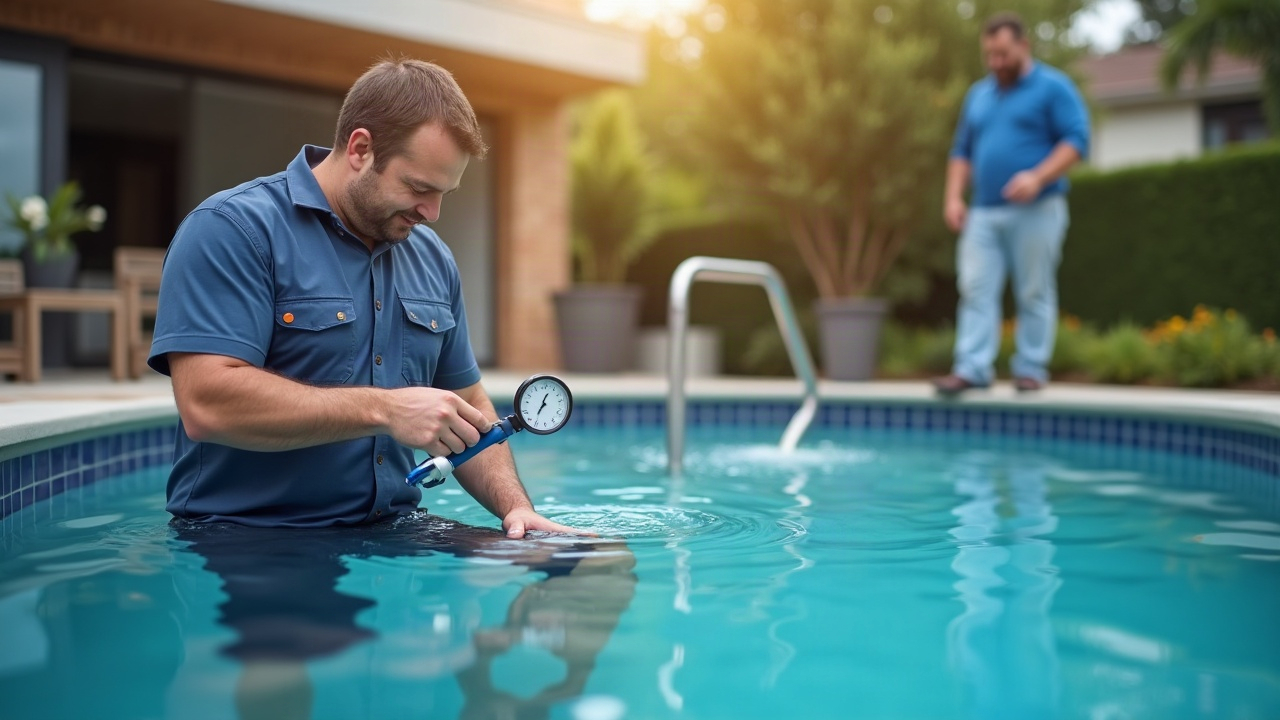
Pool leak detection upsells fail most often because pool service companies treat leak detection as a separate service instead of the first step in a full repair job. You diagnose the leak, send the customer a report, and then wait for them to call you back to schedule the repair. By the time you follow up, they've already hired a plumber who answered in 10 minutes and quoted the whole job on the spot. The repair revenue you earned through skilled diagnosis walks out the door because your front office can't close the loop fast enough.
Why Pool Companies Lose the Repair After Finding the Leak
You lose pool leak repair conversion because there's a gap between diagnosis and commitment. You send the report, the homeowner thanks you, and then they start shopping. They call a plumber. They post in neighborhood Facebook groups. They get three more quotes. The leak you found becomes someone else's $2,400 repair job.
This happens because most pool companies separate leak detection from repair sales. You're thinking like a diagnostics service when you should be thinking like a full-solution provider. The homeowner doesn't want a leak report—they want the leak fixed. When you hand them a diagnosis without immediately transitioning to "here's how we fix it and when we can start," you're inviting competition into a deal you already won.
Here's what most articles won't tell you: The real problem isn't your pricing or your technical skill. It's that your front office—whether that's you, your spouse, or a part-time admin—can't handle the inbound calls fast enough after you leave the property. According to InsideSales.com, response times beyond 5 minutes drop lead conversion by 400%. When a homeowner calls back to schedule the repair or ask a follow-up question and gets voicemail, they move on. Plumbers with live answering teams capture that moment.
The pool service companies winning leak detection upsells treat diagnosis and repair as one continuous conversation. They quote the fix on-site, they book the job before they leave, and they have someone answering every call that comes in after the visit. The leak becomes a sold repair in the same interaction.
What Happens When You Separate Diagnosis from the Sale
When you treat leak detection as a standalone service, you create three revenue killers: delay, doubt, and comparison shopping. The homeowner receives your report, sits on it for a day or two, and starts second-guessing whether the repair is urgent. They wonder if they should get another opinion. They call a plumber friend. Every hour you wait to close the repair is an hour your competitor has to undercut you.
Here's the typical timeline that kills pool leak repair conversion:
- Day 1: You complete the leak detection, send a detailed report, and leave the property feeling confident.
- Day 2: The homeowner shares the report with their spouse, who suggests getting a second quote.
- Day 3: They call a plumber who answers immediately, quotes the job, and offers to start Monday.
- Day 4: You follow up and learn they've already hired someone else.
You did the hard work. You found the problem. But the plumber who answered the phone faster and closed the deal on the first call took the revenue. This isn't a pricing issue—it's a responsiveness and sales process issue.
How to Turn Every Leak Detection Into a Booked Repair Job
To convert pool leak diagnosis into full repair jobs, you need to close the sale before you leave the property and ensure every follow-up call gets answered by a real person within minutes. This requires three changes: on-site quoting, same-visit booking, and a front office that handles all inbound calls without putting anyone to voicemail.
Start quoting the repair while you're still on-site. Walk the homeowner through what you found, explain the fix in plain language, and give them a price before you pack up your equipment. Don't email them later. Don't say "I'll send you a proposal." Quote it now. The decision-making window is open when the problem is fresh and you're standing in front of them.
Once you've quoted the job, book it immediately. Pull out your calendar and schedule the repair. Ask: "I have Tuesday at 9 a.m. or Thursday at 1 p.m.—which works better for you?" Make it easy to say yes. If they hesitate, address the objection on the spot. Price concerns, timing questions, scope clarifications—handle them now, not over email three days later when they've already moved on.
That's where Book All Leads makes the biggest difference. Pool companies lose repair jobs not because they quoted wrong, but because they missed the follow-up call when the homeowner was ready to commit. A full front office team answers every call in under a minute, books the repair while the customer is still interested, and follows up with anyone who asked for time to think. You don't manage software or train systems—you get six roles working 24/7, live in five days, handling everything from first contact to payment collection. No voicemail. No missed revenue.
How to Structure Your Leak Detection Pricing to Include the Repair
Price your leak detection as a diagnostic fee that credits toward the repair if they book with you. For example, charge $250 for the detection and apply that $250 to the total repair cost if they commit the same day. This removes the perception that they're paying twice and gives them an incentive to move forward immediately.
This also filters out price shoppers. Homeowners serious about fixing the leak will see the credit as a deal. Those just gathering free estimates will move on—and you've still been paid for your diagnostic time.
Why Plumbers Win Pool Structural Leak Jobs (and How to Beat Them)
Plumbers win pool plumbing repairs because they're set up to sell immediately. They answer calls fast, they quote on the spot, and they close deals before the customer hangs up. Pool service companies, by contrast, often operate with a service mindset—you're focused on maintenance routes, not sales closing. That hesitation costs you thousands in repair revenue every month.
Plumbing companies also benefit from broader brand recognition for "leak repair." When a homeowner Googles "fix pool plumbing leak," they see plumbers first. When they call their home warranty company, they're directed to a plumber. You have to counteract that by positioning yourself as the pool-specific expert who understands the full system—not just the pipe, but the entire hydraulic network, the deck, the liner, the bond beam.
To win against plumbers, emphasize your pool-specific expertise during the diagnosis. Explain why a pool leak isn't just a plumbing issue—it's a structural, hydraulic, and chemical issue that affects water balance, energy costs, and long-term equipment life. A plumber fixes the pipe. You fix the system. That's your value proposition, and you need to say it out loud during the visit.
Then, back that expertise with speed. The pool company that wins the repair is the one that answers the phone when the homeowner calls back with a question or wants to move forward. If your front office sends that call to voicemail, a plumber with a live answering team will capture it instead. You can calculate your losses from missed calls—it adds up faster than most pool companies realize.
What to Say on the Leak Detection Visit to Close the Repair
Use a three-part close: explain the problem, explain the consequence of waiting, and offer the solution with immediate scheduling. For example:
"Here's what I found—you've got a leak in the return line under the deck. If we don't fix this, you're losing about 2 inches of water a day, which means your pump is running harder to keep up, your chemical balance is off, and you're paying for water you're not using. I can get this fixed for you next Tuesday. I've got a 9 a.m. and a 1 p.m. slot open—which works better?"
That script does three things: it clarifies the problem, it creates urgency without scare tactics, and it makes saying yes easier than saying "let me think about it."

The Follow-Up Problem That Kills Pool Leak Detection Upsells
Even when you quote on-site, some homeowners will still want to "talk to my spouse" or "check my budget." That's fine—but what happens when they call back two hours later and no one answers? According to Vendasta, 67% of customers choose the business that responds first, not the one with the best price. If your front office is your cell phone and you're underwater fixing a pump, that callback goes to voicemail. By the time you surface and call back, they've already booked a plumber.
This is the hidden revenue drain in pool leak detection upsells. You're doing everything right on-site, but your follow-up infrastructure can't support the close. You need live answering, immediate callbacks, and proactive outreach to anyone who expressed interest but didn't book. That's not something you can do from the back of your truck between jobs.
Pool companies that consistently convert leak detection into full repair jobs have a front office team managing inbound calls, scheduling, payment reminders, and follow-up sequences. That team doesn't take days off, doesn't go to lunch, and doesn't let a qualified lead go to voicemail because you're elbows-deep in a filter housing.
How to Package Leak Detection and Repair as One Seamless Service
The most successful pool companies don't sell "leak detection" and "leak repair" as separate line items. They sell "Leak Diagnosis & Repair" as a single package with a clear price structure: pay the diagnostic fee upfront, and if you book the repair, that fee credits toward the total. This eliminates the mental friction of two separate purchases and positions you as the one-stop solution.
Market this package in your outbound messaging. When someone calls asking about a leak, your front office should say: "We'll come out, find the leak, and if you'd like us to fix it, the diagnostic fee applies to the repair. Most leaks we fix the same week." That frames the entire interaction as a path to resolution, not just information gathering.
This also protects your diagnostic revenue. If the homeowner decides not to move forward, you've still been compensated for your time and expertise. If they do book the repair, you've removed a pricing objection and made it easy to say yes.
Should You Offer Free Leak Detection to Win the Repair?
Some pool companies waive the diagnostic fee entirely, betting that the goodwill will win the repair job. This works only if your close rate is high enough to absorb the loss from customers who take the free diagnosis and hire someone else. For most pool service companies, charging a diagnostic fee that credits toward the repair is a better model—it filters out tire-kickers and ensures you're paid for your expertise even if the customer doesn't move forward.
Real-World Example: How One Pool Company Stopped Losing Repairs to Plumbers
A pool service company in Phoenix was completing 20-30 leak detections per month but only converting about 40% into repair jobs. The owner realized the problem wasn't his pricing or his technical skill—it was that he couldn't answer follow-up calls while he was on another job. Homeowners would call back with questions or to book the repair, get voicemail, and move on to a plumber who picked up.
He brought in a front office team to handle all inbound calls, follow-ups, and booking. Within 60 days, his conversion rate jumped to 78%. The leak detections he was already doing turned into $47,000 in additional repair revenue over the next quarter—not from doing more diagnostics, but from closing the ones he was already performing. The change wasn't in his field operations. It was in his front office responsiveness.
That company now quotes every repair on-site, books the job before leaving, and has a team following up with anyone who asked for time to think. They haven't lost a leak repair to a plumber in six months.
What to Track to Improve Your Leak Detection to Repair Conversion Rate
If you want to improve pool leak repair conversion, you need to measure three things: on-site close rate, follow-up response time, and lost-deal reasons. Your on-site close rate is the percentage of leak detections where you book the repair before leaving the property. Track this weekly. If it's below 60%, your on-site sales process needs work.
Follow-up response time measures how quickly your front office returns calls from customers who didn't book on-site. If your average response time is over 5 minutes, you're losing deals to faster competitors. Review your call logs and identify where the delays are happening.
Finally, track why you lose deals. When a homeowner declines the repair or books with someone else, find out why. Was it price? Timing? Did they not understand the urgency? Did they call back and no one answered? This data tells you exactly where to fix your process.
Frequently Asked Questions
How do I price leak detection so it doesn't scare off customers but still covers my time?
Charge a flat diagnostic fee between $200 and $350 depending on your market, and credit that amount toward the repair if they book with you the same day. This covers your time if they don't move forward and removes a pricing objection if they do. Frame it as "the diagnostic fee is $250, and that applies to the total repair cost if we do the work."
What if the homeowner wants to think about the repair quote overnight?
That's fine—but make sure you have a front office team ready to answer when they call back. Most homeowners who say "let me think about it" will make a decision within 24 hours. If they can't reach you during that window, they'll call someone else. Set a follow-up call for the next morning and make sure your team proactively reaches out.
Why do plumbers win pool leak jobs even when we found the problem?
Plumbers win because they answer calls faster and close deals immediately. Pool companies often treat leak detection as a diagnostic service and wait for the customer to call back to book the repair. By the time you follow up, the plumber has already quoted, scheduled, and confirmed the job. Speed and sales process matter more than who found the leak.
Should I quote the repair on-site or send a proposal later?
Always quote on-site. The decision-making window is open when the problem is fresh and you're standing in front of the customer. If you send a proposal later, you're giving them time to shop around, second-guess the urgency, and compare you to competitors who quoted immediately.
How do I explain the repair without overwhelming a non-technical homeowner?
Use the three-part structure: what's broken, what happens if you don't fix it, and how you'll fix it. For example: "Your return line has a crack under the deck. If we don't fix it, you'll keep losing water, your pump will work harder, and your chemicals will stay out of balance. We'll excavate the section, replace the damaged pipe, and pressure-test the whole system. Takes about four hours, and I can start Tuesday."
What's the best way to follow up with customers who didn't book on-site?
Call them the next morning—not three days later. Your front office should proactively reach out, confirm they received the quote, answer any questions, and offer to schedule. The longer you wait, the more likely they've already moved on to another contractor. Immediate follow-up is the difference between winning and losing the repair.
Stop Doing the Hard Work for Someone Else's Payday
Pool leak detection upsells fail when you treat diagnosis and repair as separate transactions. You're finding the problem, handing the customer a report, and hoping they call you back to book the fix. By the time you follow up, a plumber with a faster front office has already closed the deal. The revenue you earned through skilled diagnosis walks away because your sales process can't keep up.
The fix is simple: quote the repair on-site, book the job before you leave, and make sure every follow-up call gets answered by a real person in under a minute. That's how pool companies turn leak detection into consistent repair revenue instead of free consulting for their competitors.
If missed calls and slow follow-up are costing you repair jobs, Book All Leads gives you a full front office team that answers every call, books every job, and follows up with every lead—live in five days, no software to learn, no contracts. Let's turn your leak detections into sold repairs.
John Edmonds is a native Texan and military combat veteran. He founded Book All Leads after identifying a critical gap in the service industry: business owners losing revenue not from lack of skill, but because no one was handling the calls, follow-ups, reviews, and payments while they were busy doing the work.
View LinkedIn Profile →