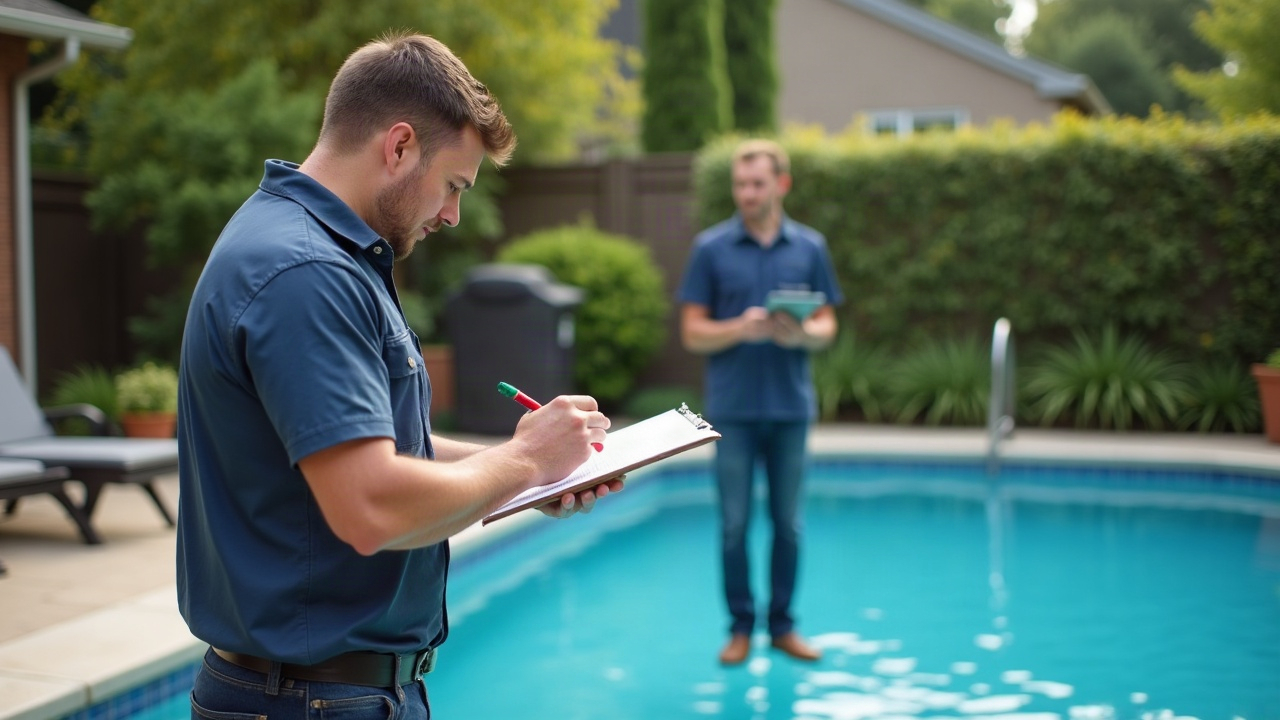
Pool maintenance customer retention collapses in year two because homeowners overestimate their ability to DIY after watching you work for a season, price fatigue sets in without visible value reinforcement, and communication gaps make them feel like just another account number. The fix isn't discounting — it's proactive education about hidden complexities, creating memorable service moments that justify the cost, and maintaining contact frequency that makes switching feel like losing a trusted advisor rather than swapping vendors.
Why Do So Many Pool Companies Lose Customers After the First Year?
The year-two drop-off happens because the initial relationship honeymoon ends and homeowners recalibrate their perception of value. In year one, they're relieved to hand off a confusing responsibility. By year two, they've watched you work dozens of times, the pool hasn't turned green, and they start thinking "I could do this myself for $50 a month in chemicals." According to Harvard Business Review, customer defection rates in service industries average 20-40% annually, with year two representing the highest churn risk as novelty wears off and price sensitivity increases.
Three specific triggers cause year-two churn in pool service:
- Invisibility of expertise: When you prevent problems, customers don't see what they're paying for
- Price comparison shopping: Year-two renewal is when homeowners finally get around to checking what competitors charge
- Life changes: Job loss, retirement, kids moving out — discretionary spending gets scrutinized
- Communication gaps: Monthly visits become routine background noise without engagement
The pool owner who happily paid $150/month in year one suddenly sees that as $1,800 annually when renewal comes up. Without reinforcement of what that money prevents, the relationship becomes transactional. And transactional relationships always go to the lowest bidder.
What Makes Year Two Different From Year One?
Year two is when the psychological contract shifts from "help me" to "prove it." In year one, homeowners are grateful for guidance. They don't know what good pool maintenance looks like, so they trust your judgment. By month 13, they've formed opinions. They've watched YouTube videos. They've talked to neighbors who claim they maintain their own pools "just fine."
Here's what most articles won't tell you: Your year-one customers weren't actually sold on your service — they were sold on not having to figure it out themselves. That's a different value proposition entirely. Once they feel competent (even if they're not), that original value evaporates. You need to transition from "I'll handle this confusing thing" to "I'm protecting your $30,000 asset and your family's health in ways you can't see."
The second-year customer also has context you didn't give them. They know you show up for 15 minutes, test water, add chemicals, and leave. What they don't know is that those 15 minutes represent years of training to spot early equipment failure, seasonal chemistry adjustments that prevent $3,000 resurfacing jobs, and the diagnostic expertise to catch a failing pump seal before it floods their equipment pad.
How Do You Keep Pool Maintenance Customers Without Competing on Price?
You keep year-two customers by making the invisible visible and transforming routine visits into relationship touchpoints that competitors can't replicate. This requires changing three operational elements: what you communicate during service, how often customers hear from you between visits, and what value signals you build into the customer experience.
Start with service visit communication. Every single visit should generate a touchpoint the customer sees. Not an invoice — a value statement. "Adjusted pH from 7.8 to 7.4 to prevent calcium scaling on your tile line" tells a different story than "completed weekly service." The first version teaches. The second is forgettable.
Create a Pre-Renewal Education Sequence
Ninety days before contract renewal, launch a deliberate education campaign. Send a cost comparison showing what DIY actually costs when you factor in testing kits, chemical waste from guessing, and the average homeowner service call rate for issues they create. Include a photo timeline of a neglected pool from a homeowner who "tried it themselves for a summer" — algae bloom, stained plaster, corroded equipment.
This isn't scare tactics. It's reality. Most pool owners drastically underestimate the cost and complexity of proper maintenance. Your job is to remind them what they're avoiding, not just what they're buying.
Why Missing Calls Costs You Renewal Revenue
The customer who can't reach you when their pool pump starts making noise doesn't blame the pump. They blame you. And when renewal time comes, that frustration surfaces as "I'm thinking about handling it myself this year." Book All Leads puts a full front office team on your phones — six roles working around the clock so customers reach a real person every time, not voicemail during your route. When homeowners feel supported between visits, they don't shop around. They renew.
Most pool companies lose customers not because their technical service failed, but because communication failed. The customer called twice about cloudy water, got voicemail both times, figured it out themselves, and started wondering what they're paying for. Every missed call is a micro-abandonment that accumulates into churn.

What Service Delivery Changes Actually Prevent Churn?
Service delivery changes that prevent pool maintenance contract renewals from declining focus on creating memorable moments that break the routine invisibility of good maintenance. You need to engineer 3-4 "I'm so glad I have them" moments per year that justify your cost when the customer mentally audits the relationship.
These moments aren't upsells. They're proactive interventions:
- Before summer heat hits: Call to schedule early filter cleaning and explain how it prevents mid-July breakdowns when every other company is booked out two weeks
- After major weather: Text within 24 hours about storm debris and offer an extra pass if needed
- Before holiday weekends: Confirm the pool is guest-ready and mention you adjusted chemistry for heavier bather load
- At seasonal transitions: Explain the specific chemistry changes you're making and why (winterization, spring opening, summer heat load)
Each intervention reinforces that you're not just showing up — you're thinking ahead on their behalf. That's the value customers will pay to keep.
The Quarterly Pool Report That Stops Price Shopping
Once per quarter, send a report showing exactly what you prevented. Include photos of equipment, water test trends over 12 weeks, chemical costs if they'd done it themselves, and a specific call-out of one problem you caught early. "We noticed your pump motor running hotter than normal in August and recommended bearing replacement. Cost: $180. If it had seized, full motor replacement would have been $850."
This report isn't about bragging. It's about translating invisible expertise into concrete value. The customer who sees documented evidence that you saved them $670 doesn't cancel when renewal comes up. They're too busy feeling relieved they didn't let the contract lapse.
How Do You Rebuild Retention When Churn Is Already High?
When you're already losing 20-30% of customers at year-two renewal, rebuilding pool service retention strategy requires triage. First, identify your at-risk segment: customers who've called with issues that took more than 4 hours to resolve, anyone who's mentioned doing "some of it myself," and every account that's asked for a price adjustment in the past six months.
Call these customers personally — not your office staff, you. Ask one question: "What would make our service valuable enough that you'd never consider switching?" Then listen. Most pool company owners never have this conversation. They just watch customers leave and assume it's price. According to research from Bain & Company, increasing customer retention rates by just 5% can increase profits by 25% to 95%, because retained customers spend more over time and cost nothing to acquire.
What you'll hear isn't "you're too expensive." It's "I called twice last month and didn't hear back until the next day" or "I don't really know what you do besides add chemicals" or "the guy who comes is fine but I never see him — he's in and out before I get home from work."
The Save Offer That Actually Works
When a customer says they're not renewing, don't counter with a discount. Counter with increased service: "I hear you. Let me try something for the next 90 days at the same price. I'll personally call you after every visit to review what we did, I'll send photos of equipment checks, and I'll be available by text if anything comes up. If you don't feel like you're getting more value than you're paying for by the end of the quarter, I'll help you transition to DIY with a full chemical and equipment rundown."
You'll save 60-70% of those customers because the issue was never price. It was feeling ignored. And the ones you don't save were already gone — at least this way you learn exactly why.

What Communication Cadence Keeps Customers Engaged?
The communication cadence that maintains engagement without annoying customers is weekly touchpoints during service visits, monthly value reinforcement between visits, and quarterly educational content. Weekly doesn't mean calling — it means the customer sees evidence you were there. A door hanger with today's test results and what you adjusted. A text with a photo of their clean filter cartridge. Anything that says "we were here, here's what we did."
Monthly touchpoint should teach something. Email or text with a seasonal tip: "July heat increases chlorine consumption by 30% — here's why you might notice us adding more than usual." This positions you as an educator, not just a vendor.
Quarterly, send something more substantial. A cost-of-ownership article comparing DIY vs. professional service. A video walkthrough of what you check during visits that homeowners don't think about. Customer testimonials from long-term clients explaining why they've stayed (let your customers sell for you).
When to Talk About Renewals (Earlier Than You Think)
Start the renewal conversation 120 days before contract end, not 30. At the 120-day mark, send a simple note: "Your annual service renews in February. We'll reach out in December to review the year and discuss any service adjustments for next season." This primes the customer to think about renewal as a given, not a decision point.
At 90 days, send that cost comparison and education content mentioned earlier. At 60 days, call to review the year: "Let's talk about what worked, what didn't, and what you want to see from us next season." At 30 days, send the actual renewal paperwork with a summary of value delivered this year.
This sequence converts renewals from a binary yes/no decision into a collaborative planning process. Customers who feel involved in shaping next year's service don't shop around — they're already mentally committed.
What Role Does Front Office Responsiveness Play in Pool Service Customer Churn Year Two?
Front office responsiveness directly determines whether customers view you as a partner or a vendor. Partners get renewed automatically. Vendors get shopped. When a homeowner calls about cloudy water or a weird pump noise, response time under 2 hours positions you as a partner. Response time over 24 hours positions you as a vendor they pay and tolerate.
The gap between those two scenarios is enormous in retention terms. According to InsideSales.com, response times within the first hour generate 7x higher conversion rates than responses after just two hours. While that study focused on lead conversion, the principle applies to customer service: fast response signals priority, slow response signals "you're one of many."
Most pool service companies can't maintain that response time because the owner is on routes and the office is either unmanned, understaffed, or staffed by someone juggling six other roles. Customers leave voicemails that sit for hours. They text and wait. Eventually they stop reaching out — and when they stop reaching out, the relationship is already over. They just haven't told you yet.
The Hidden Cost of Voicemail
Every call that goes to voicemail costs you more than the immediate frustration. It trains the customer that you're not available. Over 12 months, that customer stops calling with small questions. They Google instead. They ask neighbors. They start solving problems themselves. By month 18, they've mentally transitioned from "my pool guy handles this" to "I handle this and pay someone to show up weekly." That customer won't renew.
You can calculate your losses from missed calls and slow response times — most pool companies drastically underestimate the revenue impact because they only see the customers who cancel, not the gradual disengagement that preceded it.
What's the Biggest Mistake Pool Companies Make With Year-Two Customers?
The biggest mistake is treating year-two renewals as automatic and only engaging when cancellation is imminent. Pool companies spend enormous effort acquiring new customers — door hangers, truck wraps, local advertising — then virtually ignore existing customers between service visits. The assumption is "they'll call if there's a problem." But customer retention doesn't work on problem-based engagement. It works on relationship maintenance.
Year-two customers need deliberate attention specifically because year two is when they're most vulnerable to defection. They're past the "new relationship" phase where goodwill is high. They haven't yet reached the "long-term loyal" phase where switching costs feel prohibitive. They're in the valley where price shopping feels rational and switching feels easy.
Companies that treat year-two customers the same as year-five customers lose them. Year-two customers need re-recruitment: more communication, more education, more value demonstration. Year-five customers need consistency and appreciation. Mixing those strategies is why churn spikes at renewal time.
The "Set It and Forget It" Trap
When you land a new customer, you're attentive. You explain what you're doing. You check in frequently. You ask if they have questions. Then month six hits, they seem happy, and you shift them to autopilot. Weekly service continues, but engagement stops. The customer notices. They go from feeling like a priority to feeling like a route stop.
That transition from attentive to autopilot is where retention breaks. You need a structured engagement plan that doesn't rely on your memory or good intentions. Month 10: send educational content. Month 11: quarterly report. Month 12: personal check-in call. Month 13: renewal conversation starts. Without structure, these touchpoints don't happen, and customers drift.
Frequently Asked Questions
How much does it cost to acquire a new pool maintenance customer versus retaining an existing one?
Acquiring a new pool maintenance customer typically costs $200-400 when you factor in advertising, sales time, and administrative setup. Retaining an existing customer costs nearly nothing if you have proper communication systems in place — mostly just time invested in relationship maintenance. The profit difference is significant: a retained customer who renews for years becomes exponentially more valuable than a one-year customer who churns, because you're not constantly replacing revenue.
Should I offer a discount to keep a customer who says they're canceling?
Only as a last resort, and never lead with it. Most customers who threaten to cancel aren't actually price-shopping — they're signaling that they don't feel valued or don't understand what they're paying for. Try these first: offer increased communication and transparency at the same price, add a quarterly equipment inspection at no charge, or commit to specific response time guarantees. If they're still fixated on price after you've addressed service concerns, they may not be a good long-term fit. Customers you retain with discounts often leave anyway once a competitor undercuts your new lower price.
What's the most effective way to show customers what they're actually paying for?
Photo documentation combined with specific narration. After each visit, send a text or email with photos of their equipment, filter condition, and water test results, along with a one-sentence explanation of what you adjusted and why. "Raised alkalinity from 60 to 90 to stabilize pH and prevent plaster etching" means something. "Completed weekly service" means nothing. Quarterly, send a cost comparison showing chemical costs, equipment catches, and estimated savings from problems prevented. Customers need to see the invisible expertise you provide — your job is to make it visible.
When should I start the renewal conversation?
Start priming for renewal 120 days before contract end with a simple acknowledgment that renewal is coming. Begin active renewal conversations 60-90 days out with a year-in-review discussion. Send actual renewal paperwork 30 days before expiration. This long lead time transforms renewal from a stressful decision into a planning conversation. Customers who are part of the process renew at much higher rates than customers who get surprised with a renewal notice two weeks before their contract ends.
How do I compete with neighbors who offer pool service for half my price?
Don't compete on price — compete on professionalism, reliability, and risk mitigation. Position low-cost competitors as exactly what they are: individuals without insurance, licensing, or business continuity. Ask customers "What happens if your neighbor gets hurt on your property? What happens if he goes on vacation? What happens if he misdiagnoses an equipment issue and causes damage?" Your price includes protection, accountability, and guaranteed service. Their neighbor's price includes none of that. Some customers will still choose cheap — let them go. They're not your ideal long-term customers anyway.
What's the best way to handle customers who want to "try doing it themselves" for a season?
Make it easy and stay friendly. Offer a detailed handoff: show them your testing routine, explain seasonal chemical adjustments, give them your supplier contacts, and tell them to call if they need help. Many will realize within 6-8 weeks that it's harder than it looks and will call you back. The ones who succeed at DIY were going to leave anyway. By being gracious and helpful, you turn a cancellation into a potential future return customer instead of burning a bridge. Some of your best long-term customers are the ones who tried DIY, failed, and came back with new appreciation for what you do.
Stop Losing Customers You Worked Hard to Win
Pool maintenance customer retention in year two isn't about being the cheapest option — it's about being the option customers can't imagine living without. That requires proactive communication, visible value demonstration, and responsiveness that makes customers feel supported between service visits. Most pool companies excel at the technical work and fail at the relationship work. The ones that master both build businesses on retained revenue instead of constantly chasing new customers to replace the ones who left.
If missed calls and slow response times are costing you renewals, Book All Leads puts a full front office team on your phones in five days. No software to learn, no contracts, just live people answering every call and keeping your customers engaged. Because the best customer acquisition strategy is keeping the ones you already have.
John Edmonds is a native Texan and military combat veteran. He founded Book All Leads after identifying a critical gap in the service industry: business owners losing revenue not from lack of skill, but because no one was handling the calls, follow-ups, reviews, and payments while they were busy doing the work.
View LinkedIn Profile →