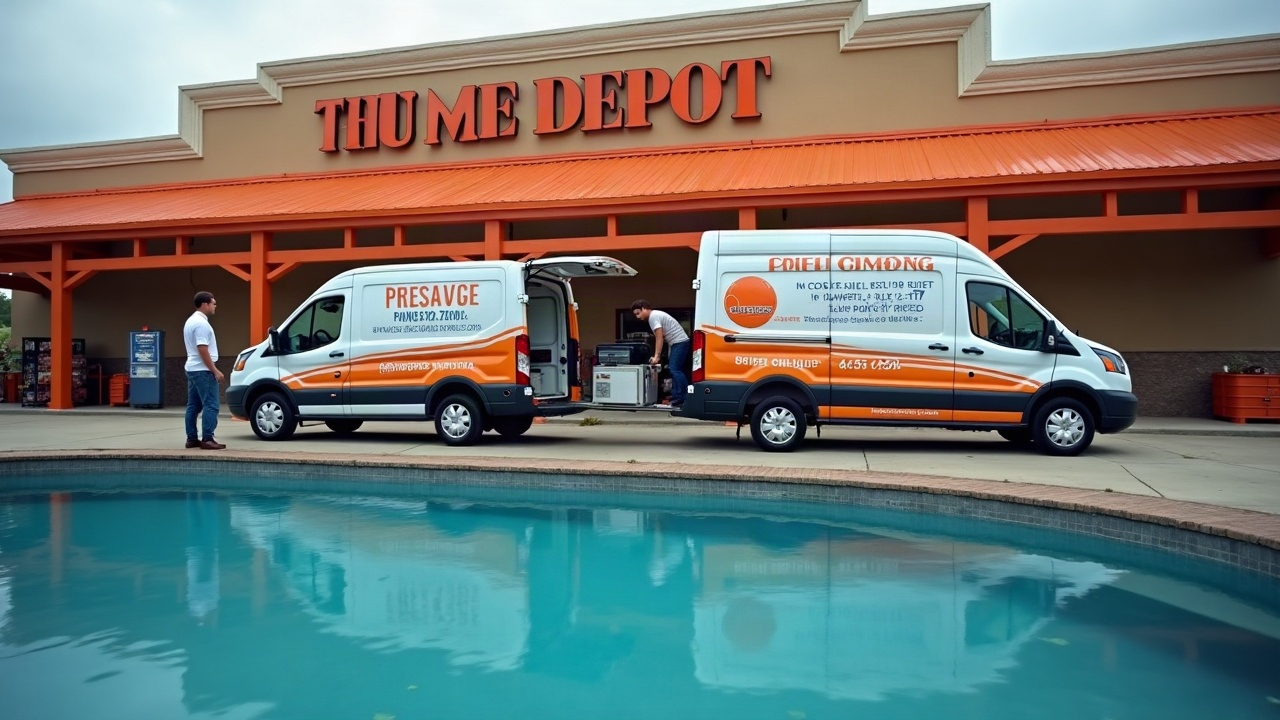
Pool companies lose pump replacement jobs to big box stores primarily because they fail to answer calls quickly and make booking difficult, while Home Depot and Leslie's offer instant in-store service. The typical pool service company misses 30-40% of incoming calls during peak season, and even when they do answer, customers face days of back-and-forth just to schedule a quote. Meanwhile, a homeowner walks into a retail store, buys a pump in 20 minutes, and either installs it themselves or hires the contractor standing in the parking lot.
The Problem: You're Losing $800 Jobs While You're Already on a Job
A homeowner's pool pump dies on a Thursday morning in July. It's 92 degrees, the kids are home from camp, and the pool is turning green. They call three pool companies. Two don't answer. One answers on the fourth ring, says someone will call back with availability, and never does.
By noon, that homeowner is at Leslie's or Home Depot with a new pump. Your phone finally rings back at 4 PM, and you get voicemail. You've just lost an $800-1,200 job that would have taken your tech three hours, including a 40% margin on the equipment.
Here's what most articles won't tell you: Pool pump replacement isn't actually competing with big box stores on price or convenience in the way you think. Homeowners don't prefer retail stores—they prefer certainty. When your pump dies in summer, you need it fixed today, not "maybe Tuesday if we can fit you in." The retailer doesn't offer better service; they offer an answer right now. You're not losing on price. You're losing on response time.
According to InsideSales.com, leads contacted within five minutes are 21 times more likely to convert than those contacted after 30 minutes. In the pool pump replacement business, that window is even tighter because the customer has a car and a credit card, and there's a store 15 minutes away with pumps in stock.
Why Pool Companies Keep Losing Equipment Sales to Retail Stores
Pool service companies lose equipment sales because their front office can't compete with the instant gratification of a retail transaction, even when they offer better value and professional installation. The gap isn't in your technical expertise or pricing—it's in how quickly you respond and how easy you make it to say yes.
Here's what's really happening when you lose these jobs:
Your Best Techs Are Underwater (Literally)
The owner-operator or lead tech is the person who answers the phone, gives quotes, and schedules work. But they're also the person with their hands in a skimmer basket or diagnosing a heater issue. When a pump replacement call comes in at 10 AM, they're knee-deep in a green pool cleanup that's running two hours over. The call goes to voicemail. They'll call back at lunch—except lunch is at 2:30, and by then the customer has already bought from Leslie's.
Callbacks Take Too Long, and Homeowners Make Fast Decisions
Even when you do call back, the typical pool company operates on "schedule a site visit, then provide a quote, then schedule installation" timelines. That's three phone calls and potentially a week of calendar Tetris. The homeowner wanted to swim this weekend. They made a decision in the store parking lot because it was the fastest path to a working pool.
The pool equipment sales competition isn't really about product selection or price. A Variable Speed pump at Leslie's costs roughly the same as what you'd charge for the equipment. But Leslie's makes the transaction happen in 20 minutes. You make it happen in three business days. Urgency wins.
You're Not Capturing After-Hours Leads
Pumps die at night and on weekends. Homeowners Google "pool pump replacement near me" at 8 PM on Saturday, call four companies, and the one that answers—or at least has a human voice and a way to get on the calendar—wins the job. The other three lose it before they even know it existed. By Monday morning, the pump is already installed.
This is where many pool service businesses hit a ceiling on their pool pump installation profit. You have the expertise, the truck, the license, and the supplier relationships. But you're leaving $30,000-50,000 a year in equipment revenue on the table because your front office is actually one exhausted person trying to do six jobs at once.
What Pool Pump Customers Actually Want (And Why Retail Wins on Speed, Not Price)
Homeowners calling about pump replacement want three things: immediate confirmation someone can help, a clear timeline to get their pool running, and a simple path to say yes. Retail stores win because they deliver all three in a single visit, even though professional installation through a pool company is often the better choice.
Here's the disconnect: you assume customers choose big box stores because they're cheaper or more convenient to visit. But interviews with homeowners who bought pumps at retail—then hired a pool tech to install them anyway—reveal a different story. They wanted you. They called you first. But when they couldn't reach you, couldn't get a callback, or faced a multi-day wait just to get a quote, they defaulted to the certainty of a store.
The retail experience isn't better. It's just resolved. The homeowner walks out with a pump, even if they're not sure it's the right model or how to install it. That feeling of forward progress beats waiting for a callback that might not come until tomorrow.
Book All Leads solves this by putting a full front office team between your customers and that moment of frustration. Six roles—live answering, appointment scheduling, follow-up, payment collection, customer service, and admin support—working around the clock to make sure every call is answered, every lead is quoted, and every job is on the calendar before the customer even thinks about driving to a store. No software for you to learn. Live in five days. You stay on the job site; your team handles everything else.
The Fix: How to Win Back High-Margin Equipment Jobs
Winning pump replacement jobs back from retail stores requires answering every call within minutes, quoting fast without requiring a site visit for straightforward replacements, and making it easy to book and pay. Pool companies that implement these changes typically recapture 60-70% of equipment sales they were previously losing.
Answer Every Call in Under 60 Seconds (Even When You're Busy)
This isn't about working harder. It's about having someone whose only job is to answer the phone, qualify the lead, and get the customer onto your calendar. If you're a one-truck or two-truck operation, you cannot do this yourself while you're working. You need a dedicated front office.
When a homeowner calls at 9 AM and a real person answers, gives them confidence you can handle the job, and books a same-day or next-day appointment, the conversation is over. They're not calling anyone else. They're not going to the store. They're waiting for you.
Offer Instant Quotes for Standard Pump Replacements
Most single-speed and variable-speed pump replacements are straightforward if you know the horsepower, plumbing size, and basic setup. Train your front office team (or your answering service) to ask the right questions and provide a quote range on the first call. "Based on what you've told me, you're looking at $800-1,100 installed, and we can have someone there tomorrow at 10 AM."
That's not a bid. It's a ballpark that sets expectations and keeps the customer from walking into a store. Your tech can confirm on-site and adjust if there are complications. But you've just eliminated the "I'll call you back with pricing" delay that kills deals.
Make Booking and Payment Effortless
The homeowner should be able to book an appointment, receive a confirmation, and even prepay or put down a deposit without a second phone call. If your process requires them to "call back to confirm" or "wait for an email," you're adding friction. Retail stores don't have friction. You swipe a card and walk out.
Your front office should handle scheduling, send confirmations via text and email, collect deposits if that's your model, and follow up the day before. The customer should feel like they're working with a well-oiled company, not a guy with a truck.
Extend Your Hours Without Extending Your Day
You don't need to answer calls at 9 PM yourself. But someone should. Homeowners search for help when they discover the problem—not during your business hours. A front office team that covers evenings and weekends captures the leads your competitors are sleeping through. Those after-hours calls often convert at higher rates because the customer's urgency is highest.
Pool companies that implement 24/7 phone coverage report a 25-35% increase in booked jobs simply because they're reachable when the problem happens, not when it's convenient.

Real Numbers: What Losing Equipment Sales Actually Costs You
The average pool service company misses 15-25 pump replacement jobs per year due to slow response times and poor call handling, representing $12,000-30,000 in lost revenue. When you factor in the lifetime value of those customers—who would have called you first for heater replacements, resurfacing, and weekly service—the real cost is multiples higher.
Let's break it down for a typical two-truck pool service operation:
- Average pump replacement job: $800-1,200 including labor
- Gross margin on equipment + labor: 35-45%
- Missed calls during peak season (May-August): 30-40% of inbound calls
- Pump replacement inquiries per season: 40-60 calls
- Jobs lost to big box stores: 15-25 jobs
- Revenue left on the table: $12,000-30,000 per season
That's just equipment sales. According to Bain & Company, increasing customer retention by just 5% can increase profits by 25-95%, because repeat customers spend more and cost less to serve. When you lose a pump replacement job, you're not just losing $1,000 today—you're losing the next five years of that customer calling you first for every pool issue.
Now factor in the pool pump service revenue you never see because that customer becomes a Leslie's regular. They buy chemicals there. They ask the store staff for advice. When their heater dies, they remember that Leslie's solved their problem, and you didn't answer. You've lost the relationship, not just the transaction.
Want to see what this is costing your specific business? Calculate your losses based on your call volume and missed-call rate.
Case Study: How One Pool Company Recaptured $40K in Equipment Sales
A three-truck pool service company in Phoenix was losing equipment jobs every week. The owner knew it was happening—customers would mention they "tried calling last month" when he showed up for a maintenance visit, and he'd see new pumps from Home Depot installed wrong. But he was too buried in day-to-day operations to fix the front office problem.
Here's what changed when they brought in a dedicated team to handle calls and scheduling:
Before: Answering about 60% of calls during peak season. Average callback time was 3-4 hours. Maybe one out of every four pump replacement callers actually booked. The rest went dark.
After: Every call answered live within two rings. Quotes provided on the first call for standard replacements. Appointments booked same-day or next-day. Follow-up texts sent automatically.
In the first season after implementing a full front office team, they booked 42 pump replacement jobs—up from 18 the previous year. That's $40,000+ in equipment revenue they would have lost to retail stores. More importantly, 31 of those customers signed up for ongoing maintenance contracts, adding another $850/month in recurring revenue.
The owner's feedback: "I didn't realize how many jobs I was losing just because I couldn't get to the phone. Now I show up, do the work, and the office handles everything else. It's like doubling my capacity without hiring another truck."

How to Compete When You Can't Beat Big Box Store Hours or Inventory
You compete by making your responsiveness and expertise feel as immediate as a retail transaction, even though you're a service business. Retail stores have inventory and long hours, but they don't have relationships, warranties, or the ability to diagnose whether the pump is actually the problem. You do.
The key is closing the gap between "I need help" and "I'm on your calendar." When that gap is measured in minutes instead of hours or days, you win. Here's how:
Lead With Speed, Then Differentiate With Expertise
Answer fast, book fast, and confirm fast. Once the customer is on your calendar, you have time to explain why a pro installation matters, why the pump they were looking at might not be the right fit, and how your warranty and service relationship protects their investment. But none of that matters if you don't answer the phone.
Offer Same-Day or Next-Day Installation for Premium Pricing
Some customers will pay extra to have it done today. Make that option available. "We can have someone there this afternoon for $1,150 installed, or tomorrow morning for $950." Giving choices makes the customer feel in control, and the urgency premium captures the highest-intent buyers who would otherwise walk into a store.
Bundle Equipment Sales With Service Contracts
Retail stores sell a pump. You sell a pump plus peace of mind. "When we install your new pump, you're automatically covered under our 90-day labor warranty, and if you sign up for monthly maintenance, we'll extend that to a year and give you priority scheduling." That's a value proposition Home Depot can't touch.
Follow Up With Every Lead, Even the Ones Who Said No
If a customer called, got a quote, and didn't book, follow up the next day. "Hi, this is Sarah from ABC Pool Service—just wanted to check if you had any other questions about the pump replacement we discussed yesterday. We actually have an opening this afternoon if you'd like to move forward."
A shocking number of "lost" leads are just delayed decisions. The customer is comparing options, checking their budget, or waiting for their spouse to weigh in. A friendly follow-up often closes the deal. Retail stores don't follow up. You can.
Common Mistakes Pool Companies Make When Competing for Equipment Sales
Even pool companies that recognize the problem often make critical mistakes that keep them losing to retail. These missteps are fixable, but only if you know where you're going wrong.
Assuming Customers Will Wait Because You're "Worth It"
Your expertise and service quality matter, but not if the customer has already solved the problem somewhere else before you call back. You're not competing on value—you're competing on response time. The best pool tech in the city still loses to Leslie's if he doesn't answer the phone.
Requiring a Site Visit for Every Equipment Quote
Site visits make sense for complex diagnostics or custom installations. But for a straightforward 1.5 HP pump replacement on standard plumbing, you can quote over the phone. Requiring an in-person visit adds delay, and delay is what sends customers to retail. Save the site visit for closing the deal, not qualifying it.
Not Tracking Where Leads Come From or Why They Didn't Book
Most pool companies have no idea how many equipment calls they're actually getting, how many they're missing, or why customers didn't move forward. Without tracking, you're flying blind. Start logging every inbound call, every quote given, and every outcome. You'll quickly see patterns—and you'll see how much revenue is slipping away.
FAQ: Pool Pump Replacement Business
Why do customers choose big box stores over local pool companies for pump replacements?
Customers choose big box stores primarily because of immediate availability and certainty, not price. When a pump dies, homeowners want a solution today—and if a pool company doesn't answer the phone or can't schedule quickly, the customer defaults to a store where they can walk out with a pump in 20 minutes. Most would prefer professional installation, but speed wins when service companies are slow to respond.
How much profit do pool companies lose by missing equipment sales calls?
The average pool service company loses $12,000-30,000 per season in pump replacement revenue alone due to missed calls and slow response times. That doesn't include the lifetime value of those customers, who would have returned for maintenance, repairs, and future equipment upgrades. Over five years, a single lost pump customer can represent $3,000-5,000 in total lost revenue.
Can a small pool company compete with Leslie's or Home Depot on equipment sales?
Yes, but not on inventory or store hours—you compete on response time, expertise, and service. If you answer every call within minutes, provide quotes on the first call, and book same-day or next-day installation, you win. Homeowners prefer working with a trusted local pro; they only go to retail when the pro is unreachable or too slow to respond.
What's the fastest way to stop losing pump replacement jobs to retail stores?
Answer every call live, within 60 seconds, and provide a quote and appointment slot on the first call. The biggest reason pool companies lose equipment sales is slow response time. When you eliminate that delay, you capture 60-70% of the jobs that were previously going to big box stores.
Should pool companies offer instant quotes for pump replacements over the phone?
Yes, for standard replacements. If you have enough information to ballpark the job—horsepower, plumbing size, basic setup—give a quote range on the first call. You can confirm and adjust when your tech arrives. Instant quotes eliminate the delay that sends customers to retail stores, and most homeowners appreciate the transparency.
How do I track how many equipment sales I'm losing to poor call handling?
Start by logging every inbound call, where it came from, whether it was answered, and the outcome (quote given, job booked, no answer, etc.). If you're missing 30-40% of calls or taking hours to call back, you're losing a significant portion of your equipment sales. Call tracking reveals the revenue gap and justifies investing in a front office solution.
Stop Losing Equipment Revenue to Stores That Don't Care About Your Customers
The pool pump replacement business should be a reliable revenue stream for your company, not a giveaway to big box retailers. You have the expertise, the relationships, and the ability to deliver better outcomes than a DIY install from Home Depot. What you're missing is a front office that can compete with the speed and convenience of a retail transaction.
Every call you miss, every callback that takes three hours, and every customer who can't get on your calendar this week is a job walking out the door. You're not losing on price. You're losing on responsiveness. And that's fixable.
If you're tired of watching equipment revenue go to Leslie's while you're on a job site, it's time to build a front office that answers every call, books every job, and follows up with every lead. Book All Leads puts a full team in place—live answering, scheduling, follow-up, payments, and customer service—working 24/7 so you never lose another job to slow response times. No software to learn. Live in five days. No contracts. Just more jobs booked and more revenue captured.
Your customers are calling. Make sure someone's there to answer.
John Edmonds is a native Texan and military combat veteran. He founded Book All Leads after identifying a critical gap in the service industry: business owners losing revenue not from lack of skill, but because no one was handling the calls, follow-ups, reviews, and payments while they were busy doing the work.
View LinkedIn Profile →