
Pool retail walk-in leads are customers who visit your store for chemicals, equipment, or advice—and represent your best opportunity to sell recurring service contracts. Most pool companies lose 60–70% of this conversion potential because retail staff are trained to ring up products, not qualify service needs or follow up consistently. The gap isn't product knowledge—it's front desk execution and persistent follow-through after the customer leaves.
The Problem: Your Retail Counter Is a Lead Graveyard
Walk into most pool retail stores during peak season and you'll see the same scene: customers lined up with buckets of water for testing, armfuls of chlorine, or questions about a green pool. Staff are moving fast—testing water, recommending products, ringing sales. What you won't see is anyone asking qualifying questions, capturing contact details with permission to follow up, or scheduling service estimates.
The customer who just spent $200 on shock treatment because their pool turned green overnight? They needed a service contract three weeks ago. The homeowner buying their third robotic cleaner in two years because they can't keep up with maintenance? Perfect service prospect. The new construction walk-in asking about startup chemicals? They don't even have a regular service provider yet.
These aren't cold leads. They're pre-qualified, motivated buyers standing in your store—and you're letting them walk out with a bag of chemicals instead of a service agreement.
Here's what most articles won't tell you: The issue isn't that your retail staff don't care about service sales. It's that they're structurally positioned to fail. When you're three-deep at the counter during Saturday rush, you physically cannot deliver great retail service AND conduct proper service qualification AND log leads AND make follow-up calls. Retail operations and service lead development require different workflows, different priorities, and different people. Trying to bolt service sales onto your retail counter is like asking your route techs to also handle your bookkeeping—it's a category error, not a training gap.
Why Pool Store Customer Conversion Fails (Even With Good Staff)
Pool store customer conversion fails because retail transactions and service sales operate on incompatible timelines. A retail sale closes in 4 minutes. A service contract typically requires 2–3 touches over 7–14 days. Your counter staff are optimized—correctly—for transaction speed, not for the patient qualification and persistent follow-up that service sales demand.
Here's what breaks down in the typical pool retail environment:
- No consistent lead capture: You might have a signup sheet or a fishbowl for business cards, but there's no process ensuring every service-eligible customer is logged with contact info and service need.
- Zero follow-up infrastructure: Even when staff write down a name and number, who calls them? When? What's the script? Most retailers have no answer.
- Retail metrics conflict with service goals: Counter staff are measured on transaction speed and product sales, not on qualified leads generated or service contracts closed 10 days later.
- Peak traffic = worst conversion: Your busiest retail days (Saturday mornings, pre-holiday weekends) are when you're least able to have meaningful service conversations.
According to InsideSales.com, leads contacted within 5 minutes are 21 times more likely to convert than those contacted after 30 minutes. But in pool retail, "follow-up" often means someone finds a sticky note with a phone number three days later—if it happens at all. The speed advantage of face-to-face contact is completely wasted without immediate capture and structured follow-through.
What Retail Walk-Ins Actually Need (That Your Counter Can't Provide)
When a potential service customer walks into your retail store, they need three things your transaction-focused counter isn't set up to deliver: unhurried qualification of their actual service needs, education on service options versus DIY cost-benefit, and scheduled next steps with clear ownership. These conversations take 8–12 minutes and shouldn't happen while five people are waiting to check out.
The homeowner buying algaecide every week doesn't need better algaecide—they need someone to ask why their pool keeps turning green, explain what weekly service actually costs versus their current chemical spend, and schedule a free water quality assessment. That's not a retail transaction. That's a consultative sales conversation.
Between the initial store visit and a signed service contract, most customers need:
- A follow-up call within 24 hours while their problem is still top-of-mind
- A scheduled on-site visit to assess their specific pool and quote accurately
- A second follow-up call after the estimate to answer questions and close
- Persistence through 2–3 contact attempts if they don't answer immediately
This is where pool retail to service conversion dies. Your retail staff did their job—they were friendly, they solved the immediate product need, maybe they even mentioned that you offer service. But nobody owns the lead after the customer leaves, so nothing happens.
The Front Desk Gap
Most pool companies don't have a pool store front desk function in the service-sales sense—they have a retail counter. The difference matters. A front desk exists to qualify leads, schedule appointments, and manage follow-up. A retail counter exists to complete transactions quickly. Asking your retail counter to also function as your service sales front desk is why walk-in service leads disappear.
What changes when you separate these functions? Every service-eligible walk-in gets logged in real time. A dedicated team calls them within 2 hours, not 2 days. Follow-up happens on a schedule, not when someone remembers. Your retail counter stays focused on retail speed, and your service pipeline actually fills.
This is exactly what Book All Leads handles for pool companies with retail locations. We act as your dedicated front office team—capturing every walk-in lead your counter identifies, making the first follow-up call while the customer's still thinking about their pool problem, scheduling service estimates, and staying on leads until they convert or clearly decline. Your retail staff keep moving customers through the line quickly, and we handle everything that needs to happen afterward. No software for you to learn, no hiring, live in 5 days.
The Real Cost of Lost Pool Retail Walk-In Leads
Lost pool retail walk-in leads cost you more than missed service contracts—they cost you the highest-value customers in your pipeline. According to Bain & Company, acquiring a new customer costs 5–25 times more than converting an existing one. Walk-ins are neither cold leads nor existing customers—they're the perfect middle ground: pre-qualified, already trust your brand enough to visit, and demonstrating active need.
Let's calculate what you're actually losing. A typical pool retail store in a decent market sees 40–80 service-eligible walk-ins per week during season—customers with maintenance problems, water quality issues, equipment questions, or new pools. If your conversion rate on these walk-ins is 5% (typical without structured follow-up), you're closing 2–4 service contracts per week from retail traffic.
Now assume you implement proper lead capture and follow-up and increase conversion to 20% (conservative for warm leads with structured contact). You're now closing 8–16 contracts per week. At an average monthly service contract value of $150, that's an additional $7,200–$14,400 in new monthly recurring revenue—from leads you were already getting but losing.
Over a six-month season, that's $43,200–$86,400 in contracts you would have written if you'd just captured and followed up on walk-ins you were already talking to. Want to calculate your losses based on your actual traffic?

How to Turn Browser Traffic Into Pool Retail Service Sales
To turn browser traffic into pool retail service sales, you need three separate functions: immediate lead identification at the counter, same-day first contact with a service focus, and persistent follow-up over 7–14 days. These cannot be the same person doing the same job—they require different training, different tools, and different time allocation.
Step 1: Train Your Retail Counter to Identify, Not Close
Your retail staff shouldn't be expected to sell service contracts while ringing up chemicals. Their job is simpler: identify service-eligible customers and capture their information with permission to follow up. This takes 30 seconds, not 10 minutes.
"I see you're dealing with algae every week—we have a service team that handles this. Would it be okay if someone called you this afternoon to talk about what weekly service would look like?"
Get the name, number, and brief note about the issue. That's it. The retail transaction continues at normal speed, and the customer leaves feeling helped, not sold.
Step 2: Make First Contact Within 2 Hours
The second the customer walks out your door, your window is closing. They'll stop at another pool store. They'll Google "pool service near me." They'll decide to try one more chemical fix themselves. If you wait until Monday to call weekend walk-ins, you've lost them.
First contact should come from someone whose only job is service sales—not a retail employee calling between customers, not a route tech calling between stops. This call qualifies the need, educates on service options, and books an on-site estimate.
Step 3: Follow Up Until You Get a Clear Yes or No
Most service leads require 2–4 contact attempts before you reach them. Most pool companies give up after one. The difference between a 5% conversion rate and a 20% conversion rate is usually just persistence—calling at different times of day, leaving specific messages, texting when calls don't connect.
After the estimate, you need another follow-up call within 48 hours. After that, another check-in at the 7-day mark if they're still considering. This isn't pushy—it's professional. People are busy. Following up is doing them a favor.
Real Example: How One Pool Store Recovered $64K in Walk-In Revenue
A pool retailer in suburban Phoenix was seeing about 60 service-eligible walk-ins per week during peak season—homeowners with chronic algae, broken equipment, or new pools. Retail staff were friendly and knowledgeable, but service conversion from walk-ins was essentially zero. They had a clipboard for collecting contact info, but nobody called the leads.
The owner knew the opportunity was there. He'd tried assigning follow-up to his service manager, but it never happened consistently—the manager was handling route scheduling, tech issues, and existing customer problems. Walk-in leads were always the lowest priority.
They implemented a dedicated front office function to handle walk-in lead follow-up. Every service-eligible walk-in identified by retail staff was logged immediately. First contact happened within 90 minutes during business hours. Follow-up was persistent—three attempts over 10 days if needed.
In the first 90 days, they converted 18% of logged walk-in leads into service contracts. That's 11 new contracts per week, averaging $165/month. After six months, those walk-in conversions represented $64,000 in new monthly recurring revenue—from traffic they were already getting but had been leaving on the table.
The owner's takeaway: "We were so focused on being good at retail that we didn't realize we were terrible at lead conversion. The same customers were coming in every week buying more chemicals, and we never asked the obvious question: 'Why are you doing this yourself?' We left a year's worth of service revenue sitting on our counter."
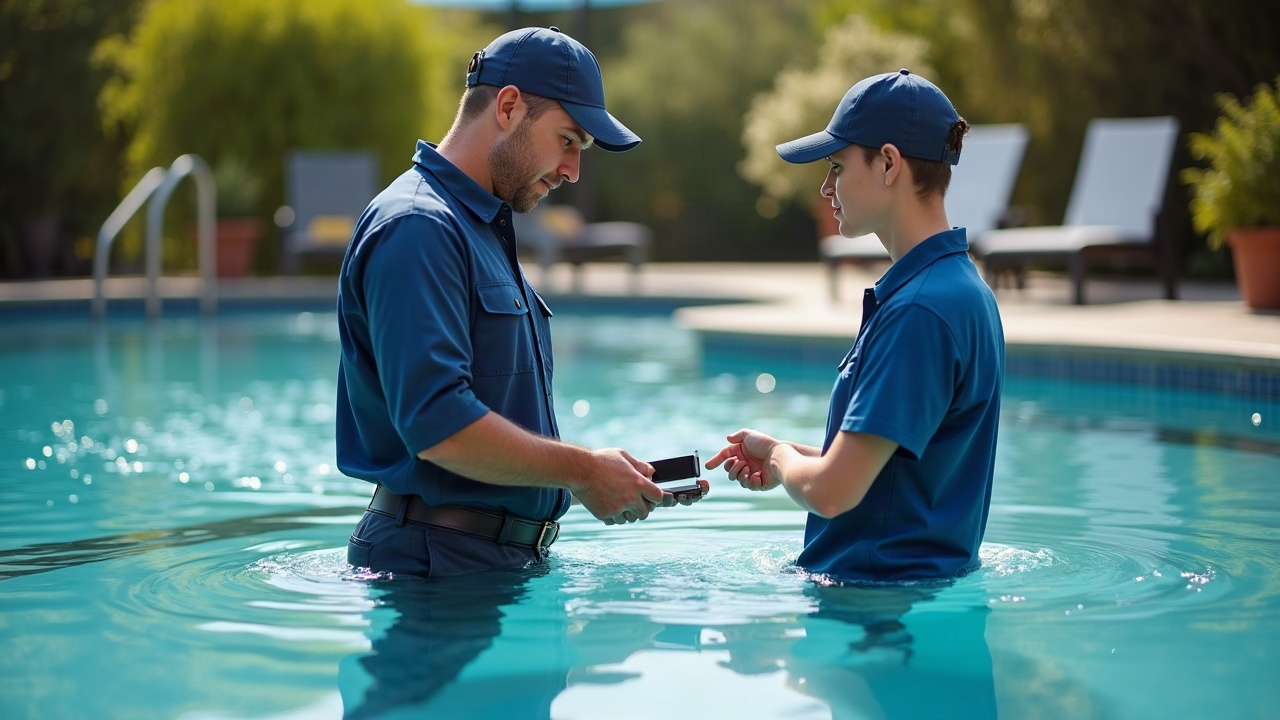
What Great Pool Store Front Desk Execution Actually Looks Like
Great pool store front desk execution is invisible to your retail customers and seamless for your staff. The retail transaction happens at normal speed with normal friendliness. The service lead gets logged in real-time. The follow-up call happens within hours, not days. The customer never feels handed off or forgotten because every touch is professional, helpful, and expected.
Here's what it looks like in practice:
A homeowner walks in Saturday morning with a water sample. The pool's cloudy and they're hosting a party next weekend. Your retail associate tests the water, recommends the chemical fix, and asks: "Are you handling the maintenance yourself, or do you have a service?" Customer says they do it themselves but it's getting overwhelming. Associate says, "We have a service team that handles this—would it be helpful if someone called you today to talk about what that looks like?" Customer says yes. Associate gets name, number, and best time to call. Transaction completes normally.
Two hours later, your front office team calls. They already know the context—cloudy pool, party next week, feeling overwhelmed. They explain what weekly service includes, what it costs, and offer to send a tech Monday to assess the pool and give an exact quote. Appointment books. Monday the tech visits, quotes $140/month for weekly service. Tech texts the quote that evening. Wednesday your front office follows up: "Did you have any questions about the quote we sent?" Customer has one clarification. Front office answers it. Customer signs up.
That's a conversion that never would have happened with just a clipboard at the counter. The retail staff did their part—the front office did theirs. For more details on how this works in practice, visit our services page.
Why This Fails When You Try to DIY It
Most pool company owners understand the opportunity and try to build this in-house. They create a lead form. They assign someone to make calls. It works for two weeks, then collapses. Why?
Because follow-up only happens consistently when it's someone's only job and they're held accountable daily. When it's one of five responsibilities for a service manager or office admin, it's always the thing that gets pushed to tomorrow. When a retail employee is supposed to call leads between helping counter customers, it never happens during busy periods—which is exactly when you're generating the most leads.
The other issue is skill mismatch. Great retail employees aren't necessarily great at phone sales. Great route techs aren't necessarily great at consultative selling. Lead follow-up and service sales closing is a specific skill set that requires practice, coaching, and focus.
This is why outsourcing front office functions works for so many pool companies. You get people whose only job is converting your leads, with management and accountability already built in. You don't have to hire, train, or supervise. It just happens. Check our pricing to see what this costs compared to hiring internally.
Frequently Asked Questions
How do I get my retail staff to actually capture walk-in leads without slowing down transactions?
Keep it to one question and 20 seconds of information capture. Train staff to listen for trigger phrases—"I can't keep up with this," "my pool's always green," "I just moved in"—and simply ask permission to have someone call. Use a tablet or simple form at the register to log name, number, and issue. The key is making it part of the checkout flow, not a separate conversation that holds up the line.
What's a realistic conversion rate on pool retail walk-in leads?
With no structured follow-up, most pool stores convert under 5% of service-eligible walk-ins. With same-day contact and persistent follow-up, 15–25% is achievable. The difference is almost entirely about speed of first contact and number of follow-up attempts. Walk-ins are warm leads—they already trust you enough to visit your store—so conversion rates should be significantly higher than cold outbound leads.
Should my retail staff be compensated for service leads they identify?
Yes, but structure it carefully. A small spiff per lead that converts ($25–$50) works better than a percentage of contract value, because it rewards the behavior you want (identification and capture) without creating commission competition that slows down retail operations. The goal is to make lead identification feel like helpful customer service, not like they're supposed to become salespeople.
How long should we keep following up on a walk-in lead before giving up?
Three contact attempts over 10–14 days is standard for a lead that never answers. If they answer but say they're still thinking, check back at 7 days and again at 30 days. Many service sales happen on the second or third follow-up because the customer's situation changes—the pool gets worse, they host an event, or they finally have time to think about it. The only time to stop is when they clearly decline or ask you not to call again.
What if walk-ins don't want to give their phone number?
Frame it as helping them, not selling to them: "I'd love to have someone call you with some options—we see this problem a lot and there are usually a few ways to handle it." If they still decline, respect it and give them a card or brochure. But most customers are fine giving their number if you're genuinely offering help, not making them feel cornered into a sales pitch.
Can retail walk-in leads really generate that much service revenue?
Absolutely, because they're already pre-qualified and local. A store seeing 50 service-eligible walk-ins per week at 20% conversion is 10 new contracts weekly. At $150/month average, that's $1,500 in new MRR every week, or $6,000/month. After six months, those walk-in conversions alone could represent $36,000 in MRR. The leads are already coming through your door—you're just currently letting them leave without follow-up.
Stop Losing Your Best Leads at the Counter
Your retail walk-in traffic represents the highest-intent, lowest-cost service leads you'll ever generate. They're already local, already trust you, and already demonstrating active need. The only thing standing between your current conversion rate and 3–4x higher is consistent lead capture and professional follow-up.
You don't need better retail staff. You need a dedicated front office function that treats pool retail walk-in leads like the revenue opportunity they actually are—with same-day contact, persistent follow-up, and accountability for conversion outcomes.
Book All Leads builds and runs this entire function for you. We're your front desk team—capturing leads from your retail counter, making first contact within hours, booking service estimates, and following up until leads convert or clearly decline. No software to learn, no staff to hire. Live in 5 days, no contracts. See how it works.
John Edmonds is a native Texan and military combat veteran. He founded Book All Leads after identifying a critical gap in the service industry: business owners losing revenue not from lack of skill, but because no one was handling the calls, follow-ups, reviews, and payments while they were busy doing the work.
View LinkedIn Profile →