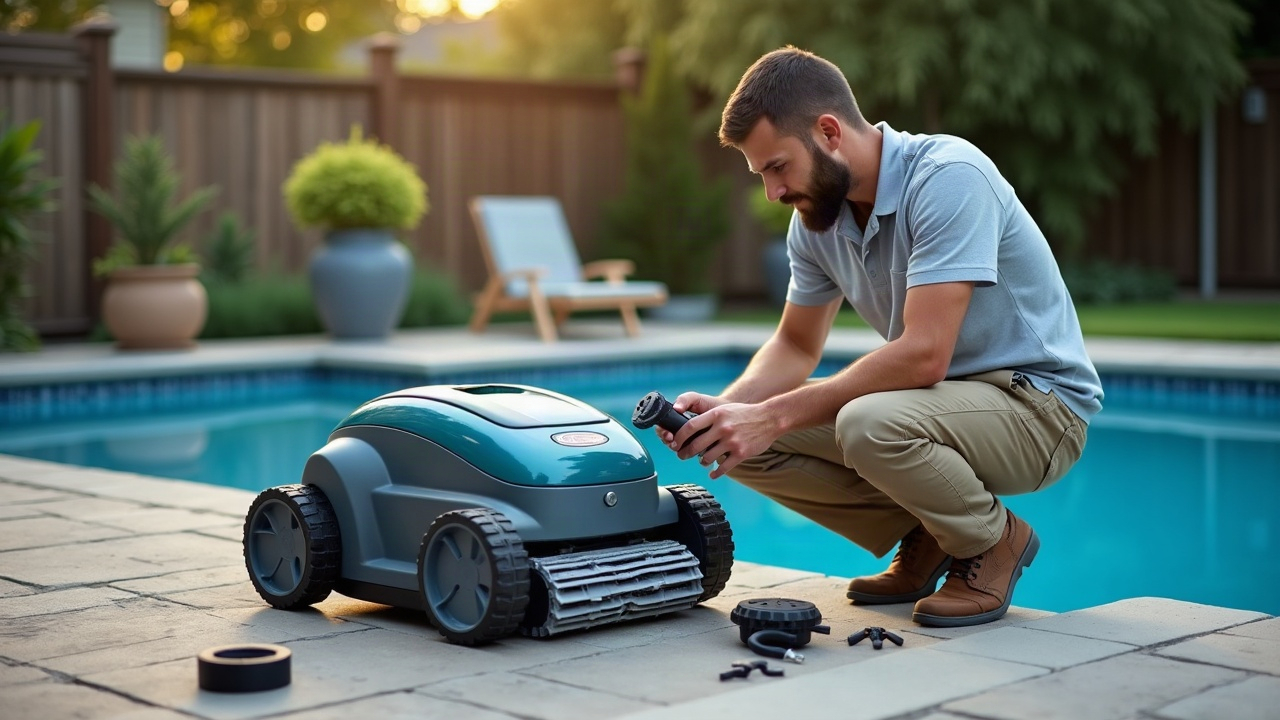
Pool robot repair leads are slipping through your fingers because homeowners can't reach you when their Dolphin or Polaris breaks down — so they drive straight to Leslie's or call a retail store that answers on the first ring. Local pool companies lose thousands in high-margin repair revenue every season, not because they lack the skills to fix robotic pool cleaners, but because they're too busy servicing pools to answer phones during peak breakdown hours. The businesses winning this market have dedicated front office teams capturing calls the moment frustrated homeowners realize their $1,200 robot just died two weeks into summer.
The Problem: Homeowners Take Broken Robots to Retail Because You Don't Answer
When a Dolphin Nautilus or Polaris 9650iQ stops working mid-June, homeowners panic. They paid over a thousand dollars for that machine, their pool's turning green, and they need help today. They google "Dolphin repair near me" or "Polaris cleaner service," call three local pool companies, get two voicemails and one "we'll call you back," then drive to the nearest Leslie's Pool Supplies before lunch.
That retail store doesn't do the repair better than you. They don't have better techs. But they answered the phone, quoted a diagnostic fee on the spot, and booked the customer for a Thursday drop-off while the homeowner was still standing in their backyard staring at the broken robot.
Here's what most articles won't tell you: The robotic pool cleaner repair market is one of the highest-margin niches in pool service, with diagnostic fees ranging from $85 to $150 and average repair tickets between $250 and $450 according to industry data from pool service operators. Parts markup runs 40-60%, labor rates hit $95-$125 per hour in most markets, and the work is indoor, clean, and schedulable. Yet most local pool companies treat robot repair as a side service they'll "get to when they can" instead of a dedicated revenue stream worth capturing aggressively.
The missed opportunity is staggering. According to the Bureau of Labor Statistics, employment in pool maintenance and service continues to grow at 6% annually, but the real action isn't in weekly cleaning contracts anymore — it's in premium services like equipment repair and automation upgrades where customers pay immediately and margins exceed 50%. Robotic pool vacuum repair customers represent exactly that opportunity: they own expensive equipment, they're willing to pay for expert service, and they need help right now.
Why Local Pool Companies Keep Losing Robotic Pool Cleaner Repair Calls
You're losing pool robot repair leads because your best techs are waist-deep in pool filters from 7 a.m. to 6 p.m., and nobody's managing the phone with the urgency this market demands. When a homeowner calls about a broken Dolphin, they've already decided to spend money today — the only question is who gets it.
Three patterns kill your capture rate:
- Voicemail during business hours: You're on a job, your phone's in the truck, and the customer moves to the next search result in under two minutes
- "I'll call you back" without booking immediately: The customer keeps calling other companies while waiting, and whoever calls back first wins
- No after-hours coverage: Homeowners discover broken robots on Saturday mornings and Sunday afternoons — retail stores have weekend staff answering phones; you don't
According to research from InsideSales.com, the odds of qualifying a lead decrease by 400% if you wait more than 5 minutes to respond, and by 900% if you wait more than 10 minutes. In the pool robot repair market, those windows are even tighter — homeowners call multiple providers simultaneously and book with whoever answers first, not who called back eventually.
The retail stores winning your customers aren't better at marketing. They're just answering calls while you're working.
What Makes Pool Robot Repair Different from Other Service Calls
Robotic pool cleaner repair leads convert differently than weekly service inquiries because the customer is already sold — they own a premium product, it's broken, and they're looking for a qualified repair tech, not shopping around for the cheapest option. This is a distress purchase with a short decision window and high willingness to pay.
The customer journey looks like this: The homeowner pulls their Dolphin or Polaris out of the pool, realizes it's not moving, checks the power supply and filter bag, then immediately searches for repair help. They're not researching for three weeks or collecting five estimates. They want someone who sounds confident, can explain what's probably wrong, and can give them a firm appointment within 3-5 days.
That first call is everything. If your front office can't answer basic diagnostic questions ("Is the power supply light on?" "Does the impeller spin freely?" "How old is the unit?"), quote a ballpark diagnostic fee, and book the appointment before hanging up, you've lost to someone who can.
Why Dolphin and Polaris Owners Pay More Willingly
Customers who bought premium robotic cleaners have already self-selected as homeowners willing to invest in pool convenience. Research from Forrester Research shows that customers who purchase premium home service equipment are 3.2 times more likely to pay for professional repair over DIY alternatives, and they exhibit 40% higher lifetime value than price-sensitive buyers. A homeowner who spent $1,400 on a Dolphin Nautilus CC Plus isn't driving to Harbor Freight for a $12 impeller replacement — they're calling a pro.
This is the customer you want: decisive, willing to pay fair rates, and looking for expertise. But only if you can capture the call.
How to Capture Pool Robot Repair Leads Before Retail Stores Do
Winning the pool robot repair market requires a front office that treats every inbound call like the time-sensitive opportunity it is — answering immediately, qualifying the repair, quoting fees confidently, and booking the job before the customer hangs up. Most pool companies can't do this themselves because their best people are in the field, so they either miss the calls entirely or handle them so slowly the customer books elsewhere.
The fix isn't hiring a receptionist who sits idle between calls. The fix is a dedicated team that handles your phones, booking, follow-up, and payment collection as if they worked in your office — because functionally, they do. That's where a service like Book All Leads makes sense for pool companies serious about capturing repair revenue. You get six front office roles working around the clock: someone answers every call live, qualifies the repair type, books the appointment into your calendar, sends confirmations, and collects payment when the job's done. No software for you to learn, no hiring, live in five days.
It's not about technology. It's about having people who answer when your customers call.
The Real-World Impact: What Happens When You Capture Robot Repair Calls
Consider Jake, who runs a two-truck pool service operation in Scottsdale. He'd been doing weekly maintenance for twelve years, occasionally fixing a Polaris when a loyal customer asked, but never marketed repair services because he was too busy to answer calls consistently. Last June, a homeowner called about a broken Dolphin Premier while Jake was backwashing a DE filter. Voicemail. The customer called two more local companies, got one voicemail and one "we'll get back to you," then drove to a retail location that diagnosed a failed motor block and charged $340 for the repair.
Jake didn't even know the call happened until he checked messages that evening.
After switching to a dedicated front office team in March, Jake's business captured 37 robot repair calls in the first 90 days — every single one answered live, qualified, and booked. Average ticket: $385. Total new revenue: $14,245 in a quarter, from a service line he used to treat as "whenever I have time." The jobs took 60-90 minutes each, parts were ordered same-day from his supplier, and homeowners paid immediately because the front office collected payment details when booking and processed cards the day of service.
The work didn't change. The capture rate did.

What to Say When a Pool Robot Repair Call Comes In
When someone calls about a broken Dolphin or Polaris, your front office needs to sound like they've handled a hundred of these calls — not like they're reading from a script. The goal is to qualify the issue, set expectations, quote fees, and book the appointment in under four minutes.
Here's the structure that converts:
- Confirm the brand and model: "Is it a Dolphin or Polaris? Do you know the model number — it's usually on a sticker near the power supply?"
- Ask diagnostic questions: "Is the power supply light on? Does the unit make any noise when you plug it in? How old is it?"
- Explain the process: "We charge a $95 diagnostic fee, which covers the inspection and estimate. If you approve the repair, that fee applies to the total. Most repairs run between $200 and $450 depending on parts."
- Book immediately: "We have availability Thursday afternoon or Friday morning. Which works better for you?"
- Confirm and collect: "Perfect. I'm booking you for Thursday at 2 p.m. We'll need a card on file for the diagnostic fee — the tech will process it after the inspection. Can I grab that now?"
Notice what's missing: "We'll call you back." "Let me check with the owner." "I'm not sure." Any version of hesitation sends the customer to the next search result.
How to Handle "Can You Just Tell Me What's Wrong Over the Phone?"
Homeowners want free diagnostics. You can't give them away, but you can't sound dismissive either. The answer is, "I can give you a few things to check, but if those don't solve it, you'll need an in-person diagnostic to pinpoint the issue and get an accurate estimate. Let's try the easy stuff first — is the power supply light on solid, blinking, or off completely?"
Walk them through filter bag cleaning, cable inspection, and impeller blockage. If the problem's simple, you've built trust. If it's not, you've demonstrated expertise and the diagnostic fee now feels reasonable. Either way, you've captured the relationship before a competitor had a chance.
The Numbers: What Pool Robot Repair Revenue Actually Looks Like
Most pool service owners underestimate how much revenue robotic cleaner repair can generate because they think of it as occasional side work, not a dedicated service line. The math changes when you capture every call.
| Metric | Conservative Estimate | Aggressive Capture |
|---|---|---|
| Inbound repair calls per month (May–Sept) | 8 | 18 |
| Conversion rate (call to booked job) | 60% | 85% |
| Jobs completed per month | 5 | 15 |
| Average ticket (diagnostic + repair) | $340 | $385 |
| Monthly revenue (peak season) | $1,700 | $5,775 |
| 5-month season revenue | $8,500 | $28,875 |
The difference between conservative and aggressive isn't skill — it's capture rate. Companies that answer every call, book immediately, and follow up consistently convert at 80-90%. Companies that rely on voicemail and callbacks convert at 40-50% if they're lucky. You can calculate your losses based on your current call volume and response time.
Why Retail Stores Can't Actually Compete on Service Quality
Here's the irony: big-box pool stores win on convenience, but they lose on service quality, turnaround time, and customer experience. Their repair techs are often entry-level employees working on commission quotas, their diagnostic fees are higher, and their turnaround runs 7-14 days because they batch repairs and send units to regional centers.
You can beat them on every metric except one: answering the phone. A local pool service company that answers live, books same-week appointments, completes repairs in 48-72 hours, and delivers the unit back to the customer's home will win every loyalty comparison. But only if you capture the call first.
Once a customer drives to Leslie's and drops off their robot, you've lost. They've invested time, they've committed to that provider, and even if the experience is mediocre, they're unlikely to pull the unit and call you. The battle is won or lost in the first 90 seconds after they hit "call" on your search listing.
What Most Pool Companies Get Wrong About Marketing Robot Repair
Pool service owners spend money on Google Ads, Facebook campaigns, and SEO to generate robotic pool cleaner repair leads, then lose 40-60% of those leads to voicemail and slow follow-up. It's like buying a bucket with a hole in it and wondering why you're not holding water.
Marketing doesn't fail because the ads are bad. It fails because the front office can't handle the volume, speed, and conversion mechanics required to turn clicks into booked jobs. A $300 Google Ads spend that generates 12 calls should produce 8-10 booked jobs if your capture process is tight. Most pool companies book 3-4, blame the lead quality, and cut the ad spend — when the real problem was that nobody answered half the calls and the other half were handled by a tech in a truck who said "let me call you back."
Fix the front office first, then scale the marketing. Pouring more leads into a broken capture process just wastes money and frustrates customers who wanted to hire you but couldn't get through.
How to Position Robot Repair as a Premium Service (Not a Favor)
Many pool service companies undercharge for robot repair because they think of it as a favor for existing customers, not a standalone premium service. That's a costly mistake. Robotic pool cleaner repair requires specialized diagnostic skills, manufacturer-specific parts knowledge, waterproof motor repair, and fast turnaround logistics — all of which justify premium pricing.
Here's how to position it:
- Diagnostic fee: $85-$125 depending on market, non-refundable, charged at booking
- Labor rate: $95-$125/hour, billed in 30-minute increments after first hour
- Parts markup: 40-60% over wholesale, presented as "parts and shipping"
- Rush service option: 48-hour turnaround for an additional $75-$100 fee
Customers who own Dolphin Premiers and Polaris 9650iQs expect to pay professional rates. They're not looking for the cheapest option — they're looking for someone who can fix it right and get their pool clean again by the weekend. If you position robot repair as a specialty service and your front office quotes with confidence, homeowners will pay without hesitation.
Frequently Asked Questions
How much should I charge for a Dolphin or Polaris diagnostic?
Charge between $85 and $125 for a diagnostic, depending on your market and service area. This fee should cover your time to inspect the unit, identify the problem, and provide a written estimate. Make it clear at booking that the diagnostic fee applies toward the repair if the customer approves the work, but it's non-refundable if they decline. This protects your time and filters out price-shoppers who are just collecting free quotes.
What's the average profit margin on pool robot repairs?
Pool robot repairs typically generate 50-65% gross margins when you include parts markup and labor. Diagnostic fees are nearly 100% margin, parts markup runs 40-60%, and labor at $95-$125/hour provides strong contribution after your tech's time is factored. The key is volume — the more repairs you capture and complete per month, the better your fixed costs (tools, parts inventory, training) are absorbed.
Should I repair robots on-site or take them to the shop?
Take them to the shop unless it's a simple cable or impeller issue you can fix in 10 minutes on-site. Most motor, PCB, and drivetrain repairs require a clean workspace, diagnostic equipment, and parts inventory you don't want to carry in your truck. Picking up the unit, completing the repair in your shop, and delivering it back also gives you control over turnaround time and quality — plus it feels like premium white-glove service compared to a tech kneeling on a patio with a toolbox.
How do I compete with big-box stores that also do robot repair?
Beat them on speed and service, not price. Big-box stores batch repairs and send units to regional centers with 7-14 day turnaround times. You can offer 48-72 hour turnaround, pick up and deliver the unit, and provide a real human point of contact instead of a service counter employee. If your front office answers live, books immediately, and follows up proactively, you'll win the customers who value convenience and reliability over saving $20.
Do I need special training to repair Dolphin and Polaris cleaners?
Manufacturer training helps but isn't required for most common repairs. Dolphin and Polaris both offer online service courses, and parts distributors provide technical support. Start with the high-frequency repairs — motor blocks, power supplies, drive belts, and impellers — which cover 70% of service calls. Build your parts inventory around those common failures, watch the manufacturer training videos, and document your first few repairs carefully. You'll be confident within 5-10 units.
How many robot repair calls should I expect during peak season?
A pool service company serving 150-300 residential customers in a warm climate can expect 10-25 inbound robot repair calls per month during May through September if you're visible in search and answer your phone consistently. Calls spike in June and July when homeowners are using their pools most and noticing equipment failures. If you're not capturing at least 8-10 calls per month during peak season, your marketing or phone answering process needs work.
Stop Losing High-Margin Repair Revenue to Voicemail
Every pool robot repair lead you miss is $300-$500 walking out the door to a retail store that answered the phone while you were skimming a filter. You don't need better marketing, more Google reviews, or a fancier website. You need a front office that captures calls, books jobs, and collects payment with the same urgency your customers feel when their $1,200 Dolphin stops working in the middle of summer.
The repair skills you already have. The customers are already searching. The only question is whether someone competent answers when they call. If you're ready to stop losing robotic pool cleaner repair customers to big-box stores and start treating this like the premium service line it is, Book All Leads builds and manages your entire front office in five days — no software to learn, no hiring headaches, no contracts. Just a team that answers, books, and gets you paid.
Your techs fix robots. Let someone else fix your phones.
John Edmonds is a native Texan and military combat veteran. He founded Book All Leads after identifying a critical gap in the service industry: business owners losing revenue not from lack of skill, but because no one was handling the calls, follow-ups, reviews, and payments while they were busy doing the work.
View LinkedIn Profile →