
Pool service text messaging isn't just a convenience—it's the difference between booking a $300 weekly maintenance contract and watching that customer hire the competitor who replied while you were elbow-deep in a filter basket. When a homeowner texts "Can you come Thursday?" and waits three hours for your callback, they've already moved on. Response speed determines who wins the job, and most pool companies are losing before they even know the opportunity existed.
The numbers tell a brutal story: InsideSales.com found that response times over five minutes cut your odds of qualifying a lead by 400%. For pool companies still treating texts like voicemails—something to return "when we're back at the truck"—that delay is handing half your inbound inquiries to faster competitors who understand that texting isn't phone calls 2.0. It's a different conversation with different expectations.
This isn't about buying software or learning a new app. It's about recognizing that your customers changed how they communicate, and your front office didn't.
Why Do Pool Companies Lose Customers to Faster Text Response Times?
Pool companies lose customers to faster text responders because homeowners interpret delayed replies as disinterest or unreliability—especially when routine questions like scheduling or pricing take hours to answer. The customer isn't comparing your service quality; they're comparing who respects their time. When a competitor texts back in three minutes and you call back in three hours, the job was decided before you ever made contact.
The expectation gap is widest for simple questions that feel urgent to the homeowner but routine to you. "Can you come this week?" or "Do you service my area?" don't need a phone call in the customer's mind—they need a yes or no. Every minute they wait, they're wondering if you're too busy, too disorganized, or just don't care.
Here's the sequence that kills conversions: Customer texts Tuesday morning. You're running service calls all day. You see the text at 4PM, but you're exhausted and figure you'll call tomorrow. By Wednesday morning, they've already booked with someone else. They didn't ghost you—they got what felt like ghosted first.
Here's what most articles won't tell you: The problem isn't that you're slow. The problem is that text messaging created an expectation of *synchronous* communication in an *asynchronous* medium. Customers send texts expecting near-instant replies because that's how texting works in every other part of their lives. When you treat their text like a voicemail to return later, the cognitive dissonance makes you look unprofessional even if your actual service is exceptional.
What's the Real Cost of Slow Pool Service Customer Communication?
Slow communication costs pool companies 40-60% of their inbound leads within the first hour of contact, and the financial impact compounds through lost recurring revenue. A missed weekly maintenance contract isn't a $120 one-time loss—it's $6,240 over a year, plus the referrals that customer would have generated. When you're hemorrhaging leads before you even quote them, your marketing spend becomes a subsidy for competitors with faster response teams.
The math is sobering when you run the numbers on actual inquiry volume. A typical pool service company generating 50 inbound contacts per month—calls, texts, web forms—loses 25 of those to response-time delays. If your close rate on contacted leads is 30% and average customer lifetime value is $5,000, you're leaving $37,500 per month on the table. That's not revenue you failed to generate; that's revenue you paid to attract and then handed away.
The damage extends beyond new customer acquisition. Existing customers texting about routine issues—"Can we skip this week?" or "The cleaner basket is full, should I empty it?"—start feeling neglected when simple questions take hours to answer. They don't leave dramatically; they just don't renew when contract time comes. Harvard Business Review research shows that customers who experience communication friction are 2.4 times more likely to churn within 90 days, even if service quality remains unchanged.
You can calculate your losses based on your actual lead volume and average job value. Most pool company owners are stunned when they see the annual number—it's usually enough to fund two full-time technicians.
How Do Competitors Win Pool Service Calls With Better Text Response?
Competitors win by staffing someone whose only job is to monitor and respond to incoming messages immediately—not by working harder, but by recognizing that customer communication is a full-time role separate from service delivery. While you're balancing chemicals and checking pumps, they have a front office person sitting at a desk replying to texts within 90 seconds, booking estimates, and nurturing leads through the decision process.
The competitive advantage isn't about being nicer or more skilled. It's about availability architecture. Companies that win on response speed have separated the roles: technicians do technical work, and front office handles all customer-facing communication. That division seems obvious when you see it, but most small pool companies still operate like it's 1995—owner does sales and service, maybe a part-time office person handles billing.
Book All Leads solves this by providing a complete front office team—six roles working around the clock to answer every call, respond to every text, book every estimate, and collect every payment. You don't learn software or train staff. You just stop losing leads to competitors with faster replies. Most pool companies are live in five days with no contracts or long-term commitments.
Here's what that looks like operationally: Customer texts at 7AM before work asking about green pool treatment. Front office replies within two minutes with pricing and availability, books a same-day assessment, sends a confirmation text with the technician's ETA, and follows up post-service with a payment link. Total customer effort: one text. Total owner involvement: zero until the technician rolls up to the job.
What Are Pool Customers Actually Texting About?
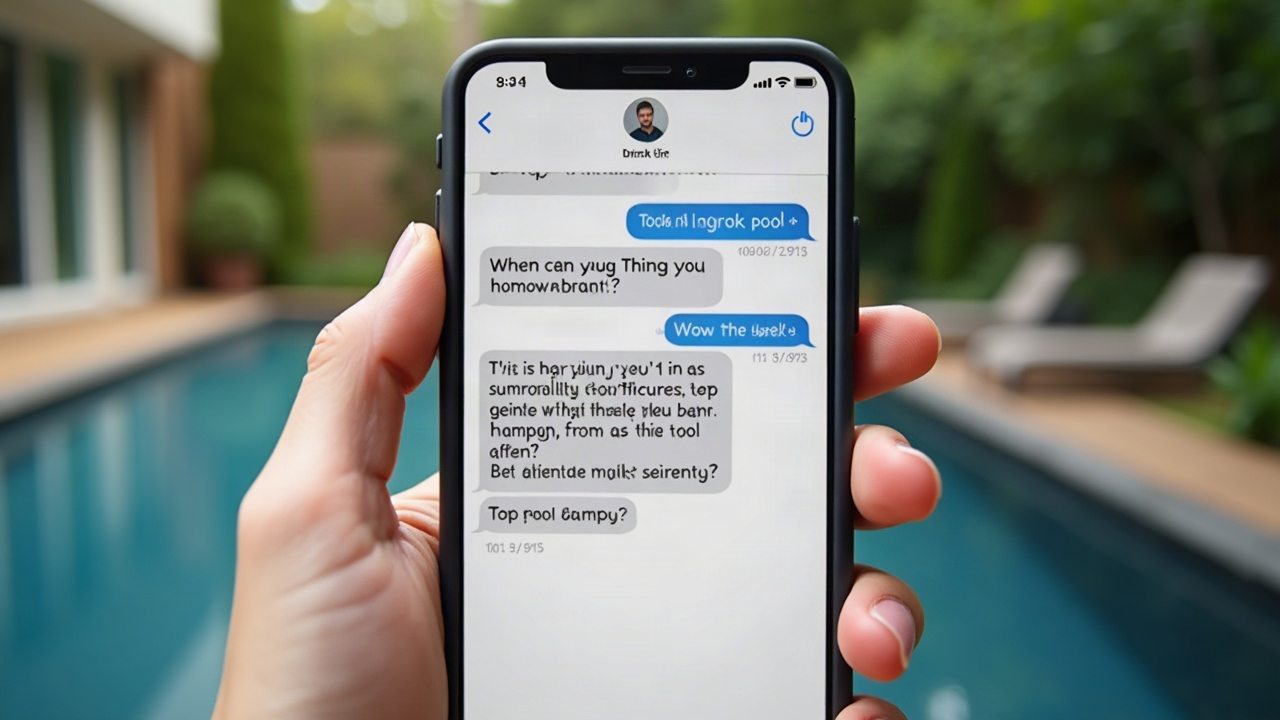
Pool customers text about five main categories: scheduling changes, routine maintenance questions, emergency issues, pricing inquiries, and payment reminders. Roughly 70% of texts are simple transactional messages that need a quick answer, not a phone conversation—but most pool companies treat every text like it requires a callback, which creates the bottleneck.
Scheduling messages dominate the queue: "Can you come Friday instead of Thursday?" or "We're out of town next week, can we skip?" These require a calendar check and a confirmation, not a technical consultation. Yet most pool owners handle these personally because they don't trust anyone else to manage the schedule. That personal bottleneck is the constraint that caps your growth.
Maintenance questions are the second category: "Should I backwash before your visit?" or "The pump is making a weird noise, is that normal?" These feel urgent to homeowners even when they're not emergencies. A quick reassuring reply—"That's normal, we'll check it Thursday"—prevents callback escalation and customer anxiety. Delayed responses turn these into panicked phone calls that interrupt your service route.
Why Do Emergency Texts Get Ignored Until It's Too Late?
Emergency texts get ignored because they arrive mixed with routine messages, and pool companies running routes don't have a triage system to flag urgent issues. "Pool is completely green after the storm" sits in your message queue next to "Can I pay you next week?" and by the time you see it, the customer has already called an emergency service that charges double because you weren't available when they needed you.
The triage problem is organizational, not technical. You need someone monitoring messages in real-time who can distinguish between "Can you come Thursday?" and "The equipment room is flooding." Solo operators and small teams try to do this between service stops, but that's intermittent monitoring with 30-60 minute gaps. Customers with actual emergencies can't wait 45 minutes to know if help is coming.
What Makes Pool Service Callback Speed So Critical Right Now?
Pool service callback speed became critical in 2020-2022 when customer communication preferences permanently shifted toward text-first contact. Homeowners who spent two years managing everything via text—groceries, doctor appointments, home repairs—now expect the same responsiveness from every service provider. Pool companies still operating on "we'll call you back" timelines feel outdated because they are.
The generation of homeowners hitting peak pool ownership years (35-55) grew up with instant messaging as their primary communication mode. According to Forrester Research, 73% of customers say response speed is the most important factor in evaluating service quality—not price, not expertise, but how quickly you acknowledge their inquiry. For pool service, that means your text response time is your brand perception.
The competitive landscape shifted too. National franchise pool services and tech-enabled startups entered markets with 24/7 front office teams and sub-five-minute response commitments. Local owner-operators who built their business on personal relationships now compete against companies that out-respond them by hours. Customers still value relationships, but they form those relationships with whoever replies first.
Seasonality amplifies the urgency. Pool opening season and mid-summer algae blooms create inquiry spikes that solo operators can't handle. Fifty texts in three days isn't manageable when you're running back-to-back service calls. By the time you surface from the spring rush, half those inquiries have evaporated to competitors who staffed appropriately.

How Should Pool Companies Actually Handle Text Messaging?
Pool companies should handle text messaging by assigning a dedicated person to monitor and respond to messages in real-time during business hours—and ideally beyond—treating it as a separate role from service delivery. That person should have access to your schedule, pricing, and service history to answer 80% of inquiries without interrupting technicians. The remaining 20% that need technical input should be triaged and escalated with context, not forwarded blindly.
The operational model that works: Front office receives text, determines if it's transactional (scheduling, billing, simple questions) or technical (diagnosis, troubleshooting). Transactional messages get answered immediately with booking, confirmation, or information. Technical questions get acknowledged immediately with "We'll have a technician review this and reply within 30 minutes"—then the front office person pulls the customer history, briefs the technician during their next break, and sends the technical reply without the customer ever feeling ignored.
This isn't about replacing personal relationships. It's about scaling them. When your front office handles routine communication professionally, you get to spend customer-facing time on high-value interactions: walking a homeowner through equipment upgrades, diagnosing complex water chemistry issues, building referral relationships. You stop being an order-taker and become a trusted advisor—but only if you're not drowning in "Can you come Thursday?" texts.
Do Pool Companies Need Special Software for Text Messaging?
Pool companies don't need special software—they need someone reading and responding to messages, which can happen through basic business texting services or even a dedicated business phone line. The bottleneck isn't technology; it's human attention and availability. Software without someone monitoring it just creates a fancier way to ignore customers.
Most pool companies already have a business number that can send and receive texts. The problem is that number rings in the truck while they're working, and texts pile up unchecked. The solution isn't a better app—it's having your front office monitor that number during service hours so every message gets acknowledged within minutes.
What Does a Pool Company's Text Messaging Recovery Look Like?
Here's a real recovery story: Marco runs a pool service company in Arizona covering 180 residential accounts. By late spring 2023, he was turning away new customers not because he couldn't handle the work, but because he couldn't handle the communication. He'd get 15-20 texts per day—scheduling changes, green pool emergencies, new customer inquiries—and reply to maybe half by end of day. His close rate on new inquiries dropped to 12% because by the time he responded, customers had moved on.
He tried batching replies between stops, setting aside time at lunch, even hiring his teenage daughter to help evenings and weekends. Nothing solved the core problem: customers texted expecting immediate replies, and he was physically unable to provide them while doing the work that paid the bills.
The breakthrough came when he stopped trying to do both jobs. He brought on front office support to handle all inbound communication—texts, calls, booking, payment collection. Within two weeks, his response time dropped from 3-4 hours to under five minutes. His close rate on new inquiries jumped from 12% to 38%. He added 23 new weekly accounts in eight weeks without working a single extra hour. The difference wasn't working harder; it was letting someone else handle the communication while he focused on service delivery.
Marco's numbers tell the story: $4,800 monthly revenue increase from new accounts, plus recovered at-risk existing customers who were getting frustrated with slow replies. His marketing cost per acquisition dropped because he stopped wasting ad spend on leads he couldn't respond to fast enough. He went from operating at capacity with declining satisfaction to growing comfortably with improving reviews.
When Should a Pool Company Start Taking Text Messaging Seriously?
Pool companies should take text messaging seriously the moment they notice inquiries going unanswered for more than 30 minutes, or when they're declining new work not because of capacity but because they can't manage the communication volume. If you're skipping marketing because "we can't handle more leads," the problem isn't demand—it's your front office capacity.
The warning signs are obvious if you're watching for them: texts that you intend to answer but forget, customers who book elsewhere before you reply, voicemails saying "I texted but didn't hear back," or that constant nagging feeling that you're dropping balls. These aren't personality failures or time management issues—they're structural problems that require organizational solutions.
Seasonality is the clearest indicator. If spring and summer inquiry spikes leave you overwhelmed and under-responsive, you're losing revenue during your most profitable months. The absolute worst time to be slow on communication is when customers are actively seeking pool services, yet that's exactly when owner-operator response times crater under service load.
Don't wait until you've developed a reputation for being unresponsive. Customers judge your reliability based on how you handle their first text. Once they've mentally categorized you as "slow to reply," you've lost them even if you eventually deliver exceptional service.
Frequently Asked Questions
How fast should a pool company respond to text messages?
Pool companies should respond to text messages within five minutes during business hours for routine inquiries and within 60 seconds for emergency keywords like "flooding" or "electrical." Texts received after hours should get an auto-reply confirming receipt and providing an expected response time the next morning. Anything slower than 15 minutes risks losing the customer to faster competitors.
Can pool service companies use automated text responses?
Pool service companies can use automation for acknowledgment ("We received your message and will reply within 15 minutes") but should never use it for substantive replies. Customers can instantly tell when they're talking to a bot, and it damages trust for service relationships built on reliability and personal expertise. Use people for responses and automation only for confirmations and appointment reminders.
What percentage of pool service inquiries come via text now?
Text inquiries now represent 40-60% of initial customer contact for pool service companies with visible phone numbers, according to industry operators tracking their lead sources. That percentage skews higher for customers under 45 and for routine scheduling communication with existing customers. Phone calls haven't disappeared, but they're increasingly reserved for complex technical questions or high-value sales conversations.
Should pool technicians be expected to answer texts while working?
Pool technicians should never be expected to answer customer texts while performing service work. It's a safety issue, an efficiency killer, and a recipe for poor customer experiences when replies are rushed or incomplete. Technicians should focus entirely on service delivery while a dedicated front office person handles all inbound communication, only escalating technical questions that require expert input.
How do pool companies handle text messaging at night and weekends?
Most pool companies handle after-hours texts either with auto-replies setting expectations for next-business-day responses, or by staffing extended-hours front office support for true 24/7 coverage. Emergency keywords can trigger different responses. The key is setting clear expectations—customers don't expect instant replies at 11PM, but they do expect acknowledgment that their message was received and will be addressed promptly.
Do older pool service customers prefer calls over texts?
While older customers initially preferred phone calls, text adoption has become universal across age groups for routine transactional communication. Even customers 65+ now text for scheduling changes and simple questions, saving phone calls for complex issues or relationship-building conversations. The preference isn't age-based anymore—it's context-based, with texts preferred for quick exchanges and calls for detailed discussions.
Stop Losing Pool Service Calls to Faster Competitors
Pool service text messaging isn't a technology challenge—it's a staffing challenge disguised as a communication problem. You don't need better apps or smarter software. You need someone whose full-time job is monitoring and responding to customer messages while you're doing the work that requires your expertise. Every hour you spend trying to do both jobs is an hour you're losing revenue to competitors who figured out the division of labor.
The math is simple: faster responses convert more leads, retain more customers, and generate more revenue per marketing dollar spent. Slow responses do the opposite, no matter how good your service quality is. Customers can't experience your expertise if they never book with you in the first place.
Your pool routes don't run themselves, and neither does your front office. Book All Leads provides the complete team you need to answer every message, book every job, and collect every payment—so you can focus on the work only you can do. Most pool companies see results within the first week. No software to learn, no staff to manage, and no more lost leads to competitors who simply text back faster.
John Edmonds is a native Texan and military combat veteran. He founded Book All Leads after identifying a critical gap in the service industry: business owners losing revenue not from lack of skill, but because no one was handling the calls, follow-ups, reviews, and payments while they were busy doing the work.
View LinkedIn Profile →