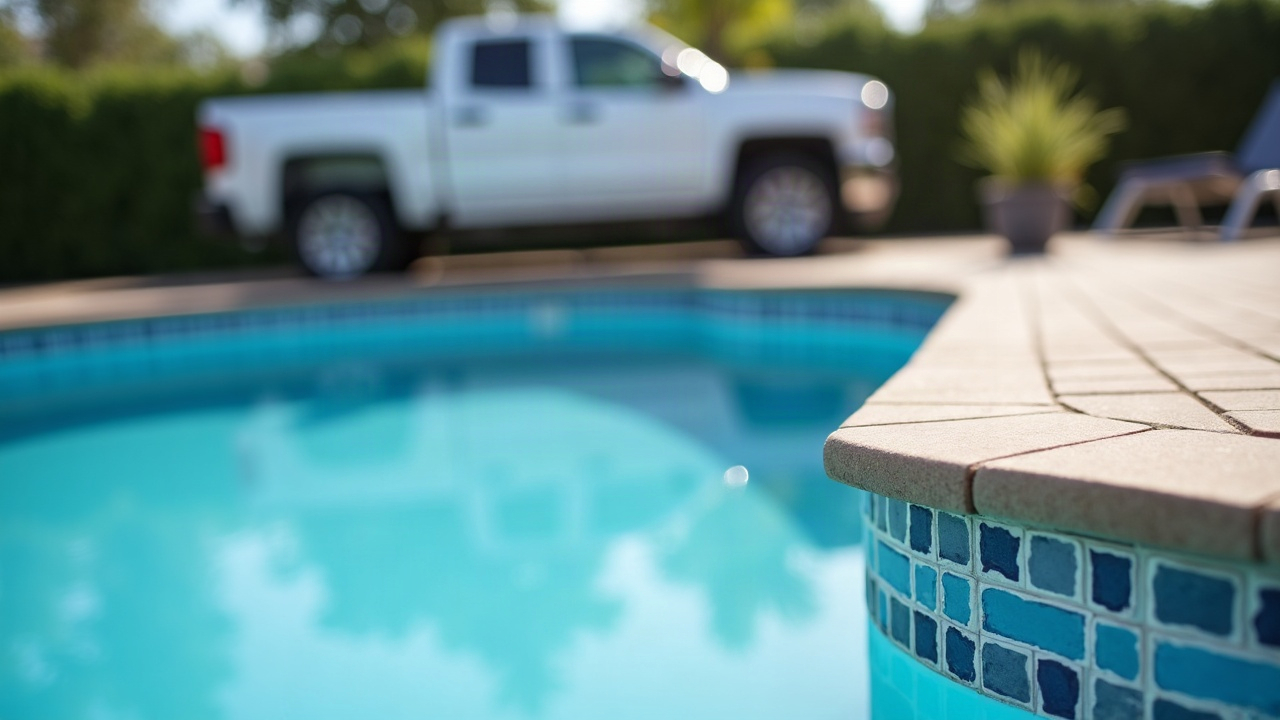
Pool companies lose tile and coping jobs to general contractors primarily because general contractors respond faster, bundle tile work into larger backyard projects, and make homeowners feel like one vendor is simpler than coordinating specialists. These jobs often come during renovation season when pool companies are underwater with service calls, leaving high-margin tile and coping work on the table for GCs who treat every inquiry like a revenue opportunity.
Why Are General Contractors Beating Pool Companies at Their Own Game?
General contractors win pool tile and coping jobs because they answer the phone and create urgency around availability. While pool service companies are managing chlorine deliveries and pump repairs, GCs treat every tile inquiry as a gateway to a $50,000 outdoor renovation. They pitch pavers, landscaping, and outdoor kitchens alongside coping replacement, making the homeowner feel like they're getting a coordinated vision instead of piecemeal fixes.
Here's what most articles won't tell you: The competition isn't really about who's better at tile work. It's about who makes the homeowner feel confident first. A general contractor who answers in 90 seconds and schedules a walk-through for tomorrow beats a pool specialist who calls back three days later with better credentials. Homeowners can't evaluate your tile grouting technique over the phone, but they can evaluate whether you acted like you wanted their business.
According to InsideSales.com, leads contacted within 5 minutes are 21 times more likely to convert than those contacted after 30 minutes. For pool tile replacement competition, that window is even tighter because homeowners typically call 3-4 contractors in one sitting. The first callback gets the appointment. The rest get voicemail.
Pool companies also lose because they position tile and coping as maintenance instead of transformation. A GC walks the property and talks about entertaining spaces, property value, and how the new coping ties into a paver extension. The pool company talks about cracked mortar and waterline integrity. Both are true, but only one makes the homeowner excited to write a check.
What Makes Tile and Coping Jobs So Vulnerable to Competition?
Pool tile and coping installation leads are uniquely vulnerable because the work sits at the intersection of pool expertise and general contracting scope. Homeowners don't know which vendor type is "supposed" to handle it, so they default to whoever sounds most capable and available. Unlike equipment repair, where a licensed pool tech is non-negotiable, tile work feels accessible to anyone with masonry skills.
This confusion creates opportunity for general contractors who position themselves as project managers. They subcontract the tile work to the same laborers a pool company would use, mark it up 30%, and still win the job because they answered first and bundled it into a broader scope. The homeowner never realizes they paid more for the same hands doing the work.
Seasonal timing amplifies the problem. Most tile and coping inquiries spike in spring when pool companies are slammed with openings, green pool cleanouts, and equipment startups. Your phone rings 40 times a day, and tile jobs—which require site visits and detailed estimates—get triaged below emergencies. Meanwhile, a GC in their slow season between winter and summer deck builds treats that tile inquiry like the center of their day.
- Tile jobs require detailed on-site estimates, not quick phone quotes
- Homeowners bundle coping with landscaping decisions, pulling in GC scope
- Pool companies often lack immediate scheduling visibility during peak season
- General contractors position tile as part of a "backyard transformation" narrative
The real kicker: many pool companies don't even realize they're losing these jobs. The homeowner who doesn't get a callback doesn't leave a complaint. They just hire someone else and never mention it. You lose revenue to silence, not to a competitor you can see and adjust for.
How Do General Contractors Position Pool Work Without Pool Expertise?
General contractors win pool tile work leads by selling confidence and coordination instead of technical credentials. They walk the property with a tablet, sketch out phased improvements, and position tile replacement as "Phase 1" of a backyard upgrade. The pool company estimates $8,000 for coping and tile. The GC estimates $12,000 for the same work plus mockups of what the patio extension could look like next year. Guess who feels like the safer bet?
They also exploit the perception that coordinating multiple trades is stressful. A homeowner who hires a pool company for tile, a landscaper for plants, and a mason for pavers now has three schedules to manage and three vendors blaming each other if timelines slip. The GC promises to handle all of it, even if they're just marking up subcontractors and making the same phone calls the homeowner would have made.
Another edge: general contractors treat every inquiry like a relationship, not a transaction. They ask about upcoming projects, take photos of the deck and fencing, and follow up with "just thinking about your backyard" emails. Pool companies estimate the tile job, send a quote, and move on. Six months later when the homeowner is ready for a pergola, they call the GC who stayed in touch, not the pool company who disappeared after the estimate.
What's the Real Cost of Losing These Jobs?
Losing pool tile and coping jobs costs more than the immediate revenue—it erases your position as the homeowner's go-to for pool decisions. Once a general contractor completes tile work, they become the default contact for future coping repairs, equipment upgrades, and even referrals to other homeowners. You've lost a customer relationship, not just a project.
The math is ugly. A typical tile and coping replacement runs $6,000–$15,000 depending on linear footage and material. If a pool company loses two of these jobs per month to slow response times, that's $144,000–$360,000 in annual revenue walking to competitors who simply answered faster. Use our calculator to see what missed calls actually cost your business over a year.
But the hidden cost is downstream work. Homeowners who trust a vendor for one project default to them for the next. The GC who replaces your coping gets called for the equipment pad pour, the paver extension, and eventually the pool replaster referral. You're not just losing one job—you're losing the entire customer lifetime value to a competitor who beat you on speed, not skill.
According to Harvard Business Review, acquiring a new customer costs five times more than retaining an existing one, and increasing retention by just 5% can boost profits by 25–95%. Every tile job you lose to a general contractor is a retention failure. That homeowner was already in your market, already spending money on their pool, and you let someone else become their trusted advisor.

How Do You Win Back Pool Renovation Contractor Competition?
You win back pool tile and coping jobs by treating inquiry response like the revenue event it is. Every tile call that goes to voicemail is a $10,000 check you're handing to a general contractor. The fix isn't working harder—it's making sure someone with authority and scheduling access answers every inquiry within minutes, even when you're shoulder-deep in a pump replacement.
Most pool companies try solving this with voicemail, text-back apps, or after-hours answering services that take messages. None of these work because homeowners don't want to leave information—they want answers. "When can you come look at this?" and "What's the rough cost?" are questions that need immediate responses, not a callback tomorrow. By the time you return the call, they've already scheduled two other estimates.
The solution is a front office team that handles inquiries like an in-house office manager would: answering questions, checking your calendar, booking site visits, and following up with estimates. Not a voicemail system. Not a chatbot. Real people who sound like they work for you because they do. Book All Leads builds and manages a full front office team for pool companies—six roles working around the clock to answer calls, book jobs, and collect payments. You're live in five days with no software to learn and no contracts locking you in.
But speed alone isn't enough. You also need to reframe how you sell tile work. Stop positioning coping replacement as maintenance ("Your mortar is cracking") and start positioning it as an upgrade ("New coping changes the entire look of your pool and ties into your patio"). Walk the property like a GC does. Notice the deck, the landscaping, the fence. Ask about entertaining and what else they're thinking about for the backyard. You don't have to bid the landscaping, but acknowledging it makes you sound like you're thinking about their space holistically.
Should You Bundle Services or Stay Specialized?
You don't need to become a general contractor to compete with one—you need to make tile and coping feel like part of a bigger pool relationship. Offer maintenance packages that include annual coping inspections. Partner with landscapers and masons you trust and offer to coordinate bids so the homeowner gets a unified timeline. Position yourself as the quarterback for pool-adjacent work, even if you're not swinging the hammer on all of it.
This also means following up after the job. Send a photo of the finished work. Check in three months later to see how they're enjoying it. Ask if they've thought about resurfacing or upgrading lights. General contractors win long-term relationships because they stay visible. Pool companies disappear after the invoice is paid and wonder why homeowners don't call them for the next project.
How Can Pool Companies Compete on Speed Without Burning Out?
Competing on response speed doesn't mean answering your phone at 9 p.m. while you're trying to eat dinner with your family. It means having someone else handle inquiries so you can focus on the work that actually requires your expertise. You don't need to be the one answering "Do you do tile work?" or "How much does coping cost?"—you need to be the one walking jobs and closing estimates.
Owner-operators get trapped in a cycle where they're too busy doing the work to capture new work, so they stay perpetually maxed out at their current revenue level. You're not turning down tile jobs because you don't want them—you're losing them because you didn't even know they called. A front office team that books estimates, qualifies budget, and schedules follow-ups turns inquiries into appointments without adding hours to your day.
The key is separating inquiry handling from job execution. Your field team should never be the first point of contact for new leads. By the time a tile inquiry reaches you, it should already be qualified, scheduled, and prepped with photos the homeowner texted in. That's not automation—it's delegation to people who treat your phone like their job, because it is.

What Does a Real Recovery Look Like?
A pool service company in Arizona was losing 3–4 tile and coping jobs per month to a local GC who'd started advertising "backyard transformations." The pool company owner knew he was better at tile work, but he was stuck on service routes and couldn't get to his phone fast enough. Inquiries went to voicemail, and by the time he called back, homeowners had already scheduled estimates with the GC.
He brought in a front office team to handle all incoming calls and booking. Within 30 days, his tile estimate appointments doubled. Not because his marketing changed, but because every inquiry got answered within two minutes and turned into a scheduled walk-through. He stopped losing jobs to speed and started competing on the quality and pricing he'd always had. Six months later, his tile and coping revenue was up 70%, and the GC who'd been eating his lunch started referring pool-specific work back to him because homeowners kept asking for "the pool guy who actually knows tile."
The shift wasn't complicated. It was just making sure someone who sounded knowledgeable and had access to his calendar answered every call like it mattered, because it did.
Why Tile and Coping Work Is Worth Fighting For
Pool tile and coping jobs are worth fighting for because they're high-margin work that leads to long-term customer relationships. Unlike a $200 service call, a $10,000 tile job positions you as the expert who transformed their pool, not just the technician who fixed a leak. That perception matters when they're ready to replaster, upgrade equipment, or refer you to their neighbor.
These jobs also happen during renovation mindset, when homeowners are thinking about investment and improvement instead of emergency repair. They're comparing you to other professionals, not just trying to stop a problem. That's the moment to show up as a trusted advisor who understands their property and cares about the outcome, not just a vendor who patches cracked mortar.
According to the National Association of Home Builders, homeowners who complete one exterior renovation project are 60% more likely to complete another within two years. Tile and coping work is a gateway to replastering, equipment upgrades, automation installs, and ongoing maintenance contracts. Losing it to a general contractor doesn't just cost you one job—it costs you the entire relationship.
Frequently Asked Questions
Why do homeowners call general contractors for pool tile work instead of pool companies?
Homeowners often don't know which type of contractor "owns" tile and coping work, so they call whoever they've worked with before or whoever answers first. General contractors also bundle tile into larger backyard projects, making it feel like part of a coordinated renovation instead of a standalone pool repair. If a pool company doesn't answer quickly and position the work as an upgrade, the GC wins by default.
How fast do I need to respond to tile and coping inquiries to win the job?
You need to respond within 5 minutes to have a strong chance of booking the estimate appointment. Homeowners typically call 3-4 contractors in one sitting, and the first one who answers and offers a specific appointment time gets the visit. Callbacks later that day or the next morning usually go to voicemail because the homeowner has already moved on.
Can I compete with general contractors on price for tile work?
You can, but price isn't usually why you're losing these jobs—it's speed and positioning. General contractors often charge more than pool companies for the same tile work because they bundle it into broader projects and mark up subcontractors. Focus on responding faster and framing the work as a pool upgrade that you're uniquely qualified to execute, rather than trying to be the cheapest bid.
Should I partner with general contractors or compete against them?
Both, depending on the situation. If a GC is already managing a large backyard renovation and needs a pool subcontractor, partnering makes sense and gets you paid for your expertise without needing to manage the customer relationship. But when a homeowner calls you directly for tile work, you should compete by responding fast, positioning the work as part of ongoing pool care, and staying in touch for future projects.
What's the best way to position tile and coping work to homeowners?
Position it as a visual and functional upgrade, not just maintenance. Talk about how new coping changes the look of the entire pool, ties into their patio or landscaping, and protects their investment. Ask about their plans for the backyard and acknowledge the bigger picture, even if you're only bidding the tile work. This makes you sound like a trusted advisor instead of a narrow specialist.
How do I stay in touch with homeowners after completing a tile job?
Send a photo of the finished work within a week of completion and ask how they're enjoying it. Follow up 3-6 months later with a seasonal check-in or a note about related services like resurfacing or equipment upgrades. The goal is to stay top-of-mind so when they're ready for the next project, you're the obvious call. General contractors do this naturally; pool companies often don't, which is why they lose repeat business.
Stop Losing High-Margin Work to Competitors Who Just Answer Faster
Pool tile and coping jobs are too valuable to lose because your phone went to voicemail. These aren't emergency service calls where the lowest price wins—they're relationship-building opportunities that lead to years of ongoing work. General contractors win them by answering fast, positioning the work as part of a bigger vision, and staying in touch afterward. You can do all of that better, but only if someone's actually picking up the phone.
The fix isn't working longer hours or turning yourself into a general contractor. It's making sure every inquiry gets handled like the revenue opportunity it is—answered within minutes, turned into a scheduled appointment, and followed up until it closes. That's what a real front office does, and it's what separates pool companies that grow from those that stay stuck at the same revenue level year after year.
If you're tired of losing tile and coping work to competitors who simply showed up faster, it's time to build a front office that treats every call like it matters. Book All Leads puts a full team in place in five days—no software, no contracts, just people who answer your calls and book your jobs while you focus on the work that actually needs your expertise.
John Edmonds is a native Texan and military combat veteran. He founded Book All Leads after identifying a critical gap in the service industry: business owners losing revenue not from lack of skill, but because no one was handling the calls, follow-ups, reviews, and payments while they were busy doing the work.
View LinkedIn Profile →