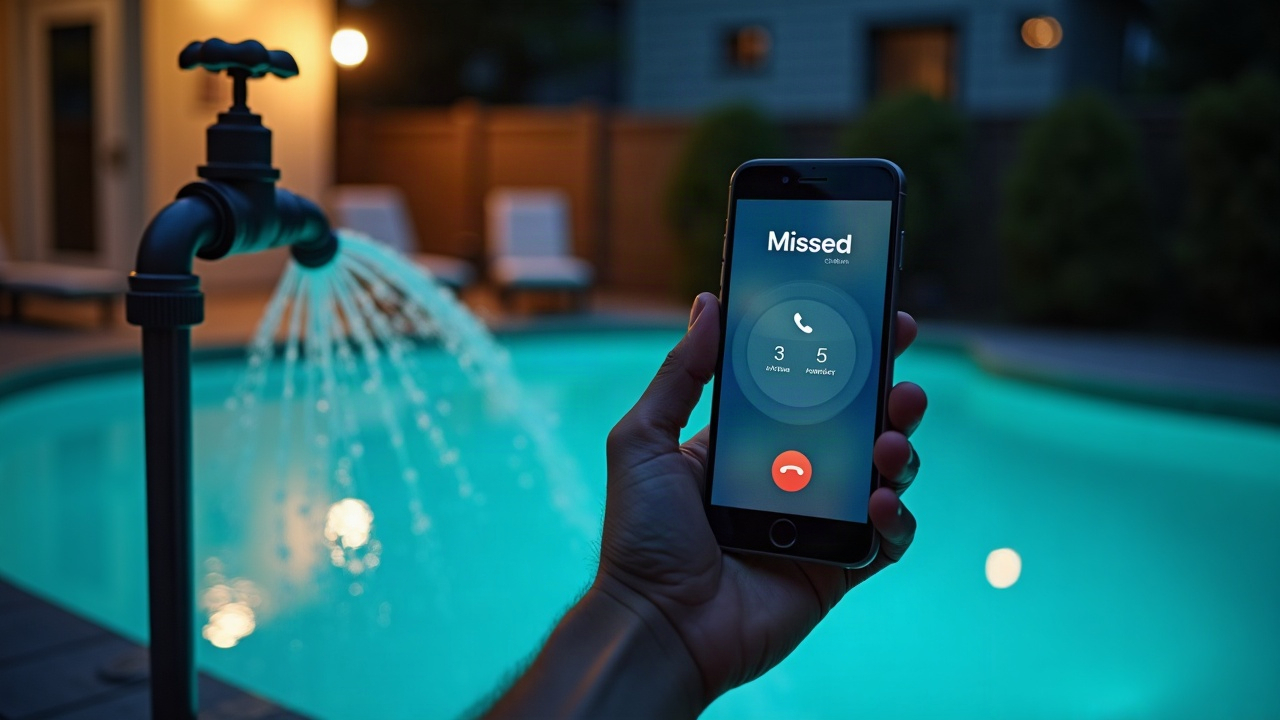
Pool valve repair leads are most often lost not because your competitors do better work or charge less, but because they answer the phone when a valve starts spraying water at 7 p.m. on Friday. When a pool equipment failure happens after business hours—which studies show is when Vendasta reports over 40% of urgent home service calls occur—the homeowner calls every pool company in their search results until someone picks up. The company that answers first books the job. Everyone else never gets a second chance at that customer.
Why Pool Valve Repair Jobs Slip Away After Business Hours
Pool valve failures don't wait for Monday morning. A three-way valve that starts leaking at 9 p.m. Saturday means a homeowner watching water spray across their equipment pad, their pool losing water by the hour, and chemicals becoming unbalanced. They're not going to wait until you open Monday at 8 a.m. They're calling every pool service company they can find right now.
Here's what most articles won't tell you: The pool companies that dominate valve repair work aren't necessarily the best technicians or the cheapest rates. They're the ones who answer when the valve breaks. According to InsideSales.com, response time is the single strongest predictor of whether you win a service call—companies that respond within 5 minutes are 100 times more likely to convert the lead than those who respond after 30 minutes. After hours, that gap becomes even wider because most of your competitors aren't answering either.
Every missed call after 5 p.m. is revenue walking straight to the competitor who stayed available. A valve replacement job averages $300 to $800 depending on the valve type and labor. Multiply that by the 15 to 30 after-hours calls most pool companies miss each month during peak season, and you're looking at $4,500 to $24,000 in monthly revenue going to competitors simply because they picked up the phone.
The Reality of Urgent Pool Equipment Repair Calls
Valve problems are rarely convenient. Homeowners discover them when they're checking the pool before a weekend party, when they hear water spraying while watching TV after dinner, or when they're closing the pool for the night. These aren't scheduled maintenance calls—they're urgent problems that feel like emergencies to the homeowner.
Pool valve leaks create visible damage. Water sprays across expensive equipment. The pump might be drawing air. The heater might not be getting flow. The homeowner sees dollar signs mounting with every hour they wait. They want someone there tomorrow morning at the latest, and they want to book that appointment tonight.
What Happens When You Send Pool Valve Leads to Voicemail
When a pool owner calls about a leaking valve at 6:30 p.m. and reaches your voicemail, they immediately call the next company. If that company answers, takes their information, checks the schedule, and books them for 9 a.m. the next morning, that job is gone. You'll return their call Monday morning to find out they already had someone come out over the weekend.
The pool service industry sees this pattern constantly. Owners spend money on marketing to generate pool equipment repair calls, then lose 40% to 60% of those calls because they happen outside business hours. You're paying to drive leads that you never convert.
Let's walk through a real scenario. A pool owner in Phoenix calls five companies Friday evening when their three-way valve starts leaking. Three go to voicemail. One has an answering service that takes a message and says someone will call back Monday. One has a front office team that answers, asks about the valve type and symptoms, checks the schedule, and books an 8 a.m. Saturday appointment. Which company do you think gets the $650 valve replacement job?
The Cascading Cost of Lost Pool Valve Replacement Jobs
Missing one valve repair call doesn't just cost you that one job. It costs you the relationship. That homeowner now has a pool company they trust who showed up when they needed help. When their filter needs replacing, when they want to upgrade to a variable speed pump, when they need weekly service—they're calling the company that answered on Friday night, not you.
Research from Harvard Business Review shows that acquiring a new customer costs five to 25 times more than retaining an existing one. Every after-hours valve repair lead you miss is both lost immediate revenue and lost lifetime customer value. A customer gained through an emergency repair often becomes a maintenance client worth $1,200 to $2,400 annually.
Why Pool Companies Can't Answer After Hours (And Why It Matters)
Most pool service owners are still on job sites at 6 p.m., finishing repairs or heading home covered in DE powder. The last thing they can do is stop mid-task to take a detailed service call, check the schedule, and book an appointment. Even if they answer, the call quality suffers—background noise, distraction, incomplete information capture. Customers can tell when they're interrupting someone.
Hiring someone just to answer after-hours calls seems expensive and complicated. A part-time receptionist costs $15 to $20 per hour, needs training on your booking process and service offerings, requires scheduling coordination, and still only covers limited evening hours. Most pool companies with fewer than 10 trucks can't justify that expense for evening and weekend coverage.
So the calls go to voicemail. Or to an answering service that takes messages you'll return Monday morning—when the customer has already booked with someone else. And the revenue keeps walking away.
The Fix: Turning After-Hours Pool Valve Repair Leads Into Booked Jobs
The solution isn't working 80-hour weeks or sleeping next to your phone. It's having a dedicated front office team that handles every call as if your business depends on it—because it does. Not an app you have to learn. Not software you have to maintain. An actual team of people who answer your phones, book your jobs, follow up with customers, and collect payments around the clock.
Companies that have solved this problem see dramatic changes in their revenue from pool equipment repair calls. They're not losing half their valve repair leads anymore. They're answering at 7 p.m. when the valve starts leaking. They're answering at 9 a.m. Saturday when the homeowner discovers the problem. They're answering at 2 p.m. Sunday when someone finally gets around to checking why the pool looks cloudy.
What Actually Happens When Someone Answers After Hours
When a trained front office person answers an after-hours valve repair call, they're gathering the information you need to prepare. What type of valve is leaking? Is it the three-way valve by the heater? Is it a check valve? Is water spraying or just seeping? Is the equipment still running?
They're checking your schedule and booking the appointment while the customer is on the phone. Not telling them someone will call back. Not taking a message. Booking the job. Confirming the address. Sending a confirmation text. That customer hangs up with an appointment, not a promise that someone might call them back Monday.
The difference in conversion is staggering. When you can calculate your losses from missed calls, most pool companies discover they're leaving $50,000 to $150,000 on the table annually just from after-hours calls that went to voicemail.
What Pool Valve Leak Jobs Actually Require From Your Front Office
Booking pool valve repair jobs isn't complicated, but it requires someone who understands what questions to ask. Your front office team needs to identify whether this is a $150 service call to tighten a union or a $700 valve replacement. They need to know that a leaking three-way valve on a heater setup is different from a leaking check valve. They need to understand urgency—active water spray versus slow seepage changes scheduling priority.
Here's what separates a message-taking service from a real front office:
- They ask diagnostic questions that help you prepare—valve location, leak severity, equipment affected, how long it's been leaking
- They check actual availability in your schedule and book the job with a specific time window, not a vague "someone will call you back"
- They set proper expectations about timing, pricing ranges, and what the customer should do in the meantime (turn off equipment if spray is severe)
- They follow up with confirmation texts, appointment reminders, and post-service payment collection
- They handle the overflow when you're on another call, so no customer ever reaches voicemail
The economics work because you're not staffing this yourself. A full front office team costs less per month than one part-time employee, covers 24/7 instead of 20 hours a week, and starts handling your calls in days instead of weeks of training.

The Real Revenue Impact of Captured Pool Equipment Repair Calls
Let's walk through the actual numbers. A typical pool service company in a mid-sized market gets 20 to 40 inbound calls per month about equipment repairs during peak season. About 45% of those calls come in after 5 p.m. or on weekends, based on call pattern data across home service industries. That's 9 to 18 after-hours calls monthly.
If your voicemail is catching those calls, you might convert 20% to 30% when you call back Monday—the customers who couldn't find anyone else or decided to wait. You're booking 2 to 5 jobs from those 9 to 18 opportunities. The rest went to competitors who answered.
When someone answers those calls live, conversion jumps to 70% to 85%. Suddenly you're booking 6 to 15 jobs from those same calls. At an average valve repair or replacement job value of $400 to $650, that's an additional $2,400 to $6,500 in monthly revenue from calls you were already receiving. You didn't spend more on marketing. You didn't expand your service area. You just answered the phone.
Annual impact: $28,800 to $78,000 in additional revenue from pool valve repair leads and other equipment calls you were already generating but not converting. For most pool service companies, that revenue increase pays for a full front office team and still adds $20,000 to $60,000 to the bottom line.
Beyond Valve Repairs: The Total After-Hours Opportunity
Valve repairs are just one piece of after-hours pool equipment calls. Filter issues, pump failures, heater problems, leaks, and automation malfunctions all follow the same pattern—they happen when they happen, not during your business hours. A front office team that captures valve repair calls is also capturing every other type of emergency and urgent service call.
The pool service companies seeing the biggest impact are those in warm-weather markets where pools run year-round. But even seasonal markets see major gains during their peak April-to-September window when call volume spikes and every missed lead represents lost revenue during your profit months.
Why Pool Companies Wait Too Long to Fix This Problem
Most pool service owners know they're missing calls. They see the voicemails Monday morning. They hear "I called Friday but had to go with someone else" when they return weekend messages. They know it's costing them money. So why don't they fix it sooner?
The common assumptions are that it's too expensive, too complicated to set up, or will take months to implement. Owners think they need to hire staff, train them on pool equipment, integrate complex scheduling software, and manage a whole new operational headache. So they live with the problem, telling themselves they'll address it "when they're bigger" or "after this season."
Meanwhile, their competitors who have solved this are answering those evening calls about pool valve leak jobs and building customer relationships that will last years. The longer you wait, the more customers develop loyalty to someone else—someone who was simply available when they needed help.
The pool service companies that grow from 3 trucks to 8 trucks aren't necessarily doing better technical work. They're capturing more of the leads they generate. They're converting after-hours calls while their competitors are at dinner. They're building customer lists from emergency repairs that turn into maintenance contracts. The work quality matters, but availability determines who gets the chance to prove their quality.
How to Start Capturing After-Hours Pool Valve Repair Leads This Week
The fastest path to capturing after-hours revenue isn't hiring or training—it's having someone else's trained team start handling your calls immediately. That's the model that works for pool companies too busy running jobs to build their own front office infrastructure.
You need a team that already knows how to handle pool service calls, can access your schedule, books appointments while the customer is on the phone, and follows up until the job is complete and paid. You need them answering today, not three months from now after recruitment and training.
Forward your phone line. They start answering. You start booking more jobs. There's no software for you to learn, no scheduling complications, no management overhead. Your phone rings, they answer it as your company, they book the job in your calendar, you show up and do the work. That's the entire process.
For pool service companies, this typically means going from 20% to 30% conversion on after-hours calls to 70% to 85% conversion within the first month. The revenue impact shows up immediately in your schedule—more jobs booked, fewer gaps, better cash flow. More importantly, you're building a customer base from people who needed help and found you available, which creates loyalty that lasts beyond the initial valve repair.
What to Look For in a Front Office Team for Pool Service
Not every answering service or front office solution works for pool companies. You need people who understand the difference between a leaking valve union and a cracked valve body, who know that "the three-way valve by the heater" means something specific, and who can assess whether this is a same-day emergency or a next-available appointment.
The front office team that works for pool service companies has these characteristics:
- They answer as your company, not as a generic answering service, so customers never know they're talking to an outside team
- They understand pool equipment basics well enough to ask intelligent questions and capture useful information for your technicians
- They have access to your real schedule and book appointments with specific time windows, not vague callbacks
- They work 24/7, not just evenings, so you never miss a call regardless of when it comes in
- They handle the full job lifecycle—booking, confirmation, reminders, follow-up, and payment collection, not just message-taking
- They start fast, within days not months, so you're capturing revenue this week not next quarter
You also want a team that doesn't lock you into contracts or require you to learn their software. If it takes you a week to figure out how to use their platform, it's too complicated. Your job is fixing valves and maintaining pools, not becoming an expert in scheduling software.
Frequently Asked Questions
How many pool valve repair leads does the average pool company miss each month?
Most pool service companies with 2 to 6 trucks receive 20 to 40 equipment-related calls per month during peak season. Approximately 40% to 50% of these calls come in after business hours or during times when the owner is unavailable. Without live answering, conversion on these calls typically runs 20% to 30%. That means 9 to 18 calls monthly are either going to voicemail or being answered too late, with 6 to 13 of those becoming jobs for competitors. In revenue terms, that's $2,400 to $8,000+ monthly in lost valve repairs, pump replacements, and other equipment work.
What's the typical value of a pool valve replacement job?
Standard valve replacement jobs range from $300 to $800 depending on valve type, labor complexity, and regional rates. A simple two-way valve replacement might run $300 to $450, while three-way valves or specialty equipment valves can reach $600 to $800. Emergency or after-hours service premiums can add 20% to 50% to these figures. The average valve-related service call, including both repairs and replacements, typically generates $400 to $650 in revenue.
Can an answering service really book pool repair jobs correctly?
Generic answering services that just take messages can't effectively book pool valve repair leads, but a trained front office team that understands pool equipment absolutely can. The difference is in the training and system access. A proper front office team knows what questions to ask about valve type, leak location, and urgency. They have access to your real schedule and can book appointments with specific time windows. They're not just taking a message—they're gathering diagnostic information, setting expectations, booking the job, and confirming the appointment, all while the customer is on the first call.
How quickly can a front office team start handling pool service calls?
A professional front office team designed for home service businesses typically starts handling calls within 5 to 7 days. This includes onboarding your business details, learning your services and pricing, getting access to your scheduling calendar, and training on your specific booking procedures. Unlike hiring an employee who might need weeks or months to become fully effective, a trained team already knows how to handle service calls—they just need to learn your particular business. Most pool companies see immediate impact in their booking rates within the first week.
What happens to call quality when someone else answers my phone?
Call quality actually improves when a dedicated front office team handles your calls compared to you answering while on a job site or during personal time. They're in a quiet environment, focused entirely on the customer, taking detailed notes, and giving complete attention to booking the appointment correctly. Customers can't tell they're not talking to someone in your office—they just notice they're getting professional, attentive service. The alternative is either voicemail or you answering distracted with background noise, neither of which creates a strong first impression for new customers calling about urgent valve repairs.
Is it worth answering after-hours calls if I charge the same rates?
Yes, because availability drives conversion even without premium pricing. The customer calling at 7 p.m. Friday about a leaking valve isn't comparison shopping rates—they're trying to find someone who will come out Saturday morning. The first company that answers and books them wins the job. You don't need to charge after-hours premiums to benefit from after-hours availability, though many pool companies do add 20% to 30% for weekend or emergency service. The primary value is in capturing leads your competitors are missing, not in charging more. The revenue comes from conversion rate, not premium pricing.
Stop Letting Competitors Win Your Pool Valve Repair Leads
Every pool valve repair lead you miss after 5 p.m. is revenue you generated through your reputation, marketing, or referrals—and then handed to a competitor simply because they answered their phone. You did the hard work of building visibility and trust in your market. You shouldn't lose jobs because of a logistical problem like call coverage.
The pool companies growing fastest in their markets aren't doing dramatically different technical work. They're capturing more of the leads they generate. They're available when valves start leaking on Saturday morning. They're answering when equipment fails Friday evening. They're building customer relationships from emergency repairs that turn into years of maintenance contracts.
You can keep letting those after-hours pool equipment repair calls go to voicemail, planning to return them Monday when the job is already booked with someone else. Or you can have a front office team answering tonight, capturing that revenue, and building those customer relationships.
The revenue is already calling you. The question is whether you're going to answer. See how a front office team can start capturing your after-hours leads this week.
John Edmonds is a native Texan and military combat veteran. He founded Book All Leads after identifying a critical gap in the service industry: business owners losing revenue not from lack of skill, but because no one was handling the calls, follow-ups, reviews, and payments while they were busy doing the work.
View LinkedIn Profile →