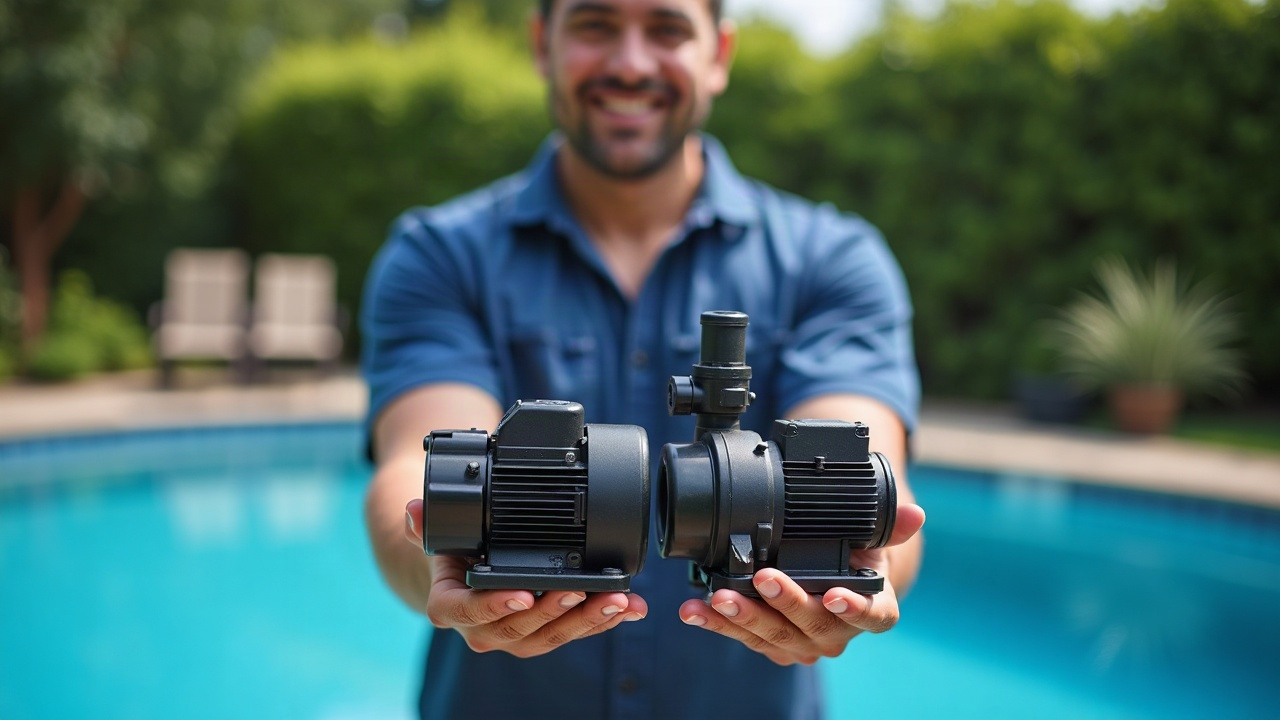
Pool companies lose pool variable speed pump leads by failing to answer upgrade inquiries within the first five minutes, missing homeowner calls during peak inquiry hours, and not having staff trained to explain energy savings and rebates during the first conversation. These failures cost pool service companies thousands per month in high-margin equipment sales that go to competitors or big-box retailers who respond faster and present ROI more clearly.
The Problem: Why Variable Speed Pump Jobs Slip Through Your Fingers
Variable speed pump upgrades represent some of the highest-margin work in pool service — equipment sales where you're not just swapping parts but solving a problem homeowners actually care about: their electric bill. Yet most pool companies lose these jobs before they ever quote them.
The loss happens in three predictable ways. First, homeowners call during peak hours (lunch breaks, early evenings) when your crew is on-site and can't answer. The homeowner moves to the next name on their list. Second, when someone does pick up, they treat it like a service call rather than an equipment sale — they schedule a callback or site visit without capturing interest or explaining value. Third, nobody mentions the rebates, financing options, or payback period that make the decision easy for the homeowner.
Here's what most articles won't tell you: The homeowner calling about a variable speed pump upgrade isn't comparison shopping on price yet — they're shopping on who makes them feel confident about the decision. According to InsideSales.com, leads contacted within five minutes are 100 times more likely to convert than those contacted after 30 minutes. But in pool service, the average callback time for equipment inquiries is 4-6 hours, often the next business day.
By then, the homeowner has already talked to two other companies, gotten a quote from a big-box installer, or decided to wait another season. You didn't lose on price. You lost on presence.
Why Pool Companies Miss These High-Value Calls
Pool service companies miss variable speed pump upgrade calls because owner-operators and field techs are physically working on equipment during the hours homeowners call, and nobody is dedicated to capturing and qualifying equipment sales inquiries in real time. The business structure prioritizes service calls over sales calls.
Most pool companies run lean. The owner handles sales, scheduling, and often fieldwork. Techs are assigned routes. If there's an office person, they're part-time or juggling billing, inventory, and customer service. Nobody's job description is "answer every call within two rings and qualify equipment upgrade opportunities."
When a homeowner calls asking about variable speed pumps, three things typically happen:
- The call goes to voicemail, and the homeowner calls the next company while waiting for a callback
- A field tech answers between stops, can't pull up the customer file, and promises someone will call back
- The office person takes a message but doesn't know how to qualify pump compatibility, rebate eligibility, or expected savings
None of these responses close the sale. The homeowner wanted to feel like they reached an expert who could help them decide. Instead, they felt like they interrupted someone's day.
This isn't a training problem or a staffing problem in the traditional sense. It's a revenue capture problem. Pool equipment upgrade sales require immediate response and knowledgeable conversation — two things that don't happen when everyone's focused on the day's service route.

What Happens When You Capture Pool Variable Speed Pump Leads Properly
When pool companies capture variable speed pump leads with immediate response and trained qualification, conversion rates jump from 8-12% to 35-50% because homeowners receive ROI calculations, rebate guidance, and installation timelines during the first conversation when their buying intent is highest. This turns inquiry calls into booked jobs instead of lost opportunities.
The difference isn't what you say — it's when you say it and who's saying it. Homeowners researching variable speed pumps have usually hit a trigger: a high summer electric bill, a failed single-speed pump, or a neighbor bragging about their energy savings. They're in the decision window, not the research phase.
When someone answers immediately and can discuss kilowatt-hour savings, utility rebates (many areas offer $200-400 for efficiency upgrades), and 18-36 month payback periods, the homeowner stops shopping. They've found someone who sounds like they know what they're doing.
That's where most pool companies need help. Not with technical knowledge — your techs know pumps inside and out — but with front-office capacity. You need people whose only job is to answer calls, qualify opportunities, and book the site visit while the homeowner is still on the phone.
Book All Leads provides a fully managed front office team for pool service companies — six roles working around the clock to answer every call, qualify equipment upgrade inquiries, explain energy savings and rebates, and book site visits while your crew stays focused on installations. Live in five days, no software to learn, no contracts. Your callers reach a real person who represents your company and knows how to turn pump inquiries into booked jobs.
How Much Revenue Are You Losing to Missed Pump Upgrade Calls?
A typical pool service company with 200-400 active customers receives 15-30 equipment upgrade inquiries per month during peak season. If you're missing or mishandling 60% of those calls, you're losing 9-18 potential jobs monthly — representing $18,000-45,000 in lost equipment revenue during a three-month summer window.
Variable speed pump installations typically generate $1,500-3,500 in revenue per job depending on pump size, brand, and installation complexity. Gross margins run 40-55% on equipment sales compared to 20-30% on routine service calls. These are the jobs that fund your slower months and pay for equipment upgrades in your own operation.
But here's the hidden cost: homeowners who wanted to upgrade and couldn't reach you don't just disappear. They hire someone else — often a big-box retailer's install crew or a competitor who answered their call. That's not just lost revenue; it's a lost customer relationship. Once another company installs their equipment, they're likely handling the warranty service, the next repair, and eventually the customer's referrals.
Use our calculator to estimate what missed equipment calls are actually costing your business based on your call volume and average job value.
Why Voicemail Doesn't Work for Equipment Sales
Voicemail works fine for existing customers scheduling routine service. It fails completely for equipment sales inquiries. Homeowners researching a $2,000-3,000 purchase don't leave voicemails — they call the next company. The first pool service business that answers with a real person who can discuss options typically wins the job.
According to Vendasta, 67% of customers hang up if they reach voicemail when calling a local service business about a purchase decision. They don't call back. They move on.
What to Say When a Homeowner Calls About Variable Speed Pumps
The first conversation should cover three things: confirm they're a good candidate for the upgrade, explain the energy savings in dollars per month, and mention available rebates before discussing price. This frames the purchase as an investment with a clear payback rather than an expense they're not sure they need.
Most pool companies jump straight to "we can come out and give you a quote." That's a mistake. The homeowner called because they're trying to decide whether to upgrade at all — not which company to hire. If you don't help them make that first decision, they'll keep calling around or decide to wait.
Here's what works better:
Step 1: Qualify the opportunity. Ask what pump they currently have, pool size, and what prompted the call. If their single-speed pump is 8+ years old or just failed, they're a hot lead. If they're just curious after seeing an ad, they need more education.
Step 2: Explain the savings in real numbers. A variable speed pump typically reduces pump-related energy costs by 60-75%. For a homeowner running a single-speed pump 8 hours a day at $0.13/kWh, that's $80-120/month in summer savings. Don't say "you'll save energy." Say "most of our customers see their electric bill drop $80-100 per month during pool season."
Step 3: Mention rebates and payback. Many utilities offer $200-400 rebates for Energy Star certified variable speed pumps. Add that to the monthly savings, and payback is usually 18-30 months. After that, it's pure savings. Homeowners love this math.
Step 4: Book the site visit. Now you can say "I'd like to get one of our techs out to confirm your setup and give you an exact quote. Does Thursday or Friday work better?" You've already sold them on the upgrade. The site visit is just to finalize details.

Real Example: How One Pool Company Recovered $60K in Lost Upgrade Revenue
A Florida pool service company with 350 maintenance accounts was missing 40% of incoming calls during peak season. The owner knew they were losing service calls, but didn't realize how many equipment upgrade opportunities were slipping away until they tracked inquiry types on voicemails.
Over a three-month summer period, they counted 23 voicemails specifically asking about variable speed pumps, heater upgrades, or automation systems. They called everyone back within 24 hours. Only 4 booked site visits. The rest had already hired someone else or decided to wait.
The owner did the math: 23 inquiries, 4 conversions, 17% close rate. Industry benchmark for equipment sales with immediate response and proper qualification: 40-50%. They were losing roughly 15 jobs per quarter, or $22,500-37,500 in revenue. Annualized, that's $90,000-150,000 in missed equipment sales.
They brought on a front office team to handle all inbound calls. Within 90 days, their equipment sales close rate jumped to 44%. They booked 14 variable speed pump upgrades in the following quarter compared to 4 the previous quarter. That's $15,000-21,000 in recovered revenue in 90 days, $60,000-84,000 annualized.
The owner's takeaway: "We weren't losing jobs because of our prices or our reputation. We were losing them because nobody was home when customers called."
Why Your Techs Shouldn't Be Answering Sales Calls
Field techs should not answer equipment sales calls because they're focused on the job in front of them, don't have access to scheduling or customer files, and aren't positioned to have a 10-minute consultative conversation while standing in someone's equipment yard. Sales calls require different skills and context than service calls.
When a tech answers mid-job, the conversation is rushed. They can't see the customer's service history, check the schedule for site visit availability, or walk through financing options. The homeowner senses they're interrupting, so they keep it brief. The tech promises a callback. Both parties hang up feeling like nothing got accomplished.
This isn't a criticism of techs — it's a structural problem. Equipment sales calls need dedicated attention from someone whose job is qualifying and closing, not installing and troubleshooting. The tech's value is in the field, not on the phone.
Businesses that separate these roles — front office handles inquiry and qualification, techs handle site visits and installation — close more equipment jobs at higher margins because both roles can focus on what they do best.
The ROI of Capturing Every Pool Equipment Inquiry
Capturing every pool equipment inquiry instead of missing 40-60% of calls generates an additional $30,000-80,000 annually for a pool service company managing 250-400 accounts, based on 20-40 upgrade inquiries per month and a 40-50% close rate on answered calls versus 10-15% on delayed callbacks.
The math is straightforward. If you're getting 25 equipment inquiries per month during peak season (May-August) and missing or mishandling 50% of them, you're losing 12-13 potential jobs monthly. At an average job value of $2,200 and a 45% close rate when handled properly, that's $11,880 in lost revenue per month during peak season, or $47,520 over four months.
Extend that to include shoulder seasons (spring heat pump repairs, fall automation upgrades, winter lighting projects) and the annual impact is $60,000-90,000 for a mid-sized pool service operation.
Compare that to the cost of ensuring every call is answered by a trained person who can qualify and close: even a full front office team costs less than the revenue recovered from just the equipment sales you're currently missing.
Frequently Asked Questions
How quickly do I need to respond to variable speed pump inquiries?
You should respond to pool variable speed pump leads within five minutes for the best conversion rates. Homeowners researching equipment upgrades typically call 3-5 companies and move quickly through their list. The first company that answers with a knowledgeable response usually wins the job. Callbacks after 30 minutes see conversion rates drop by 90% or more compared to immediate response.
What's the average close rate for pool equipment upgrade calls?
Pool equipment upgrade calls close at 40-50% when answered immediately by someone who can discuss savings, rebates, and installation timelines. Calls that go to voicemail or receive delayed callbacks close at 10-15%. The difference isn't the quality of your service — it's the quality of the first contact.
Should I quote variable speed pump prices over the phone?
Provide a range, not an exact price. Say "most variable speed pump installations run $1,800-3,200 depending on pump size and your setup, and we can give you an exact quote after a quick site visit." This keeps the conversation moving forward without locking you into a number before you've seen the job. Focus more on monthly savings and payback period than upfront cost.
How do I explain the ROI of a variable speed pump to homeowners?
Translate energy efficiency into monthly dollar savings. Say "Variable speed pumps use about 65% less energy than your current single-speed pump, which typically saves our customers $80-120 per month during pool season. With the utility rebate and those savings, most homeowners see payback in under two years." Avoid technical jargon like kilowatt-hours or motor RPMs unless the homeowner asks.
What percentage of pool service revenue should come from equipment sales?
Healthy pool service businesses generate 25-35% of revenue from equipment sales and upgrades, with the remainder from maintenance contracts and repairs. Equipment sales provide better margins (40-55%) than routine service (20-30%) and help smooth revenue during slower months. If your equipment sales are under 20% of revenue, you're likely missing upgrade opportunities.
Do homeowners really care about energy-efficient pool pumps?
Yes, especially after they see a summer electric bill. Variable speed pumps became a hot topic after the Department of Energy efficiency standards pushed single-speed pumps out of production. Homeowners replacing failed pumps now expect energy savings as part of the upgrade. The key is translating "energy efficient" into "your electric bill drops $100/month."
Stop Losing High-Margin Equipment Revenue to Missed Calls
Pool variable speed pump leads represent some of the best revenue opportunities in pool service — high-margin equipment sales to customers who are actively researching a purchase. But only if you capture them when they call.
Every missed call is a lost job. Every delayed callback is an opportunity for a competitor to book the site visit first. Every homeowner who gets voicemail from three pool companies and a live answer from a big-box installer is a customer you'll never win back.
Your techs are excellent at installations and service. They shouldn't also be responsible for answering sales calls while they're working. You need a front office team dedicated to capturing every inquiry, qualifying every opportunity, and booking every site visit while your crew focuses on the work that generates revenue.
That's exactly what Book All Leads provides. A full front office team — six roles working 24/7 to answer your calls, qualify equipment upgrade opportunities, explain savings and rebates, and book jobs. No software to learn, live in five days, no contracts. Just a team that makes sure you never lose another high-margin equipment sale to a missed call.
See how much revenue you're currently losing and what full call coverage would add to your bottom line. Talk to our team or visit bookallleads.com to learn how we help pool service companies capture every equipment upgrade opportunity.
John Edmonds is a native Texan and military combat veteran. He founded Book All Leads after identifying a critical gap in the service industry: business owners losing revenue not from lack of skill, but because no one was handling the calls, follow-ups, reviews, and payments while they were busy doing the work.
View LinkedIn Profile →