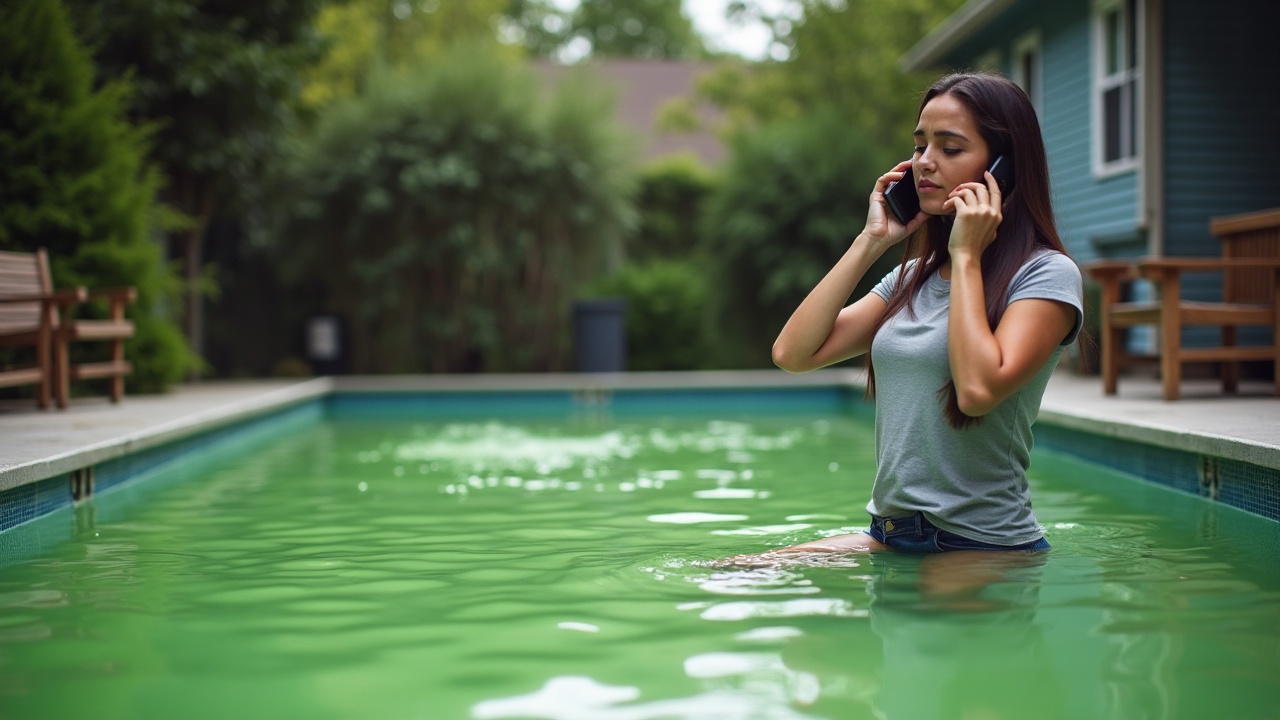
Swimming pool algae treatment leads are slipping through your fingers because homeowners can't reach you during chemical emergencies—and Leslie's Pool Supplies, Walmart, and Home Depot are open when you're not answering. When a pool owner wakes up to green water on a Saturday morning, they'll call three pool companies before driving to a retail store that's guaranteed to be open. If you miss that call, you've lost a $300-$800 service opportunity to a $40 bottle of shock treatment.
Why Do Pool Companies Lose Emergency Algae Treatment Calls?
Pool service companies lose algae treatment calls because they're unavailable during the exact hours when panic sets in—early mornings, weekends, and evenings after work. Homeowners discover green pools when they have time to look at them, not during your business hours. When they can't reach you within minutes, they assume you're too busy or don't handle emergencies, so they buy chemicals retail and either fix it themselves or never become your customer at all.
The timing problem is brutal. A homeowner sees their pool Friday evening. They call Saturday morning. You're either at job sites with your phone silenced, or you don't staff phones on weekends. By Saturday afternoon, they've bought chemicals at Leslie's and posted in a Facebook pool group asking for advice.
Here's what most articles won't tell you: The algae treatment call isn't actually about algae—it's about fear. Pool owners see green water and panic about pool parties, property value, and whether they've destroyed a $30,000 asset through neglect. They're not shopping on price. They're shopping on who picks up the phone and says "I can be there Monday morning" with enough authority that the homeowner believes the problem is contained.
According to InsideSales.com, lead response time matters more than almost any other factor in conversion—leads contacted within 5 minutes are 21 times more likely to convert than those contacted after 30 minutes. For emergency service calls like algae outbreaks, that window is even shorter.
What Makes Pool Algae Service Calls Different From Regular Maintenance?
Algae treatment calls are high-emotion, high-margin opportunities that homeowners will pay premium rates to solve immediately—but only if you're available when they need you. Unlike weekly cleaning contracts that homeowners shop carefully, chemical emergencies trigger panic buying. The pool owner isn't comparing your $500 treatment quote to three competitors. They're comparing your availability to the certainty of a retail store being open right now.
The average algae remediation service call runs $400-$800 depending on pool size and severity. That includes chemical treatment, brushing, filter cleaning, and a follow-up visit. Compare that to the $40-$120 a homeowner spends at a retail store, where they're guessing at chemical dosages and doing the labor themselves.
You'd think the price difference would send them to professionals. It doesn't. Availability beats expertise when someone is standing in their backyard staring at swamp water.
The Retail Advantage You're Competing Against
Leslie's Pool Supplies has 1,000+ locations open until 7pm on weekdays and all day Saturday. Home Depot and Lowe's are open until 10pm. When your phone goes to voicemail at 5:30pm on a Thursday, the homeowner isn't waiting until Monday. They're driving to a store that's guaranteed to be open, where an employee will hand them chemicals and a printout.
The retail experience is inferior—the homeowner often buys the wrong chemicals, overdoses the pool, or gives up halfway through the treatment. But inferior service delivered immediately beats superior service that's unavailable.
How Do You Win Back Green Pool Competition?
Winning algae treatment calls requires being reachable during the hours homeowners discover problems—evenings, weekends, and early mornings before work. You don't need to run service calls at those hours, but you need a live person answering phones who can book appointments, explain your process, and provide enough reassurance that the homeowner stops shopping. The goal is to convert panic into a scheduled Monday appointment before they leave for Leslie's.
Most pool companies try one of three failed solutions:
- Voicemail with a promise to call back Monday — By Monday, they've already bought chemicals or hired someone else
- After-hours answering service that takes messages — Homeowners can tell the difference between someone who can help and someone reading a script
- The owner's cell phone given to "emergency" customers — You answer some calls, miss others, and burn out trying to be available 24/7
The solution isn't working longer hours yourself. It's having a front office team that answers calls live, books jobs into your actual schedule, and handles the customer exactly the way you would—without you touching the phone.
Book All Leads runs a full front office team for pool service companies—six roles working around the clock to answer every call, qualify leads, book treatments, and follow up with customers. Your team goes live in 5 days. No software for you to learn. No contracts. When a homeowner calls Friday night about green pool water, they reach a real person who knows your pricing, checks your Monday availability, and books the appointment while the customer is still standing poolside.
What Should Your Team Say When Someone Calls About Algae?
The first 30 seconds of an algae emergency call determine whether you book the job or lose it to retail. Your team needs to acknowledge the urgency, demonstrate expertise, and provide a clear next step—all before the homeowner starts thinking about driving to a store. The script isn't about selling; it's about containing panic and establishing that you're the authority who will solve this.
Here's the structure that works:
Acknowledge and normalize: "Green pool water is fixable—we handle these all the time, and your pool will be clear again within a week." This immediately reduces the fear that they've destroyed their pool.
Ask qualifying questions: "When did you first notice it turning green? Is the water cloudy or can you see the bottom?" This demonstrates expertise and helps you quote accurately.
Provide a clear plan: "We'll come out Monday morning, test your chemistry, treat it with the right chemicals, and have you back on the schedule. Most pools clear up within 3-5 days depending on how long it's been."
Address the retail option directly: "You could pick up chemicals yourself, but if you guess wrong on the dosage or the algae type, you'll spend more money and still have a green pool next week. We get a lot of calls from people who tried the DIY route first."
That last part is critical. If you don't address the retail option, the homeowner will think of it the moment they hang up. By acknowledging it and explaining why your service is worth the premium, you're giving them permission to spend more for certainty.
How to Quote Emergency Pool Chemical Treatments on the Phone
Homeowners calling about algae want a price range immediately. If you refuse to quote over the phone, they'll call the next company. You need a pricing structure simple enough that your front office can quote it confidently without seeing the pool.
Most successful pool companies use a tiered structure: small pools (under 15,000 gallons) run $300-$450, medium pools (15,000-30,000 gallons) run $450-$650, and large pools or severe cases run $650-$900. Build in follow-up visits and filter cleaning, and quote the higher end of the range on the phone. If you arrive and it's easier than expected, you look like a hero.
How Much Revenue Are You Losing to Missed Calls?
The average pool service company misses 30-40% of inbound calls during peak season, according to data from Vendasta research on local service businesses. If you're getting 20 algae-related calls per month during summer and missing 8 of them, you're losing $3,200-$6,400 in monthly revenue from that service line alone—not counting the long-term contract value of customers who would have converted to weekly maintenance.
Let's make it concrete. You run a pool service business in a mid-sized market. May through September, you average 25 calls per week. Sixty percent are existing customers, forty percent are new leads or one-off requests. Of those new leads, about 30% are algae or chemical emergencies. That's 3 high-value opportunities per week.
If you're only reachable during business hours, you're catching maybe 40% of those calls live. The rest hit voicemail. Even if you call back within an hour, half have already gone elsewhere. Do the math:
- 3 algae calls/week × 20 weeks = 60 calls per season
- You miss or delay response on 60% = 36 lost opportunities
- Average job value = $550
- Lost revenue = $19,800 per season from one service line
Want to see your actual losses? Calculate your losses based on your call volume and average job value.

Why Voicemail Doesn't Work for Chemical Emergencies
Voicemail creates the illusion you're reachable while guaranteeing you'll lose emergency work to competitors who answer live. Homeowners experiencing a pool chemical emergency interpret voicemail as "this company is too busy for me" or "they don't handle urgent requests," regardless of what your outgoing message says. By the time you return the call an hour later, the lead has moved on.
The data supports this. Research from Harvard Business Review on customer experience shows that customers who can't reach a business on the first attempt are 60% less likely to try again, even if the business calls them back the same day. For emergency services, that percentage climbs higher.
Your voicemail message promising to call back within an hour doesn't reassure anyone. It confirms you're not available now, which is when they need you. They'll call the next company on Google while walking to their car to drive to Leslie's.
Why After-Hours Answering Services Fail Pool Companies
Generic answering services sound professional until the homeowner asks a real question. "How much does algae treatment cost?" "Can you come today?" "What if the pool is black instead of green?" A scripted operator reading from a flowchart can't answer those questions with the confidence needed to book a $600 job. The homeowner can tell they're talking to someone who doesn't know pools, doesn't know your pricing, and can't make decisions.
You end up with messages that say "Customer called about green pool, wants a callback," which you return Monday morning to a customer who already solved the problem themselves. The answering service gives you the appearance of availability without the conversion.
What's the Real Cost of Losing Algae Treatment Customers Long-Term?
The immediate loss is the $400-$800 treatment call. The long-term loss is the weekly maintenance contract you never got to propose. Most homeowners who call about algae aren't on a regular service plan—if they were, the pool wouldn't have turned green. The service call is your chance to convert them to recurring revenue, but only if you win the initial call.
A weekly pool maintenance contract averages $125-$175 per month depending on your market and pool size. Customer lifetime value for a pool service client typically runs 3-5 years. If you close 25% of algae treatment customers into ongoing contracts, each missed emergency call costs you more than the immediate service—it costs you $4,500-$10,500 in lifetime contract value.
That changes the math on having someone answer your phones. It's not a cost—it's the highest-ROI move you can make.
How Do You Handle Algae Calls Outside Your Service Area?
Not every call is a qualified lead. Someone 45 minutes outside your territory calls about a green pool—do you turn them away or try to help? The answer affects your reputation and your Google ranking. Dismissing out-of-area callers with "sorry, we don't service there" creates negative reviews and wasted marketing spend. Helping them anyway builds goodwill and referrals.
Your front office should have a clear protocol: politely explain you're outside their area, offer a referral to a trusted company if you have one, or provide basic advice that helps them choose a qualified service provider. "You'll want someone who tests your water chemistry on-site and includes follow-up visits, not just a chemical dump-and-run." This positions you as helpful even when you can't take the job.
Some pool companies go further and take the job anyway, charging a travel fee. If you're 30 minutes out and can add $75-$100 to your quote, that emergency call might still be worth your time—and it expands your territory organically.
When Is the Best Time to Call Pool Owners Back About Algae?
If you missed the call and you're returning it, timing matters almost as much as answering live. Calling back Monday morning about a Saturday inquiry means you're three days late and the pool owner has already handled it. Calling back within 30 minutes means you still have a chance—the homeowner probably hasn't left for the store yet and may not have reached your competitors.
But here's the problem: you can't return calls in 30 minutes if you're elbow-deep in a filter rebuild or skimming a commercial property. This is why owner-operators struggle. You're good at pool service, not phone triage. Choosing between finishing the job you're on and calling back a lead creates lose-lose situations.
The fix isn't working faster or checking your phone compulsively. It's having a team that handles calls in real-time so you never have to choose.
Frequently Asked Questions
How quickly do I need to respond to algae treatment leads?
You need to answer live or return the call within 5-10 minutes to have a realistic chance of booking the job. Algae calls are emotional emergencies—homeowners are making decisions in minutes, not days. If they can't reach you immediately, they'll either call competitors or drive to a retail store. Waiting until the next business day to return calls results in 80%+ lead loss for emergency requests.
Can I convert algae treatment customers to weekly maintenance contracts?
Yes, and you should propose it on every treatment call. Homeowners who needed emergency algae treatment clearly aren't maintaining their pool correctly. After you've solved the crisis and demonstrated expertise, offer a maintenance plan with language like "Most of our weekly customers never see green water—we catch chemistry problems before they turn into algae blooms." Conversion rates of 20-30% are common if you propose at the right moment.
What if a customer wants same-day algae treatment?
Same-day service requests are difficult for most pool companies to accommodate, but you can still win the job by setting proper expectations. Explain that rushing the treatment won't clear the pool faster—chemistry takes time regardless of when you start. Offer next-day or Monday morning service, walk them through what'll happen, and emphasize that DIY retail treatments often make the problem worse. Confidence and expertise matter more than same-day availability for most homeowners.
Should I quote algae treatment pricing over the phone?
Yes, always provide a price range over the phone. Homeowners calling about emergencies want to know whether you're $200 or $2,000. If you refuse to quote, they'll assume you're expensive and call someone else. Use tiered pricing based on pool size (small/medium/large) and quote the higher end of your range to leave room for easier-than-expected jobs. "For a pool your size, you're typically looking at $500-$650 depending on severity" books more jobs than "I'd need to see it first."
How do I compete with Leslie's and big-box stores on algae treatment?
You don't compete on price—you compete on certainty and expertise. When a homeowner buys chemicals retail, they're guessing at dosages, algae type, and treatment duration. Position your service as guaranteed results: "We test your water, use commercial-grade chemicals, and follow up to make sure it's actually clear—not just less green." Emphasize the risk of DIY failure: "I get a lot of calls from people who spent $100 at the store and still have a green pool two weeks later." You're selling peace of mind, not chemicals.
What's the profit margin on algae treatment calls compared to weekly maintenance?
Algae treatment calls typically carry 50-65% profit margins because you're charging for emergency service, expertise, and multiple visits while your hard costs are primarily labor and chemicals. Weekly maintenance contracts run 35-50% margins but provide predictable recurring revenue. The ideal business model uses high-margin emergency calls to attract customers, then converts 20-30% of them to steady maintenance contracts. One-off treatments fund growth; contracts fund stability.
Stop Losing High-Margin Work to Retail Stores
Swimming pool algae treatment leads are some of the highest-value, easiest-to-close opportunities in your market—if you can answer the phone when homeowners call. Every missed call is $500-$800 walking out the door to Leslie's or a competitor who happened to pick up. You don't need to work longer hours or carry your phone everywhere. You need a front office team that handles calls the way you would, books jobs into your real schedule, and turns panic calls into scheduled appointments.
Book All Leads builds and manages your entire front office—live in 5 days, no software to learn, no contracts. Your team answers calls 24/7, qualifies leads, books jobs, and follows up with customers so you can focus on the work that actually makes you money. Stop losing green pool competition to stores that just happen to be open. Start winning the calls that matter.
John Edmonds is a native Texan and military combat veteran. He founded Book All Leads after identifying a critical gap in the service industry: business owners losing revenue not from lack of skill, but because no one was handling the calls, follow-ups, reviews, and payments while they were busy doing the work.
View LinkedIn Profile →