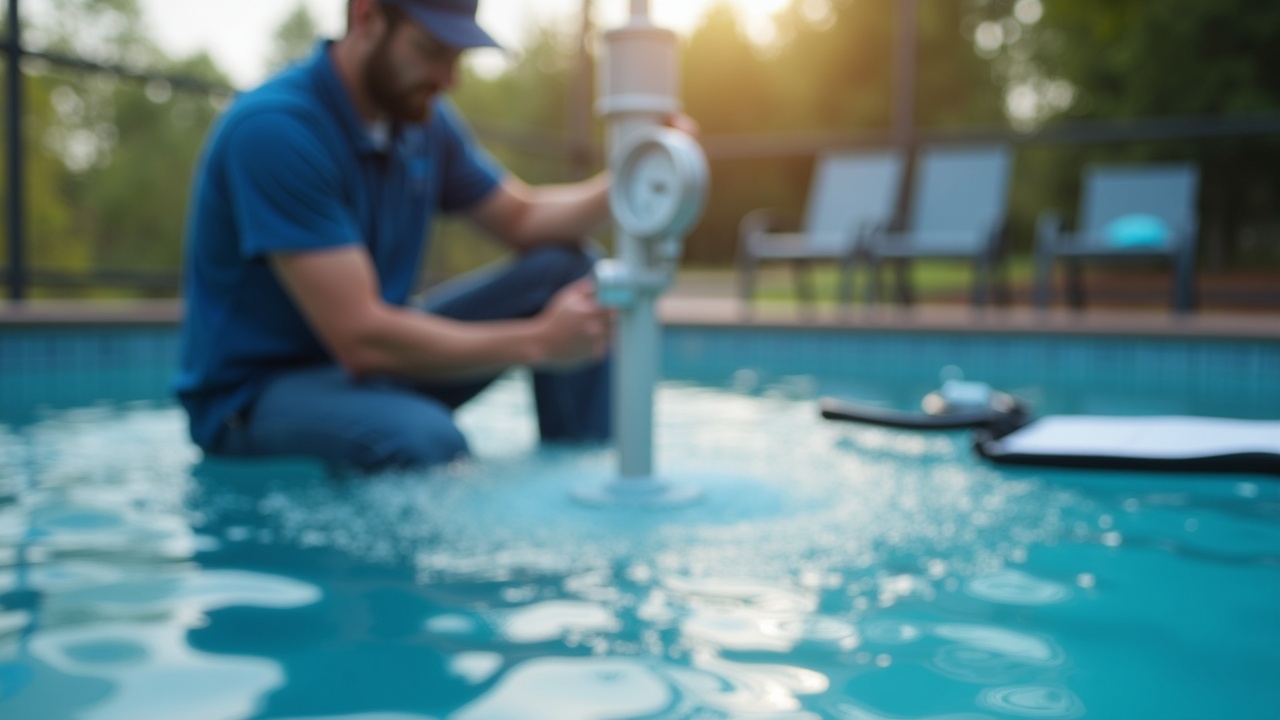
Swimming pool backwash service jobs are some of the easiest to lose because they feel unnecessary to customers. When a homeowner watches a three-minute YouTube video showing someone flip a valve and run water backward through a filter, they think "Why am I paying $85 for this?" The reason pool service companies lose these recurring jobs isn't because the work is complicated—it's because most companies never explain what they're actually looking for during backwashing, why timing matters, or what early warning signs they catch that homeowners miss entirely.
The Problem: Customers Think Backwashing Is Just Reversing Water Flow
Most pool owners believe backwashing is purely mechanical: flip the valve to "backwash," run the pump for a few minutes until the sight glass clears, switch back to "filter," and you're done. They're right about the mechanics but completely wrong about the value. The value isn't in turning the valve—it's in the diagnostic work that happens before, during, and after.
Here's what most articles won't tell you: The backwash itself is the least important part of a professional swimming pool backwash service visit. What matters is the pressure differential check before you start, the clarity timeline while you're running it, the rinse cycle most DIYers skip, and the visual inspection of the backwash water that tells you whether you're dealing with normal dirt, algae bloom precursors, or a cracked lateral that's about to fail.
When you lose a backwash customer to YouTube, you're not losing $85. You're losing the early-catch revenue: the $450 cartridge replacement you would have recommended in two weeks when you noticed the pleats starting to separate, the $180 DE grid repair before it tears completely, or the $1,200 sand change before the channeling gets so bad they're calling you for green pool recovery.
According to the Bureau of Labor Statistics, there are over 94,000 people employed in pool and spa service roles in the U.S., and the overwhelming majority of service calls stem from neglected maintenance that homeowners thought they were handling themselves. The backwash job isn't about the backwash. It's about being in front of the equipment often enough to catch problems while they're cheap.
Why Pool Owners Think They Can DIY This
Pool filter backwashing looks simple because the visible part is simple. Turn a valve, watch dirty water flow out, turn it back. There's no disassembly, no tools beyond what's already installed, and the results are immediate—pressure drops, flow improves, water clears up. It feels like an obvious candidate for DIY.
The second reason is cost perception. When homeowners see an $85 service call for fifteen minutes of work, they calculate hourly rates in their heads and feel overcharged. They don't see the fifteen years of pattern recognition that lets you hear a pump cavitation issue from thirty feet away, or the visual database in your head that knows what backwash water should look like in week two versus week eight of a seasonal cycle.
The third reason: pool service marketing has trained customers to see backwashing as a line item instead of a diagnosis. When your invoice says "backwash filter — $85," you've told them the work is transactional. When it says "filter system inspection and backwash service — $85," you've told them you're looking at the whole system. The framing matters more than you think.
What Homeowners Miss During DIY Backwashing
- Pressure trending: They check if pressure is high today, but don't track whether it's creeping up faster than it should week-over-week, which signals media degradation or a clogged return line.
- Backwash water color and clarity progression: Experienced techs know that water should clear within 90-120 seconds for a healthy sand filter, and longer timelines mean channeling or calcified media.
- Post-rinse confirmation: Most DIYers skip the rinse cycle entirely, sending DE or sand fragments straight into the pool and wondering why they have cloudy water two days later.
- Multiport valve condition: A valve that's getting hard to turn or doesn't seat cleanly is three months from failure, but homeowners won't notice until it's leaking or stuck.
What Actually Happens When a Pool Company Loses Recurring Backwash Revenue
Let's follow a real scenario. A pool owner in Mesa, Arizona, watches a video and cancels their monthly backwash service to save $85. They successfully backwash their sand filter four times over the summer. Everything seems fine—until it isn't.
In month three, the backwash takes six minutes to clear instead of two. The homeowner doesn't notice because they've never tracked it. By month four, the pressure gauge is climbing faster between backwashes. They assume it's normal summer debris load. In month five, they're backwashing every five days instead of every twelve, and the water has a faint haze that shock treatments aren't fixing.
They call the pool company back. The diagnosis: the sand has calcified and channeled, water is bypassing the media entirely, and they need a full sand replacement at $850. Had the tech been there monthly, they would have caught the calcification in month two when backwash times started extending, recommended a sand change at $650 (before the media fully failed), and the pool would never have lost clarity.
The customer saved $340 in service calls and spent $850 on an emergency fix, plus three weeks of mediocre water quality. The pool company lost five months of predictable recurring revenue and got blamed for the high cost of the emergency repair.
This is the pattern playing out in pool service companies across the country. According to Bain & Company research on customer retention economics, a 5% increase in customer retention can increase profits by 25-95%, because repeat customers spend more and cost less to serve. But in pool service, retention hinges on customers understanding the diagnostic value of routine visits—and most companies never teach them that.
How to Make Swimming Pool Backwash Service Feel Essential Instead of Optional
The fix isn't charging less or explaining the valve operation better. It's reframing the entire visit so customers see the diagnostic work, not just the transactional task. You're not selling backwashing. You're selling early problem detection with a backwash included.
Start by changing how you talk about the service. Replace "We'll come by and backwash your filter" with "We'll inspect your filter system, check pressure trends, backwash as needed, and catch any developing issues before they cost you real money." One feels like a chore they could do themselves. The other feels like insurance.
Second, show your work. Take thirty seconds during the visit to point out what you're checking: "Your pressure was 18 last time, it's 22 now—that's normal for three weeks of use. I'm looking for jumps bigger than that." Or: "Your backwash water cleared in about two minutes, that's healthy. If it takes longer next time, we'll talk about whether the media needs refreshing." Customers who see the diagnostic process understand why they're paying for expertise, not just labor.
Third, document what you find and send it to them. A photo of the pressure gauge with a date stamp and a two-sentence note—"Pressure at 22 psi after backwash, normal range. Next service recommended in 10-14 days."—turns an invisible service into a visible record. It also creates a data trail that proves your value when you eventually recommend a repair.
The Front Office Problem That Kills Retention Before You Ever Arrive
Most pool service companies lose backwash customers before the technician ever explains the value. The breakdown happens at the front office: a customer calls to reschedule, gets voicemail, and decides it's easier to just skip the service this month. Or they call with a question about whether they really need a backwash this week, no one answers, and they Google it instead—landing on a DIY video.
When Book All Leads works with pool service companies, one of the first patterns we fix is the missed call cycle. A full front office team—live people answering every call, booking follow-ups, sending reminders, and handling the "do I really need this?" conversations before they turn into cancellations—keeps customers in the routine. The backwash service doesn't feel optional when someone calls the day before to confirm, answers questions about what the tech will check, and reminds them why regular visits prevent expensive problems. It's not about technology. It's about having people who care about outcomes handling the details so you can focus on the work.
What to Say When a Customer Asks "Can't I Just Do This Myself?"
This question is coming. Have an answer ready that's honest and doesn't sound defensive. Here's what works:
"You absolutely can backwash your own filter—the mechanics are simple and YouTube has great videos. What you're paying us for isn't the valve operation. It's the diagnostic work. We're tracking pressure trends across visits, checking how fast your backwash clears compared to last time, looking at valve seals and o-rings for early wear, and catching problems while they're $150 fixes instead of $1,200 emergencies. If you're confident doing that level of inspection yourself, you can definitely handle it. Most of our customers just prefer that we watch for those things so they don't have to."
Notice what this does: it validates their ability, explains the actual value, and positions your service as a choice rather than a necessity. Customers who understand what they'd be taking on often choose to keep paying. Customers who truly want to DIY will leave anyway—but they'll remember your honesty when they need help later.

How to Package Filter Maintenance as Recurring Revenue
The most successful pool service companies don't sell individual backwash visits. They sell seasonal filter maintenance packages that include backwashing as one component of a larger inspection routine. A typical package might include:
- Bi-weekly or monthly filter system inspections with backwash as needed
- Pressure tracking and documentation across the season
- One seasonal deep-clean (DE grid cleaning, cartridge soak, or sand surface rake)
- Priority scheduling for repairs if issues are found
- End-of-season winterization or filter media assessment
Priced at $110-$140 per visit depending on your market, this package reframes the service from "paying someone to flip a valve" to "paying someone to make sure my $8,000 pool and $2,500 equipment pad stay healthy all season." The math is easier to justify, and the recurring revenue is protected inside a larger value proposition.
Why Monthly Contracts Fail and What to Do Instead
Traditional pool service contracts with auto-billing and cancellation fees feel like cable company tactics to most homeowners. They work for full-service weekly maintenance, but they backfire for standalone backwash services because customers feel locked into something they could technically do themselves.
Instead, offer a pre-paid seasonal package with a modest discount: "Six visits between May and October for $480, or $85 per visit if you book individually." No auto-renewal, no cancellation penalty, just a simple prepay incentive. Customers who prepay show up for visits (they've already paid), and the ones who don't prepay are telling you they're going to DIY anyway.
The Education Gap That's Costing You Recurring Revenue
Most pool service companies assume customers understand what professional maintenance prevents. They don't. Homeowners see a clear pool and assume everything is fine, right up until something fails expensively. Your job is to close that gap—not with scare tactics, but with pattern education.
Every time you catch something early—a valve that's starting to stick, a pressure climb that's faster than normal, backwash water that's taking too long to clear—take fifteen seconds to explain what you're seeing and what it would cost if it continued unchecked. "This valve is getting a little sticky. If we let it go another month, the o-ring will tear and you'll have a leak. Replacing the spider gasket now is $90. Replacing the whole valve after it cracks is $350."
Do this consistently, and customers stop seeing your visits as optional maintenance. They see them as the reason their neighbor spent $1,500 on emergency repairs and they didn't.
Research from Forrester Research shows that customers who understand the "why" behind a service are significantly more likely to remain loyal and recommend the provider. In pool service, the "why" isn't the backwash—it's the early problem detection that prevents expensive disasters.
When DIY Actually Makes Sense (And How to Stay in the Relationship)
Some customers are going to DIY their backwashing no matter what you say. They enjoy the hands-on work, they have the time, or they're cost-sensitive in ways you can't overcome. Instead of fighting it, give them a path to stay connected.
Offer a seasonal check-in package: "If you're handling your own backwashing, we can come out twice a season—once in late spring and once in late summer—to inspect the filter system, check your media condition, and make sure everything is running efficiently. $120 per visit, and we'll catch anything that needs attention before it turns into an expensive problem."
This keeps you in the relationship, keeps them educated, and positions you as the expert they call when they're out of their depth. Many DIY customers eventually come back to regular service after they realize how much attention the equipment actually requires.
What to Track to Prove Your Value
If you're not documenting what you find during backwash visits, you're leaving money on the table. Start tracking and sharing:
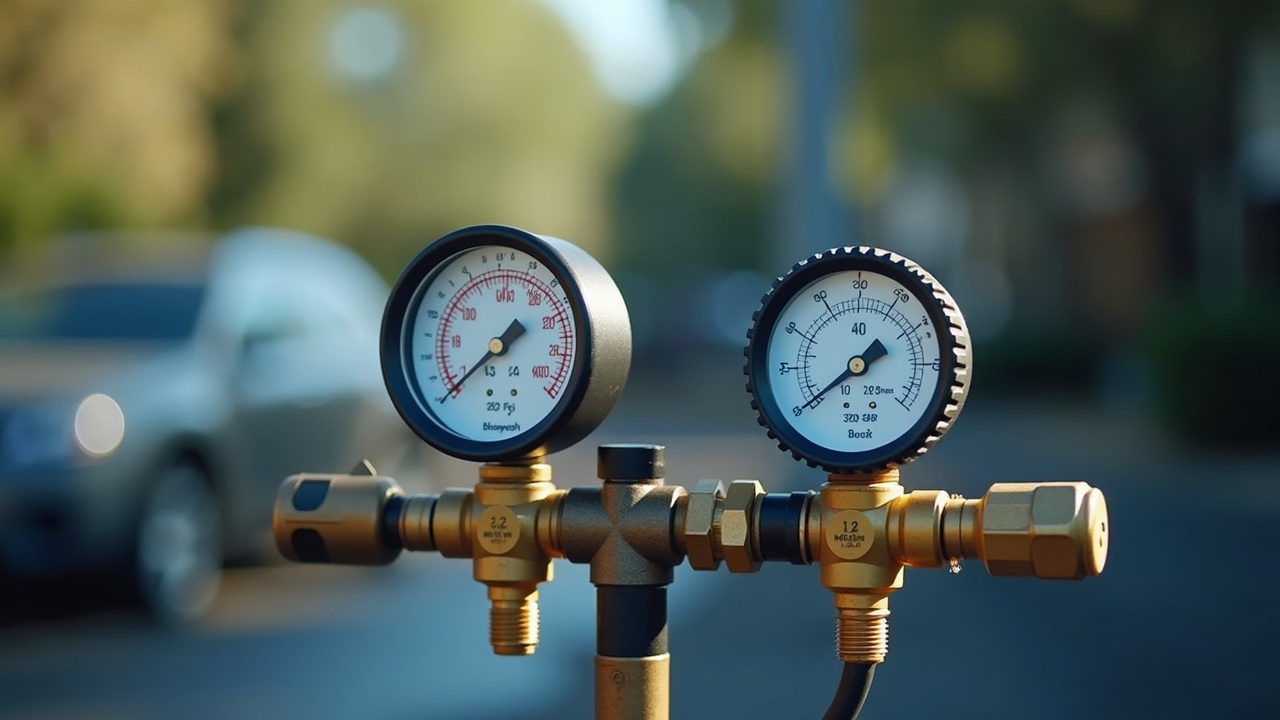
- Pressure before and after each backwash: Show the trend over time so customers see when things are declining faster than normal
- Backwash duration to clarity: "Took 90 seconds to clear this time, same as last month—your sand is still in good shape"
- Minor issues caught early: "Noticed your valve handle is getting stiff, lubed the o-rings today, should be good for another season"
- Seasonal comparisons: "You're running 3 psi higher than this time last year, let's keep an eye on that"
Send a photo and three bullet points after every visit. It takes two minutes and turns invisible work into documented value. When you eventually recommend a $650 repair, you have months of data showing why it's necessary.
The Real Reason You're Losing These Jobs
Swimming pool backwash service jobs are lost because customers don't see the diagnostic work. They see a fifteen-minute visit, a $85 charge, and a task they could learn on YouTube. The fix isn't better marketing or lower pricing—it's better education and better positioning.
Teach customers what you're actually looking for during a backwash visit. Show them the pressure trends, the backwash timing, the valve condition checks, and the early problem catches that save them real money. Document what you find so they see the value in black and white. And stop selling backwashing as a standalone service—package it as part of a seasonal filter health program that makes the recurring cost feel like smart prevention instead of optional maintenance.
The pool service companies that keep these customers aren't the ones with the cheapest prices. They're the ones who make customers feel smart for paying a professional to handle something they technically could do themselves. That's the difference between recurring revenue and a race to the bottom.
If missed calls and scheduling gaps are killing your retention before you even get a chance to prove your value, it's time to fix the front office side of the business. See how a team that actually answers every call and keeps customers in their service rhythm can change your revenue at Book All Leads.
Frequently Asked Questions
How often does a pool filter actually need backwashing?
Most residential pool filters need backwashing when the pressure gauge reads 8-10 psi above the clean baseline pressure, which typically happens every 2-4 weeks during peak season depending on usage, debris load, and bather load. Cartridge filters need cleaning every 4-8 weeks instead of backwashing. The frequency matters less than the pressure trend—if you're needing to backwash significantly more often than usual, it signals a problem with the media or a circulation issue.
Can backwashing too often damage my pool filter?
Yes. Over-backwashing wastes water and prevents the filter from building the thin layer of captured debris that actually improves filtration efficiency. For sand and DE filters, you want a slight amount of built-up material to help trap finer particles. Backwashing every few days when pressure is still normal reduces efficiency and shortens media life. Only backwash when pressure climbs 8-10 psi above your clean baseline.
What's the difference between backwashing and cleaning a pool filter?
Backwashing reverses water flow to flush out trapped debris and is used for sand and DE filters—it's routine maintenance done every few weeks. Filter cleaning is a deeper service: for cartridge filters, it means removing and hosing or soaking the cartridges; for DE filters, it means disassembling the tank and cleaning the grids; for sand filters, it means removing and replacing the sand media every 5-7 years. Backwashing is maintenance. Cleaning is restoration.
Why does my pool still look cloudy after I backwashed the filter?
Cloudiness after backwashing usually means you skipped the rinse cycle, sending DE powder or sand fragments back into the pool. It can also indicate that your filter media is worn out and no longer trapping fine particles effectively, or that you have a water chemistry imbalance (high calcium, low sanitizer) that backwashing won't fix. If rinsing and re-adding DE doesn't clear it within 24 hours, you likely need a deeper filter cleaning or media replacement.
How much does professional swimming pool backwash service cost?
Professional pool filter backwashing typically costs $75-$120 per visit depending on your market and whether it includes a full filter system inspection. Seasonal maintenance packages that include regular backwashing, pressure tracking, and one deep-clean typically run $480-$720 for a six-month season. The cost is significantly lower than emergency filter repairs, which range from $350-$1,200 depending on what fails when maintenance is skipped.
Should I backwash my pool filter before or after adding DE powder?
You backwash first to remove the old, dirty DE and debris, then add fresh DE powder after completing the rinse cycle and returning the valve to filter mode. The new DE coats the grids and becomes your filter media. Adding DE before backwashing wastes powder and doesn't improve filtration. The order is always: backwash, rinse, return to filter mode, add fresh DE through the skimmer.
John Edmonds is a native Texan and military combat veteran. He founded Book All Leads after identifying a critical gap in the service industry: business owners losing revenue not from lack of skill, but because no one was handling the calls, follow-ups, reviews, and payments while they were busy doing the work.
View LinkedIn Profile →