
Swimming pool boiler repair represents a missed revenue stream for most pool companies, who already have the technical expertise and customer relationships to service residential boilers but fail to capture these calls. The problem isn't skill—it's positioning and response capacity. When homeowners need boiler service, they call HVAC companies first, even though many pool contractors have identical or superior heating system knowledge from years of managing pool heaters, heat exchangers, and hydronic systems.
Why Pool Companies Miss Boiler Service Calls
Pool companies lose boiler repair revenue because homeowners don't associate pool service with home heating expertise, and most pool contractors don't answer their phones consistently during winter months when boiler calls peak. Your truck says "pool service," your website focuses on chlorine and vinyl liners, and your team is stretched thin managing seasonal workload swings—so when a homeowner's boiler fails in January, they never think to call you.
The technical gap is nearly nonexistent. If you've diagnosed a failing heat exchanger in a Raypak pool heater or troubleshot a Jandy ignition control, you already understand combustion chambers, gas valves, pressure switches, and thermal regulation better than many entry-level HVAC techs. The equipment is cousins. The physics is identical.
Here's what most articles won't tell you: The homeowners calling you for pool heater service in April are the same ones searching desperately for boiler repair in December—but they compartmentalize you as "the pool guy," not "the heating expert." That mental categorization costs you thousands in revenue per customer over their lifetime, because heating system problems happen year-round while pool service is seasonal.
According to the Plumbing-Heating-Cooling Contractors Association, residential boiler service calls increase 340% between November and February compared to summer months. Most pool companies are operating at reduced capacity or not answering phones consistently during exactly these peak-demand months, creating a revenue gap that better-positioned competitors exploit.
The Real Cost of the Identity Problem
This isn't about lacking skills—it's about lacking positioning and front-office capacity to handle crossover calls. Every pool company that services gas heaters already has 80% of the technical knowledge needed for residential boiler work. The missing 20% is business infrastructure: branding that positions you as a heating expert, phone coverage that captures off-season calls, and scheduling systems that route boiler jobs efficiently.
Here's what you're actually losing:
- Winter revenue gaps: Your technicians sit idle or underutilized for four months while boiler calls go to HVAC companies charging $185–$295 per service call
- Customer lifetime value: The homeowner you see once per season for pool opening could be calling you 3-4 times per year for heating issues, pool maintenance, and heat pump service
- Referral momentum: A homeowner who trusts you with their boiler in January will refer neighbors for pool work in May—but only if you're positioned as the heating expert first
- Emergency pricing power: Boiler failures are true emergencies with pricing flexibility that routine pool service doesn't command
The math is stark. If you service 200 pool heater customers and 40% of them have boilers, that's 80 households. If each needs one service call per year at $225, that's $18,000 in revenue you're leaving for HVAC competitors—from people who already trust you and have your number saved.
Why Your Phone System Is the Bottleneck
You can rebrand. You can add "heating services" to your truck doors. You can train your techs on boiler diagnostics. But none of that matters if you miss the call at 6:47 PM on a Thursday when someone's basement boiler stops firing and their pipes are at risk. That homeowner will call four more companies in the next 11 minutes, and whoever answers first gets the job and the customer relationship.
Research from InsideSales.com shows that response time is the single biggest predictor of whether a service call converts. Companies that respond within five minutes are 100 times more likely to book the job than those who respond after 30 minutes. For emergency service calls like boiler failures, the window is even narrower—often under two minutes.
Most pool companies handle phones the same way: the owner's cell rings, or calls go to a part-time office person who works 9–4 weekdays. That structure fails catastrophically for boiler crossover revenue, because heating emergencies don't respect business hours and your seasonal staff disappears exactly when boiler demand peaks.
This is where businesses like Book All Leads change the equation—a full front office team working around the clock to answer every call, qualify the job, book the appointment, and collect payment details. No missed calls. No voicemail jail. No waiting until morning to respond to last night's emergencies. For pool companies trying to capture heating service revenue, having a dedicated team handling phones 24/7 means boiler calls get answered in February just as reliably as pool opening calls get handled in April.
How to Position Pool Expertise as Heating Expertise
Winning swimming pool HVAC services revenue starts with reframing how homeowners perceive your technical capabilities. You're not "also" qualified to fix boilers—you're uniquely qualified because you work with sophisticated combustion heating equipment every single day. The rebranding isn't dishonest; it's accurate.
Change your service descriptions from equipment-specific to outcome-specific. Instead of "pool heater repair," say "residential heating system service." Instead of "heat pump installation for pools," say "heat pump installation and service." The homeowner doesn't need to know the equipment was originally poolside—they need to know you understand heat exchangers, gas lines, ignition systems, and thermal efficiency.
Add a dedicated heating services page to your website. Don't bury it. Feature it prominently during fall and winter months. Include phrases like "year-round heating expertise" and "combustion system specialists." List the brands you service—if you work on Raypak and Pentair pool heaters, you can absolutely service Raypak and Weil-McLain boilers. The control boards and burner assemblies share design principles.
Train your front office—or the team answering your phones—to ask about home heating when booking pool work. "We also service residential boilers and heating systems year-round. Would you like us to inspect yours while we're here?" That single question, asked to 200 pool customers, will generate 15–30 immediate heating service appointments and position you as the heating expert before winter demand hits.
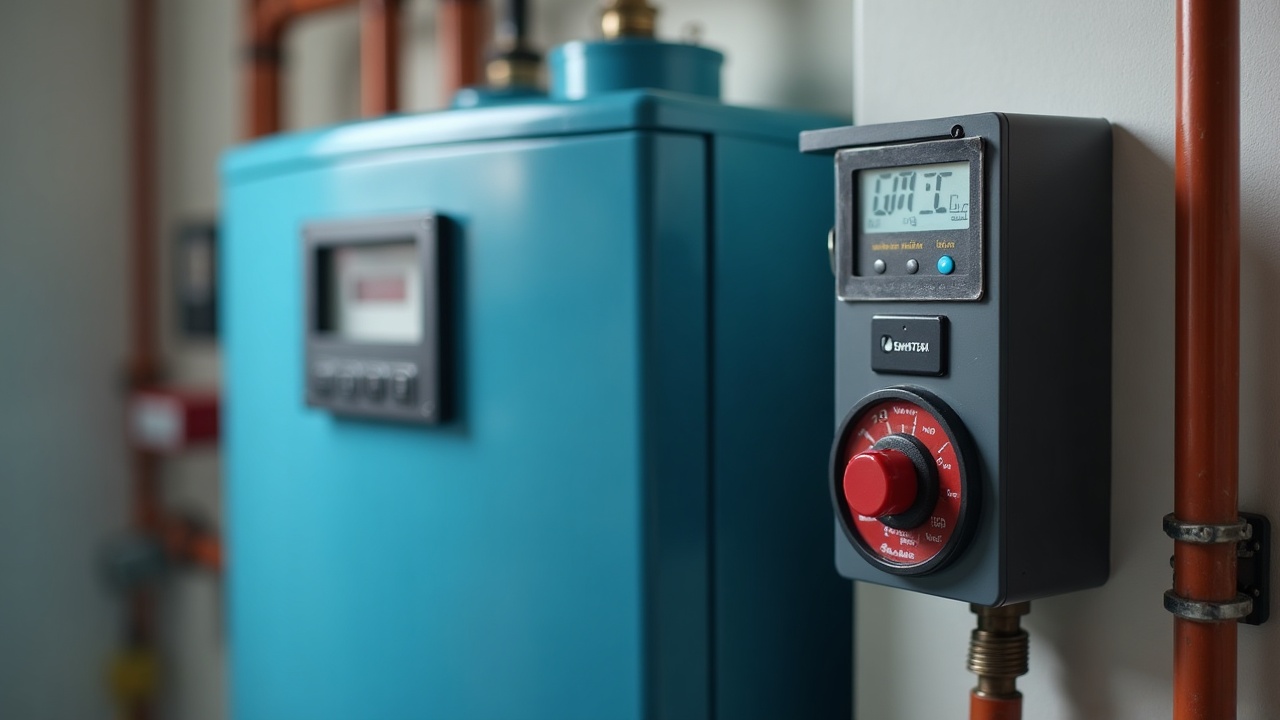
What Equipment Crossover Actually Looks Like
Pool companies worry they'll need to invest in new tools, training, or certifications to handle boiler work. In reality, the technical overlap is so substantial that most experienced pool techs can diagnose and repair residential boilers with minimal additional training.
The Skills You Already Have
If your techs can troubleshoot a pool heater that won't fire, they already know how to diagnose a boiler that won't ignite. Both involve testing gas valve pressure, checking ignition control boards, verifying flame sensors, and diagnosing pressure switch failures. The components are often made by the same manufacturers—Honeywell, White-Rodgers, Robertshaw—and function identically whether they're mounted in a pool heater cabinet or a basement boiler.
Heat exchangers? You replace them in pool heaters when they corrode or scale up. Boiler heat exchangers fail for identical reasons and use the same inspection techniques. Hydronic circulation? You already understand flow rates, pressure differentials, and pump curves from managing pool circulation systems. Gas line sizing, venting requirements, combustion air calculations—all directly transferable.
The Training Gap Is Smaller Than You Think
The honest differences are these: residential boilers often integrate with zone control systems and thermostats you don't see in pool applications, and some boiler types (cast iron sectional boilers, condensing boilers) have design quirks your techs haven't encountered poolside. A two-day condensing boiler training course and a few ride-alongs with an experienced heating tech will close 90% of that gap.
Certifications matter for insurance and liability purposes. Most states require a heating contractor license or gas-fitter certification for boiler work. If you already hold a pool contractor license and your techs have gas certifications for pool heater work, adding a heating endorsement or cross-training under a licensed HVAC contractor is administratively straightforward—not a multi-year process.
A Real-World Example: From Pool-Only to Year-Round Heating Revenue
Consider this scenario, repeated across hundreds of pool service companies every year: A Central Florida pool company with seven employees was doing $840,000 annually in pool service, maintenance, and heater repairs. Strong spring and summer, brutal winter months. The owner knew his techs could handle boiler work—several had come from HVAC backgrounds—but he'd never positioned the business that way and didn't have the phone coverage to handle off-season calls reliably.
In October, he made three changes:
- Added "Year-Round Heating Services" to the truck lettering and website homepage
- Set up a front office team to answer all calls 24/7, even during slow winter months when he used to let calls go to voicemail
- Sent a postcard to 400 existing pool customers offering a pre-winter boiler inspection for $89
By February, the company had completed 63 boiler service calls and 9 boiler replacements—$47,000 in revenue during what used to be dead months. The following year, armed with proof of concept, they promoted heating services more aggressively and cleared $110,000 in winter heating revenue. The existing customer base provided 70% of that work. No new marketing spend. Just repositioning and reliable phone coverage.
The owner later said the biggest unlock wasn't the rebranding—it was having a team that answered every call immediately, even at 9 PM on a Sunday when someone's heat went out. That responsiveness turned one-time pool customers into year-round heating clients and generated referrals from neighbors who'd never even owned pools.

Pricing and Profitability: Where Boiler Work Wins
Boiler service calls command higher pricing than routine pool maintenance because they're emergency-driven and require faster response times. A pool that's slightly cloudy can wait until Tuesday. A boiler that's not firing in January cannot. That urgency translates directly to pricing power.
Typical residential boiler service calls bill at $185–$295 for diagnostics and minor repairs—comparable to or better than pool heater service calls, but with higher call volume during winter months. Boiler replacements range from $4,500 to $9,500 depending on system type and complexity, with margins similar to pool heater installations but far more frequent. According to the Bureau of Labor Statistics, there are approximately 2.8 million residential boilers in service across the U.S., with an average replacement cycle of 15–20 years—creating consistent annual demand.
For pool companies, the profitability advantage comes from leveraging existing overhead. You already have trucks, tools, insurance, and technicians. Adding boiler service doesn't require proportional overhead increases—it fills the capacity you already own during months when it would otherwise sit idle. That means nearly every dollar of boiler revenue drops more directly to profit than starting a new service line would in a different trade.
The Front Office Problem No One Talks About
Pool companies expanding into swimming pool boiler repair consistently underestimate the front-office demands. Boiler calls are urgent. They come in evenings, weekends, and holidays. They require immediate booking, not callback-when-convenient scheduling. And they demand payment certainty before dispatch—because boiler customers are often first-time callers, not established accounts.
Your current office setup—whether that's your cell phone, a part-time receptionist, or a voicemail system—wasn't built for emergency service response. It was built for scheduling pool openings two weeks out. The skill sets are completely different. An office person who's great at managing recurring pool maintenance routes will struggle with the rapid qualification, urgent booking, and payment collection that boiler calls require.
This is the operational gap that kills most pool-to-heating crossover attempts. The marketing works. The techs are capable. But the phones don't get answered fast enough, appointments don't get booked correctly, and payment details don't get collected upfront—so jobs fall through or become unprofitable collection headaches.
Solving this doesn't mean hiring three new office people. It means recognizing that front-office work is a specialized role and either training intensively for emergency service response or partnering with a team that already handles it. The companies that win crossover revenue treat their front office as seriously as they treat their field techs—because in emergency service work, the front office is where revenue is won or lost.
How Much Revenue Are You Actually Missing?
Let's do the math for a typical pool service company with 250 active residential customers. Assume 35% of those homeowners have boilers or hydronic heating systems—that's 88 households. If each household needs just one service call per year at $225, that's $19,800 in annual revenue. Add two boiler replacements per year at an average ticket of $6,500, and you've added another $13,000. Total: $32,800.
That's conservative. Many homeowners need multiple service calls per heating season, and referral momentum from heating work generates new pool customers. A more realistic scenario for a company aggressively pursuing pool heater service expansion: $50,000–$75,000 in first-year boiler revenue from existing relationships, scaling to $120,000+ by year three as the heating service reputation spreads.
Want to calculate your losses based on your specific customer count? Run your numbers. The opportunity is larger than most pool companies realize, and it's sitting in their existing customer base right now.
What Stops Most Pool Companies (And How to Get Past It)
The barriers aren't technical—they're mental and operational. Pool contractors worry about liability exposure, licensing complexity, and brand dilution. These concerns are valid but manageable with the right approach.
Licensing: Most states allow pool contractors to add heating endorsements to existing licenses without starting from scratch. Some require a separate HVAC contractor license, which typically means employing or partnering with someone who holds that credential. This is a solvable administrative problem, not a multi-year barrier.
Liability and insurance: Your commercial general liability insurance likely already covers heating equipment service if you're currently servicing pool heaters. Call your insurer and explicitly add "residential boiler service" to your policy. The premium increase is usually minimal because the risk profile is nearly identical to pool heater work you're already doing.
Brand confusion: Pool companies fear that adding "heating services" will confuse their pool-focused brand identity. The opposite is true. Homeowners respect expertise that spans related domains. Being known as "the heating expert who also does pools" is stronger positioning than "the pool company and nothing else." It signals depth of knowledge, not dilution.
Seasonality concerns: Some owners worry that heating work will distract from core pool business during peak season. This is a scheduling and capacity issue, not a strategic problem. Heating service calls taper off naturally in late spring exactly as pool demand ramps up. The two service lines are seasonally complementary by design.
Frequently Asked Questions
Can a pool service company legally work on residential boilers?
Yes, in most states, as long as you hold the appropriate licenses or employ techs with the necessary certifications. Many pool contractors already have gas-fitter certifications that allow them to work on combustion heating equipment. Check your state's contractor licensing board for specific requirements—often a heating endorsement can be added to an existing pool contractor license without starting from scratch.
What's the difference between a pool heater and a boiler from a technical standpoint?
Both are fuel-fired (or electric) heating appliances that use heat exchangers to transfer thermal energy. The primary differences are application (pool water vs. home heating), operating temperatures (pool heaters typically run 80–104°F, boilers run 120–180°F), and system integration (boilers often connect to zone controls and thermostats). The core components—burners, gas valves, ignition systems, heat exchangers—function identically and use similar diagnostic techniques.
How do I get my existing pool customers to think of me for boiler service?
Direct communication. Send an email or postcard in October offering pre-winter boiler inspections. Add "Year-Round Heating Services" to your truck lettering and website. Most importantly, train whoever answers your phones to mention heating services when scheduling pool work: "We also service home heating systems—would you like us to check yours while we're there?" Customers compartmentalize you based on how you present yourself, so present yourself as a heating expert, not just a pool specialist.
What additional tools or equipment do I need to service boilers?
Minimal additions if you already service pool heaters. You'll want a combustion analyzer for efficiency testing (around $800–$1,500), a manometer for gas pressure testing (often under $200), and possibly some boiler-specific wrenches and fittings. Most diagnostic tools—multimeters, temperature probes, pressure gauges—are identical to what you already use. The investment is under $2,000 for a fully equipped boiler service kit.
Is there enough demand for boiler service to justify repositioning my business?
If you operate in a region with cold winters, absolutely. Residential boilers require annual maintenance and have a 15–20 year replacement cycle, creating consistent demand. Emergency service calls spike dramatically from November through February—exactly when pool service demand drops. If 30% or more of your pool customers have boilers, you're looking at thousands in revenue sitting untapped in your existing customer base, with no additional marketing spend required to reach them.
What if my techs don't have boiler experience?
If they can troubleshoot pool heaters, they're 80% there. The learning curve is short—a weekend training course on condensing boilers and zone control systems, plus a few supervised service calls, will get experienced pool heater techs fully competent on residential boilers. Many manufacturers offer free or low-cost training. The bigger barrier is usually confidence, not competence. Start with simple service calls (flame sensor cleaning, thermostat issues) and build from there.
Stop Leaving Heating Revenue on the Table
Swimming pool boiler repair isn't a side hustle or a distraction from your core business—it's the natural extension of the heating expertise you already have, applied to the customer base you've already built. The homeowners who trust you with their pool heaters in April will trust you with their home boilers in December, but only if you position yourself as the heating expert and answer the phone when they call.
The technical gap is minimal. The licensing barrier is manageable. The real challenge is operational: capturing emergency calls 24/7, booking them correctly, and collecting payment upfront so your techs show up to profitable jobs, not collection problems. Most pool companies stumble here not because they lack ambition, but because they underestimate how different emergency service response is from scheduled maintenance work.
If you're serious about capturing year-round revenue and filling your winter schedule with profitable heating work, the front office is where it starts. You need people answering every call, qualifying every job, booking every appointment, and collecting every payment detail—not software, not voicemail, not "we'll call you back tomorrow." People. Working around the clock. That's what converts heating calls into booked revenue.
Book All Leads builds and manages that entire front office team for you—six roles working 24/7, live in five days, no software for you to learn, no contracts locking you in. We handle the calls. You run the jobs. Learn more at bookallleads.com and stop losing crossover revenue to HVAC companies who aren't any more qualified than you are.
John Edmonds is a native Texan and military combat veteran. He founded Book All Leads after identifying a critical gap in the service industry: business owners losing revenue not from lack of skill, but because no one was handling the calls, follow-ups, reviews, and payments while they were busy doing the work.
View LinkedIn Profile →