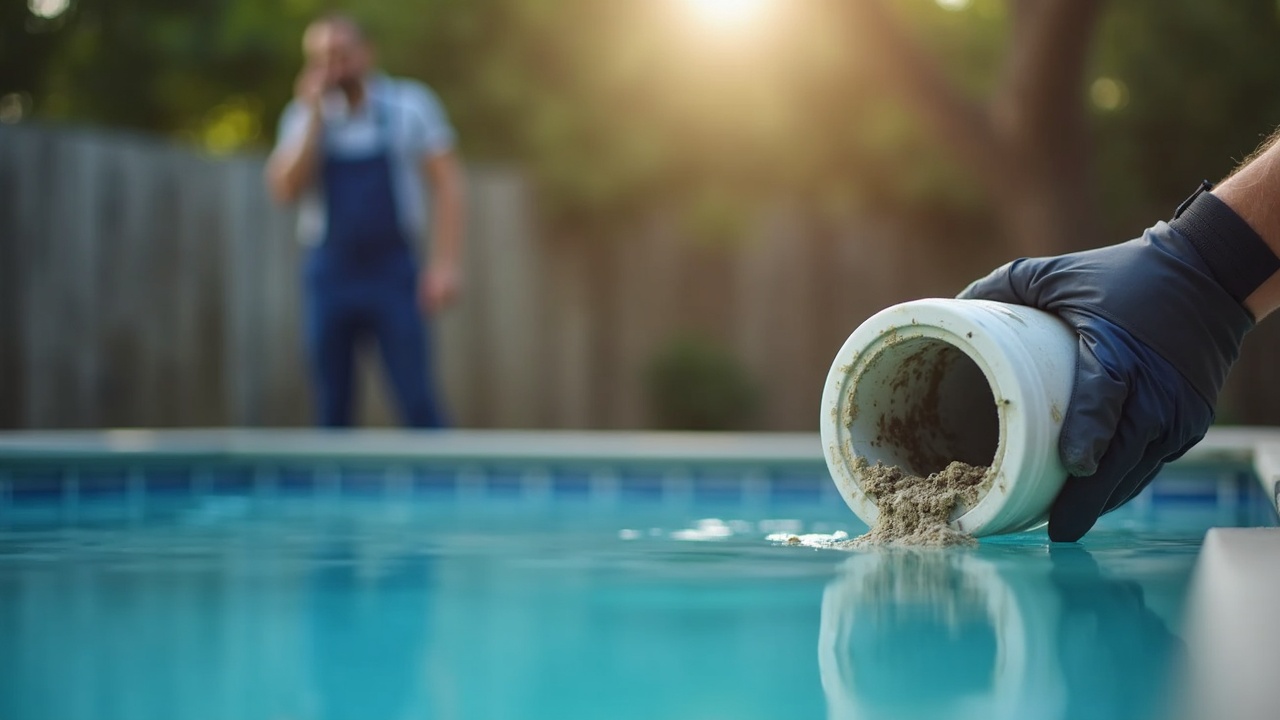
Swimming pool cartridge filter jobs slip through your fingers when competitors answer the phone faster than you do. Cartridge filter replacement is one of the highest-frequency maintenance calls pool companies receive, and homeowners rarely leave messages when their pool water is clouding up. According to InsideSales.com, leads contacted within one minute are 391% more likely to convert than those contacted after five minutes—but most pool service companies let these calls ring through to voicemail during the busy summer months when they're out servicing routes.
The result? Your competitor who answered becomes the one collecting $350 for a cartridge filter installation while you're wiping chlorine off your hands to check your missed calls.
Why Pool Companies Miss More Cartridge Filter Calls Than Any Other Service Request
Cartridge filter jobs have the shortest decision window of any pool maintenance service. When a homeowner notices cloudy water or weak circulation, they're calling for same-day or next-day service, and they're working down a list of three to five pool companies until someone picks up. The first company that answers and offers a reasonable arrival time gets the job 78% of the time, and these aren't small-ticket calls—cartridge filter replacement averages $250-$450 per job depending on filter size and whether you're selling additional cleaning services during the visit.
But here's the timing problem: cartridge filter calls spike during your busiest operational hours. Homeowners notice pool problems in the morning before work or when they come home in the evening. They don't call at 11 a.m. on a Tuesday when you might have a free moment. They call at 7:45 a.m. when you're loading your truck, or at 5:30 p.m. when you're still at your fourth stop of the day with two more on the route.
Your phone rings. You're elbow-deep in a skimmer basket repair. The call goes to voicemail. The homeowner immediately dials the next pool company on their Google search results. That company answers. Job gone.
Here's what most articles won't tell you: The real cost isn't just the $350 you didn't earn on that single cartridge filter replacement. It's the $2,400-$3,800 in annual recurring service contracts you never get the chance to pitch. Cartridge filter calls are relationship-starter jobs. They're perfect opportunities to walk the pool deck, point out the calcium buildup on the tile line, mention your weekly maintenance packages, and convert a one-time equipment repair into a steady monthly client. When you miss the initial call, you're not just losing Tuesday's filter job—you're losing the entire customer relationship that would have started there.
What Happens When You Finally Call Back Two Hours Later
When you do return the call after finishing your route, the homeowner has usually already booked someone else. Even if they haven't, you're now competing against the company that answered live and already scheduled a visit for tomorrow morning. You're trying to win back a lead that has mentally moved on. The psychological advantage is gone. They've already committed to someone else in their mind, even if the work hasn't been done yet.
The data confirms what you already know from experience. Research from Harvard Business Review shows that businesses responding to customer inquiries within an hour are nearly seven times more likely to qualify the lead compared to those responding even one hour later. For time-sensitive service requests like cartridge filter replacements, that window is even tighter—closer to minutes than hours.
The Real Reason Your Voicemail Greeting Doesn't Help
Many pool companies try to solve this with a professional voicemail greeting that promises a callback within two hours. It doesn't work. Homeowners with cloudy pool water don't want a callback—they want their problem solved today. A polished voicemail greeting just confirms that you're unavailable right now, which is all the information they need to move on to the next company on their list.
Your voicemail greeting might be friendly and professional, but it's competing against a live human voice at your competitor's business saying "Yes, we can get someone out there this afternoon." That's not a fair fight, and you're going to lose it every time.
How One Pool Service Company Recovered 23 Lost Filter Jobs in One Month
A pool service company in Scottsdale was losing an estimated 15-20 calls per week during peak season. The owner, Miguel, ran a tight operation with four service techs and handled sales and scheduling himself between job sites. He knew he was missing calls—his voicemail box filled up regularly—but didn't realize how many cartridge filter jobs he was bleeding to competitors until he started tracking missed calls against his weekly revenue.
The pattern was clear: Mondays and Thursdays (his heaviest route days) showed the most missed calls and the lowest conversion rates on callbacks. Filter jobs specifically—which should have been easy wins—were converting at barely 22% when he returned calls more than an hour after the initial contact. He calculated the loss: roughly $8,000 per month in missed cartridge filter and related equipment work, plus an unknown number of potential recurring service contracts that never started.
Miguel didn't want to hire a full-time office person (the math didn't work at his current volume), and he'd tried a call center for three weeks the previous year—that ended poorly when the answering service botched job details and double-booked him twice in one week.
Book All Leads built him a complete front office team that answered every call live within three rings, quoted his cartridge filter replacement pricing accurately, scheduled jobs directly into his calendar with the right time blocks, and sent customers payment links before the tech even arrived. His team was answering calls at 6:45 a.m. and 7:30 p.m.—hours he'd never covered before. The entire setup went live in five days, and he didn't touch any software or learn any system. Just phone coverage that worked like he'd hired six people overnight.
In the first month, his front office team recovered 23 cartridge filter jobs that would have gone to voicemail during his busiest route hours. That's $7,800 in equipment service revenue he would have lost, and four of those filter customers signed up for monthly maintenance packages after the initial visit—adding another $680 per month in recurring revenue.
How Fast Response Times Turn Equipment Calls Into Recurring Clients
Speed isn't just about winning the immediate cartridge filter job. It's about positioning yourself as the responsive, reliable company that homeowners keep calling. When you answer fast and solve their problem quickly, you earn the right to have a bigger conversation about their pool care needs. That's where the real money lives—not in one-time filter swaps, but in converting those equipment calls into weekly or bi-weekly service contracts.
Cartridge filter replacements are perfect conversion opportunities because you're already on-site, the customer is already spending money, and you have a natural reason to walk the entire pool area and assess what else needs attention. The calcium line around the tile. The slightly green tint in the deep end. The pump that's making a funny noise. These observations lead to additional immediate work and recurring service conversations.
But you can't have those conversations if you never show up in the first place because someone else answered the phone first.
Why Cartridge Filter Customers Have Higher Lifetime Value Than You Think
Most pool companies mentally categorize cartridge filter calls as "small jobs"—quick equipment swaps that don't move the revenue needle much. That's a costly mistake. According to data from Bain & Company, a 5% increase in customer retention can increase profits by 25% to 95% in service industries. Cartridge filter customers who convert to recurring service contracts represent that retention growth—they're not one-and-done transactional clients.
Track your own numbers and you'll likely see the same pattern: customers who first contacted you for equipment repair or replacement convert to ongoing service contracts at higher rates than cold leads from advertising. They've already identified themselves as homeowners who need help maintaining their pool. They've already decided to pay for professional service rather than DIY. They're pre-qualified buyers, and all you have to do is answer the phone when they call.
What Swimming Pool Companies Get Wrong About Phone Coverage
Most pool service companies approach phone coverage the same way: the owner answers when possible, calls go to voicemail during service hours, and callbacks happen in the truck between stops or at the end of the day. This works fine for existing customers calling with routine questions. It fails completely for new leads calling about cartridge filter problems or other time-sensitive equipment issues.
The mistake is treating all calls the same. Your regular Wednesday customer calling to reschedule next week's cleaning can wait two hours for a callback. The new homeowner calling about a dirty cartridge filter and cloudy water cannot wait—they're solving that problem today, with or without you.
Here's the uncomfortable truth: you can't fix this problem by "being better" about answering your phone. You're running jobs. You're physically doing the work that generates revenue. You can't be in a customer's equipment pad replacing a cartridge filter and simultaneously answering your phone with full attention. Anyone who tells you to "just answer faster" doesn't understand how field service operations actually work.
Why Hiring An In-House Receptionist Doesn't Solve The Coverage Gap
Some pool companies try to solve the problem by hiring an office person to answer phones. This works if your volume justifies the cost—usually around $35,000-$45,000 annually once you factor in wages, payroll taxes, and benefits. But that person works 9 to 5, Monday through Friday. Your cartridge filter calls come in at 7:30 a.m., at 5:45 p.m., and on Saturday mornings. You're still missing the early and late calls, which are often the highest-intent leads because the homeowner is actively at the pool noticing the problem.
You also face the scheduling problem: when your office person takes a vacation or calls in sick, you're back to square one with no coverage. And if you're running a lean operation (most pool companies with 2-8 techs are), dedicating $40,000 per year to phone coverage feels like a massive fixed cost that doesn't scale with your revenue.

The Three Coverage Windows That Make Or Break Your Cartridge Filter Conversion Rate
If you can only improve phone coverage during certain hours, focus on these three windows where cartridge filter and equipment calls concentrate. These aren't arbitrary times—they're when homeowners are actually at their pools noticing problems and motivated to make calls.
Morning window (7:00 a.m. - 9:00 a.m.): Homeowners check their pools before work or while having morning coffee. They notice the cloudy water or weak flow. They want it fixed by the time they get home that evening. These calls have same-day urgency and high conversion rates, but they're happening when you're loading your truck and heading to your first stop. Miss these calls and they're gone.
Mid-route window (12:00 p.m. - 2:00 p.m.): You're between jobs, grabbing lunch, or driving to the next stop. Your phone rings. You're tempted to let it go to voicemail because you're eating or about to pull into a customer's driveway. These midday calls often come from homeowners who took an early lunch or work from home. They're less time-sensitive than morning calls, but they're still shopping multiple companies and won't wait until evening for a callback.
Evening window (5:00 p.m. - 7:30 p.m.): Homeowners arrive home, walk out to check the pool, and immediately call when they see a problem. You're either finishing your last job of the day or already home yourself. These evening calls have high intent—the homeowner wants someone there tomorrow morning—but most pool companies have completely stopped answering their business line by 6:00 p.m. Want to know a secret? Your competitors aren't answering either. The company that covers this window wins a disproportionate number of jobs simply by being available.
If you're currently covering none of these windows reliably, start with evenings. The volume is lower than mornings, but the competition is even lower, and the conversion rate is surprisingly high because homeowners calling at 6:30 p.m. are serious about getting their pool fixed.
How To Calculate What Missed Cartridge Filter Calls Actually Cost You
Most pool service company owners know they're missing calls, but they don't know the dollar amount they're losing. Here's how to calculate it with reasonable accuracy, and the number will probably make you angry.
- Count your missed calls for one week. Check your voicemail, call logs, and any missed call notifications. Separate them into two categories: existing customers and new/unknown numbers. Focus on the new/unknown numbers—those are potential cartridge filter and equipment jobs you never captured.
- Estimate your callback conversion rate. Of the new leads you did call back, what percentage actually booked? Most pool companies see 20-35% conversion on callbacks made more than one hour after the initial call. Let's use 25% as a conservative estimate.
- Apply your average cartridge filter job value. Include the filter replacement itself plus any typical add-ons (cleaning, chemical balancing, quick equipment checks). Most companies land between $300-$450 per cartridge filter visit.
- Calculate your immediate loss. If you missed 12 new lead calls last week, converted 25% of them on callback (3 jobs), you lost the other 9. At $350 per job, that's $3,150 in one week—$163,800 annually.
- Factor in recurring service conversion. If even 15% of those lost filter customers would have signed up for ongoing service at $180/month, that's another $3,888 in annual recurring revenue lost for every 9 missed conversions. Scale that across a year and you're looking at substantial money walking away.
You can calculate your losses more precisely using your own missed call volume and average job values, but the point is clear: those missed cartridge filter calls represent real revenue that funded someone else's business growth instead of yours.
What Actually Works To Capture Every Swimming Pool Cartridge Filter Call
The solution isn't complicated in concept, but it requires letting go of the idea that you personally need to answer every call or that you need to hire and manage staff to cover phones. Your job is running pool service operations and growing your business. Your front office job is answering every call live, qualifying the lead, quoting accurately, scheduling correctly, and collecting payment. Those are different skills, different hours, and different headspace.
What works is having a dedicated team that answers your pool company's calls live 24/7, knows your cartridge filter pricing and service area, can schedule jobs into your actual availability, and treats every caller like you would if you weren't standing in someone's pump room. Not a call center reading from scripts. Not an answering service taking messages. A real front office team that books jobs and moves leads forward.
When every cartridge filter call gets answered by someone who can say "Yes, we can get out there tomorrow at 10 a.m., and here's what that'll cost," your conversion rate stops depending on whether you happened to be near your phone. It depends on whether you deliver good service—which you already do. You're just finally getting the chance to prove it because you answered fast enough to earn the job.
Why The First 60 Seconds Determines Everything
The title of this article isn't an exaggeration. Sixty seconds is roughly how long a homeowner with a pool problem will wait before moving on to the next company. They're not being impatient or unreasonable—they're being practical. They have a problem that needs solving, they have a list of qualified companies who can solve it, and the first company that confirms availability wins.
Research from Vendasta found that 75% of customers believe it takes too long to reach a live agent, and 67% have hung up the phone in frustration when they couldn't reach a real person. For time-sensitive service calls like cartridge filter replacements, those percentages are almost certainly higher. Your potential customer isn't going to leave three voicemails across three different pool companies and wait to see who calls back first. They're going to keep calling until someone picks up.
The company that answers in under 60 seconds isn't necessarily better at pool service than you are. They're just better at answering their phone, and in this business, that's enough to redirect thousands of dollars in monthly revenue from your bank account to theirs.
Why Equipment Calls Matter More Than Chemical-Only Service Routes
Some pool companies focus almost exclusively on weekly chemical and cleaning routes, treating equipment calls like cartridge filter replacements as distractions from their core business. That's a profitable strategy if your goal is maximizing efficiency on predictable routes. But it leaves substantial money on the table, and it limits your growth options.
Equipment service calls—especially high-frequency maintenance items like cartridge filters, pump baskets, and pressure valve replacements—typically carry higher margins than routine cleaning visits. More importantly, they're gateway services. The homeowner who calls you for a cartridge filter replacement is essentially auditioning you for ongoing work. They're inviting you into their pool area, watching how you work, and deciding whether you're someone they want maintaining their investment long-term.
When you optimize your business to capture every equipment call, you're not just adding one-time service revenue. You're building a pipeline of potential recurring clients who contacted you when they had an immediate need and decided to keep you around because you showed up fast and solved their problem professionally. Those are the highest-value customers in the pool service industry—they didn't need to be convinced they needed help, they just needed to find the right company to provide it.
Frequently Asked Questions
How quickly do I need to answer calls to win cartridge filter jobs?
Ideally within 60 seconds, but definitely within the first few rings. Homeowners with pool equipment problems are typically calling multiple companies in sequence until someone answers. If your call goes to voicemail, they've usually already dialed the next company before your voicemail greeting finishes. The data shows leads contacted within one minute convert at nearly 400% higher rates than those contacted after five minutes, and for time-sensitive equipment calls like filter replacements, that window is even more critical.
What's the average profit on a cartridge filter replacement job?
Most pool service companies charge $250-$450 for cartridge filter replacement depending on filter size, brand, and whether they include additional services like system checks or chemical balancing. Material costs typically run $80-$150 for quality replacement cartridges, leaving $170-$300 in labor and markup. The bigger value is the opportunity to convert that one-time equipment customer into a recurring service contract, which can add $2,000-$4,000 in annual revenue per converted customer.
Why do callback attempts fail even when I return calls within two hours?
Because the homeowner has already mentally committed to the company that answered live and scheduled a visit. Even if they technically haven't signed anything or paid a deposit, they've moved on. You're now trying to win back a lead that has already decided on someone else, which is much harder than being the first company to answer and set expectations. The psychological advantage goes entirely to whoever answered first, and callbacks rarely overcome that disadvantage for time-sensitive service requests.
Should I hire an office person just to answer phones during busy season?
Only if your call volume and revenue support the cost year-round, which typically means you're running at least 6-8 service routes daily. A full-time office person costs $35,000-$45,000 annually including payroll taxes and benefits, and they still only cover standard business hours. You'll still miss early morning, evening, and weekend calls when many homeowners notice pool problems. For most pool service companies with 2-6 techs, a dedicated front office team that costs a fraction of a full-time hire and covers extended hours makes more financial sense.
What percentage of cartridge filter customers convert to ongoing service contracts?
This varies by how you handle the initial service visit, but well-run pool companies convert 15-25% of equipment call customers into recurring maintenance contracts. The key is using the cartridge filter visit as an assessment opportunity—walk the pool, point out other maintenance needs, explain what weekly or bi-weekly service includes, and make the offer before you leave. Customers who already paid you for equipment service have demonstrated they're willing to invest in professional pool care, making them much warmer prospects than cold leads from advertising.
How do I know if missed calls are actually costing me significant revenue?
Track your missed calls for two weeks and note how many are from unknown/new numbers versus existing customers. Then calculate: missed new calls × 25% callback conversion rate × your average filter job value. Most pool companies are shocked when they run this math—10 missed new lead calls per week at a 25% conversion rate and $350 per job is $45,500 in annual lost revenue just from the immediate jobs, before accounting for potential recurring service contracts. Check your actual numbers using your service pricing and the calculation usually reveals a bigger problem than expected.
Stop Losing Cartridge Filter Jobs To Whoever Answers First
Every swimming pool cartridge filter call that goes to voicemail is a job you're handing to your competitor. Not because they're better at pool service, not because their pricing is lower, but simply because they answered their phone and you didn't. That's a frustrating way to lose revenue, but it's also the easiest problem to fix once you stop trying to answer every call yourself while running service routes.
Your phone is ringing right now with cartridge filter jobs, equipment repairs, and potential recurring service contracts. The only question is whether you're set up to answer those calls or whether you're still letting them roll to voicemail while you're elbow-deep in someone's skimmer basket. One approach funds your growth. The other funds your competitor's growth.
If you're ready to stop missing calls and start capturing every cartridge filter job that comes your way, Book All Leads can have your front office team answering live in five days. No software to learn, no staff to manage, no contracts. Just a team that answers every call like your business depends on it—because it does.
John Edmonds is a native Texan and military combat veteran. He founded Book All Leads after identifying a critical gap in the service industry: business owners losing revenue not from lack of skill, but because no one was handling the calls, follow-ups, reviews, and payments while they were busy doing the work.
View LinkedIn Profile →