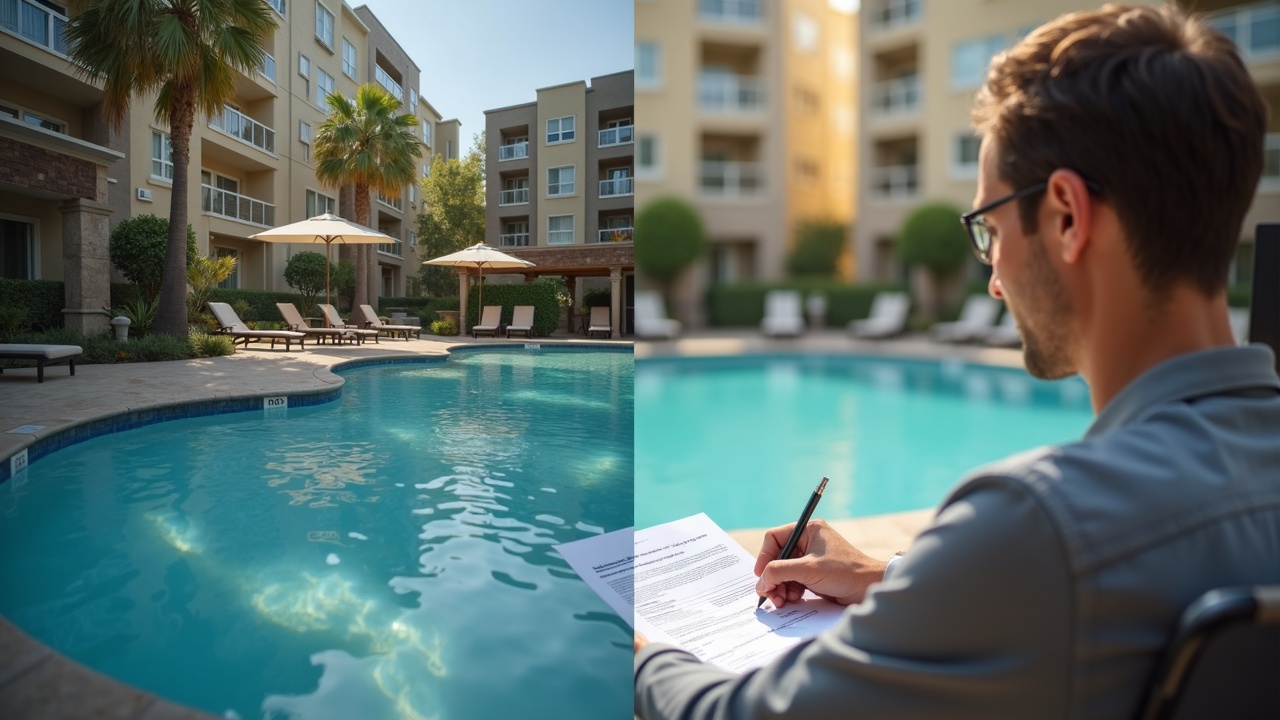
Swimming pool commercial leads fail because most pool service companies call back too late, pitch residential pricing models to property managers, and can't prove insurance compliance on the first conversation. Commercial properties—especially HOAs and multi-family complexes—move fast, expect professionalism that matches their procurement standards, and will choose a competitor who answers live over a voicemail callback every time.
The Problem: Why Pool Companies Miss the Commercial Market
Most pool service companies lose swimming pool commercial leads before they even know they're in the running. Commercial property managers don't leave three voicemails. They call the next name on their list.
Here's what happens: A property manager at a 200-unit apartment complex calls at 2 PM on a Tuesday. The pool's chemistry is off, residents are complaining, and the board meeting is Thursday night. Your phone rings four times and goes to voicemail. You're elbow-deep in a filter replacement at another site. By the time you call back at 5:30 PM, they've already booked a competitor who answered on ring two.
According to InsideSales.com, the odds of qualifying a lead drop by 400% if you wait longer than five minutes to respond. For commercial pool service contracts worth $2,000 to $8,000 monthly, that missed call just cost you $24,000 to $96,000 in annual revenue.
Here's what most articles won't tell you: The commercial pool market isn't won on price or even service quality. It's won on administrative competence. Property managers operate in a world of vendor compliance matrices, certificate of insurance tracking, and board approval timelines. When you answer the phone like a residential handyman instead of a commercial vendor, you've already disqualified yourself—even if your technical skills are superior.
Why Pool Service Companies Struggle With Commercial Accounts
The operational gap between residential and commercial pool service is wider than most owners realize. Residential clients want their backyard pool clean. Commercial properties want vendor management, documentation trails, and someone who understands that an HOA board operates on Roberts Rules of Order, not a handshake.
You're Optimized for the Wrong Customer
Your business probably grew serving homeowners. Homeowners are forgiving about callback times. They understand you're working alone or with a small crew. They don't require certificates of insurance emailed within two hours or panic when you can't attend a 6 PM board meeting on three days' notice.
Property managers and HOA boards are different animals. They manage multiple vendors across maintenance categories. Pool service sits alongside landscaping, HVAC, and janitorial contracts. When your response time is slower than the commercial HVAC company, you've signaled that you're not in the same league.
Your Phone Setup Screams "Small Time"
Walk through this from a property manager's perspective. She calls your number and gets:
- A personal cell phone voicemail greeting ("Hey, this is Mike, leave a message")
- Background noise when you do answer—a truck engine, wind, another crew member yelling
- No callback when she leaves a message because you were in a pool equipment room with no signal for three hours
- No ability to schedule a site visit, get a quote emailed, or confirm insurance without playing phone tag for two days
She moves to the next call. That company has someone who answers professionally, takes her information, confirms they can email the COI immediately, and offers three time slots for a site walk before she hangs up.
You Don't Speak Their Procurement Language
Residential sales are relationship-driven. Commercial contracts are compliance-driven. Property managers need:
- Proof of general liability insurance with specific coverage minimums
- Workers' compensation documentation if you have employees
- References from other commercial properties, not homeowners
- Scope-of-work documents that match their RFP format
- Invoicing that integrates with property management software
- After-hours emergency response guarantees in writing
When you can't provide these in the first conversation, you're out. The National Association of Home Builders reports that multifamily construction continues to represent a growing segment of residential building, which means more commercial pool service opportunities—but only for companies that can meet institutional standards.

How to Actually Win Pool Service HOA Contracts
Winning multi-family pool maintenance contracts starts with operational credibility, not technical expertise. Property managers assume you can balance chemicals and clean a filter. What they're not sure about is whether you'll show up on time, document everything, and communicate like a professional vendor.
Answer Every Call Like a Commercial Business
This is non-negotiable. Commercial properties expect to reach a live person during business hours. Not a voicemail. Not a callback in 90 minutes. A human being who can help them right now.
That doesn't mean you personally need to stop what you're doing every time the phone rings. It means you need a front office team that handles calls while you're working. Book All Leads builds a full front office team for pool service companies—six roles working around the clock to answer calls, qualify swimming pool commercial leads, schedule site visits, and send insurance documentation before property managers move to the next vendor. You're live in five days with people who understand the difference between a residential callback and a commercial opportunity that closes in the first conversation.
Build a Commercial-Grade Intake Process
When a property manager calls, your team needs to capture:
- Property name, management company, and decision-maker name
- Pool type, size, and current service schedule
- Immediate need (emergency repair, seasonal contract, RFP response)
- Timeline for decision and any upcoming board meetings
- Insurance requirements and vendor onboarding process
You can't gather this information in a voicemail. You need someone asking the right questions in real time, then routing the lead to you with context. That's how you show up to a site visit already looking like the professional choice.
Separate Your Pricing Model
Don't quote commercial pool service contracts the way you quote residential weekly maintenance. Property managers expect:
- Tiered pricing based on pool size and usage (a 200-unit complex pool with heavy summer use costs more than a boutique 20-unit building)
- Separate line items for routine maintenance, chemical balancing, equipment inspections, and emergency calls
- Seasonal adjustments if you're in a market with weather variability
- After-hours and weekend response fees spelled out in advance
A commercial contract might run $2,500/month for a mid-size apartment complex with weekly service, chemical management, and filter maintenance. That's $30,000 annual contract value from one property. Miss the call, and that revenue walks to a competitor who picked up the phone.
Prove You Understand Their World
During your first conversation and site visit, demonstrate that you've worked with HOAs and multi-family properties before:
- Ask about their board meeting schedule and offer to attend to present your proposal
- Reference other commercial properties you service (with permission)
- Walk the property with a checklist, not a casual stroll
- Follow up the same day with a written proposal that matches their RFP format
- Include a sample service report so they see what documentation looks like
Property managers live in a world of accountability. When you show them you operate the same way, you're speaking their language.
What Happens When You Actually Capture These Leads
One mid-size pool service company in Southern California was turning away commercial opportunities without realizing it. They served 90 residential accounts and assumed they were maxed out. Missed calls were normal. Voicemail callbacks happened when the owner got back to the truck.
Then a property manager for a 150-unit complex called on a Thursday morning. The owner was underwater—literally, repairing a main drain. The call went to voicemail. By the time he surfaced two hours later, the contract was gone. That single missed opportunity represented $32,000 in annual revenue.
After setting up a proper front office team to handle inbound calls, the company captured four commercial pool service contracts in six months. Average contract value: $28,000 annually. Total new revenue: $112,000. The owner still does the technical work. But now someone else is answering the phone, qualifying leads, and booking site visits while he's in the field.
According to Bain & Company, acquiring a new customer costs five to 25 times more than retaining an existing one, but commercial contracts change that math. One HOA or apartment complex can replace 15 to 30 residential accounts in revenue, with better payment terms and less scheduling chaos.

The Real Cost of Missing Commercial Calls
Let's calculate what poor call handling actually costs a pool service company chasing commercial accounts. A typical missed swimming pool commercial lead costs more than you think.
Assume a property manager calls about a multi-family pool service contract. Average contract value for a 100- to 200-unit property: $2,000 to $3,500 per month. Annual value: $24,000 to $42,000. Average contract length: 2.5 years. Lifetime value: $60,000 to $105,000.
Now assume you miss 40% of inbound commercial calls because you're working and can't answer. Out of 10 commercial inquiries per year, you lose four to voicemail or slow response times. At an average contract value of $30,000 annually, you're leaving $120,000 per year on the table. Over five years, that's $600,000 in lost revenue because you couldn't pick up the phone.
Want to see what your specific missed call rate costs? Calculate your losses based on your call volume and average job value.
Common Mistakes Pool Companies Make Chasing Commercial Work
Even companies that understand the commercial opportunity make tactical errors that kill deals before they start.
Treating Commercial Leads Like Residential Leads
A homeowner will wait for you to call back. A property manager with a board meeting in 72 hours will not. Response time for commercial inquiries needs to be under 15 minutes during business hours. Anything slower, and you're competing for scraps.
Sending the Owner to Do Admin Work
Your time is worth $150/hour doing technical pool work. It's not worth $150/hour playing phone tag with a property manager to schedule a site visit or emailing a certificate of insurance. When you pull yourself off a job site to do admin work, you lose twice—once in billable time, and again in the missed call that comes in while you're handling the first one.
Underpricing to Win the Contract
Commercial properties don't always choose the lowest bid. They choose the vendor who looks most reliable. Underpricing signals desperation or inexperience. Price your commercial pool service contracts to reflect the higher standards, tighter timelines, and documentation requirements these properties demand.
Ignoring the Follow-Up Timeline
Property managers operate on procurement calendars. If they're evaluating vendors in March for an April 1 contract start, your proposal needs to arrive by mid-March. Miss that window, and you're waiting until next year's contract renewal cycle. Track decision timelines and set reminders to follow up before they choose someone else.
How to Position Your Company for Commercial Growth
Transitioning from residential to commercial pool service doesn't require new equipment or certifications. It requires operational maturity. Here's how to bridge that gap.
Professionalize Your Front Office
Commercial clients judge you by the first phone interaction. Invest in people who can answer calls professionally, gather detailed information, and route urgent leads to you immediately. This isn't a luxury. It's the entry fee to compete for commercial pool service contracts worth $30,000 to $100,000 annually.
Create Commercial-Specific Marketing Materials
Your residential flyer won't work for HOA boards. Build a one-page service overview that includes:
- Commercial references with property names and unit counts
- Insurance coverage limits and bonding information
- Service scope and response time guarantees
- Sample service reports and inspection checklists
Property managers pass these to boards for approval. Make it easy for them to say yes.
Develop Strategic Referral Relationships
Property managers hire multiple vendors. If you do excellent pool work, ask for introductions to the property's HVAC, landscaping, or janitorial contractors. They're servicing other commercial properties that also have pools. Trade referrals. One strong relationship can unlock five new commercial accounts.
Track Commercial-Specific Metrics
Your residential metrics (number of pools serviced, weekly route efficiency) don't translate to commercial success. Track:
- Average time to respond to commercial inquiries
- Percentage of commercial leads that convert to site visits
- Site visit to contract close rate
- Average contract value and lifetime value by property size
These numbers tell you where your commercial sales process breaks down so you can fix it.
Frequently Asked Questions
How long does it take to close a commercial pool service contract?
Commercial pool service contracts typically take two to six weeks to close, depending on whether you're responding to an RFP, working through a board approval process, or handling an emergency replacement. Properties with upcoming board meetings can move faster if you meet their timeline. Companies with professional front offices that respond within minutes and schedule site visits within 24 hours close deals 60% faster than competitors who rely on voicemail callbacks.
What insurance do I need to service HOA and apartment complex pools?
Most commercial properties require general liability insurance with minimum coverage of $1 million per occurrence and $2 million aggregate. Larger properties may require $2 million per occurrence. You'll also need workers' compensation insurance if you have employees, and some properties require you to name them as additional insured on your policy. Expect to provide certificates of insurance within hours of first contact, not days.
Can I service commercial pools with the same equipment I use for residential accounts?
Yes, the technical equipment is largely the same, but commercial pools often have larger filtration systems, more complex chemical controllers, and higher usage rates that require more frequent service. The bigger difference is administrative—you'll need better documentation systems, tighter scheduling, and more responsive communication than residential accounts demand.
How much should I charge for a multi-family pool maintenance contract?
Commercial pool service contracts typically range from $1,500 to $5,000 per month depending on pool size, usage, service frequency, and included services. A 100-unit apartment complex with weekly service and chemical management might run $2,500/month. Price based on time required, chemical costs, equipment wear, and the administrative overhead of commercial documentation and compliance requirements. Don't underprice to win the contract—commercial properties value reliability over cost savings.
What's the difference between servicing an HOA pool and an apartment complex pool?
HOA pools typically serve single-family home communities with seasonal usage spikes and board-driven decision-making. Apartment complex pools see year-round use in warm climates, answer to property management companies rather than boards, and often have on-site maintenance staff you'll coordinate with. Apartment contracts tend to be larger and more stable, while HOA contracts may involve more political navigation during renewals.
How do I find commercial pool service leads?
The best swimming pool commercial leads come from direct outreach to property management companies, referrals from existing commercial clients, and being available when properties call during vendor transitions. Most commercial opportunities aren't advertised—they happen when a current vendor fails or a new property opens. Having a front office team that answers every call immediately means you're available when those opportunities surface, while competitors miss them in voicemail.
Stop Losing Revenue to Voicemail
Swimming pool commercial leads are the highest-value opportunities in your market. One multi-family pool maintenance contract can replace 20 residential accounts with less scheduling chaos, better payment terms, and longer customer lifetime value. But you'll never capture those contracts if property managers can't reach you when they call.
The solution isn't working harder. It's putting a professional front office between your phone and the commercial opportunities you're currently missing. Book All Leads builds and manages a complete team that answers every call, qualifies commercial leads, schedules site visits, and sends insurance documentation while you stay focused on the technical work that actually makes money. You're live in five days, and there's no contract locking you in.
Commercial pool service contracts are waiting. The only question is whether your phone setup is ready to capture them.
John Edmonds is a native Texan and military combat veteran. He founded Book All Leads after identifying a critical gap in the service industry: business owners losing revenue not from lack of skill, but because no one was handling the calls, follow-ups, reviews, and payments while they were busy doing the work.
View LinkedIn Profile →