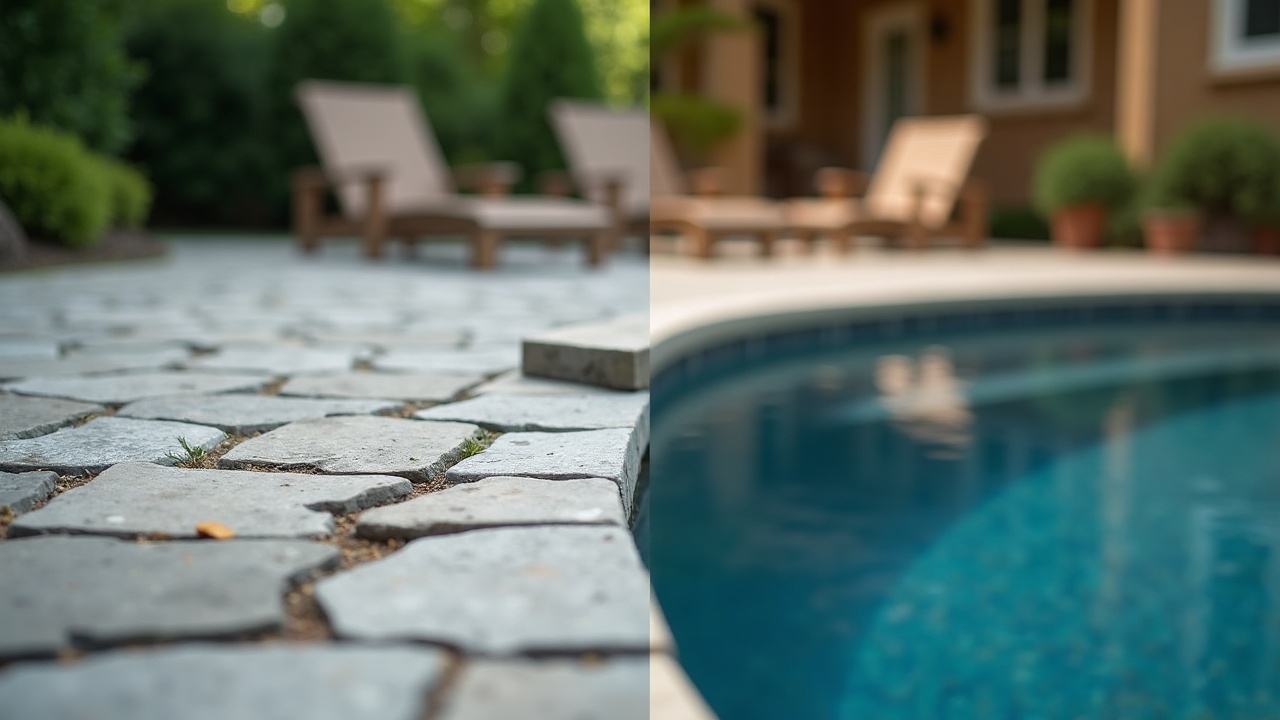
Swimming pool coping replacement jobs are slipping through your fingers because hardscape contractors are answering faster, pricing more confidently on the first call, and treating pool edge replacement as a specialty service while you're treating it like routine pool work. These jobs average $8,000 to $15,000, but when calls go to voicemail or get returned with "I need to come look at it before I can tell you anything," homeowners move down their list—and hardscape pros are picking up what should be your revenue.
Why Are Pool Companies Losing Coping Replacement Jobs?
Pool companies lose coping jobs because they handle them like maintenance work instead of construction projects. When a homeowner calls about cracked or settling coping, they're not calling for a filter cleaning—they're researching a major investment. Hardscape contractors understand this immediately and respond like project specialists. Pool companies often treat the inquiry as another service call, which delays detailed conversations, postpones estimates, and signals that the job isn't a priority.
Here's the timing breakdown that's killing your conversion rate: According to InsideSales.com, leads contacted within five minutes are 21 times more likely to convert than those contacted after 30 minutes. But most pool service companies operate on a callback rhythm designed for existing customers, not new project leads. Your team finishes a job, checks messages during lunch, and returns calls in batches. Meanwhile, the hardscape contractor who specializes in patios and pool decks has someone answering live, booking a site visit for tomorrow, and asking questions about material preferences before you've even listened to the voicemail.
The revenue impact is measurable. Pool coping jobs typically range from $8,000 for basic concrete replacement to $25,000+ for natural stone with extensive deck tie-ins. If you're losing even two of these jobs per month to response time alone, you're leaving $200,000+ in annual revenue on the table—and that's before counting referrals from satisfied clients who would have recommended you for full pool renovations.
Here's what most articles won't tell you: Homeowners aren't choosing hardscape contractors because they're better at pool work—they're choosing them because the first conversation made them feel like the project was understood and valued. Pool companies have the technical advantage, but they're losing on the business fundamentals that happen before you ever visit the site.
What Makes Coping Replacement Different from Regular Pool Service Work?
Coping replacement sits at the intersection of pool expertise and hardscape construction, which creates a qualification gap that pool service companies often underestimate. Unlike chemical balancing or equipment repair, coping work requires structural assessment, material selection, drainage considerations, and coordination with deck contractors. Homeowners know this is complex, which is why they're vetting contractors carefully—and why a generic "we'll take a look" response doesn't inspire confidence.
When a homeowner researches pool coping repair, they've usually noticed cracks, settling, or water damage. They've likely watched YouTube videos explaining cantilever coping versus bullnose styles. They've seen natural stone options that cost three times what they expected. By the time they call you, they're not asking if you can do the work—they're assessing whether you understand the scope of what they want.
Hardscape contractors excel at this qualification conversation because they do it constantly for patios, retaining walls, and outdoor kitchens. They ask about existing materials, drainage patterns, whether the homeowner wants to match the deck or create contrast, and whether this is phase one of a larger backyard renovation. Pool companies who treat this like a standard service inquiry—"We can look at it Thursday and get you a quote"—have already lost positioning as the specialist.
Why Material Selection Happens During the First Call
Successful coping contractors discuss materials immediately because homeowners are price-shopping across wildly different product tiers. Precast concrete coping might run $30 per linear foot installed, while natural bluestone can hit $150 per linear foot. If you're not surfacing this range during the first conversation, the homeowner has no framework for your eventual quote—and they'll assume you're overpriced when your $12,000 estimate arrives after their $7,500 quote from someone who proposed basic concrete.
This is where having a front office team that understands project qualification changes outcomes. When Book All Leads manages your front office, every coping inquiry gets handled with the same project-scoping questions: current material type, linear footage if known, whether the deck also needs work, timeline expectations, and budget range. That information gets captured before you drive to the site, which means your estimate reflects what the homeowner actually wants—not what you assumed they wanted based on a two-minute phone call.
How Hardscape Contractors Are Winning Your Pool Coping Leads
Hardscape contractors win coping jobs through superior lead handling, not superior pool knowledge. They've built business models around project work, which means their phones are answered by people trained to qualify construction inquiries, not route service calls. When a homeowner describes cracked coping, the hardscape office asks about the pool age, whether there's been ground settling, if the deck shows similar cracks, and when they'd like the work completed. Pool companies ask when they can come look at it.
The competitive advantage compounds when you track the full lead lifecycle. Research from Harvard Business Review shows that increasing customer retention rates by just 5% can increase profits by 25% to 95%. Hardscape contractors who capture coping jobs are building relationships with homeowners who will eventually need pool resurfacing, equipment upgrades, and ongoing maintenance—all work that should flow to you. Instead, you're losing the entry point and hoping they call you for the follow-on work.
Here's the operational breakdown where hardscape contractors pull ahead:
- Live answer rate: Hardscape pros answer 80%+ of calls live because project revenue justifies dedicated office staff. Pool service companies miss 60%+ of first calls because techs are in the field and the office is overwhelmed.
- Same-day site visit scheduling: Hardscape contractors offer next-day or same-week visits because their calendar is organized around project sales. Pool companies book two weeks out because they're squeezing estimates between service routes.
- Material portfolio presentation: Hardscape contractors bring sample books or direct homeowners to online galleries during the first call. Pool companies mention options generically and promise to "discuss materials when we meet."
- Quote turnaround: Hardscape pros deliver detailed quotes within 48 hours because that's their close rate standard. Pool companies take 5-7 days because estimating isn't the priority—keeping existing customers serviced is.
None of these are technical deficiencies. They're front office execution gaps, and they're costing you the highest-margin work in your category.

What Homeowners Really Want When They Call About Coping
Homeowners calling about pool coping replacement want three things immediately: confirmation that you understand what they're describing, a rough price range so they know if they're in the ballpark, and confidence that you've done this specific type of work recently. If your initial response doesn't address all three, they're calling the next contractor on their list—and that contractor is often a hardscape specialist who's positioning the job as a premium outdoor living investment.
The biggest mistake pool companies make is assuming the homeowner wants the cheapest fix. Coping replacement inquiries are rarely about budget minimization—if they wanted cheap, they'd ignore the cracks for another year. They're calling because the problem is visible, it's affecting pool usability or aesthetics, and they're ready to invest in a proper solution. Your job is to validate that decision and position yourself as the expert who'll execute it correctly.
When hardscape contractors field these calls, they immediately reframe the conversation around value: "Most of our clients doing coping replacement also address deck repairs at the same time because the equipment is already there, and it prevents having to jackhammer near the pool twice. Have you noticed any issues with the deck?" That question does three things simultaneously—it demonstrates experience, it surfaces additional scope, and it positions the contractor as a strategic advisor rather than a bid-taker.
Why "I Need to See It First" Kills Your Close Rate
The refusal to discuss pricing before a site visit is costing you jobs daily. Homeowners understand that final quotes require measurements and assessment. What frustrates them is contractors who won't even ballpark the range. When you say, "Every job is different, I really need to see it," the homeowner hears, "I'm not confident enough in my pricing to give you any guidance, and I might waste your time with a quote that's double what you expected."
Contrast that with: "For a standard 15x30 pool with precast concrete coping, most jobs run between $6,500 and $9,000 depending on condition and access. If you're looking at natural stone or there's extensive underlying damage, that range shifts up. When I come out Thursday, I can give you an exact number and show you material options." Same site visit scheduled, but now the homeowner knows what to expect and you've demonstrated command of your pricing structure.
How to Win Back Coping Jobs from Hardscape Competitors
Winning back pool coping jobs requires treating them like the construction projects they are, not like service calls. That starts with call handling. Every coping inquiry should trigger a project intake process: detailed questions about the current condition, homeowner goals, timeline, and budget expectations. This information should be documented and available to whoever runs the estimate, so you're not starting from scratch when you arrive on-site.
If your techs are too busy to handle this level of intake, you need a front office team dedicated to it. This isn't optional if you're serious about capturing project work. You can either hire and train in-house staff, which takes months and costs $40,000+ annually per person, or you can deploy a managed team that's operational in days. That's the exact problem we solve—a full front office team that answers calls, qualifies project leads, books estimates, and follows up with quotes, all without you managing schedules or training software.
Here's the tactical checklist for converting coping inquiries:
- Answer live or return calls within five minutes. Use our calculator to see exactly what missed calls are costing you in lost coping revenue.
- Ask material preference during the first call. "Are you looking to replace with the same material, or were you considering an upgrade to natural stone or travertine?"
- Provide a ballpark range before the site visit. Anchor expectations so your quote doesn't shock them.
- Schedule estimates within 48 hours. Project urgency fades fast—capitalize while they're motivated.
- Deliver quotes within two business days. Slow quotes signal low interest, and homeowners interpret that as low confidence.
- Follow up three days after quote delivery. Most contractors send quotes and wait. You should be calling to answer questions and ask for the close.
Position Yourself as the Pool-Specific Specialist
Your competitive advantage over hardscape contractors is pool system knowledge. Coping replacement affects pool structure, waterproofing, skimmer alignment, and deck drainage. General hardscape contractors can install beautiful stone, but they don't understand how coping interacts with pool mechanics. Make this the center of your positioning.
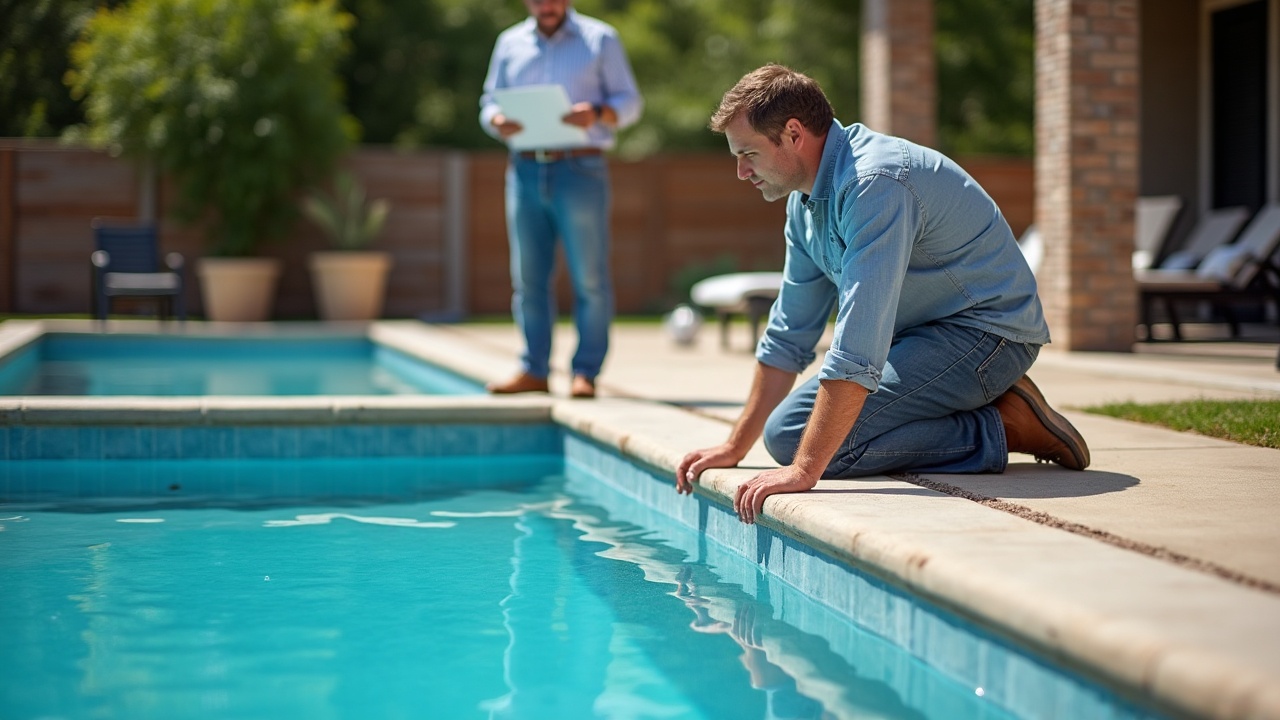
During estimate appointments, point out things hardscape contractors miss: "See how your coping has settled here? That's allowing water to drain back toward the pool instead of away from it, which is why you're getting algae buildup in this corner. When we replace the coping, we'll re-establish proper slope and tie into your deck drains so this doesn't happen again." That's a value statement no hardscape contractor can match, but only if you're in front of the homeowner making it.
What This Looks Like in Real Numbers
Let's quantify what poor coping lead management costs. If you're in a market with 50,000 residential pools and even 2% need coping work annually, that's 1,000 jobs. If average project value is $10,000, that's a $10 million annual market. Capturing just 3% of that market—30 jobs per year—generates $300,000 in revenue from a service category you're currently underperforming in.
Now add the multiplier effect. According to Bain & Company, a 5% increase in customer retention can boost profits by 25% to 95%. Homeowners who hire you for coping replacement become candidates for resurfacing, equipment upgrades, automation systems, and weekly service contracts. The lifetime value of a coping client isn't $10,000—it's potentially $50,000+ over a decade. Hardscape contractors get the first check and disappear. You should be getting the first check and building an annuity.
But this only works if you're capturing the initial opportunity, and that depends entirely on how the first call is handled. If you're relying on field techs to return calls between jobs, or on a part-time office person who's also scheduling service routes and ordering parts, you're systematically underperforming in this category.
| Lead Response Time | Conversion Rate | Annual Coping Jobs (from 120 leads) | Revenue at $10K Average |
|---|---|---|---|
| Under 5 minutes | 35% | 42 | $420,000 |
| 30-60 minutes | 18% | 22 | $220,000 |
| 4+ hours | 8% | 10 | $100,000 |
The difference between fast and slow response isn't a few jobs—it's $320,000 in annual revenue from the same lead volume. That's the cost of not having a dedicated front office managing these inquiries.
Why Pool Companies Resist Treating Coping Like Construction
Most pool service companies resist changing their approach to coping jobs because it requires operational separation they haven't built. Service work and project work have different rhythms, different qualification processes, and different follow-up cadences. Trying to manage both through the same intake system creates friction, so companies default to treating everything like service work—which is why project work slips away.
The resistance usually sounds like: "We're too busy with existing customers to chase project leads." But that logic only works if project revenue is trivial. When you're leaving $200,000+ annually on the table in coping jobs alone—not counting deck resurfacing, outdoor kitchens, and other hardscape work—you're not too busy to chase it. You're too disorganized to capture it efficiently.
The solution isn't working harder. It's delegating front office execution to people whose only job is answering calls, qualifying leads, booking estimates, and following up on quotes. When that's handled reliably, project inquiries convert at dramatically higher rates without requiring any additional effort from your field team.
Frequently Asked Questions
How much should pool coping replacement cost per linear foot?
Pool coping replacement typically costs between $30 and $150 per linear foot installed, depending on material choice and site conditions. Precast concrete coping runs $30-$50 per linear foot, natural stone like bluestone or travertine runs $80-$150 per linear foot, and poured-in-place concrete with custom edges falls in the $40-$70 range. For a standard 15x30 pool with roughly 90 linear feet of coping, total project costs range from $6,500 for basic concrete replacement to $18,000+ for premium natural stone with deck tie-ins.
Why do hardscape contractors quote lower than pool companies for the same coping job?
Hardscape contractors don't always quote lower—they quote faster and with more detailed material breakdowns, which creates the perception of better value. Pool companies often delay quotes or provide vague estimates, which makes even competitive pricing feel uncertain. Additionally, hardscape contractors frequently quote only the coping work, while pool companies bundle in related repairs the homeowner didn't request, inflating the initial number without explaining the added scope.
Can I do pool coping replacement without replacing the deck?
Yes, you can replace pool coping without replacing the entire deck, but it requires careful evaluation of the deck condition and proper tie-in between old and new materials. If the deck is stable and the coping failure is isolated to bond beam settling or material deterioration, skilled contractors can remove and replace just the coping while preserving the deck. However, if deck cracks or settling contributed to coping failure, addressing only the coping often leads to repeat problems within 2-3 years.
How long does pool coping replacement take?
Most pool coping replacement projects take 3-7 days depending on pool size, material choice, and whether deck repairs are included. Demolition and prep typically take 1-2 days, installation takes 2-3 days, and grouting or sealing adds another 1-2 days with cure time. Natural stone installations take longer than precast concrete due to individual stone fitting and leveling requirements. Weather delays, access restrictions, and discovery of underlying structural issues can extend timelines.
Should I hire a pool company or hardscape contractor for coping work?
Hire a pool company that also specializes in hardscape work, or a hardscape contractor with extensive pool experience. Pool-only service companies often lack decorative stone installation expertise, while hardscape-only contractors may not understand pool structure, waterproofing, and drainage requirements. The ideal contractor demonstrates both skill sets—ask for references on similar pool coping projects and verify they understand how coping integrates with pool systems, not just how to lay stone.
What causes pool coping to crack and fail?
Pool coping fails primarily due to ground settling, freeze-thaw cycles, poor initial installation, and water infiltration behind the coping. When the bond beam settles or shifts, it creates stress points that crack rigid coping materials. Water that seeps behind coping due to failed sealant or improper slope freezes in winter, expands, and displaces the coping from the beam. Inferior mortar or adhesive used during installation also deteriorates over 10-15 years, allowing movement and cracking even without ground settling.
Stop Losing Premium Pool Work to Contractors Who Just Answer Faster
Swimming pool coping replacement should be your specialty work, not your lost opportunity. You understand pool structure, waterproofing, and long-term durability better than any hardscape contractor who occasionally works near pools. But none of that expertise matters if homeowners never get past the first phone call with you.
The companies winning these jobs aren't better at pool work—they're better at answering calls, qualifying projects, and making homeowners feel understood in the first five minutes. That's a front office problem, not a technical problem, and it has a straightforward solution.
If you're ready to stop watching $200,000+ in annual coping revenue go to competitors who just pick up the phone faster, we should talk. Book All Leads builds you a complete front office team that answers every call, qualifies every project lead, books your estimates, and follows up on quotes—all live in five days with no software for you to learn and no contracts locking you in. Your team stays focused on the work that only you can do. We make sure every homeowner calling about pool coping gets the conversation they deserve.
John Edmonds is a native Texan and military combat veteran. He founded Book All Leads after identifying a critical gap in the service industry: business owners losing revenue not from lack of skill, but because no one was handling the calls, follow-ups, reviews, and payments while they were busy doing the work.
View LinkedIn Profile →