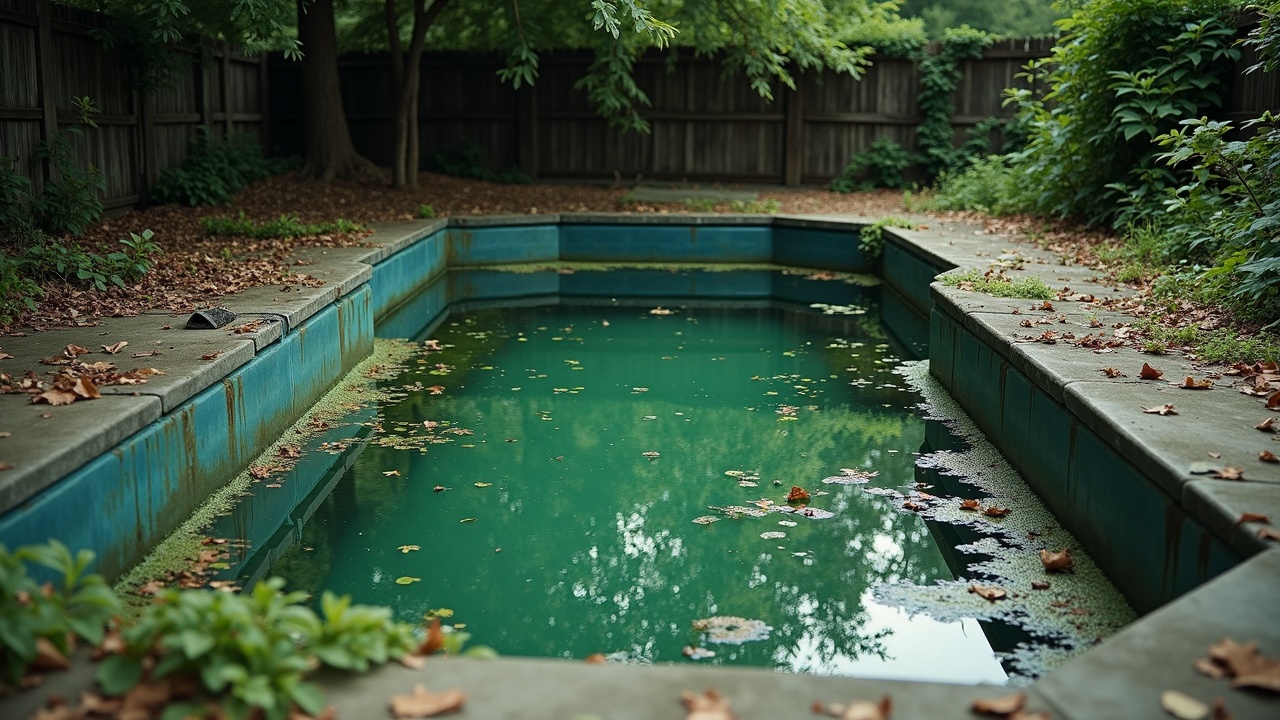
Swimming pool drowned pool leads—the calls from homeowners facing green, algae-filled, neglected disasters—represent some of the highest-value opportunities in the pool service business. Yet most pool companies lose 60-70% of these leads before ever getting them on the schedule. The culprit isn't your service quality or pricing. It's that these urgent, high-emotion calls arrive outside business hours, during route time, or when your phone rings unanswered while you're skimming someone else's pool. By the time you call back, three competitors have already quoted the job.
The difference between capturing these drowned pool leads and watching them slip away comes down to minutes, not hours. This article breaks down exactly why pool companies hemorrhage their most profitable leads—and what the handful of smart operators do differently to lock them in before the next guy even knows they called.
## Why Do Pool Companies Lose So Many Drowned Pool Leads?Pool companies lose drowned pool leads because these calls demand immediate human contact during a high-stress moment, yet most businesses rely on voicemail, after-hours silence, or a single person juggling phones between service stops. According to InsideSales.com, leads contacted within five minutes are 21 times more likely to convert than those reached after 30 minutes. In the abandoned pool recovery market, that window shrinks even further—homeowners facing a swamp in their backyard are calling five competitors in rapid succession, and whoever answers first usually wins the $3,000-$8,000 cleanup job.
Here's what happens in real time: A homeowner inherits a property with a green disaster out back. Or they return from six months away to find their pool looks like a Louisiana bayou. They're embarrassed, overwhelmed, and need someone to fix it now. They Google "pool rescue service" or "swamp pool cleanup," find your number, and call at 7:15 PM on a Tuesday.
Your phone goes to voicemail. They hang up and call the next company. That company doesn't answer either. The third company picks up, asks three questions, and books a site visit for tomorrow morning. By the time you call back Wednesday afternoon, they've already signed a contract.
Here's what most articles won't tell you: The average pool service company misses 40-50% of inbound calls during business hours and nearly 100% outside of them. For drowned pool leads specifically, the miss rate climbs even higher because these calls peak in spring evenings and weekends—exactly when most owner-operators are either finishing routes or trying to have dinner with their families.
## What Makes Drowned Pool Leads Different from Regular Service Calls?Abandoned pool recovery leads differ from routine maintenance calls in three critical ways: urgency, emotion, and ticket price. A homeowner calling about weekly service will leave a voicemail and wait. A homeowner staring at what looks like a toxic waste site in their backyard needs someone now—preferably someone who sounds confident they've seen worse and know exactly how to fix it.
The emotional state matters. These aren't rational, price-shopping calls. The homeowner is often dealing with:
- Embarrassment about the pool's condition (especially if neighbors can see it)
- Anxiety about property value impact or HOA violations
- Overwhelm from not knowing where to start or what it will cost
- Urgency from a looming deadline (house showing, family visit, summer rental)
This emotional cocktail creates both opportunity and risk. The opportunity: they'll pay premium rates for fast, confident service. The risk: if you don't answer immediately and reassure them, they'll feel that same urgency with your competitor who does pick up.
The ticket price amplifies everything. Regular service calls might be $125-$200. Drowned pool recovery runs $2,500-$8,000 depending on severity. Lose three of these calls per month because your phone went unanswered, and you've just left $15,000-$24,000 on the table. Multiply that across a season, and the math gets painful. You can calculate your losses based on your actual call volume and conversion rates.
## How Fast Do You Actually Need to Answer These Calls?For neglected pool cleanup leads, you need a human voice within 90 seconds of the call to maintain a competitive capture rate. Research from Harvard Business Review on high-consideration service purchases shows that emotional urgency decays rapidly—every minute without contact increases the likelihood the caller will move to the next option. In practical terms, if your drowned pool lead hits voicemail and the next company answers live, you've already lost regardless of your expertise or pricing.
The 90-second window isn't arbitrary. It's the average time a frustrated homeowner will wait on hold or through rings before hanging up and trying the next number. They've usually already Googled "emergency pool cleanup" or "abandoned pool recovery near me," opened five tabs, and they're working down the list. Your position in search results matters less than your position in the call queue.
This creates a brutal reality for owner-operators: you're often the most qualified person to take these calls (you can assess scope, quote accurately, and book with authority), but you're also the person elbow-deep in a filter repair at 4:30 PM when the call comes in. By the time you peel off your gloves and call back at 5:45 PM, the lead has moved on.

Voicemail doesn't work for abandoned pool recovery leads because these homeowners interpret an unanswered phone as a signal about your availability and reliability during their emergency. Even if you return the call within an hour—considered "fast" by industry standards—you're competing against the vivid, reassuring conversation they just had with the company that answered live. That competitor has already built rapport, explained the process, and scheduled a site visit. Your callback feels like an afterthought.
The psychology runs deeper than impatience. When someone faces a problem that feels overwhelming (a pool that looks beyond saving), they need immediate reassurance from an expert who sounds like they've handled worse. Voicemail provides the opposite: silence, uncertainty, and a reminder they're still alone with their swamp pool. Even a professional voicemail message saying "We'll call you back within the hour" triggers doubt: Are they too busy? Will they even be able to help? Should I keep calling other companies?
Most pool service owners underestimate this dynamic because they would wait for a callback from a reputable company. But they're not the customer. The homeowner staring at green sludge where their pool used to be isn't thinking rationally—they're thinking emotionally, and emotion favors the first voice that sounds confident and available.
### What About Scheduling Apps or Online Booking?Scheduling apps solve a different problem. They work beautifully for routine maintenance customers who already trust you and know what they need. For drowned pool leads—people who've never heard of your company and don't know if their pool is even salvageable—a "Book Online" button feels cold and impersonal. These calls require conversation: How bad is it? Do you have pictures? When's the last time anyone serviced it? Have you tried anything yourself?
That diagnostic conversation isn't about gathering information for a quote. It's about building confidence that you know what you're looking at and can fix it. Online forms can't do that. Neither can AI chatbots, which trigger immediate skepticism when someone asks, "Have you seen a pool this bad before?"
The companies that dominate the pool rescue service niche all do the same thing: a human answers every call, every time, within seconds. Not a receptionist reading a script—someone trained to handle the specific questions and emotions these leads bring. That's the standard you're competing against.
## How Do Successful Pool Companies Capture Every Drowned Pool Lead?The pool companies that consistently capture drowned pool leads don't rely on the owner to answer every call—they build a front office team that handles calls, books jobs, and reassures customers 24/7, so no lead ever hits voicemail or waits until morning. This isn't about hiring a receptionist for business hours. Abandoned pool calls don't respect business hours. They peak when people get home from work, realize their pool is a disaster, and start making calls. Successful operators recognize this and structure their front office accordingly.
Book All Leads provides exactly this setup for pool service companies: a full front office team—six roles working around the clock—that answers calls, qualifies leads, books site visits, and follows up. There's no software for you to learn, no portal to manage. Your team is live in five days, and they work as an extension of your business, speaking for your company with the expertise these high-emotion calls demand. It's built specifically for owner-operators who are too busy running jobs to answer every call but too smart to keep losing $5,000 leads to competitors.
The alternative—what most companies try first—is hiring a part-time office person or using an answering service. Part-time works until that person takes a day off or quits mid-season. Generic answering services struggle with the technical questions and judgment calls these leads require: Do you service pools this far gone? What's a ballpark cost? Can you come tomorrow? A script-reading stranger can't navigate those questions with the confidence that closes the deal.
### What Should the First Call Conversation Include?The initial call conversation for a drowned pool lead should accomplish four things in under three minutes: acknowledge the problem without judgment, ask two diagnostic questions (How long since it was serviced? Can you see the bottom?), provide a realistic ballpark timeline and cost range, and schedule a site visit within 24-48 hours. This sequence reassures the homeowner that you've handled this before and can fix it, which is the entire point of answering quickly.
Most pool companies either under-script this (leaving the conversation too loose and non-committal) or over-script it (turning it into an interrogation). The right balance sounds like a knowledgeable friend: "Okay, dark green and you can't see the bottom—I've seen that plenty of times, totally recoverable. We'll need to do a chlorine shock treatment, probably drain and acid wash depending on the surface condition, and get the equipment running again. Ballpark, you're looking at $3,500-$5,500 depending on what we find with the filter and pump. I can get someone out there tomorrow afternoon to give you an exact quote. Does 2 PM work?"
Notice what that does: it normalizes the problem, demonstrates expertise, sets cost expectations, and creates forward motion. The homeowner exhales. They've found someone who knows what they're doing and can start soon. That's the call experience your competitors aren't delivering when their phone goes to voicemail.

Missing drowned pool leads costs pool service companies $2,400-$4,800 per lost call when you account for both the immediate revenue loss and the compounding effect of referrals and repeat business from these high-value customers. A typical abandoned pool recovery job runs $4,000-$6,000, but homeowners who hire you for emergency cleanup often convert to ongoing maintenance clients worth $125-$175 per month—$1,500-$2,100 per year. Over three years, a single captured lead can generate $7,500-$12,000 in lifetime value.
The math gets worse when you calculate volume. If you're getting 10-15 drowned pool inquiries per month during peak season and missing 60% of them because of phone coverage gaps, you're leaving $24,000-$43,200 on the table per month in immediate job revenue alone. Across April through August, that's $120,000-$216,000 in lost business. For a company running $500K-$800K in annual revenue, that's 15-27% growth you're handing directly to competitors.
But the hidden cost runs deeper. According to Bain & Company, acquiring a new customer costs 5-25 times more than retaining an existing one. Drowned pool recovery clients become your best customers—they've seen you at your most valuable, solving a problem they couldn't handle themselves. They refer neighbors, leave reviews, and rarely price-shop for ongoing service because they trust you. Every missed call isn't just a lost job—it's a lost relationship.
## How Do You Know If You're Losing These Leads?You're losing drowned pool leads if you have voicemails you didn't return within 20 minutes, calls that came in after 5 PM or on weekends that you followed up on the next business day, or prospects who said "I already hired someone" when you called back. These are the obvious signals, but many pool service companies don't track them systematically. They know they're "missing some calls" but don't realize it's the majority of their highest-value inquiries.
The diagnostic is simple: track every inbound call for two weeks. Note the time, whether it was answered live, and how long until the callback if it wasn't. Then categorize the calls—routine service, quote requests, emergencies, and abandoned pool recovery. You'll likely find that swamp pool leads disproportionately arrive outside business hours and have the highest abandoned-before-callback rate. That's your revenue leak.
Another tell: you're getting plenty of traffic to your "Pool Rescue" or "Abandoned Pool Recovery" pages but not seeing proportional job bookings. That gap means people are finding you, calling you, and then booking with someone else. The problem isn't your marketing—it's your front office capacity.
### Should You Hire Someone In-House or Outsource?Outsourcing your front office to a specialized team makes sense if you need 24/7 coverage, can't afford downtime when someone quits or gets sick, and want the calls handled today rather than after recruiting and training. Hiring in-house works if you have predictable, business-hours call volume, enough administrative work to justify a full-time salary, and the management bandwidth to train and supervise. For most pool service companies dealing with seasonal spikes and after-hours leads, outsourcing wins on speed, cost, and reliability.
The break-even calculation: a full-time in-house office person costs $35,000-$45,000 annually plus payroll taxes, benefits, and training time. A professional front office team costs a fraction of that and covers nights, weekends, and holidays without gaps. You're not paying for idle time—you're paying for answered calls. For companies capturing even four additional drowned pool jobs per month, the return on investment is immediate.
The bigger question is control. Some owners worry that outsourcing means losing touch with customers. The opposite happens when it's done right: customers get better service because they reach a trained, focused team member instead of a distracted owner who's trying to balance a phone and a pool skimmer. Your job is to show up on-site and deliver great work. Let someone else handle the phone.
## What Should You Change This Week?This week, implement a 90-second answer standard for all inbound calls and track your current performance against it for five days to establish a baseline. You can't fix what you don't measure. Use your existing phone system's call log or ask your carrier to send you a weekly report showing total calls, answered calls, and time-to-answer. Categorize the missed calls by time of day and day of week. That data will show you exactly when and how often you're bleeding leads.
If the numbers are ugly—and for most pool companies, they are—you have two options: restructure your day to answer calls live (which usually means less time doing the actual work), or bring in a team that handles it for you. Most owners try the first option for a month, realize it's unsustainable, and then make the call to get help.
The urgency here isn't theoretical. Pool season is short in most markets. You have roughly 20 weeks to capture the year's most profitable leads. Every week you operate with phone coverage gaps, you're giving high-margin work to competitors who simply picked up the phone faster. That's a painful way to lose.
## Frequently Asked QuestionsHow much does a drowned pool recovery typically cost for the homeowner?
Drowned pool recovery typically costs homeowners $2,500-$8,000 depending on pool size, severity of neglect, equipment condition, and whether a drain and acid wash is required. Small pools with recent neglect (green but equipment functional) run $2,500-$4,000. Larger pools with black water, failed equipment, and structural issues can reach $8,000-$12,000. Most jobs cluster around $4,000-$5,500 for a full recovery including chemicals, cleaning, equipment service, and water balancing.
How long does it take to recover an abandoned pool?
Full recovery of an abandoned pool takes 7-14 days on average, including initial shock treatment, debris removal, equipment repairs, water chemistry balancing, and filtration. Severely neglected pools requiring drain-and-refill can extend to 14-21 days depending on water source and weather. The actual labor is spread across multiple visits—initial assessment and shock treatment, followed by daily or every-other-day visits to adjust chemicals, clean filters, and monitor progress until the water is clear and balanced.
Can every drowned pool be saved, or do some need to be demolished?
Most drowned pools can be recovered regardless of water condition, but structural damage from years of neglect may make recovery more expensive than replacement. Green or even black water is almost always recoverable through chemical treatment and cleaning. The deciding factors are shell integrity (cracks, delamination in fiberglass, or severe plaster degradation in concrete pools) and equipment condition. If the shell is sound, recovery is usually the better financial choice. A full assessment during the first site visit determines viability.
Why do so many pool companies not offer drowned pool recovery services?
Many pool companies avoid drowned pool recovery because it requires specialized knowledge, more labor-intensive work than routine maintenance, and higher chemical costs that are hard to estimate accurately without experience. It's also unpredictable—you don't know what you'll find until you assess the equipment and start treatment. Companies that do offer it charge premium rates because the work is complex and the results are dramatic, making it a highly profitable niche for those willing to develop the expertise and handle the difficult calls.
What's the best time of year to recover an abandoned pool?
Spring (March-May) is the ideal time to recover an abandoned pool because water temperatures are moderate, chemical treatments work more predictably, and you'll have the pool ready before summer. Recovery during peak summer heat is harder—algae grows faster, evaporation rates are higher, and chemical demand increases. Fall works well too, especially if the homeowner wants the pool winterized properly after recovery. Winter recovery in warm climates is fine; in cold climates, it's better to wait until spring unless the homeowner faces an immediate deadline.
Should I call multiple pool companies for quotes on drowned pool recovery?
Calling 2-3 pool companies for drowned pool recovery quotes is reasonable, but prioritize responsiveness and expertise over price alone. The company that answers first, asks smart diagnostic questions, and clearly explains the process usually delivers the best results even if they're not the cheapest. Drowned pool recovery isn't commodity work—experience matters significantly. A low-ball quote from someone who's never handled a black-water pool often leads to cost overruns and poor results. Choose based on confidence and capability, not just price.
Swimming pool drowned pool leads are the highest-margin opportunities in your business, but only if you answer the call before someone else does. Every voicemail is a lost job. Every callback 30 minutes too late is $4,000-$6,000 in revenue you'll never see. The fix isn't working longer hours or checking your phone more obsessively—it's building a front office that captures these leads the moment they call, 24/7, so you can focus on the work you're actually good at.
The pool companies winning this niche aren't bigger or better at recovery—they're just answering their phones. If you're ready to stop losing leads to competitors who simply picked up faster, Book All Leads can have your front office team live and answering calls in five days. No contracts, no software to learn, just a team that works for you and books the jobs you've been missing. Get started at bookallleads.com.
John Edmonds is a native Texan and military combat veteran. He founded Book All Leads after identifying a critical gap in the service industry: business owners losing revenue not from lack of skill, but because no one was handling the calls, follow-ups, reviews, and payments while they were busy doing the work.
View LinkedIn Profile →