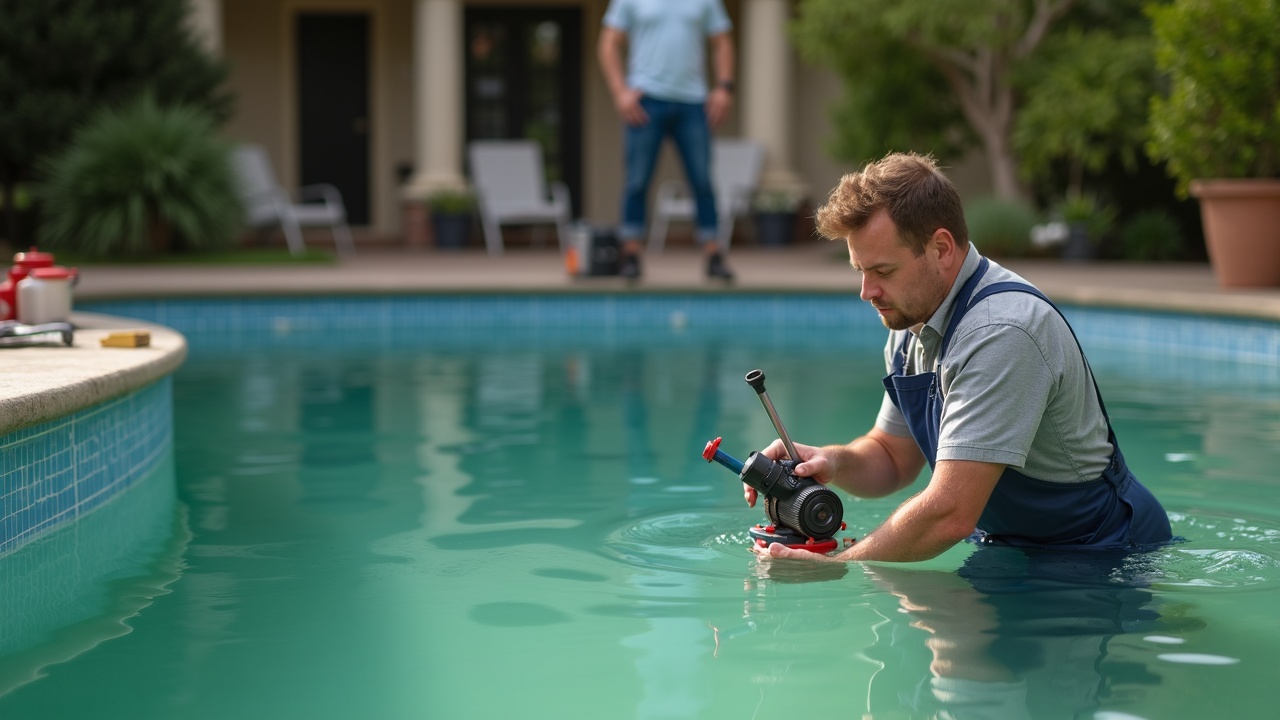
A swimming pool equipment breakdown doesn't just stop water circulation — it stops customer trust. Pool owners who call with a broken pump, failed heater, or clogged filter expect immediate action. When they can't reach you, get vague answers, or wait days for a callback, they're already searching for your competitor. The difference between keeping a customer and losing them forever isn't always your technical skill — it's how fast you respond and how clearly you communicate from the moment they report the problem until you fix it.
Why Equipment Emergencies Are Your Highest-Stakes Customer Service Moment
Equipment failures trigger panic in pool owners. A broken heater means canceled pool parties. A failed pump means algae blooms and thousands in water chemistry damage within 48 hours. When a customer calls about a swimming pool equipment breakdown, they're not just reporting a maintenance issue — they're in crisis mode, and they're evaluating whether you're the partner who solves crises or the vendor who makes them worse.
Here's what most articles won't tell you: The technical fix is rarely what determines customer loyalty during equipment breakdowns. It's the communication gap between "I need help now" and "We'll get someone out there." Pool owners will forgive a 24-hour repair window if you answer their call in 60 seconds, explain what's happening, and give them a firm appointment. They won't forgive three unreturned voicemails, even if you fix the pump in 20 minutes once you finally show up.
According to InsideSales.com, response times beyond five minutes reduce your chances of meaningful customer engagement by 400%. For emergency service calls, that window is even tighter. When a pool owner is staring at a dead pump and rising water temperature, every minute without contact feels like abandonment.
The Three Ways Pool Companies Lose Customers During Equipment Failures
Most pool service businesses lose customers during equipment breakdowns through three predictable failures: missed emergency calls, vague response timelines, and radio silence between diagnosis and repair. Each failure compounds the others, and all three stem from the same root cause — a front office that can't keep up when emergencies spike.
You Miss the Emergency Call Entirely
You're diagnosing a chemical imbalance at one property when a longtime customer calls about their heater cutting out. The call goes to voicemail. They wait 15 minutes, call again, and leave a second message. By hour two, they're calling the company whose truck they saw three streets over. By hour four, they've booked a same-day diagnostic with your competitor. You finally call back that evening — and learn they've already switched providers.
Pool equipment emergencies don't wait for your schedule. A broken pump can turn crystal-clear water into a swamp in 36 hours during summer heat. Homeowners know this. When they can't reach you immediately, they assume you're either too busy or too disorganized to handle their crisis.
You Answer, But Can't Commit to a Timeline
You take the call between jobs. The customer describes a leaking filter housing. You say "I'll try to get out there today or tomorrow" because you're not sure what your afternoon looks like. The customer hears uncertainty. They call two more companies. One says "We'll have someone there by 3 p.m. today and I'm texting you the technician's name and photo right now." You've lost the job before you finished your current one.
Vague timelines feel like low priority. During a swimming pool emergency response, customers need concrete commitments — even if that commitment is "We can't get there until Thursday at 2 p.m." A firm timeline three days out beats a vague "soon" every time.
You Go Dark Between Diagnosis and Repair
You diagnose a failed heater on Monday. You order the part and tell the customer "It'll be a few days." By Friday, they haven't heard from you. They call and get voicemail. They assume you've forgotten them or deprioritized their job. When you finally show up the following Tuesday with the part, they're polite but cold. They pay the bill and never call you again. The swimming pool customer service breakdown wasn't the delayed part — it was the silence.
Research from Bain & Company shows that customers who feel informed during service delays rate their experience 40% higher than those left guessing, even when repair times are identical. A two-minute update call or text transforms waiting from anxiety into patience.
Why This Keeps Happening (Even to Good Pool Companies)
You're not ignoring customers on purpose. You're in a truck, up to your elbows in a filter backwash valve, or negotiating with a parts supplier. The call comes in, you silence it, and you promise yourself you'll call back in 20 minutes. Then another emergency hits. Then you're driving to the next job. Then it's 6 p.m. and you realize you never called back.
The Bureau of Labor Statistics reports that employment in swimming pool services has grown 18% over the past five years, but customer expectations have grown faster. Pool owners now expect the same instant response they get from rideshare apps and food delivery. Your field skills haven't declined — customer patience has. The gap between what you can deliver alone and what customers now expect is widening every season.
Most pool service owners try to solve this by working longer hours, hiring another technician, or installing a voicemail system that promises callbacks. None of these fix the core problem: You need a front office that can handle emergency calls, communicate timelines, and keep customers informed while you're fixing equipment — and you need it to work around the clock, especially during the summer peak season when pumps overheat and heaters fail most often.
That's exactly what Book All Leads handles for pool service businesses. You get a full front office team — six roles working 24/7 — that answers every call in under 60 seconds, books emergency appointments directly into your calendar, and keeps customers updated through text and email from diagnosis through repair. No software for you to learn. Live in five days. No contracts. Your customers always reach a real person who knows your business, your availability, and your pricing — while you stay focused on fixing swimming pool broken equipment instead of managing phones.
How to Turn Equipment Breakdowns Into Loyalty Builders
The fastest way to earn lifetime customers isn't preventing every equipment failure — it's responding to failures so well that customers trust you more afterward than they did before. When you handle a swimming pool equipment breakdown with speed, clarity, and proactive communication, you transform a crisis into proof that you're the partner they need when things go wrong.
Answer Every Emergency Call Within 90 Seconds
Speed signals priority. When a pool owner calls about a broken pump and reaches a live person in under two minutes, they immediately relax. They know they're not alone. They know you're handling it. Even if you can't send a technician for six hours, that initial contact buys goodwill that carries through the entire repair process.
If you're in the field, you need someone else answering. A voicemail message, no matter how friendly, tells customers they're on their own until you decide to check messages. A live person tells them they matter right now.
Give Concrete Timelines, Not Reassurances
Replace "We'll get to you as soon as we can" with "We'll have someone there Thursday at 10 a.m., and if we finish our current job early, we'll text you to see if we can come today instead." Specific timelines reduce anxiety. Customers can plan around a firm appointment. They can't plan around "soon."
If you don't know your schedule, someone in your front office should. Every emergency call should end with a confirmed appointment time, a technician name, and a text confirmation sent before you hang up.
Send Updates Before Customers Have to Ask
After you diagnose a broken heater and order a part, send a text that afternoon: "Part ordered — expected delivery Tuesday. We'll confirm your install appointment Monday evening." Then actually send that confirmation Monday evening. Then send a "Technician on the way" text Tuesday morning. Each message costs you 30 seconds and prevents hours of customer anxiety.
Proactive updates separate you from competitors. Most pool companies only communicate when customers chase them down. Be the company that keeps customers informed without being asked.
What This Looks Like in Practice
Consider two pool service companies handling identical equipment failures. Both are skilled technicians. Both have the same response times. The difference is what happens on the front end.
Company A: Customer calls at 9 a.m. about a failed pump. Call goes to voicemail. Customer calls again at 10 a.m. and noon. Owner finally calls back at 2 p.m., apologizes for the delay, and schedules a visit for "sometime tomorrow morning." Technician arrives at 11 a.m. the next day, diagnoses a burned-out motor, and says he'll order the part. Customer hears nothing for four days, calls to check in, gets voicemail again, and finally gets a callback that evening saying the part arrived and they can install Friday. Customer pays the bill but doesn't rebook maintenance. Trust is gone.
Company B: Customer calls at 9 a.m. Live person answers in 45 seconds, expresses concern, checks the calendar, and books a diagnostic visit for 3 p.m. that day. Customer receives a text confirmation immediately. At 2:45 p.m., another text: "Mike is 10 minutes away." Mike diagnoses the motor, explains the issue, and says he's ordering the part before he leaves the property. That evening, customer gets a text: "Part ordered — delivery expected Thursday. We'll text you Wednesday to confirm your Friday morning install." Wednesday evening: "Part arrived. Still good for Friday 9 a.m.?" Friday 8:50 a.m.: "Mike is on the way." Motor installed by 10 a.m. Customer rebooks seasonal maintenance on the spot and refers two neighbors the following week.
Same equipment failure. Same technical repair. Completely different customer experience. The difference isn't the wrench work — it's the front office communication that happened around it.

The Revenue Impact of Getting This Right
Fixing emergency response isn't just about customer satisfaction — it's about revenue you're leaving on the table. Every missed call is a lost job. Every slow callback is a customer who booked your competitor. Every equipment breakdown handled poorly is a customer who won't renew maintenance contracts or refer friends.
According to Harvard Business Review, acquiring a new customer costs five to 25 times more than retaining an existing one, yet most service businesses focus almost entirely on lead generation instead of customer retention. Equipment breakdowns are your highest-leverage retention moment. Handle them well, and customers stay for years. Handle them poorly, and you're constantly replacing churned customers with expensive new leads.
Want to see what better response times could mean for your bottom line? Calculate your losses from missed calls and slow responses.
What Keeps Pool Owners Loyal After Equipment Fails
Customers don't expect perfection. They expect partnership. When equipment fails — and it will, because pumps wear out and heaters break — pool owners want to know you're on their team, solving the problem with urgency and transparency.
- Immediate acknowledgment: Answer fast or have someone who can
- Clear timelines: Tell them exactly when you'll be there
- Proactive updates: Communicate before they have to ask
- Follow-through: Do what you said you'd do, when you said you'd do it
- Post-repair check-in: Call or text 24 hours after the fix to confirm everything's working
These aren't complex strategies. They're basic customer service — but they're nearly impossible to deliver consistently when you're the one answering calls, scheduling jobs, ordering parts, and turning wrenches. You need a front office team dedicated to communication while you stay dedicated to repairs.
Frequently Asked Questions
How fast should I respond to swimming pool equipment breakdown calls?
Answer emergency calls within 90 seconds whenever possible. Research shows response times beyond five minutes dramatically reduce conversion rates. For equipment failures, customers are in crisis mode — every minute without contact increases the chance they'll call a competitor. If you're in the field, you need a front office team answering calls while you work.
What if I can't get to an emergency repair the same day?
Customers can handle delayed repairs if you communicate clearly. Answer the call immediately, assess the situation, give them a firm appointment time (even if it's 48 hours out), and explain what they can do in the meantime (like turning off equipment to prevent further damage). A concrete timeline three days away beats a vague "as soon as possible" that leaves them guessing.
Should I offer 24/7 emergency service for equipment breakdowns?
It depends on your market and capacity, but you should at least answer calls 24/7 to assess urgency and schedule appointments. Not every breakdown requires a middle-of-the-night truck roll, but every call deserves an immediate response. A front office team can triage after-hours calls, handle true emergencies, and schedule non-urgent repairs for the next business day.
How do I keep customers updated during multi-day repairs?
Send proactive text or email updates at key milestones: when you order parts, when parts arrive, the day before installation, and when your technician is on the way. Each update takes 30 seconds but prevents hours of customer anxiety. Customers who feel informed during delays rate their experience significantly higher than those left guessing, even when actual repair times are identical.
What's the biggest mistake pool companies make during equipment failures?
Going silent between diagnosis and repair. You identify the problem, order a part, and assume the customer knows you're working on it. They don't. They're checking their phone, wondering if you forgot them, and googling other pool companies. A two-minute update call or text transforms that anxiety into confidence. Silence kills trust faster than delayed repairs.
Can good emergency response really turn customers into long-term clients?
Absolutely. Customers remember how you handle crises more vividly than routine maintenance. When you respond to a swimming pool equipment breakdown with speed, clarity, and proactive communication, you prove you're reliable when it matters most. Those customers renew maintenance contracts, call you first for future issues, and refer neighbors — turning a single emergency repair into years of recurring revenue.
Stop Losing Customers When Equipment Breaks
You didn't become a pool service professional to spend your day managing phone calls and sending update texts. You became a pool service professional to fix equipment, balance chemistry, and keep pools running. But in today's market, technical skill alone isn't enough to retain customers through equipment breakdowns. Speed, communication, and reliability during emergencies separate businesses that grow from businesses that constantly replace churned customers with expensive new leads.
The solution isn't working longer hours or checking your phone between every job. The solution is a front office team that handles communication as expertly as you handle repairs — answering every call in under 60 seconds, booking appointments with firm timelines, and keeping customers informed from breakdown through resolution.
That's what Book All Leads delivers. A full front office team — six roles working around the clock — dedicated to making sure your customers always feel heard, informed, and prioritized. Live in five days. No software to learn. No contracts. Just the front office support that turns swimming pool equipment breakdowns from customer service disasters into loyalty builders. Let us handle the phones while you handle the pools.
John Edmonds is a native Texan and military combat veteran. He founded Book All Leads after identifying a critical gap in the service industry: business owners losing revenue not from lack of skill, but because no one was handling the calls, follow-ups, reviews, and payments while they were busy doing the work.
View LinkedIn Profile →