
Most pool companies treat equipment failure calls like basic service requests — take a name, promise a callback, hope the lead doesn't go cold. But these aren't scheduling calls. They're diagnostic conversations that require your front office to recognize the difference between a clogged impeller and a failed capacitor based on how the homeowner describes the noise. When your competitor's answering service can walk through symptom questions, quote a ballpark price, and schedule same-day service while the customer is still on the line, you've already lost. The homeowner doesn't call a second company. They book with whoever made them feel heard and gave them certainty first.
Here's the gap: you know how to diagnose pool equipment breakdown in your sleep, but the person answering your phone at 6:45 AM doesn't. And that person — whether it's you juggling a wrench and a cell phone, your spouse covering calls between errands, or a generic answering service reading from a script — is the only thing standing between a $3,500 equipment repair and a missed opportunity.
- Equipment failure calls convert at 3–4× the rate of routine maintenance inquiries because the need is urgent and the pain is immediate
- Homeowners who reach a knowledgeable voice in the first call rarely shop around — they book on perceived expertise
- Competitors who train their front office to recognize symptoms (grinding noise = bearing failure, humming without spinning = capacitor, no sound at all = electrical) close these calls before you return the voicemail
- Every hour of delay costs you the job — according to InsideSales.com, leads contacted within 5 minutes are 21× more likely to convert than those contacted after 30 minutes
A homeowner calling about a pool pump not working isn't looking for an appointment — they're looking for an answer. They've already spent 20 minutes Googling "pool pump humming but not spinning" and watching YouTube videos. They're calling because they need a professional to confirm their diagnosis, tell them what it costs, and commit to fixing it today. If your front office can't do that, you're asking them to wait in uncertainty while their competitor offers immediate clarity.
The difference between winning and losing these calls comes down to pattern recognition. Your best competitor doesn't just answer the phone — they ask the right sequence of questions. "Is it making any noise at all? Is the motor hot to the touch? Can you hear a hum or is it completely silent?" Within 60 seconds, they've mentally narrowed it down to three likely causes. Within two minutes, they've quoted a price range, explained what happens next, and put the customer on the schedule.
Here's what most articles won't tell you: Homeowners don't need you to be right 100% of the time on the phone diagnosis. They need you to sound like you've seen this exact problem fifty times before. Confidence closes the call. A generic answering service that says "we'll have someone call you back" sounds like they have no idea what they're doing. A front office that says "that humming sound usually means the capacitor failed — it's a $200–$350 repair and we can be there this afternoon" sounds like they know exactly what they're doing. Even if the on-site diagnosis reveals something different, you've already earned the trust that gets your truck in the driveway.
## What Your Front Office Needs to Know (And Why Generic Call Handlers Don't)Pool equipment troubleshooting over the phone isn't rocket science — but it does require someone who knows the difference between a mechanical failure and an electrical one. Your front office doesn't need to be a certified pool technician. They need to recognize patterns, ask clarifying questions, and translate homeowner descriptions into probable causes. That's a skill set generic answering services don't have and owner-operators don't have time to teach.
Here's the knowledge gap that's costing you jobs: when a homeowner says "the pump just stopped working," that description covers eight different failure modes. A trained front office asks follow-ups: Did it stop suddenly or gradually lose power? Is the breaker tripped? Is there any noise at all? Those answers separate a $75 impeller cleaning from a $1,200 motor replacement. The company that can make that distinction on the first call wins the job.
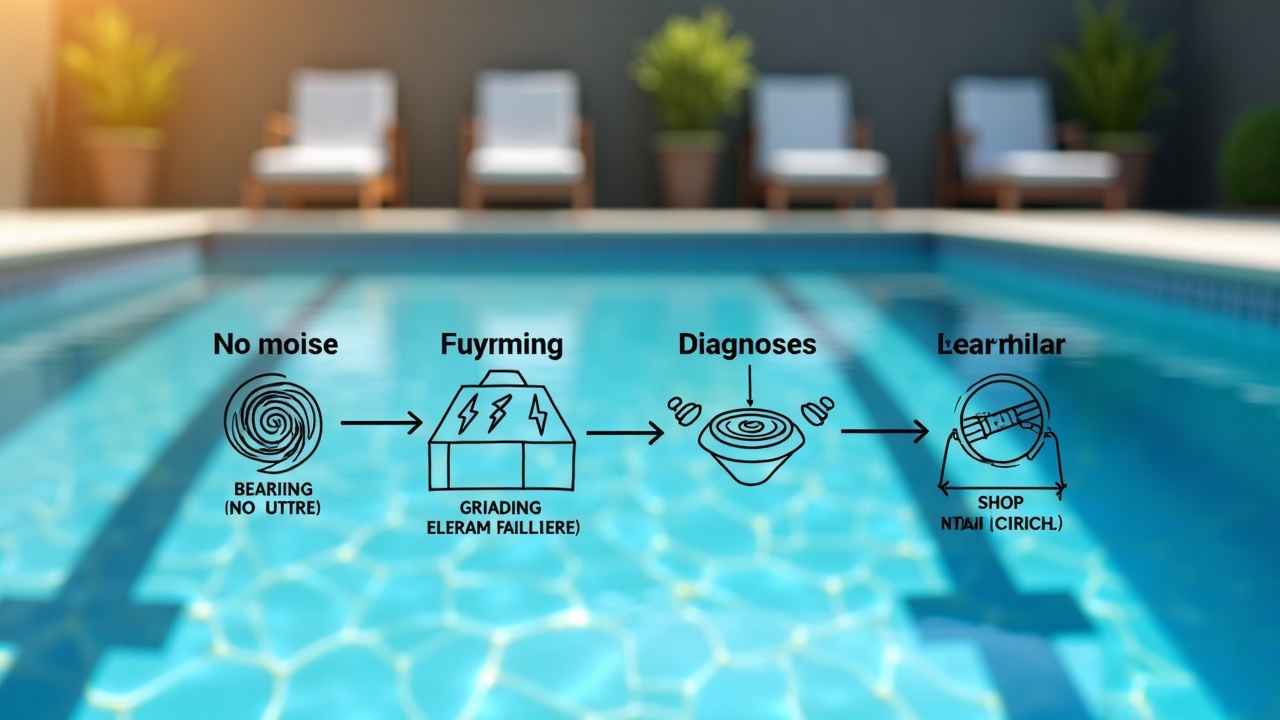
Most pool service businesses handle this in one of three ways — and two of them bleed revenue. Option one: the owner answers every call personally, which means diagnostic conversations happen while they're elbow-deep in another job, leading to missed details and irritated customers. Option two: a spouse or office admin takes messages and promises callbacks, which means the lead goes cold or books with whoever answered first. Option three: a generic answering service logs the call with zero context, and the homeowner hangs up feeling like they talked to a voicemail box with a pulse.
The companies winning these calls have a fourth option: a front office team trained specifically on pool equipment diagnostic patterns. Not software. Not a chatbot. Not a script. Actual people who've been taught to recognize the symptoms of common failures and speak with the same confidence you would. That's not something you can outsource to a $2-per-call answering service. It's also not something you can expect your spouse to learn while managing three other parts of the business.
Book All Leads builds and manages a full front office team that works like your best in-house hire — except there are six roles covering 24/7, they're trained on your trade before they take their first call, and they're live in five days. No software for you to learn. No scripts that sound like scripts. Just a team that recognizes when a "loud grinding noise" means a bearing failure and when "humming but not spinning" means a bad capacitor — and books the call while your competitor is still returning voicemails.
## The Real Cost of Losing High-Value Equipment CallsEvery missed pool equipment failure call costs you more than the immediate job — it costs you the lifetime value of a customer who needed you most and found someone else. Equipment failures are the moment homeowners are most ready to spend, most willing to pay for speed, and most likely to become long-term clients if you solve their problem fast. Lose that call and you've lost the $3,000 repair, the $1,200 annual maintenance contract, and the three referrals that would have followed.
According to research from Bain & Company, a 5% increase in customer retention can increase profits by 25–95%, and customers acquired through emergency service calls have higher lifetime value because the relationship starts with you solving their most urgent problem. Miss that first call and you've missed the best customer acquisition opportunity in your business.
Let's put numbers on it. A typical pool service company handling equipment repairs averages 8–12 equipment failure calls per week during peak season. If your front office can't diagnose and book those calls in real time, you're losing 30–40% to competitors who can. That's 3–5 lost jobs per week at an average ticket of $2,500. Over a 20-week season, that's $150,000–$250,000 in lost revenue — not because you weren't qualified to do the work, but because someone else answered the phone better. You can calculate your losses based on your own call volume, but the pattern holds: the company that wins the phone call wins the revenue.
| Call Handling Approach | First-Call Close Rate | Lost Revenue (per 10 weekly calls, 20-week season) |
|---|---|---|
| Owner answers between jobs | 45–55% | $112,500–$225,000 |
| Generic answering service | 15–25% | $187,500–$318,750 |
| Trade-trained front office team | 75–85% | $37,500–$93,750 |
Your sharpest competitor isn't beating you with better technicians or lower prices — they're beating you with a front office that makes every caller feel like they've reached an expert who's seen this exact problem before. That perception is built in the first 60 seconds of the call, and it has nothing to do with technical certifications. It's about asking the right questions in the right order and responding with confidence instead of uncertainty.
Here's how the best pool service companies handle a pool pump not working call: The front office asks if the pump is making any sound. If it's humming but not spinning, they know it's likely a capacitor — a same-day fix under $400. If it's grinding, it's a bearing failure — plan for a $600–$1,000 repair. If it's completely silent, they ask if the breaker tripped. If yes, there's likely a short or ground fault — electrical diagnostic needed. If no, the motor's probably seized. Within 90 seconds, they've given the homeowner a probable cause, a price range, and a same-day appointment. The homeowner hangs up relieved. They don't call anyone else.
Compare that to the typical missed-call experience: voicemail, or a callback three hours later asking for photos and promising someone will "take a look and get back to them." By that point, the homeowner has already booked with someone who gave them an answer when they needed it most.

The gap isn't knowledge — it's availability and training. You know how to diagnose these failures. But if you're the only one who can, you've built a business that can't scale past your personal capacity to answer the phone. The companies that grow past $500K in revenue have figured out how to transfer that diagnostic skill to their front office without hiring a full-time employee or spending six months training someone who quits three months later.
## Why Most Pool Companies Can't Build This In-HouseThe obvious solution is to hire a full-time office manager and train them on pool equipment diagnostic patterns. The reality: that hire costs $40,000–$55,000 per year, takes 60–90 days to get competent, and you're still stuck with one person covering 40 hours a week. Equipment failures don't wait for business hours. The $4,500 heat pump repair call comes in at 7 PM on a Saturday. The panicked homeowner whose pool is draining through a cracked filter housing calls at 6 AM on a Tuesday. If your front office is one person, you're still missing the calls that drive the most revenue.
Some owners try to patch the gap with family members or part-time admins. That works until it doesn't. The person answering your phone needs to sound like they've been doing this for years, not like they're reading a script or guessing. Homeowners can hear uncertainty, and uncertainty makes them call the next company on their list. You need someone who can hear "the pump is making a loud squealing noise" and respond instantly with "that's usually a bearing starting to fail — if we don't replace it soon the motor will seize and you're looking at a full replacement instead of a $700 repair." That level of fluency doesn't come from a script. It comes from training and repetition.
The third option — outsourcing to a generic answering service — is worse than doing nothing. A flat-rate call center might log the details, but they can't diagnose, they can't quote, and they can't close. They're a recording device, not a revenue driver. The homeowner hangs up feeling like they got processed, not helped. Then they call someone else.
## The Fix: A Front Office That Speaks Pool Equipment FluentlyThe solution isn't hiring more people or working longer hours — it's building a front office that handles diagnostic calls the same way you would, without requiring you to be on the phone. That means a team trained specifically on swimming pool equipment failure patterns, available 24/7, and empowered to book jobs on the first call. Not a script. Not a chatbot. Not a "we'll have someone get back to you" answering service. A team that knows the difference between a suction leak and a circulation issue based on what the homeowner describes, and closes the call with confidence.
This isn't about adding technology to your business. It's about adding capacity. You're already the expert. The goal is to clone that expertise into a front office that represents you when you're on a job, after hours, or on your one day off. The companies doing this well have front offices that can field a "pool heater not working" call, ask if the pilot light is on, ask if there's an error code, ask if they've checked the breaker, and narrow it down to a likely ignition failure or a pressure switch issue — all in under two minutes. Then they book the job and move to the next call.
Here's what changes when your front office can diagnose over the phone: your close rate on equipment failure calls jumps from 40–50% to 75–85%. Your average response time drops from hours to seconds. Homeowners stop shopping around because you gave them certainty when they were panicking. And you stop losing $2,000–$5,000 jobs to competitors who just happened to answer first.
If you're tired of returning voicemails for jobs that have already been booked by someone else, the fix isn't working harder — it's building a front office that knows your trade as well as you do and represents you like your best employee would. Not in six months. This week.
## Frequently Asked QuestionsWhat's the difference between a pool equipment diagnostic and a regular service call?
A diagnostic call requires your front office to identify probable causes based on symptoms before the truck rolls. A regular service call is scheduling-focused — the homeowner already knows they want maintenance or cleaning. Equipment failure calls need real-time troubleshooting to close, which is why generic answering services lose them.
Can a front office really diagnose pool equipment over the phone without seeing it?
Yes — the same way you mentally diagnose probable causes when a customer describes symptoms. Your front office doesn't need to be 100% accurate. They need to ask the right questions (Is it making noise? What kind? Is it hot?) and give a confident probable cause with a price range. Homeowners book with whoever sounds like they've seen the problem before, even if the on-site diagnosis reveals a slightly different issue.
How do I train someone to recognize pool equipment failures without years of field experience?
You don't need to train them like a technician — you need to train them on pattern recognition. Teach them the five most common failure modes for pumps, heaters, and filters, the questions that differentiate them, and the language you'd use to explain each one. A competent front office person can learn this in two weeks if they're taught by someone who knows the trade, not reading from a generic script.
Why do equipment failure calls convert better than routine maintenance inquiries?
Because the pain is immediate and the need is urgent. A homeowner calling because their pool is turning green or their pump is making a grinding noise needs help today, and they're willing to pay for it. They're not price shopping — they're looking for someone who can solve the problem fast. That urgency makes them ready to book on the first call if you give them confidence.
What happens if my front office gives the wrong diagnosis over the phone?
Your technician corrects it on-site and explains why the actual issue was different. Homeowners don't expect perfection — they expect honesty. What they won't forgive is being ignored or put off. A confident probable diagnosis that turns out to be slightly off is infinitely better than "we'll have someone call you back" and then losing the job to a competitor who gave an answer immediately.
How much revenue am I actually losing by not diagnosing equipment calls on the first contact?
If you're getting 8–12 equipment failure calls per week during peak season and your front office can't close them in real time, you're losing 30–40% to competitors who can. That's $150,000–$250,000 over a 20-week season for a typical pool service company averaging $2,500 per equipment repair. Every hour of delay cuts your close rate in half.
You already know how to fix a failed pool pump or diagnose a heater ignition issue. The problem isn't your technical skill — it's that homeowners are booking with whoever answers the phone first and sounds like they know what they're talking about. Every swimming pool equipment failure call you miss because your front office can't diagnose over the phone is a $2,000–$5,000 job going to someone else. Not because they're better at the work. Because they're better at the phone.
The fix is simple: build a front office that recognizes symptoms, quotes confidently, and closes calls while your competitor is still checking voicemail. Not six months from now. This week. Book All Leads gets you live in five days with a team that knows your trade, works 24/7, and books equipment failure calls the same way you would. No contracts. No software to learn. Just a front office that stops letting revenue walk out the door because someone else answered first.
John Edmonds is a native Texan and military combat veteran. He founded Book All Leads after identifying a critical gap in the service industry: business owners losing revenue not from lack of skill, but because no one was handling the calls, follow-ups, reviews, and payments while they were busy doing the work.
View LinkedIn Profile →