
Swimming pool fence jobs are consistently lost by pool installation companies because they fail to quote barrier requirements during the initial sales conversation, allowing general contractors and specialized fence companies to capture the add-on revenue weeks or months later. Pool companies focus on the water feature itself while treating safety compliance as an afterthought, creating a gap that competitors exploit by positioning themselves as the simpler, faster solution for legally required enclosures.
The Problem: You're Installing $50,000 Pools and Walking Away from $8,000 in Fence Revenue
Every inground pool installation in the United States triggers a legal requirement for barrier protection. Every single one. Yet most pool companies treat the fence conversation like it's someone else's problem.
Here's what happens on a typical job: You close the pool sale, excavate, install the shell, finish the decking, fill it with water, and hand the homeowner a completion checklist that includes "contact a fence contractor for required safety barrier." You've just gift-wrapped $6,000 to $12,000 in margin for whoever answers their next phone call.
The pool barrier isn't an optional upgrade. It's mandated by the International Swimming Pool and Spa Code, enforced at the local level before final inspection approval. Homeowners don't get to skip it. They're going to buy it from someone. The only question is whether that someone is you or the contractor they find on Google three days after you leave.
Here's what most articles won't tell you: The homeowner doesn't want to deal with a second contractor. They're exhausted from managing your project. When you tell them to "find someone for the fence," what they hear is "I'm not set up to handle the whole job, so now you get to coordinate another vendor, get more quotes, manage another timeline, and hope it gets done before the county inspector shows up." You've positioned yourself as incomplete.
Why Pool Companies Lose Pool Barrier Sales to General Contractors
Pool installers lose fence work because they've built their business around one thing—pools—and haven't adapted their sales process to capture the mandatory add-ons. The revenue leaks at three specific points, and competitors know exactly where to step in.
You're Not Quoting the Fence During the Initial Estimate
When a homeowner requests a pool quote, they're thinking about the entire outdoor transformation. They've already researched permit requirements. They know a fence is coming. But your proposal shows only the pool, decking, and maybe equipment upgrades.
General contractors and fence specialists, meanwhile, are running Facebook ads targeted at "new pool owners" in your zip code. They're positioning themselves as the safety compliance experts who make permitting easy. By the time your client reaches out to them, they've already framed the conversation: "Most pool installers don't handle this part, so we specialize in getting you permitted fast."
You're not losing on price. You're losing because you didn't make an offer.
Your Team Isn't Trained to Sell Pool Enclosure Installs
Your field crew knows pools. They don't know fence installation specs, material options, or gate hardware requirements. So when a homeowner asks, "What about the barrier?" the answer is usually, "You'll need to hire someone for that."
That's not a referral. That's a missed sale. And it trains your clients to think of your company as single-function.
According to the National Association of Home Builders, bundled service offerings increase project close rates by 23% compared to single-trade proposals, largely because homeowners assign higher trust and perceived competence to contractors who can manage multiple scopes without coordination handoffs.
No One's Answering When Pool Safety Fence Leads Call Back
Even when you do quote the fence, the follow-up fails. Homeowners don't make decisions in a single meeting. They call back with questions: "Can we do glass instead of aluminum? What's the timeline if we add the fence? Does this delay the final inspection?"
If those calls go to voicemail, or get returned eight hours later, they've already called the next name on their list. Research from InsideSales.com shows that response time is the single strongest predictor of lead conversion in home services—leads contacted within five minutes are 21 times more likely to convert than those contacted after 30 minutes.
You can have the better product, the better price, and the better reputation. If you don't pick up the phone, none of it matters.
That's where a team like Book All Leads changes the equation. Instead of relying on your field crew to juggle phone calls between jobs, you get a full front office team—six roles working around the clock—that answers every call, qualifies every inquiry, and books estimates while the lead is still warm. No software to learn, no apps to manage. Just a team that picks up, speaks for your business, and gets the appointment on the calendar. Most clients are live in five days.
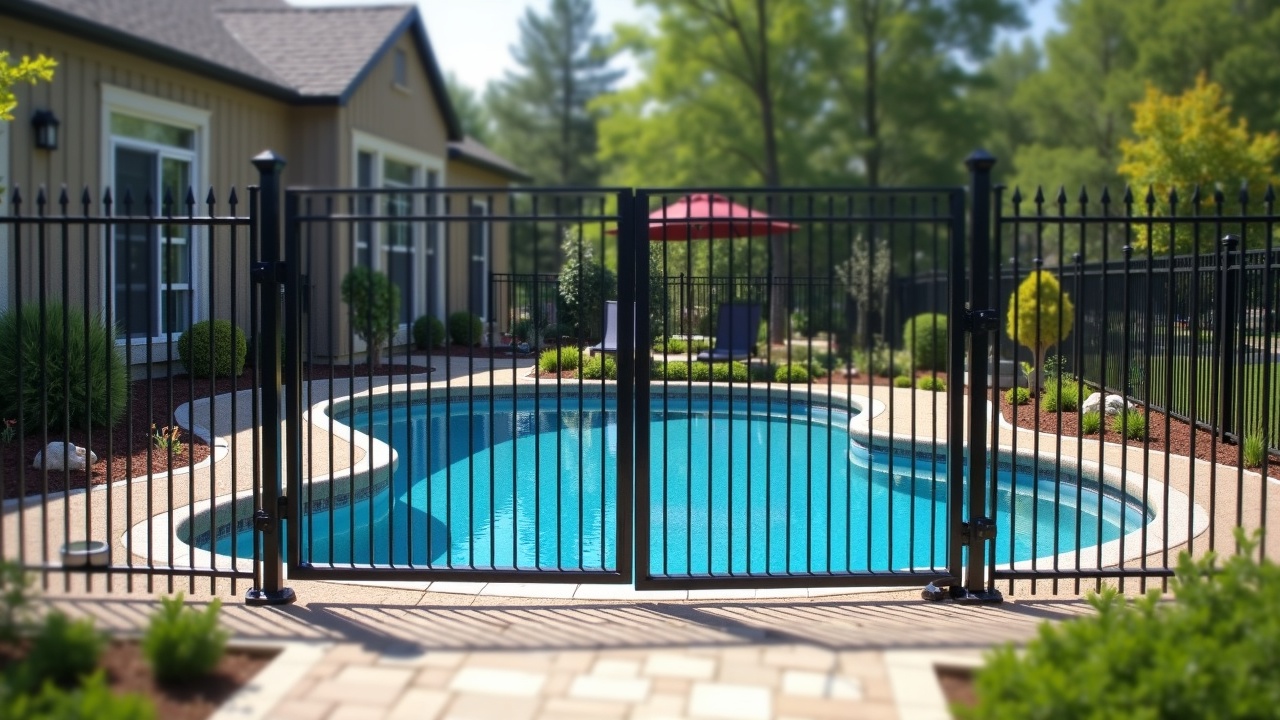
The Fix: Build Pool Barrier Sales Into Your Core Offering
Capturing swimming pool fence jobs doesn't require you to become a fence company. It requires you to treat the barrier as part of the pool project from the first conversation, train your team to sell it confidently, and ensure every inquiry gets handled before the homeowner moves on.
Quote the Fence in Every Pool Proposal
Stop presenting the pool as a standalone item. Your proposal should include three options:
- Pool only (with a note that barrier installation is required for permitting and not included)
- Pool + code-compliant mesh or aluminum fence (itemized, with gate and latch specs)
- Pool + upgraded enclosure (glass panel, decorative ornamental iron, or integrated landscaping design)
When the homeowner sees the fence priced in the original proposal, it's no longer a separate project. It's a line item they can approve or decline. And because you're framing it as part of the permitting pathway, it feels like the smart, complete choice.
You'll close 40-60% of fence add-ons this way—not because you're a better fence installer, but because you made it easy to say yes in the moment of highest buying intent.
Partner with a Fence Installer and White-Label the Work
You don't need to hire fence crews or buy new equipment. You need a reliable subcontractor relationship with a fence company that will install under your brand, on your timeline, and at a predictable cost.
Negotiate a per-linear-foot rate for standard barrier types. Lock in lead times. Then mark it up 25-35% and present it as part of your scope. The homeowner gets one point of contact, one invoice, one warranty. You get margin on work you're not physically performing.
This is how the most profitable pool companies operate. They don't do everything in-house. They control the client relationship and the project timeline, then coordinate the trades that fill the gaps.
Make Sure Every Call Gets Answered
If you're quoting fences but missing the follow-up calls, you're doing the marketing work for your competitors. Homeowners will call back. They'll have questions. They'll want to adjust the scope. If they hit voicemail twice, they'll move on.
Your options are simple: hire someone to answer the phone full-time, or bring in a team that's already doing it for dozens of companies like yours. The math isn't close. A full-time office person costs $40,000-$55,000 annually, plus benefits, plus the time you spend training them on your pricing, scheduling, and CRM. A managed front office costs a fraction of that and starts picking up calls this week.
Want to see what you're losing to missed calls right now? Use our calculator to estimate the revenue walking out the door every month.
Real-World Example: How One Pool Installer Recaptured $130,000 in Barrier Revenue
A residential pool company in Scottsdale, Arizona, was installing 18-22 inground pools per year. Their average project value was $48,000. Every single client needed a fence. Zero were buying it from them.
The owner knew he was leaving money on the table, but his crews didn't sell fences and he didn't want to manage another trade in-house. So he did three things:
First, he built relationships with two local fence contractors and negotiated fixed pricing for the most common barrier types: four-foot black aluminum with self-closing gates, and removable mesh for clients who wanted seasonal flexibility.
Second, he updated every pool proposal to include the fence as an optional line item, positioned immediately below the pool and decking package. He added a single sentence to his sales script: "Most clients add the required safety barrier to the project so everything's permitted and inspected together. I can show you both options we typically install."
Third, he brought in a team to handle inbound calls and follow-ups so fence questions didn't go unanswered while his estimators were on job sites.
In the first year, 62% of his pool clients added the fence package. That's 12 additional fence installs at an average of $7,800 each. He netted roughly $2,600 per fence after subcontractor costs and overhead. Total captured revenue: $93,600. By year two, as word spread and reviews mentioned the "complete service," that number climbed to $130,000.
He didn't change what his crews did. He changed what he offered and how reliably he followed up.

What Happens When You Treat the Barrier as Someone Else's Problem
When you don't quote the fence, three things happen—all of them bad for your business.
First, you train homeowners to think of you as narrow specialists rather than full-service professionals. That limits your referral value. When their neighbor asks, "Who did your pool?" the answer is, "They did the pool, but we had to bring in someone else for the fence and another guy for the landscaping." You've positioned yourself as incomplete.
Second, you extend the project timeline and dilute your control. The homeowner now has to coordinate another contractor, which delays permitting and final inspection. If the fence installer is slow, unprofessional, or overpriced, that reflects on you. You recommended them—or at minimum, you didn't solve the problem.
Third, you leave a wide-open lane for pool fence contractors to build a relationship with your client while the project is still active. That contractor is now in position to quote future work: pavers, outdoor kitchens, landscaping, covers. You installed the pool, but they're building the relationship.
The homeowner isn't trying to shut you out. They just need the fence, and you didn't offer to handle it.
How to Price Pool Barrier Work Without Eating Your Margin
Pricing the fence is straightforward if you treat it like any other subcontracted scope. Get a locked-in cost from your installer, apply your standard markup, and present it as a turn-key line item.
Here's a simple structure:
- Subcontractor cost: $4,800 for 60 linear feet of powder-coated aluminum with two gates
- Your markup: 30% ($1,440)
- Client price: $6,240
That's $1,440 in margin you didn't have before, on work that required zero additional labor from your team. If you close ten of those per year, that's $14,400 in profit from a pricing conversation you were already having.
Some pool companies worry that adding the fence to the proposal will make the total price look too high. The opposite is true. Homeowners expect to pay for the barrier. When they see it itemized in your quote, it signals competence and removes a decision burden. They don't have to research fence contractors, get three more bids, and manage another timeline. It's already handled.
Bundling increases close rates because it reduces friction. The homeowner gets one decision, one point of contact, and one invoice. That's worth paying a modest premium.
Why Pool Safety Fence Leads Go Cold (and How to Keep Them Warm)
Even when you quote the fence, a percentage of clients will say "let me think about it" or "I'll call you back after we talk it over." If you're not set up to follow up fast and consistently, those warm leads turn into lost revenue.
The most common failure points:
Your estimator is back on a job site and doesn't return the call until end of day. By then, the homeowner has already spoken to two other contractors.
The client emails a question about gate options or upgraded materials. It sits in your inbox for 36 hours. They assume you're not interested.
They call your office line after hours or on the weekend. It goes to voicemail. Monday morning, they've already scheduled with someone who picked up on Saturday.
This isn't a sales skills problem. It's a capacity problem. If answering the phone pulls you off a job site or requires your estimator to stop mid-meeting, you're choosing between doing the work and capturing new work. That's a losing trade.
The fix is simple: make sure someone is always available to pick up, answer questions, and get the next step on the calendar. That someone doesn't have to be you. It just has to happen.
Common Objections Pool Installers Have About Adding Fence Work
"I don't want to manage another trade." You're not managing another trade. You're managing a single subcontractor relationship the same way you'd manage a plumber for equipment hookups or an electrician for lighting. The fence installer shows up on your schedule, installs to your spec, and invoices you. You maintain the client relationship.
"What if the fence installer screws up?" That's why you vet the partner before you start referring work. Install with them on two jobs as a test. If they're reliable, keep them. If not, find another. You're not locked in. You're building a vendor relationship like any other.
"Our clients want custom designs we can't quote." Then quote the standard option and offer the custom as an alternative. Most buyers just want code-compliant, attractive, and fast. If someone wants a designer glass enclosure, refer it out or mark it up enough to justify the coordination time. But don't skip the 80% of clients who'd happily buy a mesh or aluminum fence if you made it easy.
"We're already too busy to add more work." You're not adding work to your field schedule. You're adding a line item to proposals you're already writing. The fence happens during or after the pool project, on a separate timeline. It doesn't slow you down. It increases the value of every job you're already closing.
Frequently Asked Questions
Do I need a separate contractor's license to quote pool fence work?
In most states, you can quote and contract for fence installation as part of a pool project under your existing pool contractor or general contractor license, as long as the fence is directly related to code compliance for the pool. However, licensing requirements vary by state and municipality. Check with your local licensing board or consult with a contractor attorney to confirm what's allowed in your jurisdiction. If you're subcontracting the work to a licensed fence installer, they typically carry the trade-specific license, and you act as the general contractor managing the overall project.
What's the typical profit margin on pool barrier sales?
Most pool companies mark up subcontracted fence work by 25-35%, which translates to a net margin of roughly $1,800 to $3,200 per barrier install after covering coordination and warranty costs. If you're installing the fence with your own crew, margins can reach 40-50%, but that requires training, equipment, and scheduling capacity most pool installers don't have. The subcontractor model offers better return on time invested.
How long does a pool fence installation take?
A standard residential pool barrier—60 to 80 linear feet of aluminum or mesh fencing with one or two gates—typically takes one to two days to install, depending on terrain, gate hardware, and whether concrete footings are required. Removable mesh fences install faster, often in four to six hours. Glass panel enclosures take longer, usually three to five days including template work and custom fabrication. Scheduling the fence immediately after pool completion keeps the project timeline tight and gets you to final inspection faster.
What if the homeowner wants to use their own fence contractor?
Let them. You've still done your job by quoting it and offering a solution. Some clients have existing relationships or want to shop around. That's fine. The goal isn't to force every sale—it's to capture the 40-60% of buyers who'd prefer to handle everything through one contractor. When you make the offer, you've positioned yourself as comprehensive. When you don't, you've positioned yourself as incomplete.
Should I offer financing for the fence add-on?
Absolutely. If you're already offering financing for the pool, extending it to cover the full project—including the fence—makes the decision easier and increases close rates. Homeowners don't want to split payments across multiple vendors. A single financed amount that covers pool, decking, equipment, and barrier keeps everything simple and increases the likelihood they'll say yes to the complete package. Work with your existing financing partner to adjust the loan amount when the fence is added.
What's the best type of pool fence to offer as a default option?
For most residential clients, a four-foot powder-coated aluminum fence with self-closing, self-latching gates is the best default. It meets code in nearly every jurisdiction, looks clean, requires minimal maintenance, and comes in at a mid-range price point that doesn't scare off buyers. Offer removable mesh as a budget option for clients who want seasonal flexibility, and glass panels as a premium upgrade for clients prioritizing aesthetics. Having three tiers lets you meet the client where they are without overcomplicating the conversation.
Stop Walking Away from Pool Fence Revenue You've Already Earned
You've already done the hardest part: you sold the pool. The homeowner trusts you. They're writing a $40,000+ check and giving you access to their backyard for weeks. They'd be thrilled to add the required safety barrier to the same contract if you simply offered it.
Capturing swimming pool fence jobs doesn't require new trucks, new crews, or new skills. It requires a pricing conversation, a subcontractor relationship, and a front office that picks up the phone when clients call back with questions.
That last part is where most pool companies fall short. You can quote the fence perfectly, but if no one answers when the homeowner calls at 7 p.m. to ask about gate options, you've lost the sale.
Book All Leads makes sure that doesn't happen. Get a team that answers every call, books every qualified lead, and turns follow-ups into scheduled estimates—without you lifting a finger. No software, no training, no long-term contracts. Just more booked jobs and fewer missed opportunities.
John Edmonds is a native Texan and military combat veteran. He founded Book All Leads after identifying a critical gap in the service industry: business owners losing revenue not from lack of skill, but because no one was handling the calls, follow-ups, reviews, and payments while they were busy doing the work.
View LinkedIn Profile →