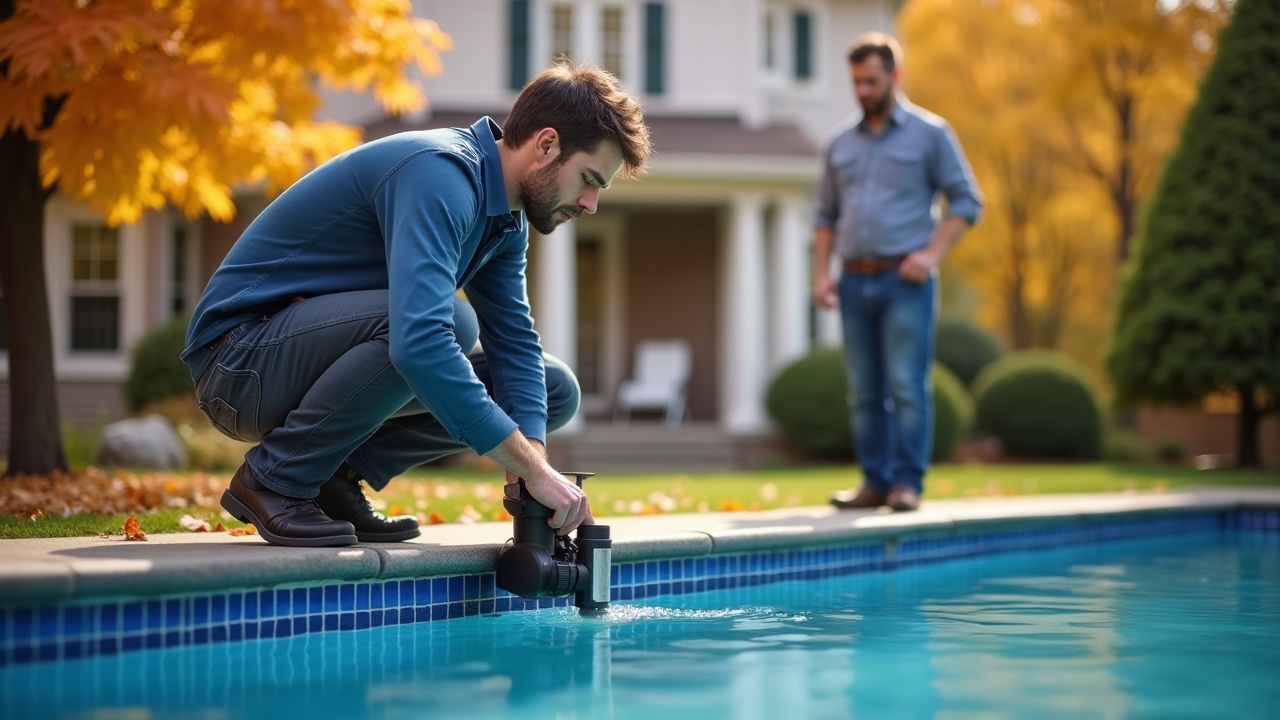
Swimming pool heater repair leads spike hard in September and October—right when the weather turns and homeowners want to stretch their pool season. Most pool companies lose 40-60% of these high-margin service calls because they're caught flat-footed after summer chaos, still overwhelmed with closing jobs, and can't answer the phone fast enough. These aren't tire-kickers. These are homeowners who want their heater fixed now, and they'll move to the next company within minutes if you don't pick up.
The Problem: Your Busiest Revenue Window Happens When You're Least Ready
Pool heater service calls arrive in concentrated bursts during the fall shoulder season—typically late September through early November, depending on your region. Homeowners who spent all summer enjoying their pool suddenly face the reality that water temperature is dropping, and they're not ready to close for the season yet. They call for heater repairs, new installations, or diagnostics on systems that haven't run in months.
Here's the brutal part: these calls come exactly when your crew is buried in closing appointments. Your phone rings off the hook with both routine closings and urgent heater calls, but you're physically on a jobsite with your hands full of vacuum hoses or chemical treatments. You see the missed calls pile up. By the time you call back—even if it's just two hours later—those homeowners have already booked with someone else.
Here's what most articles won't tell you: Pool heater repair leads convert at dramatically higher rates than routine maintenance calls, but only if you answer within the first five minutes. According to InsideSales.com, response times beyond five minutes drop your conversion rate by 400%. These aren't price shoppers—they're homeowners with a problem that's costing them pool time every day they wait. They have urgency and budget. But they won't wait for you to call back tomorrow.
The math is stark. If you're missing even half your inbound heater calls during this 6-8 week window, you're bleeding $15,000-$40,000 in high-margin revenue that you'll never recover. Fall pool revenue doesn't reschedule to spring. When November hits and pools close, that opportunity is gone until next year.
Why Swimming Pool Companies Miss Heater Repair Calls Every Fall
You already know why you miss calls—you're running jobs, not sitting in an office. But the deeper issue is structural. Pool companies staff for summer volume: openings, weekly service routes, repairs during peak swim season. By September, you've probably scaled back or you're transitioning team focus to closings. Nobody planned capacity for a second spike in urgent service calls.
Here's what's happening behind the scenes:
- Summer exhaustion: Your team just survived the busiest season of the year. Energy is low, not high, right when heater calls start flooding in.
- Closing bookings dominate the schedule: You've got a backlog of closings that customers scheduled weeks ago. Those are predictable, scheduled appointments. Heater repairs are urgent interruptions.
- No dedicated person on the phone: You're answering calls between jobs, or your office person is part-time and overwhelmed with scheduling closings, invoicing summer work, and fielding ten other questions.
- Heater work requires different skills: Not every pool tech is comfortable diagnosing gas lines, igniters, or heat exchangers. You might only have one or two people qualified to handle these jobs, creating a bottleneck.
The result? Calls go to voicemail. Voicemails pile up. You return calls hours later—or the next day—and homeowners tell you they already found someone. You've lost the job before you even quoted it.
What Fall Heater Calls Are Actually Worth (And Why You Can't Afford to Miss Them)
Pool heater service calls are among the highest-margin work you'll see all year. A typical heater repair runs $350-$800, and most jobs close in a single visit with minimal follow-up. New heater installations range from $2,500 to $6,000+ depending on the unit type. Compared to weekly service routes or routine openings and closings, heater work delivers more revenue per hour and often requires less repeat visits.
Fall pool heating season booking also attracts a specific type of customer: homeowners invested enough in their pool to extend the season. These aren't the customers nickel-and-diming you on weekly service rates. They're willing to spend to keep swimming into October or November. Many of them will also need spring opening services, summer maintenance, and future upgrades—first contact during a heater emergency is your entry point to a long-term relationship.
The window is short but dense. Most regions see 60-80% of annual heater service requests compressed into a 6-8 week fall period. If your average heater repair ticket is $500 and you're missing even three calls per week during this window, that's $9,000-$12,000 in lost revenue over two months. Scale that to five or ten missed calls per week, and you're looking at $20,000-$40,000 walking out the door.
And here's the kicker: your competitors are missing the same calls. The company that answers first doesn't just win that one job—they often become the go-to provider for that homeowner's future pool needs. You're not just losing a heater repair. You're losing a customer relationship that could be worth thousands over the next five years.
How to Capture Swimming Pool Heater Repair Leads Without Adding Chaos
The fix isn't hiring a full-time receptionist who'll sit idle for eight months of the year. It's not buying another software tool you'll never log into. The fix is having people—real, trained people—who answer every call, qualify the lead, book the appointment into your actual calendar, and follow up until the job is done.
Most pool companies don't need more leads. You need to convert the leads already calling you. That means answering the phone live, every time, within three rings. It means knowing which calls are urgent heater repairs versus routine questions. It means booking appointments without back-and-forth texting or waiting for you to call back with your schedule.
Book All Leads runs your entire front office—six roles, 24/7, live in five days. No software for you to learn. We answer your calls, book jobs into your calendar, follow up with customers, and handle payment collection. You stay on the jobsite. We make sure every swimming pool heater repair lead turns into a booked appointment, not a missed opportunity.
Here's what changes when every call gets answered by a real person who knows your business:
Speed kills hesitation. When a homeowner calls about a broken heater and gets a live person who can book them an appointment in the next 48 hours, they stop shopping. The job is yours. When they hit voicemail, they call three more companies and book whoever answers first.
Qualification happens before you drive. Your front office team asks the right questions: What type of heater? Gas or electric? What's the issue—no heat, intermittent heat, error codes? Is the pool already winterized? You show up with the right parts and the right expectations, not guessing in the driveway.
Follow-up doesn't fall through the cracks. If a customer needs a quote before committing, your team sends it and follows up two days later. If parts are on backorder, they call the customer with updates. You're not juggling texts and emails between jobs—your front office handles it.
You don't lose revenue to "I'll call you back." Homeowners who say they need to check with their spouse or compare prices get scheduled follow-ups. Most pool companies lose these leads to inertia. Your front office turns "maybe" into "booked."
Real-World Example: What Happens When You Catch Every Call
Take a mid-sized pool service company in North Carolina—12 employees, strong summer service routes, decent reputation. Every September, the owner knew he was missing heater calls. He'd see four or five missed calls per day, return them that evening, and hear "we already scheduled with someone else" more often than not. He estimated he was losing $20,000-$30,000 every fall, but hiring a full-time office person year-round didn't make sense financially.
He switched to a dedicated front office team in early September. Within two weeks, his heater repair bookings doubled—not because more people were calling, but because every call was answered live and converted into an appointment. By the end of October, he'd booked 47 heater repairs and three new installations. Total revenue from fall pool heating season: $38,400. The previous year, with the same call volume? $16,200.
The difference wasn't marketing. It wasn't a new website or paid ads. It was answering the phone every single time it rang and turning inquiries into appointments before the homeowner moved on.

When Should You Scale Up for Fall Heater Season?
Start preparing in late August—before the calls start flooding in. If you wait until mid-September when your phone is already ringing nonstop, you're already behind. Pool heating season booking doesn't wait for you to get organized.
Here's the timeline that works:
Late August: Make sure your front office capacity—whether that's your own team or an outside team—is ready to handle double the call volume you see in July. Train anyone answering the phone on heater-specific questions: types of heaters you service, typical lead times, pricing ranges, emergency vs. routine urgency.
Early September: Proactively reach out to past customers who've had heater work done before. A simple email or text: "Fall's coming—if you're planning to extend your swim season, now's the time to get your heater checked before the rush." You'll pre-book 15-20% of your fall heater work before the panic calls start.
Mid-September through October: This is go-time. Every call must be answered live. Every voicemail returned within 15 minutes, not two hours. Every lead followed up until they book or explicitly say no. You can calculate your losses from missed calls during this window—it's almost always more than you think.
Early November: Calls taper off as pools close for winter. If you've captured the fall rush effectively, you'll have a revenue cushion heading into the slow season and a contact list of high-value customers to target for spring openings.
What to Say When a Pool Heater Repair Lead Calls
Most pool companies treat heater calls like any other service inquiry. That's a mistake. Heater calls have urgency—homeowners are losing pool time right now, today. Your phone script should reflect that urgency and create confidence that you'll solve the problem fast.
Qualify the Issue in 60 Seconds
Ask these questions immediately, in this order:
- "What type of heater do you have—gas, electric, or heat pump?"
- "What's happening—no heat at all, or intermittent?"
- "When did you first notice the issue?"
- "Is the pool still open, or are you planning to close soon?"
These answers tell you whether this is an emergency repair (pool still in use, complete heater failure) or a diagnostic job (intermittent issues, planning ahead). They also tell you which tech to send and what parts to bring.
Book the Appointment on the Spot
Don't say "I'll check the schedule and call you back." Say "I can get someone out to you Thursday between 10 and noon, or Friday afternoon—which works better?" Give two options, both soon. Homeowners with broken heaters will take the first available slot that feels responsive.
If your schedule is genuinely slammed, be honest: "We're booked solid through Wednesday because of the fall rush, but I can get you in first thing Thursday morning. I'll also put you on our cancellation list in case anything opens up sooner." This creates urgency (everyone else is calling too) and commitment (you're prioritizing them).
Set Expectations on Pricing
You don't need to quote over the phone, but give a range: "Most heater repairs run between $350 and $700 depending on the issue. If it's something more involved, we'll walk you through options before we do any work." This filters out price shoppers and reassures serious customers that you're not going to surprise them with a $2,000 bill for a $400 job.

Why Most Pool Companies Wait Too Long to Fix This
You already know you're missing calls. You've known for years. But it's easy to rationalize waiting another season: "I'll hire someone next year." "I'll get better about returning calls faster." "It's only six weeks—it's not that bad."
Here's the reality: every fall you wait is $20,000-$40,000 you'll never recover. According to Bain & Company, increasing customer retention rates by just 5% can increase profits by 25-95%, and first-contact experiences—like answering a heater emergency call—are the strongest predictor of long-term retention. The homeowner you miss this October won't call you next spring. They'll call whoever answered when their heater broke.
The companies that dominate their local pool service market aren't the ones with the flashiest trucks or the biggest marketing budget. They're the ones that answer the phone every time it rings and convert inquiries into booked jobs. That's it. That's the difference between a $300,000 pool business and a $600,000 pool business.
How to Prepare Your Team for the Fall Heater Rush
If you're handling calls in-house, your team needs to be ready before September hits. That means role-playing heater service calls, reviewing common issues (igniter failures, thermostat problems, gas valve issues), and scripting responses to the most common objections ("How much will this cost?" "Can you come today?" "Do I need a new heater or can this be repaired?").
Make sure whoever answers the phone has direct access to your calendar and can book appointments without waiting for approval. Nothing kills conversion faster than "Let me check with the owner and call you back." Homeowners with broken heaters want an appointment now, not a callback in four hours.
Equip your team with a simple triage system: emergency repairs (pool in use, no heat) get priority scheduling within 24-48 hours. Routine diagnostics (planning ahead, intermittent issues) get scheduled within the week. Clear prioritization prevents your schedule from turning into chaos while making sure urgent jobs don't wait.
If you don't have in-house capacity, don't wait until September to realize you're overwhelmed. Line up your front office support in August so they're trained, familiar with your business, and ready to handle calls the moment volume spikes.
Frequently Asked Questions
How many pool heater repair leads should I expect in the fall?
Most pool service companies see 60-80% of their annual heater service calls concentrated in a 6-8 week window from late September through early November. If you're actively marketing and have a solid local presence, expect 3-10 heater-related calls per week during peak fall weeks, depending on your market size and the number of pools you service. If you're missing even half of these calls, you're losing $15,000-$40,000 in revenue that won't reschedule to spring.
What's the average ticket price for a fall pool heater repair?
Pool heater repairs typically range from $350 to $800 depending on the issue—igniter replacements, thermostat failures, and gas valve repairs are the most common fall calls. New heater installations run $2,500 to $6,000+ depending on unit type and complexity. Compared to routine service calls, heater work delivers significantly higher revenue per job with fewer repeat visits, making it some of the most profitable work you'll do all year.
How fast do I need to respond to heater repair calls to win the job?
You need to answer live or return the call within five minutes. Research from InsideSales.com shows that response times beyond five minutes reduce conversion rates by 400%. Homeowners with broken heaters call multiple companies at once and book with whoever answers first. If you're calling back two hours later—or worse, the next day—you've already lost the job to a competitor who picked up the phone.
Should I raise prices for fall heater repairs because of demand?
You don't need to gouge, but you can absolutely charge at the higher end of your pricing range during peak fall demand—especially for emergency or next-day service. Homeowners calling in October understand they're competing for limited appointment slots. Communicate value, not scarcity: "We're booked solid this week, but I can prioritize your repair for Thursday afternoon." If you're offering faster service than your competitors, your pricing should reflect that.
What happens to pool heater leads I miss in the fall?
They don't reschedule—they go to your competitors. Fall pool heating season is a fixed window. Homeowners who want to extend their swim season need heat now, not in two weeks. If you miss the call and they book elsewhere, you've lost not just that $500-$800 repair job, but potentially a long-term customer relationship worth thousands in future openings, closings, and service contracts. Missed fall calls are gone forever.
Can I handle fall heater calls with just voicemail and callbacks?
No. Voicemail might work for routine inquiries, but urgent heater repairs require live answers. Homeowners with broken heaters are actively shopping—they're calling three or four companies at once and booking with whoever responds first. If you rely on voicemail, you're guaranteeing that 60-70% of your inbound heater leads will book elsewhere before you even call back. Live answer rates directly correlate to conversion rates for time-sensitive service calls.
Stop Losing Fall Revenue You've Already Earned
Swimming pool heater repair leads are calling you right now. The homeowners are ready to book. The jobs are high-margin, quick-turn, and often lead to long-term customer relationships. The only thing standing between you and $30,000-$50,000 in fall revenue is whether someone answers the phone when it rings.
You don't need more marketing. You don't need a bigger truck or fancier equipment. You need a front office that works as hard as you do—people who answer every call, book every appointment, and follow up until the job is done.
Book All Leads gives you a full front office team in five days. No software to learn. No contracts. Just real people who make sure every lead turns into revenue. Stop losing jobs to voicemail. Start capturing every call.
John Edmonds is a native Texan and military combat veteran. He founded Book All Leads after identifying a critical gap in the service industry: business owners losing revenue not from lack of skill, but because no one was handling the calls, follow-ups, reviews, and payments while they were busy doing the work.
View LinkedIn Profile →